National Party would stop Turnbull from action on Climate Change
 Nationals would rein Turnbull’s progressive instincts THE AUSTRALIAN FEBRUARY 06, 2015 Sid Maher National Affairs Editor, Canberra NATIONALS MPs will demand a written guarantee from Malcolm Turnbull that he will not pursue an emissions trading scheme, gay marriage or backtrack on asylum-seeker policy if he topples Tony Abbott to become prime minister.
As Liberal leadership tensions continued, Nationals leader Warren Truss declared yesterday that the Coalition agreement was a pact between the Prime Minister and himself, and a change of leader would require a new agreement.
As Nationals MPs met for the first time this year, in Wodonga in northern Victoria, it emerged that Mr Truss would face backbench pressure to require the moderate Mr Turnbull to provide written assurances on key policies as part of any new agreement if he won the Liberal leadership……..
Some Nationals MPs have privately indicated they would have trouble working with Mr Turnbull, the Communications Minister, if he regained the leadership…..tp://www.theaustralian.com.au/national-affairs/nationals-would-rein-turnbulls-progressive-instincts/story-fn59niix-1227209730141
Tasmanian government dumps its proposal to stifle free speech
 Explainer: Why the Tasmanian Government abandoned defamation law changes, ABC News 5 Feb 15 By Michael Atkin Tasmania was pushing to become the first state in the country to allow companies to sue people for defamation but recently dumped the proposal, breaking an election promise. Attorney-General Vanessa Goodwin admitted there was zero appetite from other states for the move.
It was the second blow to the Government’s plans to crackdown on forest protesters, a push much heralded in last year’s election campaign.
In the Government’s sights were groups like Markets For Change, Bob Brown Foundation and activists like Miranda Gibson who sat in a tree for a record 457 days……….
the move prompted widespread criticism from lawyers, environmentalists, civil libertarians. Even Australian businesswoman Janet Holmes a Court joined the campaign against the move.
Backlash beyond Tasmanian borders
Peter Bartlett, a partner at Minter Ellison Lawyer, defends some of the country’s top media organisations in court. He said breaking away from Australia’s uniform defamation laws was a retrograde step that could have turned Tasmania into the defamation capital of the country.
“We have a uniform defamation act, it took us nearly 30 years to get the states and territories and the Commonwealth to get a like mind … and they were able to agree to uniformity which meant that one of terms [was] corporations were not allowed to sue,” Mr Bartlett said.
“State and territory borders are largely irrelevant to the media so they would need to self censor because of the risk of a corporation suing them in Tasmania.”
Crikey’s business editor Paddy Manning was sued by the big end of town and he was concerned that if Tasmania proceeded it would happen more often. “It’s already quite difficult to write tough [and] investigative stories about big business in Australia,” he said.
“I think it’s undemocratic. It’s an attack on free speech and it’s not the way we do things in this country.
“Misinformation is actually in the eye of the beholder and business does not need another law reform in its favour that’s going to lead to open slather on journalists just because Tasmania wants to shut down its forestry debate.” http://www.abc.net.au/news/2015-02-05/why-tasmania-backed-down-on-defamation-law-changes/6072170
AUDIO: How will the Queensland election result impact the state’s solar energy?
 How will the Qld election result impact the state’s solar energy? http://www.abc.net.au/radionational/programs/breakfast/how-will-the-qld-election-result-impact-the-states-solar-energy/6071836
- Thursday 5 February 2015
With the wait to find out who will govern in Queensland almost over, the fate of the renewable energy sector will soon be learned.
If Labor forms government, it will be a welcome result by the sector, which is hopeful of a turnaround in its fortunes in the state.
The ALP made a number of promises favourable to the sector in the campaign, including a solar target of a million homes by 2020.
But in a cash strapped economy, will they deliver?
Guests John Grimes CEO of the Australian Solar Council
Credits Producer Cathy Van Extel
Nuclear Power is Not “Low Carbon”
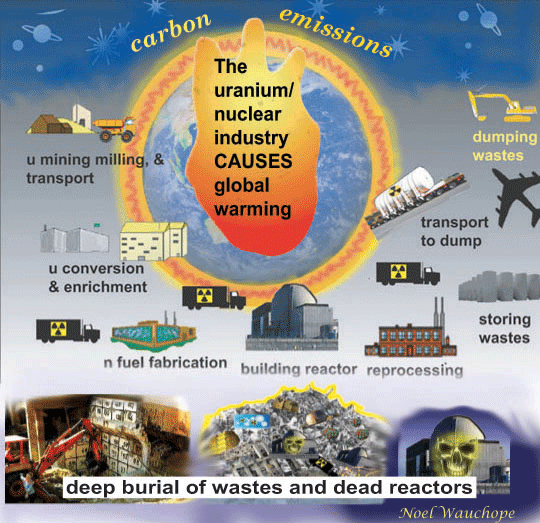
The last two contributions, dismantling and waste disposal are particularly difficult to estimate. Not many commercial reactors have been fully decommissioned. Also there is still no scientific or political consensus on the approach to be used for the long-term storage of waste.
The fuel preparation contribution is also problematic. Considerable amounts of carbon are released in the mining, milling and separation of the uranium from the ore. Also the carbon emitted is very dependent on the concentration of uranium in the ore.
It’s important to appreciate that these three problematic contributions, fuel production, dismantling and waste disposal are either non-existent or small contributions in the case of electricity generation by renewable technologies. Estimates of the carbon footprint of renewably generated electricity therefore should be much more reliable than those for nuclear…….http://www.counterpunch.org/2015/02/05/why-nuclear-power-is-not-low-carbon/
Queensland voters show that environment matters to Australians
Politicians need to realise that it was never just the economy, stupid. The environment matters to Australians, and they’re prepared to make it known at the ballot box.
It’s the environment, stupid! http://www.sbs.com.au/news/article/2015/02/05/comment-its-environment-stupid In the fallout of the Queensland election, one thing is clear: Australians don’t just care about their hip pocket. Paul Sinclair In the 1992 US election, Bill Clinton’s Chief Strategist James Carville coined the phrase “it’s the economy, stupid”. The phrase morphed into a form of conventional wisdom; the idea that the economy is the only thing really matters to voters.
But in 2015, this conventional wisdom is myopic. Just as the economy wasn’t the only thing that mattered to voters in 1992, last week’s Queensland election suggests that in 2015, voters are still thinking about wider than simply their hip pocket.
And in this era where all our leading scientific bodies including NASA and Australia’s Bureau of Meteorology are warning us of the tangible and atmosphere altering impacts of climate change – the environment is looming larger than Federal politicians seem able or willing to acknowledge. Continue reading
Climate change causing water crisis: nuclear power makes this worse
 World has not woken up to water crisis caused by climate change: IPCC head, Planet Ark, 04-Feb-15 INDIA Author: Nita Bhalla Water scarcity could lead to conflict between communities and nations as the world is still not fully aware of the water crisis many countries face as a result of climate change, the head of the U.N. panel of climate scientists warned on Tuesday.
The latest report from the U.N. Intergovernmental Panel on Climate Change (IPCC) predicts a rise in global temperature of between 0.3 and 4.8 degrees Celsius (0.5 to 8.6 Fahrenheit) by the late 21st century.
Countries such as India are likely to be hit hard by global warming, which will bring more freak weather such as droughts that will lead to serious water shortages and affect agricultural output and food security.
“Unfortunately, the world has not really woken up to the reality of what we are going to face in terms of the crises as far as water is concerned,” IPCC Chair Rajendra Pachauri told participants at a conference on water security.
“If you look at agricultural products, if you look at animal protein – the demand for which is growing – that’s highly water intensive. At the same time, on the supply side, there are going to be several constraints. Firstly because there are going to be profound changes in the water cycle due to climate change.”
Development experts around the world have become increasingly concerned about water security in recent years.
More frequent floods and droughts caused by climate change, pollution of rivers and lakes, urbanization, over-extraction of ground water and expanding populations mean that many nations such as India face serious water shortages.
In addition, the demand for more power by countries like India to fuel their economic growth has resulted in a need to harness more water for hydropower dams and nuclear plants……….http://planetark.org/enviro-news/item/72777
New high efficiency solar cells being developed for rooftop use
 High efficiency concentrating solar cells move to the rooftop, EurekAlert, 5 Feb 15 ULTRA-HIGH EFFICIENCY SOLAR CELLS SIMILAR TO THOSE USED IN SPACE MAY NOW BE POSSIBLE ON YOUR ROOFTOP THANKS TO A NEW MICROSCALE SOLAR CONCENTRATION TECHNOLOGY DEVELOPED BY AN INTERNATIONAL TEAM OF RESEARCHERS.
“Concentrating photovoltaic (CPV) systems leverage the cost of high efficiency multi-junction solar cells by using inexpensive optics to concentrate sunlight onto them,” said Noel C. Giebink, assistant professor of electrical engineering, Penn State. “Current CPV systems are the size of billboards and have to be pointed very accurately to track the sun throughout the day. But, you can’t put a system like this on your roof, which is where the majority of solar panels throughout the world are installed.”
Giebink notes that the falling cost of typical silicon solar cells is making them a smaller and smaller fraction of the overall cost of solar electricity, which also includes “soft” costs like permitting, wiring, installation and maintenance that have remained fixed over time. Improving cell efficiency from about 20 percent for silicon toward greater than 40 percent with multi-junction CPV is important because increasing the power generated by a given system reduces the overall cost of the electricity that it generates………http://www.eurekalert.org/pub_releases/2015-02/ps-hec020515.php
1 This month
7 April – WEBINAR – Australia and the Doomsday Clock – Preventing nuclear war through NoFirstUse and other policies
Online | Tuesday April 7, 4:00-5:30pm, Australian Eastern Time / 8:00-9:30am Central Europe Time
– Access the registration link
15 April – Zoom –Nuclear Power is Not the Solution
Apr 15, 2026 01:00 AM in Canberra, Melbourne, Sydney

Join the International Physicians for the Prevention of Nuclear War (IPPNW) on Tuesday, April 14th for a timely webinar exploring the risks associated with nuclear power and challenging the myth that it offers a simple, safe, carbon-free solution to the climate crisis
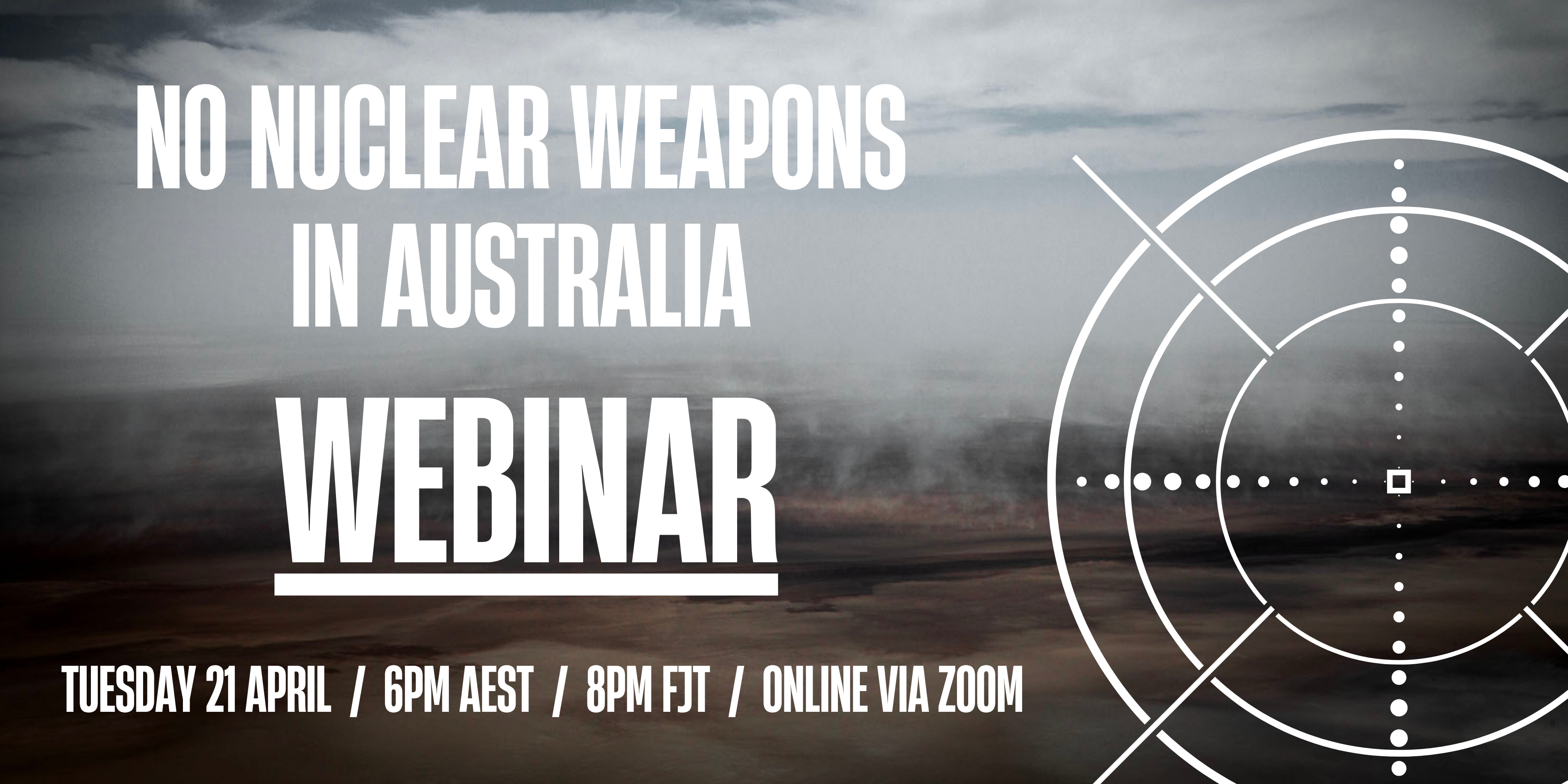
21 April Webinar: No Nuclear Weapons in Australia
Start: 2026-04-21 18:00:00 UTC Canberra, Melbourne, Sydney (GMT+10:00)
End: 2026-04-21 19:30:00 UTC Canberra, Melbourne, Sydney (GMT+10:00)
Event Type: Virtual
A virtual link will be communicated before the event.
Host Contact Info: australia@icanw.org

of the week – Australians for War Powers Reform (AWPR)
To see nuclear-related stories in greater depth and intensity
 Antinuclear