Again, Murdoch media gets it wrong on Renewable Energy Target
 Murdoch media wrong again on renewable energy target REneweconomy By Giles Parkinson on 10 February 2015 The Murdoch media has been unrelenting in its attack on renewable energy, and the renewable energy target in particular. Now that Tony Abbott has been propped up, despite losing a referendum among his back benchers on Monday, it seems that castrating the RET remains unfinished business.
 Regular Murdoch commentator Judith Sloan has been a repeated critic of the RET, and let fly again on Tuesday, calling for the policy to be changed.
That’s fine, different points of view are welcome. But not when they are accompanied by such wild factual errors. Sadly, this has been the lot of the renewable energy industry in Australia.
The original Sloan article can be found here. Here are some of the erroneous highlights. Continue reading
Cloud over fortunes of Cameco uranium company – no relief in sight
 Uranium Producer Cameco Looks Depleted Full-Year Results Lowest Since 2006, WSJ, By SPENCER JAKAB Feb. 8, 2015 Customers shutting down in droves? Environmentalists creating headaches? Low cost competitors flooding the market? Nuke ‘em. ……
he nearly two-thirds decline in Cameco’s U.S.-listed share price since February 2011 is about more than a delayed earnings bonanza. Furthermore, fluctuations in uranium’s thinly traded spot market should be viewed cautiously.
Not only do utilities in Japan and elsewhere have substantial inventory on hand but other sources of uranium supply hang over the market. These include low-cost mines in Kazakhstan that now supply around 40% of the market as well as nuclear fuel derived from nonmine sources such as the waste “tailings” of previously processed uranium.
Assuming analysts’ 2018 scenario plays out in terms of output and prices, Cameco now fetches just under 10 times that year’s consensus forecast earnings according to FactSet—hardly a bargain in today’s depressed mining landscape. The cloud hanging over Cameco may not dissipate soon.http://www.wsj.com/articles/uranium-producer-cameco-looks-depleted-ahead-of-the-tape-1423421905
Family First Senator Bob Day a fan of the nuclear industry
Nuclear Royal Commission a boost for SA, subs – Bob Day Australian Conservative – Feb 9, 2015 Family First Senator Bob Day today welcomed the South Australian Government’s move for a Royal Commission into the nuclear industry, saying the decision has enhanced prospects for submarines to be built in South Australia. “Two big obstacles fell …
Liberals’ panic over climate change put Abbott in a role beyond his abilities
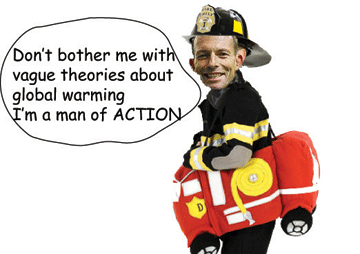 Remember, Abbott is the product of the Liberals’ freak-out over climate , Guardian Jason Wilson 10 Feb 15
 The facts on the ABC’s Fact Check
The ABC Fact Check budget is modest, a tiny fraction of the $10 million mischievously bandied around. ABC Fact Check does not check the media, not ABC journalists nor any others. In the age of 24/7 news, frenetic social media commentary and shrinking newspapers, it interrogates the claims of elected representatives, prominent individuals, influential institutions and lobby groups engaged in the public policy debate. I would have hoped Mr Cameron would have seen that as a positive step.
Fact-check journalism began in the US following the weapons of mass destruction debate before the 2003 Iraq invasion. It has proliferated in the US, Britain, the EU, South Africa, Ukraine, Egypt and South America.
Russell Skelton, Editor, ABC Fact Check, Ultimo THE AUSTRALIAn 11 Feb 15
Rockfall at Olympic dam uranium mine kills worker
Worker killed in industrial accident at Olympic Dam CHRISTOPHER RUSSELL STEVE RICE THE ADVERTISER FEBRUARY 10, 2015 A FATHER killed during a rockfall at Olympic Dam was a four-time premiership footballer renowned for being a larrikin and a popular community member.
Brian Partington, 47, of Tumby Bay, died after he was struck in the chest by falling rocks in the underground mine about 6am on Tuesday.
His death was the first workplace fatality this year following 13 deaths in 2014.
Police will prepare a report for the State Coroner while SafeWork SA has launched an investigation into the incident…….http://www.adelaidenow.com.au/news/south-australia/worker-killed-in-industrial-accident-at-olympic-dam/story-fni6uo1m-1227214320004
Australian govt to cut off basic services to up to 200 indigenous communities
The remote communities are mainly located across the northern tip of Australia and the Kimberley in the country’s northwest. The federal government announced late last year that it would stop paying for the utilities, making states responsible for the communities. The Western Australia (WA) state government says it can’t afford to cover the costs.
Rodney Dillon, an indigenous advisor at Amnesty International Australia, told VICE News that some members of the indigenous communities might not survive a move.
“It would be a complete culture shock, a complete mental shock,” Dillon said. “This is their homeland. It’s where they belong it’s where they are proud. They are the keepers of the land. Some might stay and die on the land. The older individuals won’t manage it — it might kill them.”……..
Initial hopes of establishing a $1 billion “Royalties for Regions” fund, which would have used 25 percent of the state’s mining royalties to cover the cost of power and water for the communities, were quashed this week by WA Premier Colin Barnett, who stressed that the government has not yet reached a solution.
Minster for Regional Development Terry Redman originally floated the “Royalties for Regions” idea, but has since said he was “misunderstood” by the media. He stressed to VICE News that it was simply one option……….
Asked if communities had been contacted about the potential closures, the state’s Aboriginal Affairs Minister Peter Collier said last week that a consultation that involved “going out to all the communities” would be “just nonsensical,” and that “consultation in a general sense will continue” instead.
Dillon said such a consultation has been non-existent so far.
“The communities haven’t been contacted, no one’s asking anything,” he said. “This is going to be done without consultation, it will be a couple of blokes with a coffee in Perth making these decisions.”
The government will decide which communities stay open and which are “not viable” for investment, Dillon added.
The Partnership of Western Australian Aboriginal Land Councils invited Barnett and other key WA politicians to discuss the issue in early March, but they have yet to receive a response…….
The criteria that determines whether a community is viable has not been released, but both Redman and Barnett have stressed the likelihood that at least some of the 274 communities in the state will have to close, perhaps as many as 200.
Lauren Pike, a spokeswoman for the Kimberley Land Council, described what happened in 2011 when the government shuttered an indigenous community in Oombulgurri, a community in the eastern Kimberley, and relocated the residents to Wyndham, about 45 kilometers away.
“The result was just devastating,” Pike said. “They literally told these people to get out of their homes and that they couldn’t stay or come back, and then dumped them in the mangroves around the town.
“Houses weren’t provided — nothing was provided,” she continued. “People in the town literally had to hand out borrowed sleeping bags and blankets for these people coming in so they could have something to sleep on outside. It caused so much trouble in the community, and it only got worse from there. Suddenly people had access to alcohol, to illicit substances. It was just an absolute state of poverty.”……..
Dillon believes any future living conditions in the remote communities would consist of the bare minimum.
“They would be moved to very poor conditions,” he said. “They’re frightened and scared and they speak a different language. Now they’re all possibly going to be moved into slums and shanty towns in the city.”
Groups campaigning against the closure also believe moving the indigenous people into new towns would cost the government more in the long run than if they just maintained the status quo. https://news.vice.com/article/australia-may-stop-providing-water-and-power-to-remote-aboriginal-communities
Australia’s political deadlock is financially hurting windfarm companies
Some 44 Australian windfarm projects, about half overseas-funded, have been shelved since a new conservative government said it wanted to cut state support for the industry a year ago, with investors and operators saying they are considering either downscaling or leaving the country altogether if it succeeds.
Even Australian windfarm companies such as Infigen and Pacific Hydro have effectively shelved their Australian operations, with Infigen saying it plans to pour all its financial muscle into the more amenable U.S. market.
“It’s a difficult time at the moment, and the policy uncertainty is the main cause of it,” said Shaq Mohajerani, an Australian spokesman for wind farm company Union Fenosa, owned by Spanish energy giant Gas Natural.
“We’re still considering all options on how to proceed. The parent company will provide us with the strategy.”
A Gas Natural spokesperson said the firm had an “attractive backlog” in Australia but “we are waiting for the whole development of the new framework for renewable energy and hope our presence … in the country can be maintained”.
Wind power in Australia is not the only renewable energy sector to be affected by uncertainty over government subsidies or actual cuts. ……
Windfarms are Australia’s No. 2 renewable energy source, behind hydropower but ahead of solar, providing a quarter of the country’s clean energy and 4 percent of its total energy demand.
But while households can collect rebates for installing their own rooftop solar panels, windfarms rely on “certificates”, or tradeable securities handed out by the government, to offset costs.
That support hit a roadblock a year ago when new conservative prime minister Tony Abbott ordered a review of the country’s target for clean energy use by 2020, which ultimately recommended slashing it by a third, in line with falling overall energy demand. A lower target would mean a lower certificate price……..
A spokeswoman for U.S.-owned GE Australia & New Zealand, which has stakes in several renewable energy projects, said further investment “will only occur once investor confidence in the policy environment is restored. For this to happen, bipartisan support regarding the future of the renewable energy target is essential.”
The Australian arm of Spanish infrastructure group Acciona, the world’s largest renewable energy firm, has frozen about A$750 million of windfarm projects because of the stalemate, said local managing director Andrew Thomson.
“When you’re a subsidiary (of a global business), you’re competing for capital, you’re competing for your budget allocation next year,” he said.
“If the parent company can’t see that there’s a stable environment it becomes really difficult to get traction. For us at the moment it’s a really difficult sell.”
If the renewable energy target is cut, “it’s the type of jolt to industry that basically would create such an upheaval that you would have a mass exodus”, said Alex Hewitt, managing director of Bulgarian-Polish-U.S.-backed windfarm operator CWP Renewables, which has A$1.5 billion of projects on ice.
“I can’t say whether we’d completely exit the country, but you would be looking at such a level of reduction in the level of investment into people in the company that it would be very significant,” Hewitt said. http://www.sbs.com.au/news/article/2015/02/08/australian-windfarms-face-13-billion-wipe-out-political-impasse
Hotter summers to become ‘normal’ in Australia
The 2013 heatwave in Australia would be impossible if not for climate change. The scorching heat experienced by Australians in late 2012 and early 2013 had set new temperature records in ever state and territory in the country.
According to the Bureau of Meteorology, the national average of daily temperatures in 2013 had rise to record-breaking levels for an extended period. NASA had noted that Australia’s extreme temperatures in Jan. 2013 were extended not just days but weeks, The Washington Postreports.
A new report by Australia’s independent Climate Council has found that 2013, the country’s hottest year ever, would be “virtually impossible” without climate change. The summer heatwaves of late 2012 and early 2013 were also enhanced by global warming and increased the chance of reaching extreme temperature levels.
The Climate Council report was written by Will Steffen, a professor at the Australian National University, and based his research on several climate change models. …….
The professor said the report highlighted the importance of developing an action plan to reduce emissions. If something is not done, Steffen warned that an extreme heat event would be a normal occurrence by the middle of the century.
Climate Council chief councillor Professor Tim Flannery said the report allowed scientists to “quantify” the effect of human activities on extreme weather events, reports ABC. He said Australia should reduce greenhouse gas emissions if it wants to achieve a better climate in the future. http://au.ibtimes.com/australia-experience-hotter-prolonged-heatwaves-extremely-hot-summers-normal-1420002
Abbott govt weakening on anti-renewable energy policy?
Guardian Australia understands the government is preparing to make significant concessions in talks with Labor to try to strike a bipartisan deal over the RET. Talks resumed last week and are set to continue…….
the government is now also in close consultation with the renewable energy industry, with a target in the mid 30,000 gigawatt hours under discussion. More talks with Labor are expected within a fortnight.
The solar industry has run an intensive marginal seat campaign to protect its treatment under a special “small scale” renewable energy target, earning the ire of Greg Hunt in the process…….http://www.theguardian.com/australia-news/2015/feb/10/abbott-government-shows-signs-of-shifting-ground-on-climate-policy
1 This month
Chernobyl: The Lost Tapes – A good documentary on Chernobyl on SBS available On Demand for the next 3 weeks– https://www.sbs.com.au/ondemand/tv-program/chernobyl-the-lost-tapes/2352741955560
15 April – Zoom –Nuclear Power is Not the Solution
Apr 15, 2026 01:00 AM in Canberra, Melbourne, Sydney

Join the International Physicians for the Prevention of Nuclear War (IPPNW) on Tuesday, April 14th for a timely webinar exploring the risks associated with nuclear power and challenging the myth that it offers a simple, safe, carbon-free solution to the climate crisis
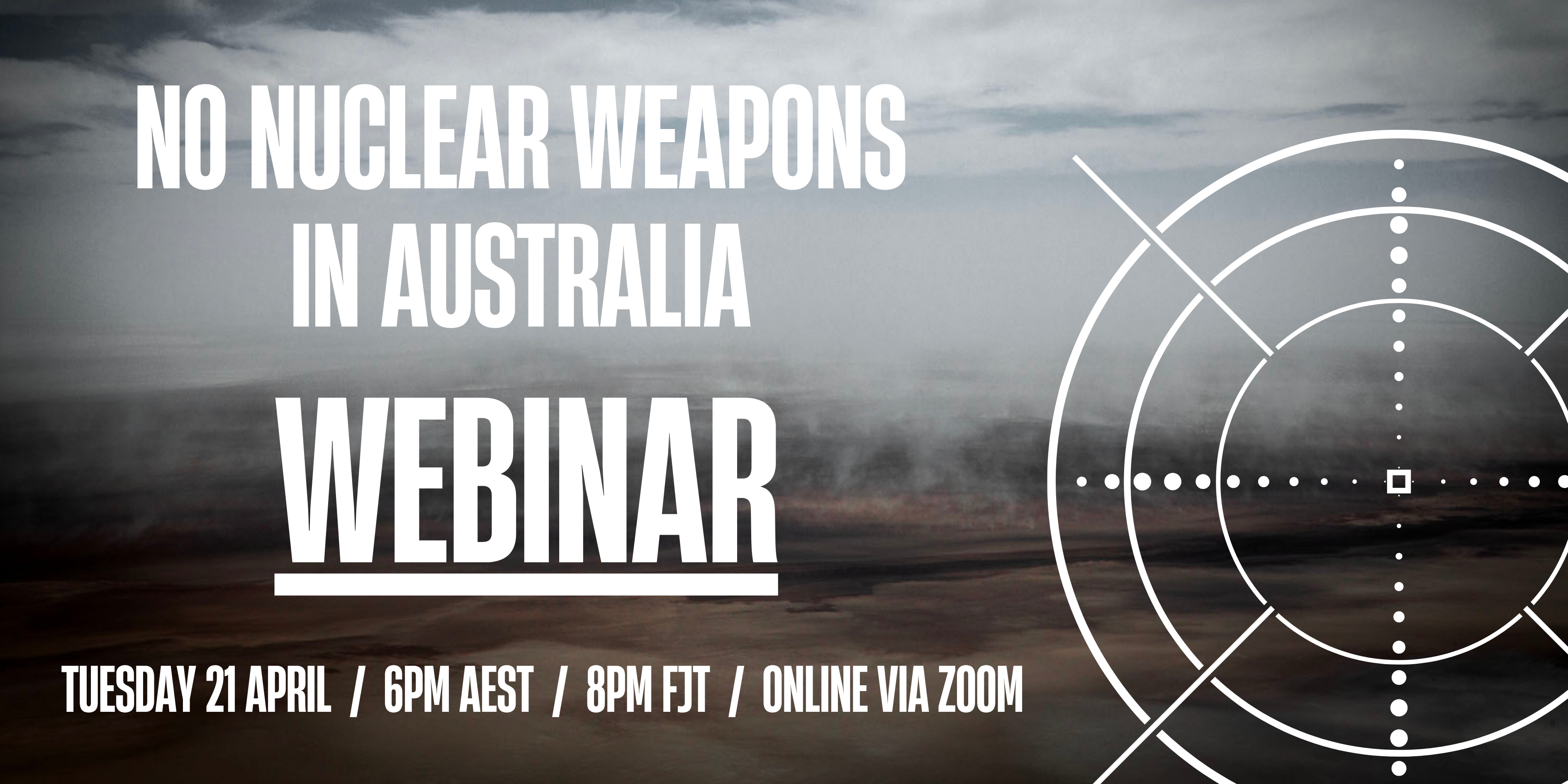
21 April Webinar: No Nuclear Weapons in Australia
Start: 2026-04-21 18:00:00 UTC Canberra, Melbourne, Sydney (GMT+10:00)
End: 2026-04-21 19:30:00 UTC Canberra, Melbourne, Sydney (GMT+10:00)
Event Type: Virtual
A virtual link will be communicated before the event.
Host Contact Info: australia@icanw.org

of the week – Australians for War Powers Reform (AWPR)
To see nuclear-related stories in greater depth and intensity
 Antinuclear