Australia sleep-walking into a bad deal with the secretive Trans Pacific Partnership
An Australian National University study of the US-Australia Free Trade Agreement found there was very little in it for Australia. A recent US department of agriculture study found it would deliver a zero economic benefit to Australia and a zero economic benefit to the United States. For smaller nations the economic benefits are bigger which may explain why they are eager to join and why the US is driving a hard bargain on intellectual property and the rights of its pharmaceutical industry
 Trans Pacific Partnership. What’s the deal being negotiated in our name?, SMH, February 21, 2015 Peter Martin When The Lancet and the Australian Medical Journal editorialise against Australia’s next free trade agreement it’s a fair bet they are concerned about more than just trade.
The Trans Pacific Partnership is the biggest free trade agreement hardly anyone’s ever heard of. Bubbling along below the radar for half a decade, it’s about to become solid. It is set to deliver much more money and power to US pharmaceutical companies, to criminalise the use of technology in ways that presently don’t attract jail time and to set up outside tribunals to reconsider decisions already made by Australian courts.
Taking part is almost 40 per cent of the world’s economy – the industrialised nations of Australia, Canada, Singapore, Brunei, New Zealand, Chile, Mexico, the United States and Japan and the less developed nations of Malaysia, Peru, and Vietnam. If China joins later (as expected) it’ll be nearly 50 per cent.
It has reached the point where Australia’s trade minister Andrew Robb is prepared to put a date on it. “I think it could be ready next month,” he says, before adding that there have been slippages before. It was meant to be signed in 2011……..
Mind boggling in its complexity (the US takes 80 specialists to each negotiation, Japan 120, and Australia 22) the negotiating text is secret. Robb says even most of the negotiators don’t know what’s in the whole thing. Each knows about little more than the chapter they are working on and there are more than 20 chapters. The text won’t be made public until after the leaders shake hands, as is typical in international trade agreements.
But what is known, from draft chapters leaked to Wikileaks and from the generally more open US political system, suggests that it’s about far more than trade.
Health
When the US negotiated its 2004 free trade agreement with Australia it pushed to eliminate “price controls”, by which it meant the prices set by Australia’s Pharmaceutical Benefits Scheme. What it got was an independent review process which had no authority to overturn decisions. Public health expert Dr Deborah Gleeson of La Trobe University says it’s only been used twice. For the TPP the US wants something much stronger, the right to appeal against decisions and have them overturned. It would apply to decisions about both the prices charged for drugs and which drugs to include in the scheme (and in similar schemes in other countries)………
Sovereignty
Australia is currently being sued in an international tribunal by Philip Morris Asia after the tobacco giant lost its case in the High Court against Australia’s plain packaging law. It is only able to do that because of an investment treaty Australia signed with Hong Kong. Philip Morris moved its Australian business to Hong kong to take advantage of it.
So-called investor-state dispute settlement procedures are common in international treaties. The US has insisted on them in all its free trade agreements but one. Australia is the exception. The Howard government said no in 2004 arguing that Australia’s legal system was good enough to resolve any disputes it would have with the US without the need for an outside one.
This time the US wants a universal system. The previous Labor government refused to have them in any of its trade agreements and believed it was on the verge of getting a carve out for Australia in the TPP because of its strong judicial system. But shortly after taking over the new trade minister, Andrew Robb said he would instead consider agreeing to them on a case by case basis, depending on what he got in return. The statement weakened Australia’s ability to get a carve out.
High Court Judge Robert French has complained that the judiciary is being frozen out of the decision making process. It knows more than any other branch of government about what allowing outside appeals beyond the High Court would do to the legal system, but he says as far as he knows, he hasn’t been asked.
Intellectual property
The US is demanding extreme extensions in copyright terms. Already in the US-Australia Free Trade Agreement it secured an extension from 50 years after the author’s death to 70, something former productivity Commission economist Philippa Dee believes cost Australia $88 million in extra copyright payments. Now it wants to make 70 years universal in those countries that don’t have it and to extend the copyright on movies and sound recording from 70 years after publication to 95 years. And it wants to turn into criminal offences breaches of copyright that presently attract only civil penalties.
Robb says none of this is known, in part because the decisions haven’t yet been taken, but leaks from inside the negotiations suggest that most of the intellectual property chapter has been finalised.
What’s in it for us?
An Australian National University study of the US-Australia Free Trade Agreement found there was very little in it for Australia. A recent US department of agriculture study found it would deliver a zero economic benefit to Australia and a zero economic benefit to the United States. For smaller nations the economic benefits are bigger which may explain why they are eager to join and why the US is driving a hard bargain on intellectual property and the rights of its pharmaceutical industry……..http://www.smh.com.au/federal-politics/political-news/trans-pacific-partnership-whats-the-deal-being-negotiated-in-our-name-20150220-13jci9.html
No comments yet.
1 This month
7 April – WEBINAR – Australia and the Doomsday Clock – Preventing nuclear war through NoFirstUse and other policies
Online | Tuesday April 7, 4:00-5:30pm, Australian Eastern Time / 8:00-9:30am Central Europe Time
– Access the registration link
15 April – Zoom –Nuclear Power is Not the Solution
Apr 15, 2026 01:00 AM in Canberra, Melbourne, Sydney

Join the International Physicians for the Prevention of Nuclear War (IPPNW) on Tuesday, April 14th for a timely webinar exploring the risks associated with nuclear power and challenging the myth that it offers a simple, safe, carbon-free solution to the climate crisis
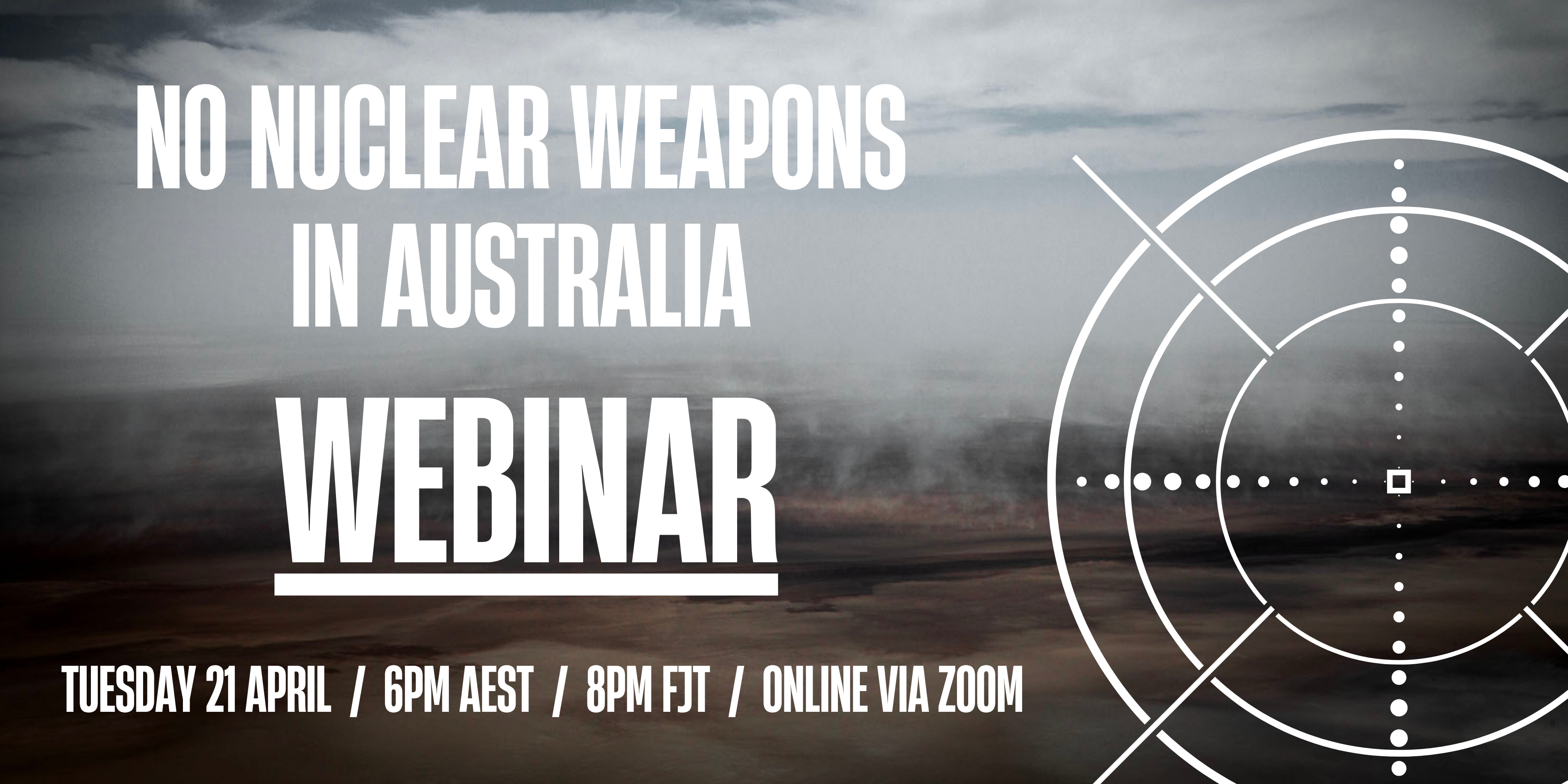
21 April Webinar: No Nuclear Weapons in Australia
Start: 2026-04-21 18:00:00 UTC Canberra, Melbourne, Sydney (GMT+10:00)
End: 2026-04-21 19:30:00 UTC Canberra, Melbourne, Sydney (GMT+10:00)
Event Type: Virtual
A virtual link will be communicated before the event.
Host Contact Info: australia@icanw.org

of the week – Australians for War Powers Reform (AWPR)
To see nuclear-related stories in greater depth and intensity
 Antinuclear
Leave a comment