Significant omissions from the Terms of Reference for the SA Nuclear Royal Commission
Will anyone take this Royal Commission seriously?
 Some Significant omissions from the Terms of Reference for the SA Nuclear Royal Commission Margaret Beavis 25 Feb 15,
Focus on Mining expansion only
No mention of old mines and contaminated areas
No mention of water issues- huge supply required for reactor and risks of contamination of waterways and aquifers. SA is a dry state.
Opportunity cost of focussing on nuclear industry instead of becoming world leader in renewables
Ignores high cost of nuclear power compared to other sources
Large subsidies needed from government preventing spending on other important issues
Lack of financial/professional conflict of interest declarations being required from all witnesses and commission members
No mention of health impacts of radiation
No provision for how state would respond to Fukushima type scenario from accident/deliberate damage
No mention of possible impacts on SA tourism, food and wine exports (especially fisheries)
Vast majority of medical waste has a very short period of radioactivity and is not the main reason for a dump.
Conservation Council of South Australia : points on Terms of Reference for the Royal Commission.

 If the Royal Commission is to be a genuine inquiry, the draft terms of reference need significant revision. Otherwise it will lack credibility.
The Adelaide Advertiser misleads public on medical nuclear isotopes
The Editor
The Advertiser
Your correspondent Phil Day (The Advertiser, 24/2/15) is a victim of those nuclear industry spin doctors who try to use nuclear medicine to justify the use of nuclear reactors.
The nuclear waste that is being considered for dumping in South Australia does not come mainly from medical grade isotopes, it comes from nuclear power stations and from facilities for producing the fuel for nuclear power stations and nuclear weapons. The nuclear waste from medical grade isotopes is comparatively trivial.
I also hope I never need a CAT scan or X-ray because both use ionising radiation. However, neither CAT scans nor X-rays use radioactive isotopes or produce nuclear waste and hence their use to justify generating and importing nuclear waste is misleading.
Dennis Matthews

Nuclear waste generated at Lucas Heights is a very small amount – Ziggy Switkowski
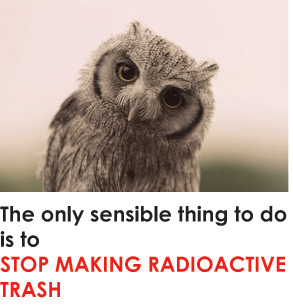 Nuclear waste dump needed, SA could fill gap, ABC Radio P.M February 23, 2015 Natalie Whiting reported this story
“……….NATALIE WHITING: Is the Federal Government going to need a sight for waste storage earlier than when we might see this royal commission wrap up?
NATALIE WHITING: Nuclear fuel rods from France are set to be returned to Australia before the end of the year
More nuclear waste, which is being reprocessed in the UK, will be sent back by 2020……”http://www.abc.net.au/pm/content/2015/s4185584.htm
Warning; drones can make nuclear power plants unstable
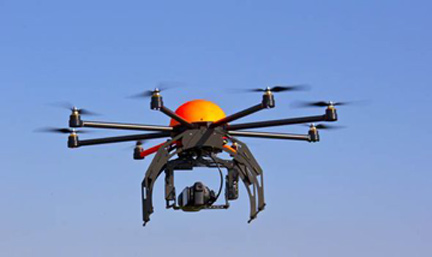 Most French Nuclear Plants ‘Should Be Shut Down’ Over Drone Threat, NewsWeek BY CATHERINE PHILLIPS AND CONOR GAFFEY / FEBRUARY 24, 2015 “You don’t need massive amounts of force to allow a nuclear plant to go into instability. The plant has enough energy to destroy itself. Drones can be used to tickle the plant into instability.”
With devastating simplicity, John Large explains how drones could be used to coordinate a terror attack on a nuclear power station. Continue reading
Radioactive Cesium in Fukushima port – 7,400 times the safe limit
 Alarm at Fukushima Nuclear Plant: Radioactivity too High, National Japan News, By Ken Tanaka & Norihisa Taguchi Alarm at Fukushima Nuclear Plant: Radioactivity too High, National Japan News, By Ken Tanaka & Norihisa Taguchi
“………Contaminated Water And Records Tokyo Electric Power Company (TEPCO) has revealed that it may not have enough space to store the contaminated water that began to leak from its nuclear Fukushima plant over the weekend. There are presently not enough sturdy, above-ground tanks that can be used take the water from the pits in which it is stored, TEPCO General Manager Masayuki Ono said at a news conference. Water has been leaking from the pits over the lst few weekends. The company is still facing problems dealing with the consequences of the 2011 Fukushima disaster, as it attempts to keep reactors and spent fuel pools in a safe state known as cold shutdown. A record quantity of radioactive cesium – 7,400 times the country’s limit deemed safe for human consumption – has been detected in a greenling fish in the waters near the crippled Fukushima plant, two years after the nuclear disaster.
The operator installed a net on the seafloor of the port exit near the plant to prevent the fish from escaping. The bottom-dwelling greenling fish was found in a cage set up by TEPCO inside the port next to the Fukushima Daiichi plant, a utility official told AP on condition of anonymity. The company also indicated that the previous record of cesium concentration in fish was 510,000 becquerels per kilogram detected in another greenling caught in the same area, TEPCO said.https://onewayjapan.com/News-National/2015/09-Alarm-at-Fukushima-Nuclear-Plant-Radioactivity-too-High.html |

|
By Ken Tanaka & Norihisa Taguchi |
Australia a partner in the nuclear injustice done to the Marshall Islands
For Australia, this is anything but a quaint and esoteric legal exercise, and we are anything but an innocent bystander. Successive Australian governments pay lip service to the goal of a nuclear weapons free world, while simultaneously giving support to US nuclear weapons, under the extraordinarily foolish notion that they protect us. Goliath, with his genocidal weapons, has our unbridled loyalty and complicity. We are in fact part of the problem.
 Nuclear nations in the dock http://www.onlineopinion.com.au/view.asp?article=17110 By Sue Wareham , 23 February 2015 A little known court case initiated by an inconspicuous Pacific Island state might not seem very newsworthy, but when there’s a David and Goliath element involving some of the world’s most powerful nations, with implications for Australia, we should take notice.
The small nation state of the Republic of the Marshall Islands, with a population of just over 50,000 people, is taking the United States, the United Kingdom, Russia, China, France, India, Pakistan, Israel and North Korea to the International Court of Justice (ICJ). What do this motley lot have in common? Between them, they possess the world’s 16,300 most destructive, horrific and indiscriminate weapons, nuclear weapons.
No nation has a stronger moral claim to call the nuclear armed states to account than the Marshall Islands. Continue reading
Time that Australia rethought the nuclear nexus between India, Australia, Japan and the United States.
Undermining Nuclear Non-Proliferation: Energy and Security Politics in the Australia-India-Japan-U.S. Nuclear Nexus 核不拡散の土台崩し オーストラリア·インド·日本·米国間におけるエネルギーと安全保障政策 The Asia-Pacific Journal, Vol. 12, Issue 46, No. 2, November 1, 2014 Adam Broinowski
The inception of the U.S.-led nuclear alliance system From the world’s first atomic test on 16 July 1945, uranium, nuclear reactors and nuclear weapons have played a key role in the US-led alliance system. As the former axis powers of Japan, West Germany and Italy as well as other strategically important territories such as South Korea, the Philippines and Taiwan, were incorporated in a US foreign policy designed to confront and contain the Soviet Union and the People’s Republic of China, nuclear weapons were deployed with the justification of being necessary to deter large Communist conventional forces……..
As nuclear intimidation continued, and as other nations sought to gain ‘parity’, the global nuclear industry grew. It was clearly understood in these early decades that the dual-use of nuclear materials in nuclear energy generation and nuclear weapons served to establish and maintain national influence in the international arena. Since 1945, the supply and procurement of uranium together with coal (for steel production) has been a good indicator of a nation’s capacity to both rapidly increase its energy production with the potential to produce munitions and, for those states already with the capacity, to produce and enhance a nuclear weapons arsenal. High-energy power generation was an index of a nation’s war-making potential underlining the link between mining and militarisation.
In the following I seek to explain why and how the Australian government in 2014 has concluded a uranium trade deal with India that is in breach of the Nuclear Non-Proliferation Treaty (NPT) by tracing the development of a nuclear nexus between India, Australia, Japan and the United States. Just as it was in the early cold war, this trade in nuclear materials is informed by interlocking and mutually reinforcing economic and geostrategic interests that have long undermined international disarmament initiatives. I argue that changing climatic conditions caused by emissions intensive energy production, however, demand a fundamental re-thinking of this paradigm.
Crisis and Response in the post-2011 nuclear industry……….http://japanfocus.org/-Adam-Broinowski/4226
Western Australian Premier Barnett snubs Kimberley Aboriginals – protest March 5th
All interested people are encouraged to attend the meeting being held on 5 March 2015 at Kimberley Land Council. Show your support and rail against continued injustices against the Indigenous people.
Indigenous community closures in WA: Barnett turns his back on traditional owners, Independent Australia 23 February 2015, WA Premier Colin Barnett has, without notice or consultation, announced he is closing down 150 Indigenous communities and has refused to meet Indigenous community leaders to discuss the matter, writes Natalie Cromb. Continue reading
South Australia’s Royal Commission should investigate the costs of uranium mining
The draft terms of the reference for the royal commission, released on Monday, are focused on nuclear power generation, uranium enrichment and waste storage. But the government has ruled out scaling back the state’s involvement in uranium mining, while also precluding the use of nuclear for military purposes.
Australian Conservation Foundation spokesman Dave Sweeney says the decision to exclude consideration of uranium mining is deeply disappointing. “The nuclear industry starts with uranium and so should any genuine assessment of the nuclear sector in South Australia,” he said.
Continuing process of removing Aboriginals from their land, making way for mining
 Aboriginal people driven from their land Green Left, Friday, February 20, 2015 By Emma Murphy “…………..It is now eight years since the Howard Coalition government launched its appalling intervention into NT Aboriginal Communities — the NT Emergency Response package. While the intervention may seem like old news, it continues to be raised as an example of the increasing neoliberal offensive against Aboriginal people’s right to their own land, identity, and self-determination.
History certainly did not stop in 2007 when the intervention started. Aspects of the intervention, such as income management and increased police presence, have continued and there have been many more attacks as well, not just in the NT, but across the country.
The intervention and policies banning bilingual education and undermining NT homelands, were really about launching an attack on Aboriginal identity and culture. They were about undermining a way of life that really isn’t compatible with capitalism; a way of life that involved collective property rights and aspirations other than home ownership and careers. It is a way of life that embraces multilingualism, sustainability and quite often strong opposition to the extractive resource industry.
Many of the policies in the NT were seen, in one way or another, as forcing Aboriginal people off their land, whether to free up resource-rich land for the extractive industries or to push remote Aboriginal people into larger, more “viable” service hubs.
Right now in Western Australia, Aboriginal people living in remote communities are facing a similar disastrous social experiment. The Barnett government has foreshadowed the closure of more than 100 remote communities. Continue reading
Australia missing out, as solar energy to become cheaper than fossil fuels
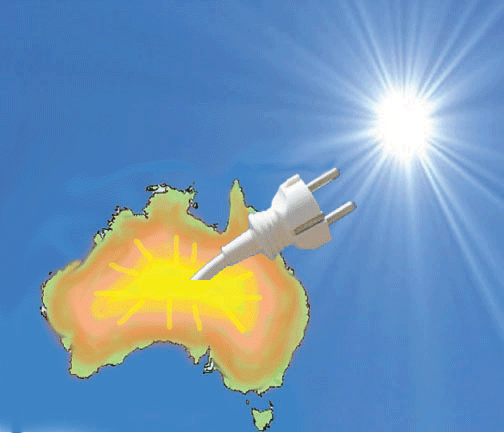 given Australia’s sunny climate, solar energy should be thriving.
“If you look at that technology and you ask yourself the question, ‘where in the future will we have cheap and clean energy?’ It’ll be those countries in the world with a lot of sun and with stable investment conditions,” Dr Graichen said.
“You see a lot of solar projects are now coming up in the Gulf, in New Mexico, California, Texas, but Australia is lacking in that concept.”
Solar power set to become cheapest source of energy over next decade, German think tank says, ABC News, 25 Feb 15, The World Today By Annie White Solar energy is set to become the cheapest source of electricity in many parts of the world within the next 10 years, according to a new report released by German think tank, Agora Energiewende.
The report was commissioned by the independently funded organisation, designed to steer Germany towards its 80 per cent renewable energy target.
Chief executive officer Dr Patrick Graichen said they wanted to see if recent falls in the cost of photovoltaics would continue. “The finding is there’s no end to the cost decline in photovoltaics,” he said. “The technology still has further improvements so we expect that within the next 10 years photovoltaics will become, in many regions of the world, the cheapest source of electricity.”
Dr Graichen said in some sun drenched parts of the world, it would be cheaper than burning fossil fuels. Continue reading
The Greens have a renewable energy vision for New South Wales


 Greens’ Clean, Renewable Energy Vision For NSW http://www.energymatters.com.au/renewable-news/greens-renewable-energy-em4699/ February 24, 2015
Coal and gas fired electricity generation in NSW generates 60 million tonnes of carbon emissions annually, making the state one of the most carbon-intensive economies in the world.
The Greens’ plan includes partnering with households to support the transition away from coal-fired electricity and gas to rooftop solar, energy efficient equipment and intelligent energy trading and management.
The plan would see the creation of public sector energy agencies to provide financial support and technical advice, investment in a “smart grid” and keeping the network in public hands.
“Transformation of the state’s energy industry is inevitable,” stated Greens NSW MP John Kaye, who said it was important this process begins as soon as possible. “Premier Mike Baird’s plans will to pass control of much of the electricity network to private hands would create political and financial barriers to the remaking of the network.”
The Greens say their energy vision would slash household power bills and break the stranglehold of big private-sector energy corporations. They envision an electricity sector where households and businesses would trade roof top solar electricity and other renewable sources across a publicly-owned network.
Pursuing a 100% renewable energy based New South Wales would also create a clean power jobs boom. While there are just 1,800 jobs in NSW’s coal-fired power stations and approximately 4,000 in mining the coal these facilities burn, more than 70,000 new jobs could be created in NSW in clean energy.
The Greens state much of the $17 billion investment in electricity transmission and distribution since 2009 in New South Wales has been in the wrong kind of technology, locking the state into a centralised and expensive supply based on coal and gas.
“A 100% renewable energy NSW is possible, affordable and essential. But it will not happen as long as the old parties remain committed to coal and gas and continue to frustrate and undermine wind and solar,” says the party.
Is classroom exposure to electromagnetic radiation a danger to kids?
Something in the air By: Elissa Lawrence Feb 15 Courier Mail
IT MAY be invisible but it’s everywhere — in our homes, parks, workplaces, shopping centres, hotels and schools.

Wi-fi has become a way of life — accepted, convenient and fundamental to how we live.
A type of electromagnetic radiation — the same as emitted from mobile phones — wi-fi, shorthand for “wireless fidelity”, is a means for computers, smart phones and other devices to wirelessly connect to the internet or communicate with each other. Data is transferred via radiofrequency electromagnetic fields (RF-EMF) instead of through wires. Wi-fi has the same frequency and wavelength as the microwaves used in ovens, but is not contained within a closed unit, routers are usually permanently switched on, and they have a range of 30 metres or more.
The technology, which took hold in the early 2000s, is now widely seen as integral to education. All Queensland state schools have wi-fi access and there is a widespread rollout across schools of Bring Your Own Device schemes, starting in many primary schools from grade four.
But a growing body of researchers, educators and parents is concerned about the future effects of exposing children to long hours of wi-fi. In 2011, RF-EMF were classified by the World Health Organisation’s International Agency for Research on Cancer as a 2B carcinogen, or “possibly carcinogenic to humans”, Continue reading
Australian governments’ political risks in promoting the really quite marginal uranium industry
Given that Australia’s uranium mining and export accounts for less than 1 percent of its hundred billion dollar mineral export business (iron ore, bauxite, coal, copper, nickel etc),36 however, these decisions by Australian leaders risked significant political capital over what has been a highly contentious issue in Australia’s recent political history
Undermining Nuclear Non-Proliferation: Energy and Security Politics in the Australia-India-Japan-U.S. Nuclear Nexus 核不拡散の土台崩し オーストラリア·インド·日本·米国間におけるエネルギーと安全保障政策 The Asia-Pacific Journal, Vol. 12, Issue 46, No. 2, November 1, 2014 Adam Broinowski “……Until 2014, along with China, Japan has also seen a boom in mostly solar and wind electricity generation. But this has been stalled by utilities who have refused to take an influx of renewable power into the grid or to reduce electricity prices.10 With fewer nuclear plants scheduled for construction around the world than for shutdown, however, the nuclear industry faces the likely prospect of contraction11 and replacement by rapidly advancing renewable energy options, including solar, wind, tidal, hydro and possibly geothermal power over the longer term.
Despite this gloomy prognosis for the uranium sector, confidence began to return to the uranium mining industry in Australia from late 2012. Continue reading
1 This month
7 April – WEBINAR – Australia and the Doomsday Clock – Preventing nuclear war through NoFirstUse and other policies
Online | Tuesday April 7, 4:00-5:30pm, Australian Eastern Time / 8:00-9:30am Central Europe Time
– Access the registration link
15 April – Zoom –Nuclear Power is Not the Solution
Apr 15, 2026 01:00 AM in Canberra, Melbourne, Sydney

Join the International Physicians for the Prevention of Nuclear War (IPPNW) on Tuesday, April 14th for a timely webinar exploring the risks associated with nuclear power and challenging the myth that it offers a simple, safe, carbon-free solution to the climate crisis

21 April Webinar: No Nuclear Weapons in Australia
Start: 2026-04-21 18:00:00 UTC Canberra, Melbourne, Sydney (GMT+10:00)
End: 2026-04-21 19:30:00 UTC Canberra, Melbourne, Sydney (GMT+10:00)
Event Type: Virtual
A virtual link will be communicated before the event.
Host Contact Info: australia@icanw.org

of the week – Australians for War Powers Reform (AWPR)
To see nuclear-related stories in greater depth and intensity
 Antinuclear