Senator Scott Ludlam on “new generation” nuclear reactors that “emit only unicorn dust”
Nuclear Industry On Trial? Scott Ludlam Hopes So, New Matilda, 26 Feb 15 “……The unthinkable consequences of a well-executed terrorist attack on an operating reactor or high-level waste store keep national security planners awake at night, with the potential for nuclear power plants to be used as pre-deployed radiological weapons by those with malevolent intent.
It seems likely that in the face of this evidence, the Royal Commission will see the industry play its last remaining card: an invitation to set aside the actual performance of existing reactors and imagine the potential of a new generation of nuclear technology: safe, clean, reliable, cheap, modular, proliferation-proof; reactors that consume only nuclear waste and emit only unicorn dust.
Forgive the scepticism: no-one has ever come remotely close to designing and building such a device, and commercial application of imaginary Generation IV reactors lies well over an indefinitely receding horizon; always just a few more years and decades away.
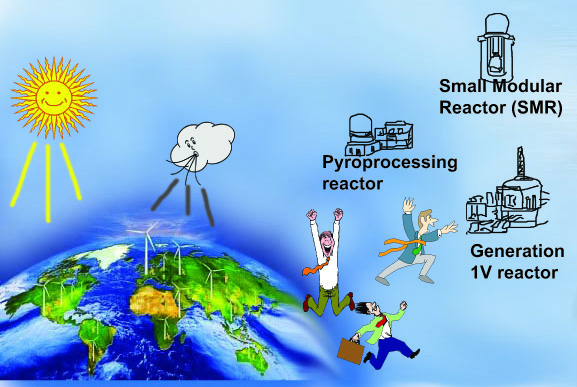
Perhaps more to the point, it may be that there are simpler ways to boil water or induce electrons to flow down a wire than the absurdity of plutonium-burning fission reactors cooled by liquid sodium.
Turning to face the timeless abundance of free solar energy presents a much simpler way forward. It is time that advocates of terrestrial nuclear power instead used their efforts to advocate for better use of the celestial nuclear reactor that sustains rather than threatens life on Earth.
The very qualities of scale, baseload delivery and centralisation that so appealed to energy planners of the 1950s make nuclear technology uniquely unsuited to the realities of the 21st century.
Emerging industrial economies like India, Africa and China’s rural hinterlands are vastly better served by decentralised renewable generators feeding local or regional-scale microgrids.
The plunging costs of solar, wind and micro-hydro generators are combining with cheap, decentralised energy storage technology – driven largely by developments in the IT and automotive industries – to drive the final nail into the fallen potential of nuclear power.
In March 2013 the cover and feature piece of the Economist magazine put the case succinctly: Nuclear Power – the dream that failed.
For the indefinite future, there will still be a need for reliable, dispatchable utility-scale power plants, but even here clean-technology has emerged to checkmate atomic energy: large-scale concentrating solar thermal plants have come online in Spain and the United States, paving the way for vastly more ambitious developments in South America and the Middle East combining cheap photovoltaics with heliostat fields heating overnight molten salt energy storage.https://newmatilda.com/2015/02/26/nuclear-industry-trial-scott-ludlam-hopes-so
No comments yet.
1 This month

of the week – Australians for War Powers Reform (AWPR)
To see nuclear-related stories in greater depth and intensity
 Antinuclear
Leave a comment