Musings on the nuclear and energy news this week
 Sorry to harp on about South Australia’s Royal Commission into Nuclear Power – but it IS the most important matter to come up in Australia’s recent nuclear history. And, it’s all being done in such a hurry.
Senator Scott Ludlam wrote a wonderful, courteous (what a novelty for an Aussie politician!) article, on how this Commission might be done properly. Alas, few people are confident that this will happen.
This Royal Commission looks like a cover for an old agenda – to make South Australia the world’s nuclear waste dump. Last time they tried this, the nuclear lobby was beaten in a campaign led by a bunch of Aboriginal women – The Kupa Piti Kungka Tjuta. A court decision in 2004 resulted in the dump plan being abandoned.
The public has until March 13 to send submissions about the draft Terms of Reference. These draft terms are extraordinarily narrow – ignoring comparative costs, health, agricultural and tourist impacts, and they exclude uranium mining and the current situation of radioactive contamination at Maralinga. The Conservation Council of South Australia provides clear and simple guidance for anyone wanting help in sending a submission.
South Australian farmers have lately been flat out selling berries , as uproar has gone out about people getting sick, from eating imported berries. I wonder how our fruit and vegies would go, if South Australia did become the world’s hub for radioactive trash importing.
The Renewable Energy Target saga drags on – but that’s the way that the Abbott government likes it – the inertia that slowly kills off investor interest. Victoria’s new Labor government now starting some pro renewable initiatives – funding a Community Solar Energy Farm in Macedon. Even some Victorian Liberals are making pro renewable energy noises.
INTERNATIONAL
Nuclear weapons. The focus has been on this issue throughout February. This weekend, experts in studying nuclear weapons and war have been gathering in New York at the Symposium: The Dynamics of Possible Nuclear Extinction. It’s streaming live – and podcasts, transcripts and a book will later be available.
This week – Lots of (not very good) news on nuclear weaponry and war risks, e.g USA law-makers wanting to spend $577 billion on defense, China, Russia, India ramping up their nuclear weaponry. North Korea, too.
This month, the focus on http://www.nuclear-news.net, (and on http://www.antinuclear.net) will be on the growing movement for a clean nuclear-free planet. At the same time, a global revolution is happening at extraordinary speed – the change from “top-down” “vertically integrated” systems to “small scale or “horizontal” systems. Some business examples – Airbnb, Taskrabbit, Uber, They work through the “digital ecosystem” . Political examples – extreme religious activist groups. So it’s not all good. But most of it is good– based on trust between individuals, building “reputational capital” between strangers with a common vision.
The nuclear lobby has no grasp of this 21st Century transition.
Even the current nuclear PR for Small Modular Reactors is based on huge centrally organised, government funded, mass purchase and mass distribution – imposed from above. Compare that with the millions of homes and small businesses and institutions where individuals made the choice for solar energy – it was not imposed by government.
The clean planet movement is happening at the local level, most often led by indigenous people – and they are linking up globally. The new digital ecosytem has opened the way for millions of people to work together for a healthy nuclear-free planet.
Pro nuclear spin hides the real motive behind South Australia’s Royal Commission – a nuclear waste import industry
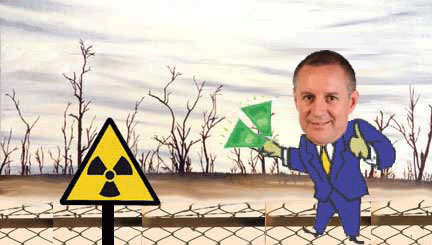
When announcing the commission last month, SA Premier Jay Weatherill said it would “explore the opportunities and risks of South Australia’s involvement in the mining, enrichment, energy and storage phases for the peaceful use of nuclear energy”.
The move caught many by surprise, not least federal opposition leader Bill Shorten, who – unlike his Labor colleague Weatherill – remains opposed to nuclear.
The announcement also generated huge amounts of free PR for the nuclear industry, as shown in the avalanche of media coverage that ensued – some deliberately balanced, some sceptical of the commission and its value, but much of it highly favourable, especially in the business press.
It is not hard to see why. As Naomi Klein contends, nuclear power is an industrial technology, organised in a corporate manner. And as psychiatrist Robert Jay Lifton points out, no technology does more to underline humanity’s dominion over nature than our ability to split the atom.
The positive spin Continue reading
Highly respected South Australian Aboriginal, Yami Lester, speaks out on nuclear waste dump plan
I’m hoping you will support us with this very important issue which has arisen from SA Goverenment regarding a Royal Commission into Nuclear Energy and proposal to store high-level nuclear waste at Maralinga, South Australia
Please read. With thanks, Yami Lester, Yankunytjatjara Walatinna Station, South Australia (08) 8670 5077
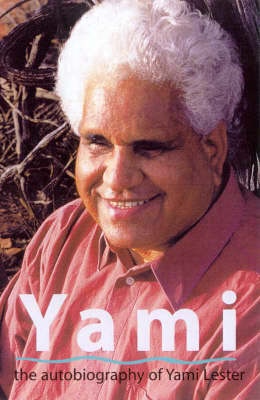 Statement on Royal Commission into Nuclear Energy and proposal to store high-level nuclear waste at Maralinga, South Australia:

In 1953 I was just ten years old when the bombs went off at Emu and Maralinga, I
didn’t know anything about nuclear issues back then, none of us knew what was happening. I got sick, and went blind from the fallout from those tests, and lot of our people got sick and died also.
Now I’m 73 years old and I know about nuclear issues, and I have some friends who know about nuclear waste, and they will fight the South Australian Government on their plans to put high-level nuclear waste at Maralinga and to develop nuclear energy in South Australia.
Why does the government keep bringing back nuclear issues when we know the problems last forever?
The Royal Commission into British Nuclear Tests in Australia (1984-85) revealed
what happened at Maralinga but it never told what happened to Aboriginal people; the findings were left open.Lawyers proved that there was radiation fallout over Walatinna, but because wenever had any doctors records to document what happened to us, (the closest clinic was Ernabella, 160km away as the crow flys and we didn’t have any transport to get there), we only had our stories and they were never written down.
A few years ago they cleaned up Maralinga from the waste that was leftover from the bomb tests; they spent $1 million, and now they’re going to put more waste back there?
That’s not fair because it’s Anangu land and they won’t be able to use that land.
Members from the APY, Maralinga-Tjarutja and Arabunna, Kokatha lands say we don’t want nuclear waste on our land.
The best thing the government can do is the leave the uranium in the ground, stop mining it.
We ask the South Australian Premier, Jay Weatherill, to talk to Aboriginal people on the lands, and to everyone who has been directly affected by the atomic tests and nuclear industry in Australia before he makes any decisions for South Australia.
South Australia’s proud history of the win against nuclear waste, a win led by Aboriginal women
One media narrative, as espoused in the AFR, is that this defeat was the result of a revolt by SA politicians. But this version of the story ignores the powerful campaign led by the Kupa Piti Kungka Tjuta, the senior aboriginal women’s council of Coober Pedy.
This story has been recorded by movement researchers Nina Brown and Sam Sowerwine and in a book, Talking Straight Out: Stories from the Irati Wanti Campaign.
Many members of the Kunga-Tjuta were survivors of the British government’s atomic testing in the 1950s and 60s, and so understood the devastating history of the nuclear industry. Upon hearing about the waste dump proposal, the group issued this statement:
We are the Aboriginal Women. Yankunytjatjara, Antikarinya and Kokatha. We know the country. The poison the Government is talking about will poison the land. We say, “No radioactive dump in our ngura – in our country. It’s strictly poison, we don’t want it.

The traditional residents of this supposedly “benign and sparsely populated geology” fought hard to protect their country using the tools they had available. They explained, demanded, marched and sang. They worked with green activists and wrote passionate letters. They urged politicians to “get your ears out of your pockets”. They won.
As South Australia faces another push from the nuclear industry, we would do well to remind ourselves of these stories. To paraphrase the late historian Howard Zinn, we need to emphasise what is possible by remembering those moments in our recent history when people demonstrated their capacity to resist, come together, and occasionally, to win.http://theconversation.com/south-australias-broad-brush-nuclear-review-is-meant-to-sideline-opponents-38110
Industry Minister Ian Macfarlane speaks with forked tongue on the Renewable Energy Target
What Macfarlane is essentially saying here is, ‘take my offer or I’ll leave you with scheme that we will make clear to investors does not have Coalition Party support.
And in the event that it looks like the target will not be met, we will use that as a mechanism to overcome Senate obstruction to cut the scheme back by even more than what is currently on the table’
 Macfarlane threatens: take my RET deal or else, Climate Spectator TRISTAN EDIS 27 FEB 15 , The confusing saga on the Renewable Energy Target continues with Environment Minister Greg Hunt sounding optimistic (as he seems to be about everything) that there will shortly be an agreement on the level of the target, and one that he said will “go significantly further” than 20% market share for renewable energy. Meanwhile Industry Minister Ian Macfarlane on the same day delivered a message of a rather more belligerent and less optimistic tone. Continue reading
Indigenous Americans lead the charge against uranium mining in New Mexico
“The Pueblo felt so strongly about the issues surrounding uranium mining that it issued its own Resolution in 2008 declaring a moratorium on any further uranium mining activities on Pueblo lands from that day forward,” emphasized Laguna Governor Siow.
“Why should we be talking about opening new mines when we have more than 500 abandoned mines?” questioned one Native American man. “New Mexico needs to go with renewable energy; it’s about time we start doing that.”

 Concerned Community Members Attend Uranium Workers Day http://www.cibolabeacon.com/news/concerned-community-members-attend-uranium-workers-day/article_d3db641a-be87-11e4-8ac5-7bf4a188c6cf.html
PROCLAMATION AND LEGISLATION By Rosanne Boyett 27 Feb 15
CIBOLA COUNTY – “We can’t plant cornfields anymore because the water is contaminated on our homestead, which has been in the family for four generations,” said one Native American woman. “We used to plant one of the largest cornfields in the area.”
She addressed an audience of more than 200 people who participated in the Feb. 20 “Uranium Workers Day” at the Rotunda in Santa Fe and urged people to contact legislators about their concerns.
Another area suffering from contamination is the Pueblo of Laguna, which was once the site of the largest open pit uranium mine in the world. Residents “know first-hand the challenges associated with uranium mining and its aftermath, especially when it comes to the severe impacts it has had on the health and welfare of our community members and the environmental impacts is has had on our lands,” wrote Virgil A. Siow, Pueblo of Laguna governor, in a letter supporting MASE in its activities to raise awareness about mining issues. Continue reading
Western Australia’s superb opportunities for $1billion in Renewable Energy
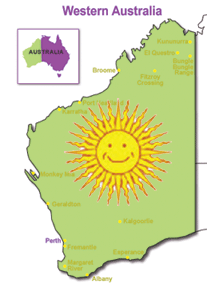 $1 billion in untapped clean energy opportunities in WA http://ecogeneration.com.au/news/1_billion_in_untapped_clean_energy_opportunities_in_wa/091292/26 February 2015 Western Australia has an exciting opportunity to join the race for renewable energy and the investment and jobs it brings, according to the Clean Energy Council.
The CEC says that while Australia’s renewable energy industry has grown from a niche player to a multi-billion dollar industry, Western Australia hasn’t fully capitalised on the opportunities on offer.
“The Western Australian Government can step up to the plate and attract more renewable energy projects to the state with just a few simple policy measures,” Clean Energy Council CEO Kane Thornton said.
“I have written to Energy Minister Dr Mike Nahan to ask him to advocate for a bipartisan resolution to the Renewable Energy Target, which would see Western Australia attract more than $1 billion in new investment out to 2020.
The CEC has recommended 15 policy measures that would help Western Australia become a leading renewable energy state, while driving greater competition and consumer choice in the electricity sector.
The CEC launched its new Guide to improving electricity use in your business in Perth this week.
The guide aims to provide small and medium-sized businesses with more information on how they can reduce their operating costs through measures like installing solar and storage, or shifting their energy use.
The guide is part of the CEC’s Future-Proofing in Australia’s Electricity Distribution Industry project, which aims to enhance the flexibility and resilience of Australia’s electricity distribution systems for the future. The project is supported by $878,000 funding from the Australian Renewable Energy Agency.
To download the Guide to improving electricity use in your business, visitcleanenergycouncil.org.au/fpdi
For more information on the Clean Energy Council’s Western Australia Directorate, contact Dermot Costello atdcostello@cleanenergycouncil.org.au.
India’s $160 billion renewable energy plans

 India’s Renewable energy sector to generate $160 billion business in five years: Economic Survey By ET Bureau | 27 Feb, 2015 NEW DELHI: Positioning India as a responsible nation committed to sustainable development, the Economic Survey 2014-15 has said the Indian clean energy sector is likely to generate business opportunities to the order of $160 billion for the next five years. …….
The document forecasts 2015 to be a momentous period with the world set to witness new agreements on climate change and sustainable development; it predicts this year will determine the course for international development and environmental policy agenda for the global community for the next 15 years.
It elaborates that in India renewable energy offers very good opportunity for businesses to set and scale up industry, leapfrog technologies, and create volumes. Some of India’s major immediate plans on renewable energy include scaling up cumulative installed capacity to 170 GW that includes 100 GW of solar power by 2022 and establishing a National University for Renewable Energy.
To provide a big push to solar energy, two new schemes — ‘Scheme for Development of Solar Parks………..
Google now backing wind and solar to tune of nearly $2 billion
 Google Is Making Its Biggest Ever Bet on Renewable Energy, Bloomberg, Christopher Martin Google Inc. is making its largest bet yet on renewable energy, a $300 million investment to support at least 25,000 SolarCity Corp. rooftop power plants.
Google is contributing to a SolarCity fund valued at $750 million, the largest ever created for residential solar, the San Mateo, California-based solar panel installer said Thursday in a statement.
Google has now committed more than $1.8 billion to renewable energy projects, including wind and solar farms on three continents. This deal, which may have a return as high as 8 percent, is a sign that technology companies can take advantage of investment formats once reserved only for banks.
The deal reflects the success of renewable energy companies in tapping into a broader pool of investors with financial products that emerged in the past three years, either paying dividends or sheltering cash. Those helped boost investment in clean energy 16 percent to a record $310 billion last year, according to data compiled by Bloomberg……..http://www.bloomberg.com/news/articles/2015-02-26/google-makes-biggest-bet-on-renewables-to-fund-solarcity
Australia’s success in Renewable Energy Target – and the present climate of uncertainty
How does Australia’s Renewable Energy Target compare globally, with other countries’ mechanisms to encourage uptake of renewable energy?
The RET has been extremely successful at getting the least-cost renewables into the grid. It’s been copied around the world. It’s something I think Australia as a whole should be really proud of. It’s a really clever way to maximise renewable energy uptake because it is a meritocracy, rather than just having a feed-in tariff for the fixed rate, and there is constant competition to deliver the lowest-cost energies. The UK system was until recently a copy of ours; and a similar system is used by a number of US states…….
GEreports: What makes some countries better at uptake of renewables than others? Continue reading
Government and media ignoring rising cancer rates near Fukushima
Cancer Rates Soar By 6000% Near Fukushima Site, New Report Shows http://yournewswire.com/cancer-rates-soar-by-6000-near-fukushima-site-new-report-shows/ by Sean Adl-Tabatabai 27 Feb 15 Cancer rates in areas surrounding the Fukushima nuclear reactor in Japan have soared by 6000% according to reports, yet the government and media are carrying on as if its business as normal. Continue reading
A clear economic case for the Australian government to support renewable energy
On reflection: Why Australia should not give up on renewables, Wind Power Monthly, 27 February 2015 by Alicia Webb ,
As the government battles to reduce the current renewables policy, the Australian wind industry is experiencing lost jobs and dwindling economic opportunities. Yet, there is a clear economic case for continuing renewables support.
Uncertainty and missed opportunity have been the recent themes for the Australian wind industry. While the country’s renewable energy target (RET) had enjoyed well over a decade of bipartisan support from the major political parties, the federal government plan to slash the level of the policy froze investment and resulted in many lost jobs and economic opportunities last year.
But the government does not have enough support to change legislation, and so the debate drags on. And, while the government looks for support from the opposition or a rag-tag alliance of senators from various smaller political parties, the RET’s uncertain future means the country is squandering billions of dollars in potential investment while interest in wind power and other renewables flourishes across the globe…….
The review undertook comprehensive modelling of prices. It found that any scenario in which the RET is cut would result in higher power prices for consumers from 2020, and that the scenarios that would deliver the most renewable energy were those that would also result in the lowest power prices over the life of the legislated policy. With the RET as it is, more than 18,000 jobs would be created and power bills would be lower in the long-term than they otherwise would be. Cut the RET to 27TWh by 2020, and 6,200 jobs will be lost and the average power bill will go up by A$42/year. Remove the RET altogether and by 2020, 11,800 jobs will be lost and the average power bill increases by A$56.
One of the reasons for this is that there is direct evidence of wind energy pushing wholesale electricity prices down. The Australian Energy Market Operator found in 2014 that in South Australia, the state with the highest wind penetration, wind farms have “low operating costs and tend to offer energy to the market at low prices”…….http://www.windpowermonthly.com/article/1335304/reflection-why-australia-not-give-renewables
Rio Tinto follows BHP’s example – restructuring – cost cutting
Rio Tinto reveals plans to ‘simplify’ company, Australian Mining 27 February, 2015 Vicky Validakis“…….The move comes after an Australian Mining exclusive last week which flagged the company was set to engage a heavy cost cutting campaign, involving renegotiation of service contracts, reduction of scheduled maintenance task times, and changes to staff pay .
An internal document leaked to Australian Mining showed Rio Tinto iron ore chief executive Andrew Harding had outlined a series of cost cutting requirements, including an immediate hiring freeze, which he said must be performed to maintain business success.
The move by Rio to simplify its business comes after BHP Billiton undertook a similar simplification process last year…..” http://www.miningaustralia.com.au/news/rio-tinto-reveals-plans-to-simplify-company
Dangers of UV radiation from backyard solariums
Backyard solariums creating a dangerous market, The Saturday Paper, MAX OPRAY FEB 28, 2015
A recent ban on commercial solariums has seen many turning to backyard operations, ignoring the cancer risk. “……On January 1 commercial solariums were banned in New South Wales, Victoria, Queensland and South Australia, after a raft of studies confirmed indoor tanning was a particularly carcinogenic way to pass the time. According to the Australian Radiation Protection and Nuclear Safety Agency, sunbeds are responsible for an average of 43 melanoma-related deaths and 2572 new cases of squamous cell carcinoma every year in Australia.
Commercial use of these machines was banned, yet home use was left legal………
The Cancer Council strongly backs the ban, and in its position statement on solarium use cites a study published in the International Journal of Cancer in 2011 that, according to the council, found one in six melanomas in Australians aged 18-29 years “would be prevented if solariums were shut down”……. regular solarium users appeared six times more likely to be diagnosed with melanoma before the age of 30, and that 16 per cent of melanoma cases of those aged 18-29 would be prevented by avoiding sunbed exposure. …..http://www.thesaturdaypaper.com.au/news/health/2015/02/28/backyard-solariums-creating-dangerous-market/14250420001552#.VPDRw3yUcnk
Victoria’s Labor government to fund Macedon community solar energy program
 Andrews government shows renewed interest in renewables The Age, February 28, 2015 Michael Green
Renewable energy projects, including solar energy schemes i are staging a revival in Victoria under the new Andrews Labor government.
The Woodend local sustainability group is launching two green energy projects: a new solar energy scheme and the resurrection of a longstanding plan for three community-owned wind turbines.
Today, at the Sustainable Living Festival in Woodend, Energy and Resources Minister Lily D’Ambrosio will announce a $100,000 grant for a 30-kilowatt solar farm.
The panels will be installed at the old timber mill, where the tenants’ ongoing electricity bills will be reinvested in more solar panels. It will create a “perpetual fund” for community renewable energy, says Ralf Thesing, president of the Macedon Ranges Sustainability Group.
Last week, D’Ambrosio announced a $200,000 grant for the central Victorian town of Newstead to become fully powered by renewable energy.
She says the Labor government will “support and stand alongside” communities such as Newstead and Woodend, who are planning “to better control how their energy is made and where it comes from”.
“Everywhere I go, whether it’s metro Melbourne or regional and rural Victoria, people love renewable energy,” D’Ambrosio says. “That’s why we’re seeing many communities coming up with plans to make renewable energy part of their everyday life. They’re bottom-up approaches and they’re a terrific boon for local jobs.”
The Andrews government is preparing a “renewable energy action plan” and finalising the guidelines for its $20 million “new energy jobs fund”. It will also release a discussion paper on community-owned wind power.
For the clean energy advocates in Macedon Ranges shire, the election result was transformative. “It changes our situation completely – from being banned, we’re now unbanned,” says Barry Mann, who is helping co-ordinate the wind power project……….
The Victorian Liberal party appears to have had a change of heart under the leadership of Matthew Guy. For the first time, the state has a “shadow minister for renewables”, David Southwick. He says Victoria has the opportunity to be a leader in renewable energy. “We want an industry that can deliver more clean energy and clean energy jobs.”
1 This month

of the week – Australians for War Powers Reform (AWPR)
To see nuclear-related stories in greater depth and intensity
 Antinuclear
