Japan developing alternatives to nuclear energy, and with energy conservation
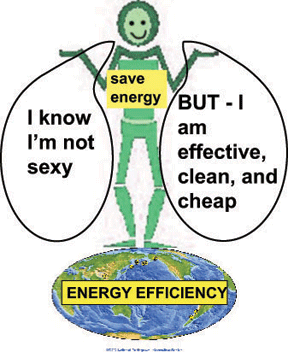
 Humble light bulb helps Japan fill nuclear gap New Zealand Herald, 27 Feb 15 Japan’s push to keep power flowing after it shuttered its nuclear program may best be illustrated by 73 million light bulbs.
That’s the number of LED bulbs sold in Japan since the start of 2012, representing about 30 per cent of all bulbs sold there. The LEDs, which consume a fifth of the energy used by standard lights, are key to the country’s strategy to make energy use more efficient, even as it pursues alternative sources such as solar power.
Four years after the Fukushima nuclear meltdown spurred the closure of Japan’s many reactors, knocking out 30 per cent of Japan’s power supply, the drive to reduce energy consumption has sparked a national campaign that includes everything from improved insulation for homes to train stations powered by the braking of subway cars and vending machines that recycle waste heat and generate power with solar panels on top.
“There’s no doubt Japan has some of the most advanced technologies in energy saving,” said Takumi Fujinami, a senior researcher at the Japan Research Institute. “And there is still room for saving energy dramatically.”……
Hiroshi Amano, who shared last year’s Nobel Prize for physics, sees LEDs playing an even bigger role. Japan could cut annual electric spending by as much as 1 trillion yen (US$8.4 billion) within five years by using more LEDs, according to Amano, one of three Japan-born scientists who were awarded the Nobel Prize in 2014 for their work developing LEDs…..
Energy alternatives
Japan is pursuing a variety of alternatives after shuttering its nuclear plants for safety checks, pulling 47 gigawatts of capacity from the grid. Subsidies for solar power, which are triple what Germany offers, have made Japan the biggest market for the technology in the world behind China. The country may install as much as 12 gigawatts of solar panels this year, according to Bloomberg New Energy Finance.
The options run from old standbys such as making sure homes are insulated to ideas that offer a unique take on how to keep consumption under control.
The government has set a goal for all new public buildings and homes to be net zero energy by 2030, meaning they use only as much energy as they can produce from renewable sources and other generation systems on site. Currently, about 40 per cent of existing homes have no insulation, according to a December task force report.
Meanwhile, Mitsubishi Electric said in September that a system installed at a Tokyo subway station to harvest energy generated by braking subway cars saved enough to run 60 homes. The power is being used for station lighting, air conditioning and elevators, the company said…..
Efforts paying off
All of these efforts are apparently paying off, according to a task force on power demand for the trade ministry.
Power used by the nation’s nine regional utilities fell by 10 terawatt-hours in July and August thanks to conservation measures, compared with the same period before the Fukushima disaster, the task force found. Overall for the fiscal year ending March 31, consumption fell in eight of the first nine months, with declines ranging from 1 per cent to 8 per cent.
Results from the consumption campaign are also being felt within the industrial community……..http://www.nzherald.co.nz/business/news/article.cfm?c_id=3&objectid=11408970
No comments yet.
1 This month

of the week – Australians for War Powers Reform (AWPR)
To see nuclear-related stories in greater depth and intensity
 Antinuclear
Leave a comment