South Australian government to publish submissions on Terms of Reference for Royal Commission on Nuclear Power

13 Mar 15 From the Attorney Generals’ Department, South Australia
the Government proposes to publish submissions received through the AGD:Submissions mailbox which have not been marked ‘confidential’, in the very near future.
Adelaide Advertiser obligingly publicises pro nuclear shills
 Dennis Matthews, 13 Mar 15 Whilst belittling socially aware South Australian schoolteachers and environmentalists The Advertiser seems to be totally comfortable with pro-nuclear visiting British professors quoting numbers “suspect to challenge” and Japanese Professors supporting nuclear reactors and nuclear waste storage in Australia (The Advertiser, 13/3/15).
The British Professor is from the University College London, which has a campus in Adelaide, has had very generous funding from the people of SA but looks like closing its doors in the near future, and which appears to be a *Trojan Horse for the uranium mining and nuclear energy lobby.
The Japanese Professor is an “expert on international law” and as far as we can tell has no particular expertise on uranium mining, nuclear reactors or nuclear waste dumps but who claims that Australia could offer a “cradle to grave” solution to the nuclear industry. The people of Fukushima would be experts on that, but neither The Advertiser nor the esteemed professor of international law seems to be in a rush to talk about the reality versus the mirage.

* re UCL – a Trojan horse
see Adelaide’s University College London (UCL) -pro nuclear research funded by nuclear interests
South Australia’s Nuclear Royal Commission – an undemocratic device for a fake nuclear approval
 Dennis Matthews, 13 Mar 15 David Penberthy is correct when he says “the debate in South Australia right now clearly isn’t about the production of nuclear weapons” (The Advertiser, 13/3/15). This is because, thanks to the Premier and his mates in the nuclear industry, debate about such distasteful facts as nuclear weapons and the nuclear industry’s disastrous past is being gagged by the terms of reference of the Royal Commission.
As the name implies, the farcical Royal Commission has all the hallmarks of an undemocratic device to put a fake seal of approval on a done-deal within the reigning Labor-Liberal duopoly.
Just look at the pitiful parade of nuclear junkies appearing before various government committees and being thrust on the public through the commercial media. Some of these even have the gall to claim to not be pro-nuclear despite a history to the contrary.
This travesty of a debate doesn’t alter the facts which, as has happened in the last two Queensland elections, are likely to bite devious politicians where it hurts most.
South Australian Liberal Senator Sean Edwards promises $billions for accepting the world’s radioactive trash
Dr. Jim Green, from Friends of the Earth, Australia attended the protest and told ABC radio that he was there to for two reasons. To lend his sympathy to the 160,000 Japanese who remain displaced from the Fukishima disaster and to send a message to the government that they’re “not happy about the terms of reference” of the inquiry.
The inquiry’s terms of reference will focus on uranium enrichment, nuclear generation and waste storage. Opponents of nuclear energy say the focus of the inquiry is disproportionately skewed towards the positive financial benefits without adequately accounting for the dangers.
Dr. Green would like to see uranium mining and previous nuclear programs such as Radium Hill and the Port Perry Uranium processing site included in the inquiry. Both sites sit deserted and serve as a reminder to Dr. Green of the perils of nuclear power.
So with just a single day left for the public to submit their opinion on the issue, perhaps it’s worth asking the question: At what price should we be willing to become a nuclear dumping ground?
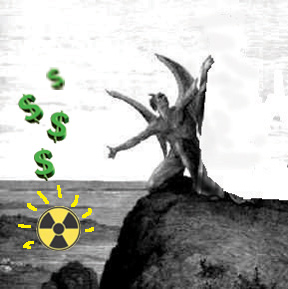 Royal commission is set the debate a proposed plan from SA senator to expand nuclear industry http://www.news.com.au/technology/environment/royal-commission-is-set-the-debate-a-proposed-plan-from-sa-senator-to-expand-nuclear-industry/story-e6frflp0-1227259822071 MARCH 12, 2015 FREE power, no payroll tax and no motor vehicle tax.
Sounds pretty great, right? That is what South Australian Senator, Sean Edwards is touting if the state expands its nuclear energy industry.
According to the Liberal senator, the state would be able to access ten of billions of dollars from the global nuclear industry if they are allowed to store rods and nuclear waste from other countries.
“The science is in. The process is proven and we have a first mover advantage which would see us generate wealth akin to being the Saudis of the South,” he told the Adelaide Advertiser.
The senator believes it would turn South Australia into a “special economic zone” which would further attract business investment.
Mr. Edwards has thrown his weight behind the project. He has reportedly met with countries interested in partnering with the state government and has briefed Trade Minister Andrew Robb and Industry Minister Ian Macfarlane on the details. All while promising huge economic incentives to the people of his state. Continue reading
Respected Aboriginal women elders explain the importance of the Homelands
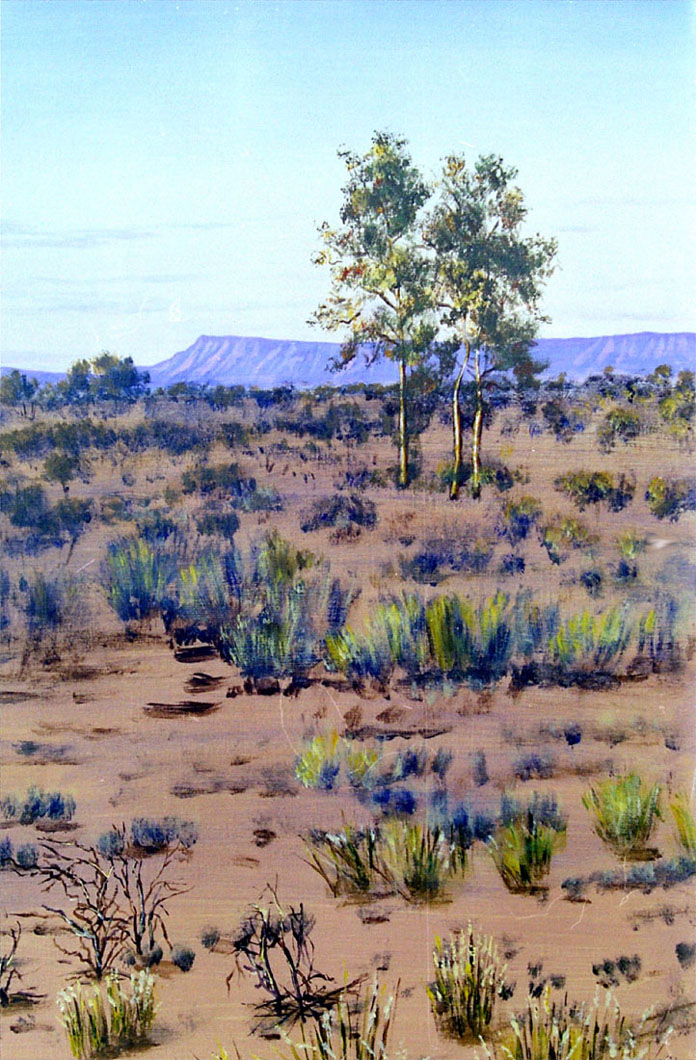 ‘People wanted to go back to homeland’
Mr McLarty said many of the small communities were created in response to government policy last century which saw Aboriginal people forcibly amalgamated into camps with other tribes.
“People wanted to move back to their own homeland,” he said.
“People wanted to go out to their own community, to feel some ownership, because they didn’t feel like they belong here in another tribal area.”
He said the Prime Minister’s comments may come from a lack of understanding of Aboriginal people’s history.
The women said remote communities were being unfairly painted as dysfunctional.
They argued that in most communities, children were safer and happier being raised ‘on-country’, where there was not the steady flow of drugs and alcohol and they could learn the traditional culture.
 Remote Aboriginal community closures: Return to country or risk losing traditional homes forever, elders warn http://www.abc.net.au/news/2015-03-11/indigenous-community-members-called-on-to-return-to-country/6304716 By Erin Parke and Rebecca Trigger Senior Aboriginal women from WA’s Kimberley say the Prime Minister’s “lifestyle choice” comments are a wake-up call and people who have drifted from their bush communities should return or risk losing them forever.
The call comes in the wake of Tony Abbott’s suggestion that living in remote Aboriginal communities was a “lifestyle choice” that could not be endlessly subsidised by the Government.
Senior Miriuwung Gajerrong woman and chairperson of the Kimberley Aboriginal Law and Culture Centre Merle Carter said the comments should spur people into action.
“For all of our people who are living in town, who are fringe-dwellers, just because of alcohol, go back to your communities,” she said.
“With the statement that Premier Colin Barnett made about closing the Aboriginal communities, and Tony Abbott backing him up, this might be a wake-up call.” Continue reading
A safe, clean energy future will be nuclear-free
If we are to discuss “safety” within the context of nuclear, it’s also important to broaden our perspective beyond a narrow focus on solely catastrophic accident risks at operating nuclear reactors, to major environmental and public safety risks imposed by the entire nuclear cycle. These include uranium mining; uranium processing to create nuclear fuel (milling, conversion, enrichment and fabrication – each step uses fossil fuels and generates radioactive wastes); radioactive releases during operation – both, routine radioactive releases and accidental ones; and the ever increasing nuclear waste problem.
There are also indications that even in the absence of a major disaster, nuclear reactors may be hazardous to human health – particularly for children.
The positive is that we do not need to accept this dirty, dangerous, and outdated technology – neither to keep the lights on nor to meet carbon reduction targets.
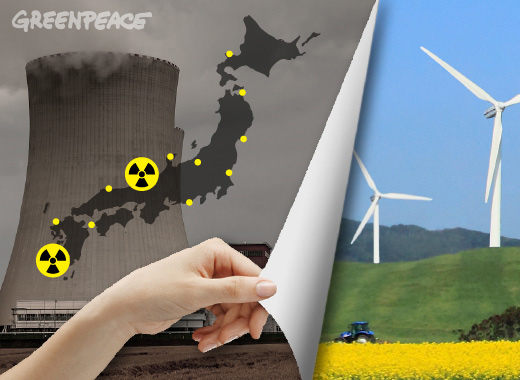
A lesson from Fukushima: A safe, clean energy future will be nuclear-free, Greenpeace by Kendra Ulrich – 11 March, 2015
“……..Relying on nuclear to fulfill Japan’s climate obligations is betting the future of the planet and generations of people to come on a politician’s fantasy.
And, how “safe” and “clean” is this energy source, really? If we believe the nuke huggers, it is very safe – one catastrophic accident occurs only once every 250 years, they say.
However, it doesn’t take a nuclear scientist to tell you we’ve experienced a few more major accidents than that in the 70 years of nuclear programs, including the disaster at the Fukushima Daiichi power plant — with 3 reactors at the site experiencing core meltdowns; the catastrophic meltdown at Chernobyl; and the partial meltdowns at the Three Mile Island and Fermi 1 nuclear power plants in the US – just to name a few.
A logical person would look at this evidence, as well as the industry’s track record, and either revise their opinion or revise their prediction models. Probably both are in order. Continue reading
1 This month

of the week – Australians for War Powers Reform (AWPR)
To see nuclear-related stories in greater depth and intensity
 Antinuclear