Is the South Australian Nuclear Royal Commission in a Bigger Mess Than We Thought?
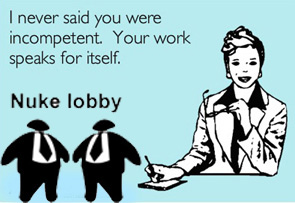 We wait to find out just who are to be the experts on South Australia’s Nuclear Royal Commission, (and what their agendas might be). We already know that the Terms of Reference exclude important issues, – so that the whole thing is likely to end up as just an eminently forgettable PR exercise for the nuclear lobby.
The Royal Commission received well over 1000 Submissions on its Terms of Reference. But now it seems that all have been removed from its website.
Could this be because the submissions were so overwhelmingly critical of the proposed Terms of Reference, that the nuclear lobby is embarrassed?
Nuclear lobby influence – Australian Industry Group Defence Council wants nuclear submarines
 Nuclear submarine option pushed by industry Financial Review by John Kerin, 24 Mar 15, Australia’s peak defence industry group has urged Prime Minister Tony Abbott to reconsider buying or leasing a nuclear submarine fleet to replace the ageing Collins class, saying the absence of a supporting domestic nuclear power industry no longer presents a hurdle.
Australian Industry Group Defence Council chairman Chris Jenkins, who is also the Australian chief of French industry giant Thales, said today’s submarine nuclear power plants were so efficient and required so little maintenance that an onshore nuclear power industry was hardly a requirement.
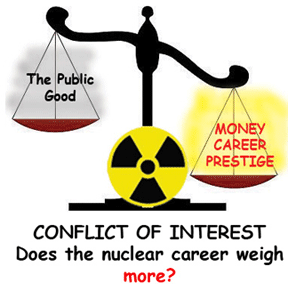
He said nuclear submarine powerplant technology was constantly improving and you would need a trained workforce but not necessarily a power industry to support it.
The defence council is the peak body representing the’s $8 billion 24,000 strong defence sector. “That’s been said [you need a nuclear power industry] but I think nuclear energy these days is much more modularised than people think….like anything else [the submarine] powerplant is manageable,” Mr Jenkins said.
“The idea of a nuclear industry as a fundamental necessity, I am not convinced, but I did think it was quite a good thing that there was a call for a really deep review from South Australia in to nuclear energy,” Mr Jenkins said.
Mr Jenkins was referring to a royal commission called by South Australian Premier Jay Weatherill into the development of nuclear power.
Defence Minister Kevin Andrews will deliver the opening address at a major two-day summit on Australia’s Future Submarine, where experts are expected to fiercely debate the competitive evaluation process given ongoing concerns over the future of Adelaide based ASC and jobs in Adelaide……..
the French firm DCNS has offered a diesel powered version of its 5000 tonne Barracuda submarine.The nuclear version of the Barracuda will be in service with the French Navy from 2017.
But its understood DCNS could offer the nuclear version of the Barracuda from around 2030 if Canberra wished to go down that route……..
Mr Jenkins said. “Given the concern over jobs, South Australia should be as keen to know the answer as anyone because it would undoubtedly be the centre of Australia’s nuclear industry,” he said. http://www.afr.com/news/politics/nuclear-submarine-option-pushed-by-industry-20150324-1m5cpx
Beyond Nuclear Initiative monitors Australia’s Radioactive Waste Management
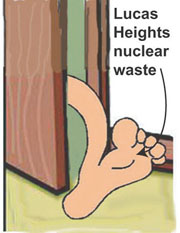 The Beyond Nuclear Initiative considers this timeframe to be unnecessarily compressed and constrained, especially given that the first shipment of long-lived intermediate level waste returning to Australia from overseas reprocessing in December 2015 will be returning to a purpose built storage facility at the Lucas Heights nuclear reactor complex just south of Sydney.
The Beyond Nuclear Initiative will continue to monitor progress of the NRWMP and inform stakeholders and interested parties of key developments and opportunities for input into the process. That this process is happening at all is a tribute to the tenacity of the Muckaty Traditional Owners who took such sustained action to protect their country and culture. It is also a tribute to all who supported them. Now we need to maintain our vigilance and efforts to advance radioactive waste management in Australia in a more socially and environmentally responsible way.
Radioactive Waste Update- March 2015 http://beyondnuclearinitiative.com/radioactive-waste-update-march-2015/ Natalie Wasley Beyond Nuclear Initiative coordinator.In June 2014 the Australian federal government abandoned plans to build the first national nuclear waste facility on Aboriginal land at Muckaty in the Northern Territory. The decision came half way through a federal court case challenging the nomination of the site and is a testament to the determined eight year campaign by Traditional Owners and their supporters around the country and world.
Australian non-government and civil society organisations, including environment groups, public health organisations and trade unions, have consistently requested the Minister halt the search for a single remote site in favour of a process based on an audit of all radioactive waste materials in parallel with an independent Inquiry that considered the full range of waste management options.
However, in November 2014 federal Industry Minister Ian Macfarlane instead announced intention to open a nationwide site nomination and selection process for locating a national radioactive waste facility. The National Radioactive Waste Management Project (NRWMP) was officially launched on Monday March 2 and aims to shortlist nominations, assess preferred sites and declare a final location by the middle of 2016.
The Beyond Nuclear Initiative considers this timeframe to be unnecessarily compressed and constrained, especially given that the first shipment of long-lived intermediate level waste returning to Australia from overseas reprocessing in December 2015 will be returning to a purpose built storage facility at the Lucas Heights nuclear reactor complex just south of Sydney. Continue reading
Continuing concerns about Australian government’s Radioactive Waste Management

 Radioactive Waste Management in Australia: The federal government’s revised search for a national facility ACF briefing paper: March 2015 Continuing issues and concerns: “……· The Government seems determined to establish a site before the next federal election, which is expected in the second half of 2016. There is no apparent plan in place if a suitable site cannot be found according to the assessment criteria in the proposed timeframe. There are no social or technical reasons to rush a decision that demands the highest quality decision-making, as the facilities currently storing the majority of Australia’s nuclear waste are secure and can provide adequate storage for many years.
- Despite a wide range of civil society organisations calling for an independent Inquiry into the full range of nuclear waste management options, including decentralised storage, the Government appears set on a centralised co-located facility without an objective assessment of other management options.
- The revised process allows for nominations of land from any State or Territory. South Australia, the Northern Territory, Western Australia, Victoria and the Australian Capital Territory all have legislation in place prohibiting the storage or disposal of externally produced nuclear waste on their land. The National Radioactive Waste Management Act 2012, (section 19) provides the federal government with the power to override these laws. Such a scenario undermines the commitment to ‘volunteerism’, as the democratic rights of the affected electorate would be violated. The federal government has stated that if ‘a freehold landowner put forward a site to become a nuclear waste dump, states or territories would not have veto powers, but the Government did not want to impose its decision without consultation’.
- The Government has asked all nominators to give consent to public disclosure of the nomination and currently states that it will make nominations public. Ongoing monitoring during the nomination period is required to ensure this occurs and to inform our understanding of community attitudes in nominated regions.
- The Government has stated its intention to engage with the regional communities in which short-listed sites are located, but does not declare consent by the community to be a condition for final site selection. Furthermore, an Independent Advisory Panel has been established whose objective is partly to develop a site identification methodology that best reflects stakeholder and community values. However, a truly inclusive approach should go beyond the identification stage and include actual consent to the siting. So far, the Department of Industry has only expressed that it may seek evidence of community support.
- ‘A package of benefits may also be negotiated with the community of the selected site in recognition of the potential development, construction and operational impacts of the facility.’ No details have so far been given on the potential amount and duration of benefits, and this remains a point to observe and brief targeted communities on.
- Further clarity is also needed in relation to the proposed National Repository Capital Contribution Fund – a fund of at least $10 million, which is a provision of the Act to enhance public services and/ or infrastructure in the State or Territory hosting the selected site. It remains unclear who makes decisions referring to this allocation and on what basis.
- According to the National Radioactive Waste Management Act 2012, section 9 (3) the Minister does not have a duty to consider a nomination. This leaves potential for the un-justified preference of some nominations over others and requires monitoring.
- It is currently uncertain what the position of the Government is on the potential withdrawal of nominations. This, however, seems to be an essential factor to consider in relation to ‘volunteerism’ and the decision making of interested landowners.
- Compensation for the acquisition of the declared site is open to negotiations but supposed to be guided by a Land Value Calculation and a premium of 3 times the established market price. For 100 hectares of land in remote Australia, this does not equate to a large financial incentive for the landowner. Furthermore, ‘the Commonwealth reserves its right to determine, at its sole discretion, any offer it makes for the acquisition of property’, potentially making the compensation issue less transparent.
- The actual declaration of a nominated site as the chosen one for a facility gives the Minister the right to acquire adjacent or related land required to access the declared site and may therefore affect the rights of community members, again a potential interference with the concept of ‘volunteerism’ and an issue to alert affected communities to.
Abbott government intransigent on its plan to weaken Renewable Energy Target
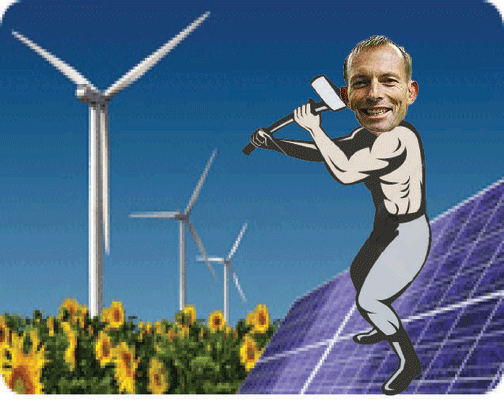 ‘Take it or leave it’, government tells renewable energy industry in latest RET talks, SMH March 24, 2015 Lisa Cox National political reporter Industry Minister Ian Macfarlane has told the clean energy industry that the government’s latest offer on the renewable energy target is a “take it or leave it” position.
In a fresh round of talks with unions and representatives for the clean energy and aluminium industries on Monday, Mr Macfarlane said the government would not budge from a figure of 32,000 gigawatt hours of renewable energy production by 2020.
The number represents a substantial reduction from the existing large scale target of 41,000 gigawatt hours and both Labor and the clean energy industry have said it is unacceptable…….
Australian Solar Council chief executive John Grimes said “we are now at the end point”.
Mr Grimes said his organisation was shut out of Monday’s talks.
“This is not a process and the end point is perpetual uncertainty,” he said. http://www.smh.com.au/federal-politics/political-news/take-it-or-leave-it-government-tells-renewable-energy-industry-in-latest-ret-talks-20150324-1m5ql8.html
$1.6 billion wasted in Fukushima nuclear plant cleanup
Japanese audit finds $1.6 billion wasted in Fukushima nuclear plant cleanup Fox News, 24 mar 15 TOKYO – Japanese government auditors say the operator of the Fukushima Dai-ichi nuclear plant has wasted more than a third of the 190 billion yen ($1.6 billion) in taxpayer money allocated for cleaning up the plant after it was destroyed by a March 2011 earthquake and tsunami.
A Board of Audit report describes various expensive machines and untested measures that ended in failure. It also says the cleanup work has been dominated by one group of Japanese utility, construction and electronics giants despite repeated calls for more transparency and greater access for international bidders……
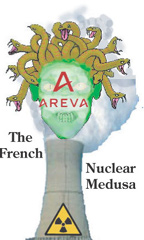 Some of the failures cited in the report:
FRENCH IMPORT: Among the costliest failures was a 32 billion yen ($270 million) machine made by French nuclear giant Areva SA to remove radioactive cesium from water leaking from the three wrecked reactors. The trouble-plagued machine lasted just three months and treated only 77,000 tons of water, a tiny fraction of the volume leaking every day. It has since been replaced with Japanese and American machines.
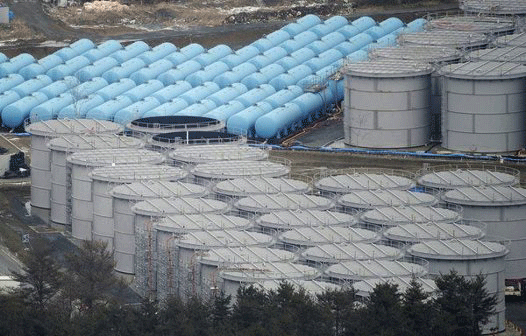 SHODDY TANKS: TEPCO hurriedly built dozens of storage tanks for the contaminated water at a cost of 16 billion yen ($134 million). The shoddy tanks, using rubber seals and assembled by unskilled workers, began leaking and some water seeped into the ground and then into the ocean. The tanks are now being replaced with more durable welded ones.
GIANT UNDERGROUND POOLS: A total of 2.1 billion yen ($18 million) was spent on seven huge underground pools built by Maeda Corp. to store the contaminated water. They leaked within weeks, and the water had to be transferred to steel tanks.
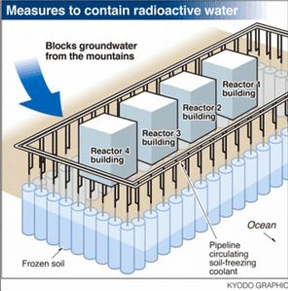 UNFROZEN TRENCH: A 100 million yen ($840,000) project to contain highly contaminated water in a maintenance tunnel by freezing it failed because the water never completely froze. TEPCO subsidiary Tokyo Power Technology even threw in chunks of ice, but eventually had to pour in cement to seal the trench. http://www.foxnews.com/world/2015/03/24/japanese-audit-finds-millions-dollars-wasted-in-fukushima-nuclear-plant-cleanup/
Issues ignored in Radioactive Waste Management in Australia
Radioactive Waste Management in Australia: The federal government’s revised search for a national facility ACF Briefing paper compiled by Anica Niepraschk, March 2015
“…………Related issues/ wider impact
As the current process focuses on the selection of a site, it leaves some issues untouched that are of high importance when establishing a National Radioactive Waste Facility:
- The safety of workers at the facility as well as in the wider nuclear waste industry (such as in the transport and securing of waste) needs to be ensured.
- Not only the community in near proximity of the site will be affected but also the communities along the transport routes between the facilities producing or currently storing nuclear waste and the newly established facility. A clear plan on how to engage with these communities and ensure their safety should be developed. At the current stage, there is no indication any such engagement will take place and once again, resistance among the transport routes can indirectly interfere with the proposed concept of ‘volunteerism’.
- Communities are organic mechanisms and so are characterised by change. Engaging with the affected community at the selected site only during the selection process does not live up to the requirements of such a high-safety issue. Continuous engagement, including consultations and sensitisations as well as transparent access to information, is required beyond the selection process, encompassing the establishment and day-to-day operations of the facility for its whole lifespan.
For questions, comments or additional information please contact:
Dave Sweeney – Nuclear Free Campaigner, ACF: d.sweeney@acfonline.org.au
Anica Niepraschk – Nuclear Free Campaign Intern, ACF: a.niepraschk@acfonline.org.au
Natalie Wasley – Beyond Nuclear Initiative (BNI): beyondnuclearinitiative@gmail.com
Mildura’s solar farm – successful without a cent of government money
what makes the Mildura plant so special is that it was built without a cent of government grants being tipped in.
helps illustrate how solar’s smaller, highly modular scale and fast construction time could allow it to play a far greater role in ensuring the target for the large-scale RET is met
Belectric have a developed a standardised 3MW solar power installation system they call the 3.0 MegaWattBlock (pictured below) which they roll-out across the globe.
Australia’s biggest solar farm powers-up but solar’s potential shines elsewhere, Business Spectator, TRISTAN EDIS 23 MAR
Australia’s largest ever solar power plant, AGL’s 102 megawatt Nyngan – has begun feeding power into the grid. But there’s a far more interesting solar power plant no one is talking about in Mildura.
The Nyngan plant in Western NSW now has its first 25MW of capacity, involving 350,000 solar modules made by First Solar, generating power that is exporting power to the grid. Further generation will progressively be brought online over the next three months as the remaining three sections of the plant are individually commissioned.
It’s unambiguously good news, yet I’m far more excited about the solar power plant in Mildura even though it’s substantially smaller – 3MW of capacity versus Nyngan’s 102MW. In fact it’s quite astounding that the completion of the Mildura plant has received no press whatsoever, because when it started feeding power to the grid in April last year it was the second largest operational solar power plant in the country at the time, and remains comfortably the largest in Victoria. Continue reading
Tweed Heads indigenous community march on 31 March to support remote communities
 Tweed march backs WA Aboriginal communities Ech Net Daily, March 23, 2015 | by Luis Feliu The Tweed’s indigenous community has organised a protest march for next week in the Tweed Heads CBD in solidarity with remote Aboriginal communities in Western Australia who face being forcibly removed from their lands. The fears about the closures were sparked by WA premier Colin Barnett flagging the possibility that up to 150 communities could be closed after the Commonwealth withdraws funding for essential services from June this year.
The Tweed’s Aboriginal and Torres Straight Islander community are urging locals to support the march next Tuesday at 4pm from Tweed Heads Civic Centre to the Jack Evans Boat Harbour. Continue reading
USA Dept of Energy seeks new sites for nuclear waste storage
 Under current law, the DOE is responsible for nuclear waste generated by electric utilities. The department has already paid out US$4 billion for failing to meet its obligation to remove waste that is now building up at nuclear power plants. It could be forced to shell out up to $23 billion more over the next 50 years if the issue isn’t resolved, Moniz said
US government seeks new sites for nuclear-waste storage Department of Energy pursues interim plan for commercial fuel and permanent location for defence waste. Nature Jeff Tollefson 24 March 2015 The US Energy Department will seek interim storage facilities for commercial nuclear waste and a permanent geologic repository for radioactive material from the country’s nuclear weapons programme, energy secretary Ernest Moniz said on 24 March. Continue reading
Paris installs tree-shaped wind turbines
TREE SHAPED WIND TURBINES TO BE INSTALLED IN PARIS, 24 Mar 15 A French company called New Wind is installing tree-shaped wind turbines at the Place de la Concorde in Paris, France. The company’s founder, Jérôme Michaud-Larivière came up with the idea while in a Paris square, when he “saw the leaves tremble when there was not a breath of air.” He hopes the trees can be used to exploit small air currents flowing along buildings and streets, and could eventually be installed in people’s yards and urban centres………http://www.alternative-energy-news.info/tree-shaped-wind-turbines-paris/
The importance of connection to country – the danger of Terra Vacua

Do we want Australia to become Terra Vacua, a site of vast quarries visited only by a fly in and fly out workforce?
Without connection to country, Australia is a shallow nation. That’s what Abbott doesn’t understand Guardian Chris Sarra 25 Mar 15 The best way to unite all Australians is to encourage the ancient Indigenous connection to the land, not destroy it or label it a “lifestyle choice” any official functions throughout Australia are opened with an acknowledgement to the traditional custodians of the land. Unfortunately, it is not unusual to observe some people rolling their eyes at this. If only they knew and understood the value of such a gesture. An acknowledgment of country may not seem like much, but its value is enhanced if one can understand that this very gesture has been occurring on this land withIndigenous Australians for many thousands of years. It is an ancient and serious gesture, which was traditionally executed to enable passage on another person’s country, as well as to signal good manners.
Today Indigenous Australians offer a gift to non-Indigenous Australians by enabling them to participate in this ancient gesture. As we execute this ritual together, our history becomes shared and non-Indigenous Australians can become more in tune with the rhythm of this land we both now live on. When we understand the depth of this gesture, we are better able respect and stand alongside each other.
Last week on his visit to Kalgoorlie, Tony Abbott – who likes to be seen as one who walks alongside Aboriginal Australians – set himself apart from us when he described many of those in remote communities as making “lifestyle choices”. Even his hand-picked Aboriginal advisers denounced him.
It is clear that Abbott wants to be regarded a prominent leader in this space but such comments signal he has a long way to go. It is also clear that neither he, nor any other politician, can develop the level of understanding required and respect that comes with it, from a few carefully choreographed appearances at remote Indigenous communities. On these visits, everything is done to ensure the VIPs hear what they want to, rather than what they need to.
It is worth understanding that Aboriginal people in many remote communities are there by anything but a process of “choice”. They are there because historically their people were rounded up and detained in such places under apartheid-like policies. Nonetheless, such communities have evolved over time. It is also clear that as a nation we have left them to dwindle at the end of the societal vine rather than enabled them to evolve into communities of quality and substance that can nurture a sense of hope and strength……. Continue reading
Greens call to reinstate Municipal and Essential Services funding for remote Aboriginal communities
Consultation to begin with Aboriginal communities slated for closure in WA, Guardian Calla Wahlquist 17 Mar 15 “………Greens senator Rachel Siewert was due to move a motion on Tuesday calling for the prime minister to apologise for the “insensitive” remark.
Abbott has so far refused to apologise for the comments or concede it was a poor choice of words.
The motion will also call on the federal government to reinstate the Municipal and Essential Services funding, which will run out next year under a deal that gave states responsibility for providing for remote communities, and urge the WA government to abandon plans to close Aboriginal communities.
“Many organisations, including the National Aboriginal Community Controlled Health Organisation, have noted that these remote communities are important to cultural, emotional and social wellbeing and should not be shut down for the sake of short-sighted budgetary measures,” Siewert said.
“We need to be working with communities to deliver essential services and support, not closing and abandoning them.”…..
Dodson, known as “the father of reconciliation”, said on Sunday the avenue for dialogue between Indigenous people and the federal government had closed and urged Abbott to reconsider his approach.
“Does Australia want to have a relationship with Aboriginal people, or does it not?” Dodson said. “Or does it simply want to improve the management and control systems over the lives of Aboriginal people? That’s the seminal issue.”……http://www.theguardian.com/australia-news/2015/mar/17/consultation-to-begin-with-aboriginal-communities-slated-for-closure-in-wa
Good news. New national park in W.A. – mining excluded
 Miners agree on new national park for WA’s Kimberley region, Australia’s biggest WA Today March 24, 2015 – Steve Holland A new national park that will be the biggest in Australia is set to be created in Western Australia’s Kimberley region after two major mining companies relinquished their tenements.
Rio Tinto and Alcoa Australia have given up their rights to mine the Mitchell Plateau in the north-west of the Kimberley, a region of significant biological diversity, encompassing spectacular gorges and waterfalls.
Premier Colin Barnett said on Tuesday he would introduce legislation into WA Parliament to terminate a State Agreement which would have seen an alumina refinery and bauxite mine allowed in the region. …..
It’s expected that numerous endangered animals in the region, such as the northern quoll, the rough-scaled python and various turtles, will have a greater chance of survival with the creation of the park. …….The government announced it would continue to work with the traditional owners in the area, the Dambimangari, Wunambal-Gaambera and Wilinggin, to create and jointly manage the proposed Kimberley National Park. http://www.watoday.com.au/wa-news/miners-agree-on-new-national-park-for-was-kimberley-region-australias-biggest-20150324-1m6h8q.html
Australia will have plenty of posturing but little or no new large scale renewable energy
Clean energy victim of political pantomime, Financial Review, by Jennifer Hewett 24 Mar 15 What a fiasco the argument over the Renewable Energy Target has become.
As one senior industry figure laments, it’s now complete political pantomime. No one in the government or Labor wants to concede the reality of what’s happening on the ground in terms of investment.
The result is that Australia will have plenty of posturing but little or no new large scale renewable energy development likely for years to come. No matter what the official target says.
It’s also despite the two sides of politics supposedly moving much closer on the revised number of gigawatt hours required to meet the 2020 target – 32,000 GWh according to the government and 35,000 GWh according to Labor. Any deal would include full exemptions for emission-intensive industries such as aluminium and steel.
Instead, the whole argument has been diverted into false and emotive arguments about who is for or against climate change. Labor doesn’t want to concede any political vulnerability to the Greens who suggest Labor is reneging on a commitment to combating climate change……http://www.afr.com/opinion/columnists/clean-energy-victim-of-political-pantomime-20150324-1m6j6n
1 This month
15 April – Zoom –Nuclear Power is Not the Solution
Apr 15, 2026 01:00 AM in Canberra, Melbourne, Sydney

Join the International Physicians for the Prevention of Nuclear War (IPPNW) on Tuesday, April 14th for a timely webinar exploring the risks associated with nuclear power and challenging the myth that it offers a simple, safe, carbon-free solution to the climate crisis

21 April Webinar: No Nuclear Weapons in Australia
Start: 2026-04-21 18:00:00 UTC Canberra, Melbourne, Sydney (GMT+10:00)
End: 2026-04-21 19:30:00 UTC Canberra, Melbourne, Sydney (GMT+10:00)
Event Type: Virtual
A virtual link will be communicated before the event.
Host Contact Info: australia@icanw.org

of the week – Australians for War Powers Reform (AWPR)
To see nuclear-related stories in greater depth and intensity
 Antinuclear