Nuclear reprocessing not likely to be viable for China (nor for Australia?)
 the experiences of nations that have launched large reprocessing programs and built demonstration breeder reactors in the expectation that the commercialization of these reactors would follow. Commercialization did not follow in those countries—but huge expenses were incurred for cleaning up reprocessing sites and disposing of separated plutonium.
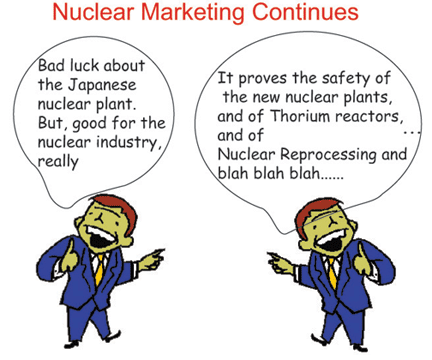 Reprocessing in China: A long, risky journey, Bulletin of the Atomic Scientists, April 15 Hui Zhang Since 1983, a closed fuel cycle has been an official element of China’s nuclear energy policy. According to proponents, plutonium reprocessing and breeder reactors will allow full utilization of China’s uranium resources, drastically reduce the volume of radioactive waste that must be stored in an underground repository, and establish a way to dispense with the spent fuel accumulating in China’s reactor pools.
But Beijing’s attempts to develop commercially viable reprocessing facilities and breeder reactors have been afflicted with technological difficulties, serious delays, and cost overruns. At this point—especially taking into account China’s ample uranium resources and its easy access to additional resources abroad—it appears very doubtful that reprocessing and fast reactors are the proper way forward for China’s nuclear energy sector.
Not according to plan……….
Should China continue pursuing its plans for fast breeder reactors and commercialized reprocessing? Good reasons exist for avoiding this course of action. First, because most of China’s power reactors are newly built, Beijing will face little pressure over the next two decades to reduce its spent fuel burden. And spent fuel can be stored safely, at low cost, in dry casks—or disposed of safely in a deep geological repository.
Second, China faces no shortage of uranium resources for the foreseeable future. The nation’s identified resources more than tripled between 2003 and 2012, to 265,500 metric tons from 77,000 metric tons. China’s potential uranium reserves amount to more than 2 million tons. Beijing in recent times has also secured huge overseas uranium resources—about three times as large as its own identified uranium reserves. More such reserves could easily be added.
In any event, the cost of uranium accounts for only a small percentage of the cost of power that reactors generate. Simply put, the cost of uranium will not increase in the foreseeable future to levels that would justify the cost of reprocessing and breeder reactors. To the extent that China is concerned about potential disruptions in its uranium supply, it could easily and inexpensively establish a “strategic” uranium stockpile.
China should carefully examine the experiences of nations that have launched large reprocessing programs and built demonstration breeder reactors in the expectation that the commercialization of these reactors would follow. Commercialization did not follow in those countries—but huge expenses were incurred for cleaning up reprocessing sites and disposing of separated plutonium. For China, there is no urgent need to go down this risky road.
Plutonium recycling is much more expensive, and much less safe and secure, than operating light water reactors with a once-through fuel cycle. As for nuclear waste, dry cask storage is a safe, flexible, and low-cost option that can postpone for decades the need either to reprocess spent fuel or to dispose of it directly—allowing time for technology to develop. China has no convincing rationale for rushing to build commercial-scale reprocessing facilities or plutonium breeder reactors. http://thebulletin.org/reprocessing-poised-growth-or-deaths-door8185
No comments yet.
1 This month
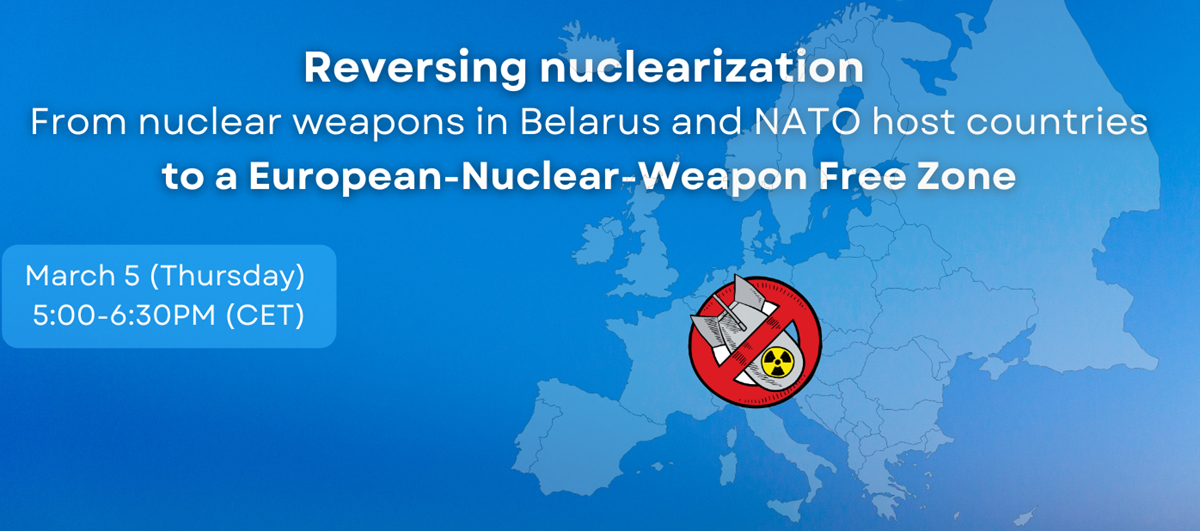
6 March -Online – Reversing nuclearization:
From nuclear weapons in Belarus and NATO host countries to a European-Nuclear-Weapon Free Zone
Mar 6, 2026 03:00 AM in Canberra, Melbourne, Sydney

of the week – Australians for War Powers Reform (AWPR)
To see nuclear-related stories in greater depth and intensity
 Antinuclear
Leave a comment