Nuclear Non-Proliferation Treaty (NPT) parties meet
NPT parties meet to review nuclear progress and challenges, The Interpreter, 23 April 2015 Every five years, Nuclear Non-Proliferation Treaty (NPT) parties meet to review progress in limiting nuclear weapons proliferation, reducing the threat of nuclear arms and facilitating the peaceful uses of nuclear energy. The current review cycle culminates in the ninth NPT Review Conference in New York starting next Monday, 27 April, to 22 May. Only five countries will not be involved: India, Israel, Pakistan, North Kore and South Sudan. The first three are ‘hold-out’ states which have never joined the NPT, North Korea purports to have left it and South Sudan is yet to join.
What should be an opportunity for further strengthening the Treaty is likely again to be dominated by recriminations. The Iranian nuclear deal helps, but the failure to convene the promised conference on a WMD-Free Zone in the Middle East will feed resentments. And the five NPT nuclear weapon states will face growing unhappiness over their disarmament efforts.
But recriminations should give way to renewed efforts to address mounting challenges:
- An alarming willingness by certain governments to brandish nuclear force.
- A continuing threat of regional proliferation spirals in the Middle East and North Asia.
- Rapid nuclear build-up on the Indian sub-continent with no systems to manage yet alone end the race.
- Advances in industrial and scientific expertise providing a growing number of actors with potential access to WMD technologies.
- A decline in public interest in nuclear security issues, potentially making it easier for governments to sweep them under the carpet.
The Australian National University’s Centre for Nuclear Non-Proliferation and Disarmament, guided by former Foreign Minister Gareth Evans, has published a report on developments since the 2010 NPT Review, ‘Nuclear Weapons: The State of Play 2015‘. The report is comprehensive, authoritative and a sobering tool for all participants in the upcoming Review. Of 27 ‘action clusters’ arising from the 2010 Review, none are judged ‘implemented fully’ and only two show ‘significant progress’………
what will be the main issues for the Review Conference, and where will Australia stand?………
Advocates of a treaty to ban nuclear weapons will continue their campaign for a start to negotiations. Last December Austria hosted a conference on ‘the humanitarian consequences’ of nuclear weapons. The 180-plus participating countries included for the first time the US and UK, who concluded that it is best to have their views heard than not. China, France and Russia stayed away. Those opposed to starting negotiations argue that negotiations would be futile without the participation of states with nuclear weapons, and that such talks would distract from the potentially more profitable work on smaller tangible steps such as a ban on the production of nuclear material for weapons (the so-called ‘cut-off’ treaty). Australia confirmed at the Vienna Conference its view that the better way forward was to recognise the inevitability of gradualism, thus siding with the P-5 sceptics. While Australia’s view is responsible, particularly as we continue to rely on the US nuclear umbrella, it will come under pressure because it can so easily be an excuse for inaction……….http://www.lowyinterpreter.org/post/2015/04/23/NPT-parties-meet-to-review-nuclear-progress-and-challenges.aspx?COLLCC=4127615215&
No comments yet.
1 This month
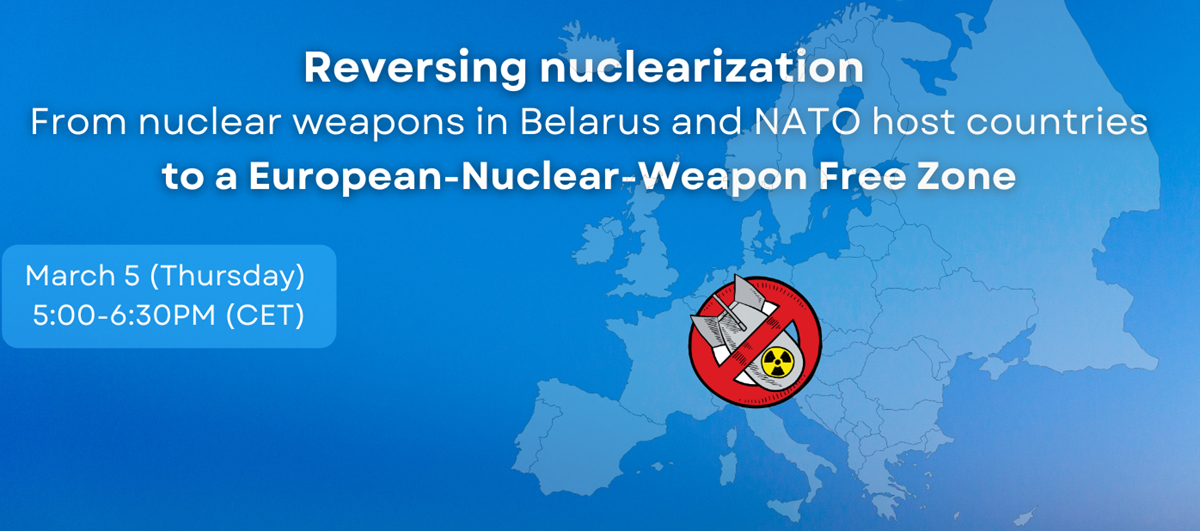
6 March -Online – Reversing nuclearization:
From nuclear weapons in Belarus and NATO host countries to a European-Nuclear-Weapon Free Zone
Mar 6, 2026 03:00 AM in Canberra, Melbourne, Sydney

of the week – Australians for War Powers Reform (AWPR)
To see nuclear-related stories in greater depth and intensity
 Antinuclear
Leave a comment