Australian Labor Party to roll over on nuclear policy and become indistinguishable from Liberal
 AUDIO Labor set to debate expanding Australia’s role in the global nuclear fuel cycle http://www.abc.net.au/radionational/programs/breakfast/labor-set-to-debate-expanding-australias-role/6436276 1 May 2015 More uranium mining, more Australian involvement in the global nuclear fuel cycle, and the potential for taking back spent Australian nuclear fuel.
With the prospect of bi-partisan support, these options are all on the table with moves to free up the Labor Party’s nuclear policy at the ALP National Conference in Melbourne in July.
Labor in South Australia is already considering its nuclear options, with a Royal Commission set up earlier this year.
The nuclear re-think here in Australia comes as national nuclear societies meet in France over coming days to sign a Nuclear for Climate declaration.
What Australia’s nuclear lobby is most worried about
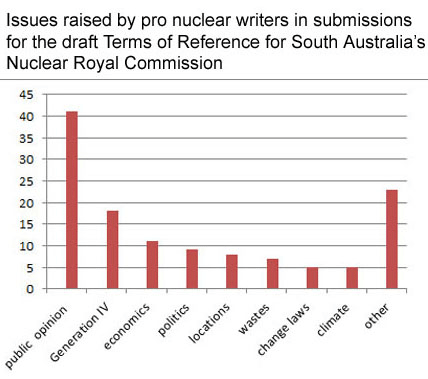
 Pro nuclear Submissions for the Draft Terms of Reference for South Australia’s Nuclear Royal Commission gives an insight into the preoccupations of Australia’s nuclear lobby.
Dennis Matthews, of South Australia, took the trouble to analyse the themes raised in pro nuclear submissions.
The overwhelming concern of the nuclear lobby appears to be – the need to win over the public to supporting the nuclear industry – the necessity of “educating” the public. (It struck me that their idea of education might be similar to British tobacco’s idea of informing the public of the benefits of cigarette smoking.)
The second most important topic was the benefits of “Generation IV nuclear technology”, particularly Small Modular Recators. (They don’t even exist yet – but never mind)
Way behind these two topics, were arguments for the nuclear industry on grounds of economics, politics, locations for reactors, waste disposal, need to change Australia’s laws, and fixing climate change.
A very few submissions dealt with (in this order) military advantages, radiation no real threat, energy demand, Australia’s international role, benefits to Aborigines, expertise, and medical uses.
So I guess we can expect that the first onslaught of the pro nuclear campaign will be an allout publicity and “educational” effort – no doubt supported by a sycophantic media, and by educational institutions who know which side their bread is buttered.
ISSUES RAISED BY THE PRO-NUCLEAR SUBMISSIONS TO THE
DRAFT TERMS OF REFERENCE
SCARCE COMMISSION INTO EXPANDING THE NUCLEAR INDUSTRY Continue reading
Thousands rally across Australia against closure of Indigenous communities
 Melbourne city centre blocked by protests over closure of Indigenous communities – as it happened, Guardian, Helen Davidson @heldavidson 1 May 15 [excellent report and pictures]
Thousands of people joined rallies in towns and cities around Australia and overseas to protest against threatened withdrawal of funding from remote communities Tens of thousands have attended reportedly peaceful rallies across Australia and New Zealand, protesting against the threat of closure of remote communities in Western Australia.
The largest rallies in Melbourne and Sydney began at 4pm, severely disrupting Friday peak hour traffic. The Melbourne rally blocked a major intersection and Flinders st Station. Protesters intend to move to Kings Domain where they will set up a makeshift camp for two nights.
Some protesters in Sydney have moved on to the Redfern Aboriginal tent embassy after thousands walked down Sydney’s George St, delaying some public transport.
Between 500 and 1000 attended a Perth rally, as well as thousands more across Sydney, Canberra, Darwin, Adelaide, Alice Springs, and 1,000 in four New Zealand cities. …..http://www.theguardian.com/australia-news/live/2015/may/01/protests-at-proposed-closure-of-remote-indigenous-communities-live
Liberal MP Dan Tehan dares question Abbott strategy on Renewable Energy Target
 Renewable energy target: Liberal MP Dan Tehan pushes for higher RET to end political stalemate, save jobs ABC TV 7.30 By Sabra Lane and Lucy Barbour A Liberal
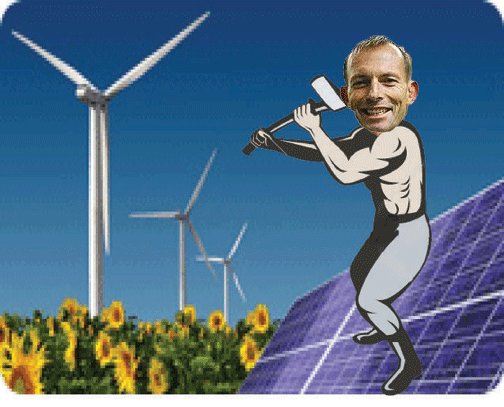 MP is urging the Government to settle on a higher renewable energy target (RET) to prevent further job losses across the sector.
Companies from the trade-exposed energy intensive industry and the clean energy sector have told 7.30 they want the major parties to settle on a final target of 33,000 gigawatt hours (GWh).
The Member for Wannon, Dan Tehan, agrees and believes the Government should resolve the impasse swiftly. “[My constituents] have been saying that politics is put in front of jobs and what I have been reassuring them is that, as far as I’m concerned, what I want to see is jobs put before politics,” Mr Tehan told 7.30.
The RET mandates that 20 per cent of all Australia’s energy come from renewable sources by 2020.
The current target is legislated at 41,000 GWh, but electricity demand has dropped dramatically in recent years, meaning the amount generated will far exceed 20 per cent.
It is why the Coalition and Labor have been at loggerheads for months over what the target should be.
The Coalition will not budge from 32,000 GWh, while Labor is fixed on 33,500 GWh.
Businesses in ‘state of limbo’ as result of impasse
The community of Portland, in south-west Victoria, is fed up with the political stone-throwing and the latest push for agreement has been pushed by two of the region’s key businesses, Keppel Prince Engineering and Portland Aluminium.
Both companies rely on the RET debate being resolved to prevent further job losses.
The general manager of Keppel Prince, Steve Garner, said his company — which builds wind turbine towers — is in a “state of limbo”………….http://www.abc.net.au/news/2015-04-30/liberal-mp-pushes-for-higher-ret-target-to-end-political-impasse/6435712
Abbott govt’s unreasonable delaying on decision about Renewable Energy target
a year and half has passed since the government set about reviewing a policy that they had made no mention of planning to cut during their election campaign. A review of the scheme had only just been concluded 12 months prior, saying no need to change it and no need to review it again.
So a few months later, and after spending several hundred thousand dollars, they find out what the earlier review had concluded. This scheme does not significantly increase household electricity bills, in fact if cut it is most likely to increase electricity bills.
But they decide they want to cut the scheme nonetheless
 It has become a complete farce. Industry Minister Ian Macfarlane’s story for why he couldn’t accept lower cuts to the target have changed every few weeks.
Can Dan Tehan get Abbott to stop playing games over renewable energy?, Climate Spectator, TRISTAN EDIS 1 MAY, Backbench Liberal MP Dan Tehan’s seat of Wannon in southwest Victoria is probably suffering the most from the government’s decision to throw the future state of the Renewable Energy Target into uncertain turmoil.
His seat has one of the best land-based wind resources available in the world with a major power transmission line running right through the middle of it. There’s already several hundred megawatts of wind power capacity built, but also several thousand megawatts proposed in the area.
Meanwhile in the struggling town of Portland with high unemployment, one of Australia’s leading wind tower manufacturers and also wind servicing businesses, Keppel Prince, lays largely idle.
Construction of the wind farms proposed in the area would provide a very large employment boost to a region that badly needs it, while also providing a significant new income stream for local farmers that host the turbines.
His appearance on the ABC’s 7.30 Report last night clearly reflected an incredible degree of frustration with his own government’s lack of interest in giving the wind industry the regulatory stability required for it to come out of its coma…….. Continue reading
Business leaders outline why Nuclear Power cannot combat Climate Chnage
The arguments that nuclear power offers the solution to climate change are dead wrong for several reasons: [outlined further down in this article]
Even if we decided to replace all fossil-fuel plants with nuclear reactors – leaving cost issues aside – it would not be technically possible to build them quickly enough to meet even the modest targets of the Kyoto Protocol. In the U.S., up to 1,000 new reactors (nearly 10 times the current base) would be required at a cost of about $1.5 trillion to $2.0 trillion, based on industry estimates of $1,500-$2,000/KW for new nuclear plant construction. In fact, Alvin M. Weinberg, former director of Oak Ridge National Laboratory argues that, in order to make a serious dent in carbon emissions, it would take perhaps four times as many reactors as suggested by the MIT study, or up to 4,000 reactors .
 Nuclear Power: Totally Unqualified to Combat Climate Change BY RINALDO S. BRUTOCO , WORDL BUSINESS ACADEMY SEPTEMBER 14, 2014
An Open Letter from the World Business Academy to leading climatologist Dr. James Hansen regarding his advocacy of nuclear power as a solution to global warming.
My colleagues and I at the World Business Academy have followed climate activism for many years and its on-going campaign to restrain the coal and oil industries. Research, congressional testimony, and activism by numerous climatologists to address climate change has brought this very real global threat into the public consciousness and set the stage to develop a strategy for preserving human civilization as we know it. …….
With regard to nuclear energy, the IPCC made the following finding: “Nuclear energy is a mature low-GHG emission source of baseload power, but its share of global electricity generation has been declining (since 1993). Nuclear energy could make an increasing contribution to low carbon energy supply, but a variety of barriers and risks exist (robust evidence, high agreement). Those include: operational risks, and the associated concerns, uranium mining risks, financial and regulatory risks, unresolved waste management issues, nuclear weapon proliferation concerns, and adverse public opinion (robust evidence, high agreement).”[4]……..
The World Business Academy agrees with the substantive findings from these reports and is firmly committed to implementing the most expeditious path towards (i) eliminating or mitigating all sources of carbon and methane emissions and (ii) remediating ambient CO2 levels back to pre-industrial levels……….
Given the urgency of climate-related issues, we were nonetheless deeply vexed with the proposal by Dr. James E. Hansen and other climatologists to embrace nuclear power as a viable component in mitigatiing climate change. Continue reading
Australia’s coal lobby blamed for stalling the uranium deal with India
Is Australian coal-lobby blocking uranium deal with India?, Economic Times By IANS | 1 May, 2015, By Rekha Bhattacharjee SYDNEY: After India signed a deal with Canada on uranium imports during Prime Minister Narendra Modi’s visit to Ottawa, questions are being raised as to why it has taken Canberra so long to clinch a similar pact.
While there are 1,300 mining firms in Australia, production is dominated by very large firms such as BHP Billiton, Rio Tinto, Xtrata,Shell Ch .. …
A business perspective on the economics of nuclear power
Before rushing to endorse nuclear expansion, regulatory agencies and individual researchers should critically examine past performance and demand experimental proof for claims that the next generation of nuclear plants (should any ever be considered for construction) will be economically viable, climate-friendly, and accident-proof.
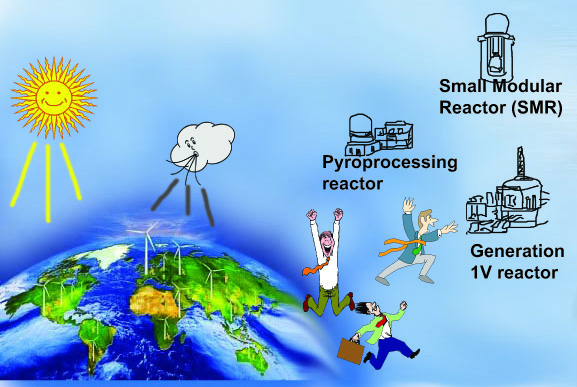
It is believed that next generation reactors will differ dramatically from current reactors in that they will replace active water cooling and multiple backup safety systems with “passive safety” designs. In fact, many nuclear advocates and news reports inaccurately describe the proposed new reactor designs, such as the pebble bed modular reactors, as “accident-proof” or “fail-safe.”
 Nuclear Power: Totally Unqualified to Combat Climate Change BY RINALDO S. BRUTOCO , WORDL BUSINESS ACADEMY SEPTEMBER 14, 2014 “………From a business perspective, private investors should be seen as the ultimate ”referees” on competing energy choices, using informed diligence and prudent criteria to determine which energy technologies can compete in the market with the best chance of generating revenues and profits. As Amory Lovins points out, the capital markets have already spoken. Private investors and project finance lenders have flatly rejected large base-load nuclear power plants and have enthusiastically embraced supply-side competitors, decentralized cogeneration, and renewables……… We believe the reason all sophisticated investors avoid nuclear investments isbecause no one has figured out how to build a reactor that doesn’t routinely emit toxic levels of radioactivity while still producing power economically, and because there is no safe disposal system known to humanity.
The commercial nuclear industry has been around for over half a century, so the prudent approach would be to look at the industry’s track record. Continue reading
Nuclear reprocessing threatened by cheap, efficient, deep bore wastes disposal
successfully developing deep-hole disposal techniques would be a great development for society
it could be devastating for next-generation nuclear developers attempting to utilize existing used nuclear fuel stockpiles
Why Sending Nuclear Waste to the Center of the Earth is Bad News for General Electric, Motley Fool By Maxx Chatsko April 30, 2015 “………the U.S. Department of Energy is set to experiment with a technique to dispose of nuclear wastes by drilling 3-mile boreholes into the Earth’s crust and then, well, dropping radioactive materials into their geological tombs. For good
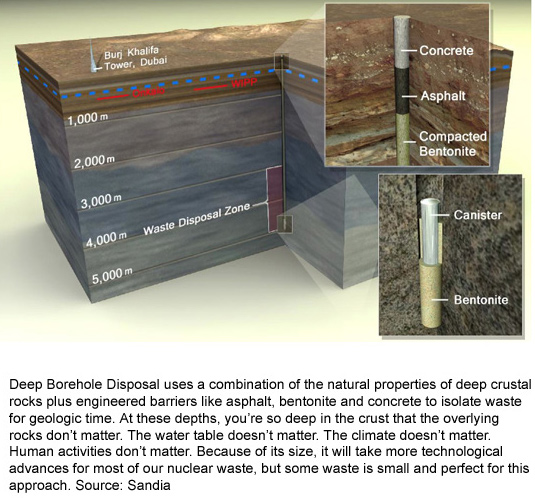
………Fergus Gibb, the technique’s pioneer, told The Engineer that each bore hole, measuring roughly 3 miles deep and 2 feet wide, would cost just a few tens of millions of dollars to drill. …
Australians heard the social media call from Aborigines threatened with removal from their lands
Family harnesses power of social media to drive protests against forced closures of Aboriginal communities, ABC Lateline By Ginny Stein 1 May 15 Pressure is growing across Australia against plans by West Australian Premier Colin Barnett to close scores of remote Aboriginal communities.
A call to protest has spread across social media with rallies in capital cities across the country. But the protests had their origins far from any big city.
Layangali Bieundurry and her brother Nelson Bieundurry are from Wangkatjungka, a remote Aboriginal community on the edge of the Great Sandy Desert with a permanent population of approximately 200 people.
Although internet access is slow in Wangkatjungka, the call to protest against the Government’s threat to close up to 150 communities started there thanks to family support, and then spread nationally and now globally. “We knew that all our family were on Facebook, so what we did, we just set the page up and started sending out messages throughout Facebook and that is how most of our family knew,” Ms Bieunderry said.
“And then other communities started to jump on Facebook and started realising what the Government [was] going to do to us in the remote communities.”
#SOSBlakAustralia has since emerged, connecting people, communities and organisations with similar interests and concerns through the Twittersphere. “I want it to go into the ears of Tony Abbott, that’s where I want it to go,” Mr Bieundurry said………
Throughout the Kimberley, the threat to close up to 150 remote Aboriginal communities has raised both fear and anger. At Wangkatjunga, there is disbelief that the next wave in a long history of dispossession may soon hit.
The State Government has not stated which communities may close, sparking fear across the state………http://www.abc.net.au/news/2015-04-30/protest-against-forced-closure-aboriginal-communities/6431558
Australian Capital Territory could become Australia’s Silicon Valley of renewable energy
ACT pushes to expand its renewable energy industry http://www.canberratimes.com.au/act-news/act-pushes-to-expand-its-renewable-energy-industry-20150501-1mxt2w.html May 1, 2015 – Clare Colley Reporter at The Canberra Times The ACT could become Australia’s Silicon Valley of renewable energy development and a test site for new  technology as it moves towards reaching its 90 per cent renewables target by 2020.
At the centrepiece of a new strategy to expand the renewable energy industry in the ACT is a $1.2 million Renewable Energy Innovation Fund collected from private companies as part of the government’s 200 megawatt wind auction. Continue reading
Medical warning on radiation risks in unnecessary CT scans
 Less is the new more: choosing medical tests and treatments wisely The Conversation,Tammy Hoffmann A/Prof Clinical Epidemiology, Bond University; NHMRC Research Fellow at The University of Queensland Chris Del Mar Professor of Public Health at Bond University
29 April 2015 “……Not so long ago, getting an x-ray for acute back pain was the norm. Although it’s now known that they don’t help most cases, they are still used far more frequently than is necessary.
Acute non-specific low back pain is a very common problem that, most of the time, gets better without any treatment. We are not sure anything, except staying active, helps it resolve faster.
X-rays are only helpful to diagnose the rare causes of acute back pain such as cancer (spread from some other origin), infection (very rare nowadays), osteoporotic fractures in elderly folk, or exceptional narrowing of the spinal canal. Most of these have some clinical indications that doctors look out for.
X-rays not only have little to contribute, they have downsides too.
First, they detect problems that may not be relevant (such as disc-space narrowing) and can lead to more investigations, such as computed tomography (CT) scans. Rarely does anything detected from the x-rays or the further investigations contribute to the better management of the condition and resolve a person’s back pain faster.
Second, x-rays themselves are directly harmful: accumulated doses of radiation increase the risk of cancer. While the doses are very small for plain x-rays, they are much higher for CT scans…….
One move comes from government. Last week federal Health Minister Sussan Ley ordered a review of Medicare item numbers to prune away activities funded from the public purse that are useless.
Another initiative, launching in Australia this week, comes from the clinical professions themselves: the Choosing Wisely campaign. It aims to encourage a conversation between clinicians and patients about tests, treatments and procedures that may provide little or no value, and which may cause harm.
The Choosing Wisely campaign first launched in America in 2012 as collaboration between the American Board of Internal Medicine Foundation, Consumer Reports and nine medical speciality societies. Each society developed a list of five treatments, tests or services that were commonly provided but whose necessity should be questioned and discussed.
The campaign has expanded, with 70 societies now participating. Thirteen countries have adapted and implemented Choosing Wisely…….
These lists are not just for clinicians. As we recently wrote on The Conversation, our research showed most people overestimate the benefits and underestimate the harms of tests, screens and treatments.
These unrealistic and overly optimistic expectations often result in patients asking clinicians for tests and treatments. Some of these are unnecessary and will provide little, if any, benefit and may cause harm………http://theconversation.com/less-is-the-new-more-choosing-medical-tests-and-treatments-wisely-40756
1 This month

of the week – Australians for War Powers Reform (AWPR)
To see nuclear-related stories in greater depth and intensity
 Antinuclear