The end of the line for uranium company Energy Resources of Australia
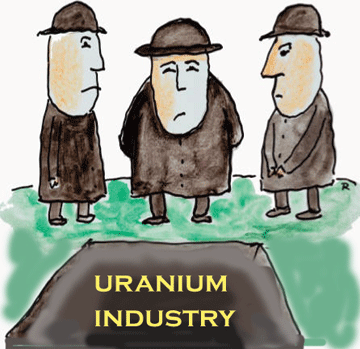 ERA faces closure after uranium miner’s expansion plans shelved by Rio Tinto, ABC News, 30 June 15 By business reporter Stephen Letts ERA was once one of the world biggest uranium producers, supplying about 10 per cent of the global market for ‘yellowcake’ and powering electricity utilities in Japan, Europe and North America.
It’s now pretty well friendless as its last three independent directors resigned, leaving the company in the hands of its majority shareholder Rio Tinto.
Rio for its part said there is no future for ERA’s only productive asset, the Ranger Mine, which operates in the middle of the World Heritage listed Kakadu National Park.
With its existing open mine resources exhausted, ERA has been labouring on, processing stockpiled ore since late 2012.
Ranger’s last hope lay in an ambitious and expensive underground mine – the Ranger 3 Deeps project – which could have extended the mine’s life by another decade. That hope was extinguished earlier this month when Rio, with its 68 per cent stake in ERA, said enough was enough. The market was blindsided by Rio’s decision, with ERA’s share price tumbling more than 70 per cent in the aftermath.
In hindsight it was probably inevitable.
ERA’s losses mount to $700 million since 2011
Since 2011, ERA has posted losses totalling $700 million, selling into a market devastated by the Fukushima nuclear disaster. It’s also had an enforced shutdown to clean up the mess caused a toxic spillage of radioactive slurry in late 2013.
Production is now less than 20 per cent of its boom years.
The traditional owners of the land, the Mirrar people, have made it clear that they do not support ERA’s bid to continue operating the mine beyond the expiry of the current lease in 2021, despite having received more than $150 million in royalties over the past decade.
Even then, a new lease would need the support of both houses of Parliament to change the Atomic Energy Act that enforces the procedures and environmental standards at Ranger.
Rio’s withdrawal of support earlier this month was blunt, saying it didn’t support “any further study or the future development of Ranger 3 Deeps due to the project’s economic challenges.”
Rio ruled things off, noting it would book a $US300 million non-cash impairment on its ERA shareholding.
It also offered ERA a “conditional line of credit” to help pay for rehabilitation work beyond ERA’s cash reserves and future earnings.
It’s a line of credit that will undoubtedly be needed. n the meantime ERA will bleed cash undertaking the rehabilitation.
Talk of restarting the Japanese nuclear industry keeps getting pushed back, further undermining sentiment towards uranium.
Currently there’s about eight months of inventory backed up in the global market, meaning that a price recovery doesn’t appear imminent.
If the uranium price heads further south, then even the 16 cents a share valuation may end up being inflated.
Dr Lawcock said in the “downside scenario” – if the price falls below current forecasts – there is a real risk that ERA won’t have the funds to complete its rehabilitation program………. The remaining ERA board members – all Rio employees – say they are now searching for another batch of independent directors to oversee an orderly wind-up of operations.
But that could be tricky given any new directors would be left in no doubt who runs the show.
The sales pitch is made no easier with ERA in terminal decline, facing a very difficult couple of years before its eventual demise with questions now being raised about its ability to remain solvent to the end.http://www.abc.net.au/news/2015-06-30/era-faces-closure-after-expansion-plans-shelved/6584040
No comments yet.
1 This month
7 April – WEBINAR – Australia and the Doomsday Clock – Preventing nuclear war through NoFirstUse and other policies
Online | Tuesday April 7, 4:00-5:30pm, Australian Eastern Time / 8:00-9:30am Central Europe Time
– Access the registration link
15 April – Zoom –Nuclear Power is Not the Solution
Apr 15, 2026 01:00 AM in Canberra, Melbourne, Sydney

Join the International Physicians for the Prevention of Nuclear War (IPPNW) on Tuesday, April 14th for a timely webinar exploring the risks associated with nuclear power and challenging the myth that it offers a simple, safe, carbon-free solution to the climate crisis
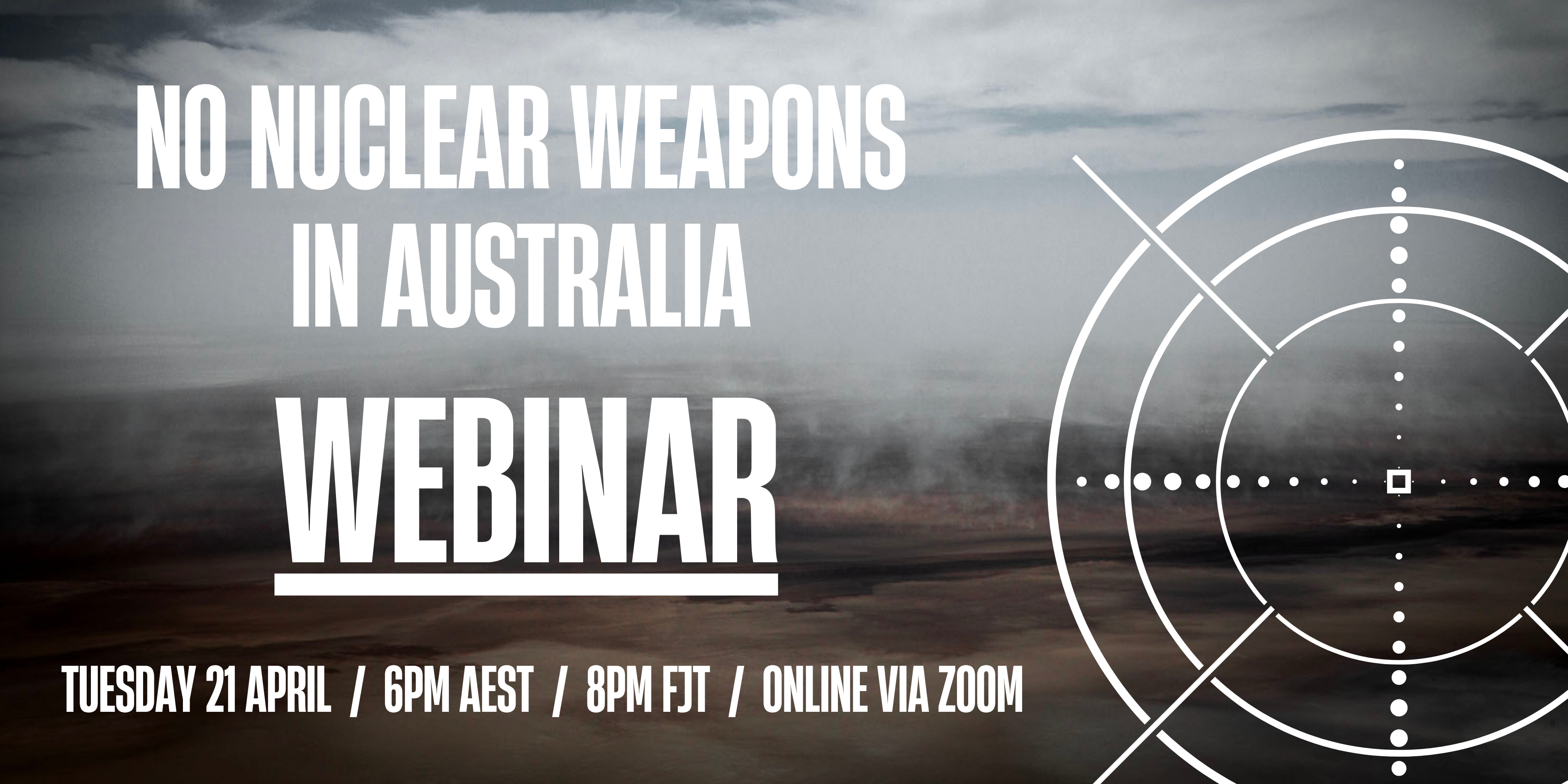
21 April Webinar: No Nuclear Weapons in Australia
Start: 2026-04-21 18:00:00 UTC Canberra, Melbourne, Sydney (GMT+10:00)
End: 2026-04-21 19:30:00 UTC Canberra, Melbourne, Sydney (GMT+10:00)
Event Type: Virtual
A virtual link will be communicated before the event.
Host Contact Info: australia@icanw.org

of the week – Australians for War Powers Reform (AWPR)
To see nuclear-related stories in greater depth and intensity
 Antinuclear
Leave a comment