50% renewable energy goal will effectively bring Australia up with world leaders
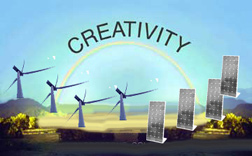 50% renewable energy would put Australia in line with leading nations, The Conversation, John Mathews Professor of Strategic Management, Macquarie Graduate School of Management at Macquarie University, 25 July 15, Opposition leader Bill Shorten told the Labor Party conference this morning that the party’s policy should be for 50% of electricity to come from renewables by 2030.
This would bring Australia abreast with its international competitors such as California, with its recently announced target of 50% of electricity from renewables by 2030, and Germany, where the Energiewende(“energy transformation”) will see the country commit to 40-45% non-nuclear green power by 2020, and 55-60% by 2035.
Shorten’s move is a major break with previous ALP policy, and promises to be so effective in building a new power sector to eclipse the present fossil-fuelled sector that it already has the conservative side of politics foaming at the mouth. This week predictably saw the return of the “Electricity Bill Shorten” name-calling, and The Australian newspaper branded the renewables policy “Labor’s loony turn”.
It is such a break with previous climate policy because it sets a target for building renewable energy capacity, rather than targeting notional carbon reductions by such and such a date without specifying how to get there. If adopted, this policy would allow Labor finally to free itself of the politically damaging obsession with using carbon pricing – either in the form of a carbon tax or a cap and trade scheme – as its principal green platform.
Although Labor is also committed to emissions trading, renewable energy offers the more politically straightforward approach of fast-tracking investment in the renewables sector, providing the business certainty that the Abbott government has been so keen to break.
This was always the missing piece in Labor’s green strategy – eclipsed by its continuing commitment to support Australia’s exports of coal, gas and iron ore to the rising industrial powers of Asia, particularly China. The new policy represents a switch from a 20th-century obsession with fossil-fuel mining and export, to a 21st-century focus on creating energy security through renewables.
It promises to be effective for the same reason that Germany’s or California’s commitment to swing behind a power sector fuelled by renewables is effective. These targets are really about industry strategy, with a favourable side-effect that they also promise to lower carbon emissions. Denmark’s 2012 commitment to renewable power using wind energy (with a conservative target of 50% renewables by 2020) has already created the world’s number-one wind power company, Vestas. Support for renewables is a smart industry strategy.
China is, of course, the world leader in this transition, with a commitment to source 30% of electricity from renewables by 2020. China’s Energy Development Strategic Action Plan (2014–2020) specifies limits for overall energy and coal consumption, and at the same time sets targets for renewable energy capacity as reaching 350 gigawatts, 200 GW and 100 GW respectively for hydro, wind and solar, plus 58 GW for nuclear.
These are by far the most ambitious targets in the world…………
Australia stands to benefit from these cost decreases as policy shifts to supporting a renewables-driven power system. These costs refer to production costs, or wholesale costs, driven by the learning curves that are a feature of all manufacturing industries. What the existing power producers actually charge consumers is another matter altogether.
But as the political debate comes to focus on the real production costs of electricity, so the position of the incumbent power producers will prove to be untenable. https://theconversation.com/50-renewable-energy-would-put-australia-in-line-with-leading-nations-45152
1 Comment »
Leave a comment
1 This month

of the week – Australians for War Powers Reform (AWPR)
To see nuclear-related stories in greater depth and intensity
 Antinuclear
Instead of New Nuclear, Australia could easily become a major Energy exporter by using massive Solar (of all flavors) farms to produce the electricity needed to disassociate water into Hydrogen and Oxygen which could then be liquefied and shipped (like LNG) to Global markets that need clean burning fuels to power their Industries.
The same Energy could also produce potable drinking water from seawater which could be used to irrigate vast areas to turn un-need land into crop lands to feed the Worlds hungry.
Going Nuclear is a giant step backwards…
LikeLike