Australia’s history of trying to get nuclear weapons
 In 1969, the government announced plans to construct a 500-megawatt nuclear reactor at Jervis Bay in New South Wales. The intention was clear — this reactor was to support a nuclear weapons program.
in 1972, the conservative Gorton government was swept from power and replaced. Gough Whitlam, a longtime advocate of arms control, wasted no time ratifying the NPT and abandoning the Jervis Bay reactor. In a heartbeat, the 40-year quest for Australian nuclear capability was over.
 Australia’s Failed Bid for the Bomb, War Is Boring, Chris Walsh, 15 Sept 15 Canberra was captivated by atomic weapons in the 1950s — then ruined its chances of ever getting them
At 9:00 in the morning on Oct. 3, 1952, a 25-kiloton nuclear explosion vaporized the retired British frigate HMS Plym off Australia’s remote western coast. The Operation Hurricane detonation in the Monte Bello Islands was a seminal moment for Britain and marked its return to the club of great powers.
But for Australia, these tests and others served a murkier purpose – as important and deliberate steps toward Australia’s own acquisition of nuclear weapons.
It was in the tense Cold War environment of the late 1950s and early 1960s that these aspirations moved beyond talk and into concrete action. By the time the Hurricane detonation took place, Australia was already experienced in weapons of mass destruction. From 1943 and in the shadow of a possible Japanese invasion, Australia built extensive stocks of chemical weapons and delivery systems.
Elsewhere, one of Australia’s pre-eminent physicists, Mark Oliphant, was working on a project called Manhattan – the creation of the first atomic bomb. Australia was slowly developing its intellectual knowledge base around “special weapons.”
That’s not all. Post-war British leaders realized that nuclear weapons were a must if Britain was to remain a first tier international player. However, the country’s small land mass blocked Whitehall from testing nuclear weapons at home. This is how Australia — with its vast coastlines and deserts — emerged as a key player in Britain’s nuclear strategy.
When Britain approached Australia to host nuclear tests, a sympathetic government led by Prime Minister Robert Menzies readily agreed. While Menzies — an Anglophile — focused on his relationship with the United Kingdom, others saw this as an opportunity for Australia to buy membership into the nuclear club.
But they would be disappointed. Throughout Britain’s early testing program and even after the subsequent construction of the Maralinga testing site, Australia did not gain access to the nuclear crown jewels. Between 1956 and 1963, Britain detonated seven weapons in the South Australian desert and in all cases kept Australian scientists at a respectful distance.
The same cannot be said for nuclear delivery systems. In 1949, Britain and Australia established a joint weapons testing facility at Woomera where Britain tested technology such as the abortive Blue Streak missile. Australia was actively involved in the development of these technologies.
Its taste for missiles and other weapons grew………..
On Nov. 2, 1956, Australia’s Defense Committee formally recommended the acquisition of kiloton-range tactical nuclear weapons. They quickly ascertained that direct acquisition of weapons from the United Kingdom or at least access to British weapons was the most realistic option. The United States was out of the question. Far-sighted U.S. policy makers had already implemented restrictions on the export of nuclear weapons knowledge.
It was here that that nuclear politics and policy intersected. Prime Minister Menzies was happy to support his defense chiefs, but had no real passion for obtaining nuclear weapons. During the next two years, Australia raised the idea with Britain at defense, diplomatic and political levels.
While British leaders were initially reluctant, they began to warm to the idea. They believed Australia could be a lucrative customer in the arms business — particularly for airborne delivery systems………
While studies progressed through 1965-1968, the political environment changed markedly. Harold Holt replaced Menzies as prime minister, and suddenly died. John Gorton followed Holt. Gorton was a former World War II pilot and a strong advocate for Australian nuclear capability.
But time was running out.
In the background, discussions about international agreement in the form of a Non-Proliferation Treaty gained strength. The window for Australia to develop an indigenous nuclear capability was closing.
……..In 1969, the government announced plans to construct a 500-megawatt nuclear reactor at Jervis Bay in New South Wales.
The intention was clear — this reactor was to support a nuclear weapons program. The reactor project pushed ahead and preliminary site work commenced. But politics and circumstances would intervene once again. Pressure grew on Australia to sign the Non-Proliferation Treaty, which it eventually did in March 1970 after much bureaucratic hand wringing.
Australia held off on ratifying the treaty. But in 1972, the conservative Gorton government was swept from power and replaced. Gough Whitlam, a longtime advocate of arms control, wasted no time ratifying the NPT and abandoning the Jervis Bay reactor. In a heartbeat, the 40-year quest for Australian nuclear capability was over.
There is, however, one startling and little known postscript to Australia’s nuclear weapons journey…….
Intelligence estimates did forecast that the USSR would attack Australia with nuclear weapons in a global exchange. However, the missiles would most likely target local U.S. facilities which were in isolated areas of the continent.
Considered together, this scenario leaves us with something befitting of a Greek tragedy. A battered but still coherent Australia, alone and without allies, could have found itself holding the British nuclear card it had sought for so long – only to find there was no one left at the card table. http://warisboring.com/articles/australias-lost-bid-for-the-bomb/
No comments yet.
1 This month
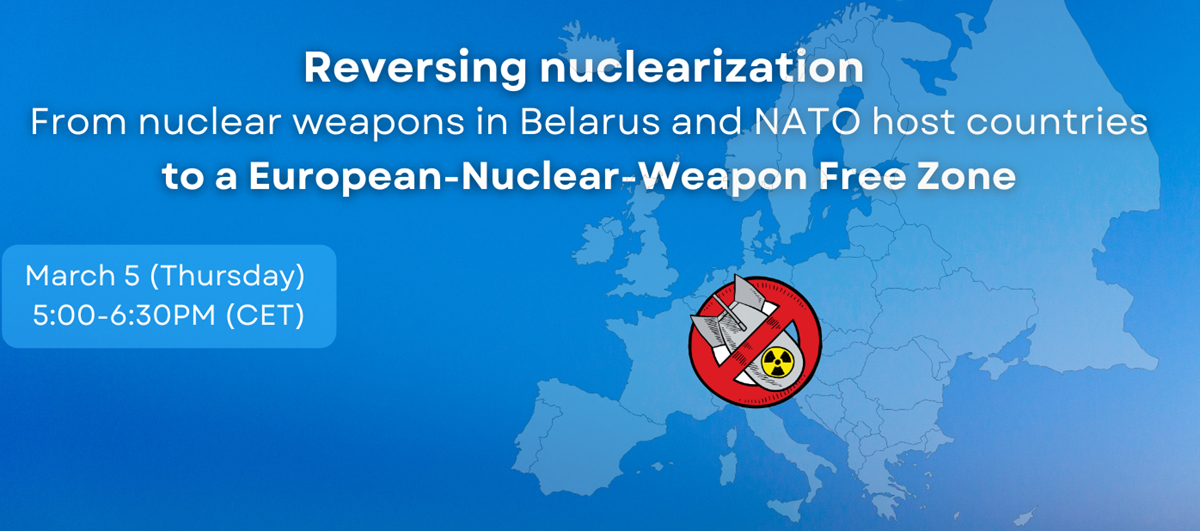
6 March -Online – Reversing nuclearization:
From nuclear weapons in Belarus and NATO host countries to a European-Nuclear-Weapon Free Zone
Mar 6, 2026 03:00 AM in Canberra, Melbourne, Sydney

of the week – Australians for War Powers Reform (AWPR)
To see nuclear-related stories in greater depth and intensity
 Antinuclear
Leave a comment