Malcolm Turnbull – not really going to act on climate chnage
I don’t think Labor has a hope of defeating Malcolm Turnbull as things currently stand—unless we change our politics.
Our only hope of defeating Malcolm Turnbull is also our only hope of seriously tackling climate change. We have to come together across divides to articulate a different way of doing things, to mount a cohesive, comprehensive, and strategic campaign for a better, fairer, greener world.
Malcolm Turnbull’s elevation to the Prime Ministership will change very little on its own. But it could be the stimulus we need to work with the new recruits brought to us by Tony Abbott to change everything.
 The Fall of Tony Abbott Changes…Not What You Think It Might http://theleap.thischangeseverything.org/the-fall-of-tony-abbott-changes-not-what-you-think-it-might/
September 15, 2015 by Tim Hollo Australia’s climate vandal Prime Minister is no more.
Tony Abbott, elected under two years ago after a lie-filled, Murdoch-fuelled anti-climate campaign, has been deposed by his own party.
Abbott, who famously declared that “coal is good for humanity,” led the first government in the world to reverse a price on carbon or slash a renewable energy target. He rejected funding for mass transit and increased it for roads; he attacked wind farms as ugly and pandered to the junk science of “wind turbine syndrome.” He took Australia’s treatment of refugees to new depths of depravity, even banning doctors from reporting on abuses in the detention camps; begged Barack Obama to let Australia join the bombing of Syria; slashed funding for universities, research and the arts; and escalated the “war on terror” rhetoric.
Tony Abbott’s political demise is cause for celebration.
But what can we expect of his replacement, Malcolm Turnbull, a man seen by some as Australia’s climate saviour? My expectation is: far too little to make a difference, but just enough to threaten to defuse the growing radicalization that Abbott’s clumsy approach was fomenting. We may have just replaced our movement’s most unlikely recruitment tool with someone more dangerous.
Unlike Abbott, Turnbull avowedly accepts the science of climate change. He was deposed (by Abbott) from a previous stint as leader of Australia’s conservative Liberal Party for attempting to negotiate passage of a carbon pricing regime with then-Prime Minister Kevin Rudd. As Environment Minister in the previous government, he won plaudits for announcing the phase-out of incandescent light bulbs. He is often seen catching public transport.
Malcolm Turnbull is a highly intelligent man and an effective communicator. He’d have to be a lot better for the climate than Tony Abbott, right?
Well, let’s explore that.
Firstly, let’s park the idea that, just because he accepts the climate science, Turnbull will necessarily act on it with urgency and ambition. How many national leaders talk of “believing” in climate change while doing far less than the science clearly demands?
Kevin Rudd’s inaptly named “Carbon Pollution Reduction Scheme” was rejected by climate scientists, economists, renewable energy advocates, and environmentalists as inadequate at best and counterproductive at worst. Turnbull’s negotiations, which failed when his own party tore him down, would have given even more support to the coal and aluminium sectors, making it even harder to reduce Australia’s emissions. Yet the fact that he was negotiating at all, and his temporary political martyrdom over doing so, allowed him to present himself as a climate hero—a perception Turnbull carefully cultivated.
But in re-taking the leadership of the Liberal Party, a party populated by climate deniers, he had to make certain commitments that will be difficult to shake.
In his first press conference as leader, Turnbull publicly recommitted to his predecessor’s climate policies, including his appallingly weak emissions target. He described Abbott’s widely ridiculed Direct Action policy, which would pay out billions to polluters to do voluntary, ineffective carbon reduction projects, as “one that I supported as a Minister in the Abbott Government, and… one that I support today”—even going so far as to call it “very well designed.” At the same press conference, Julie Bishop, continuing as Deputy Leader and Foreign Minister, declared that “we’ve already announced the targets for Paris and I expect those targets to continue.”
Some will say he doesn’t really mean it. They will point to his light bulb moment and his commitment to public transport as evidence that he truly cares about the climate. They will seize on his statements at the press conference about disruptive technology being exciting. Especially if he takes a few easy early steps, such as stopping the attacks on two important government bodies to support renewables and provide expert policy advice, the Clean Energy Finance Corporation and the Climate Change Authority, they will excuse his statements as something “Malcolm just has to say to keep the support of his party.”
How Turnbull plans to thread the needle of being an avowed climate believer leading a party of deniers will be one of his greatest challenges. But even if he does chose to face down the troglodytes, how far is he likely to go?
There is little doubt that Turnbull does understand climate change better than probably any previous Prime Minister of Australia, though that is a very low bar. Those who see tackling climate change as a series of incremental shifts and tweaks to the status quo have every reason to be excited about Turnbull’s rise.
But that’s not enough. Climate change is the most urgent and far-reaching consequence of a massive systemic problem—one that requires systemic changes in how we relate to each other as people and communities, and in how we understand our relationship with the environment. Changes that boil down to confronting capitalism.
And unlike Tony Abbott, he is an articulate and often reasonable-sounding advocate of a system that is destroying lives, communities, ecosystems, and our entire biosphere.
Abbott’s politics were so extreme, and his communication skills so poor, that he actively undermined his own goals. By declaring that “coal is good for humanity” he helped us build the case against coal. In attacking the Australian National University’s decision to partially divest from fossil fuels, he gave the divestment movement a great boost. In spruiking the expansion of coal mining, he helped radicalize a new generation of climate activists, and helped inspire more civil disobedience than Australia has seen for decades.
It is not that I wish Abbott were still our Prime Minister. We are well rid of his nasty and vicious politics. But Malcolm Turnbull will not make the same mistakes Abbott made—he will lead a much cleverer government, and he will be much harder to beat.
This is a warning. But it is also a hopeful wake up call.
Like many, I thought Tony Abbott was beatable in the next election. But, if he’d been beaten it would have been by a weak Labor Party that remains in lockstep with the Liberals on coal and asylum seekers, and that has no concept of tackling the systemic challenges we face.
I don’t think Labor has a hope of defeating Malcolm Turnbull as things currently stand—unless we change our politics.
Our only hope of defeating Malcolm Turnbull is also our only hope of seriously tackling climate change. We have to come together across divides to articulate a different way of doing things, to mount a cohesive, comprehensive, and strategic campaign for a better, fairer, greener world.
Malcolm Turnbull’s elevation to the Prime Ministership will change very little on its own. But it could be the stimulus we need to work with the new recruits brought to us by Tony Abbott to change everything.
No comments yet.
1 This month
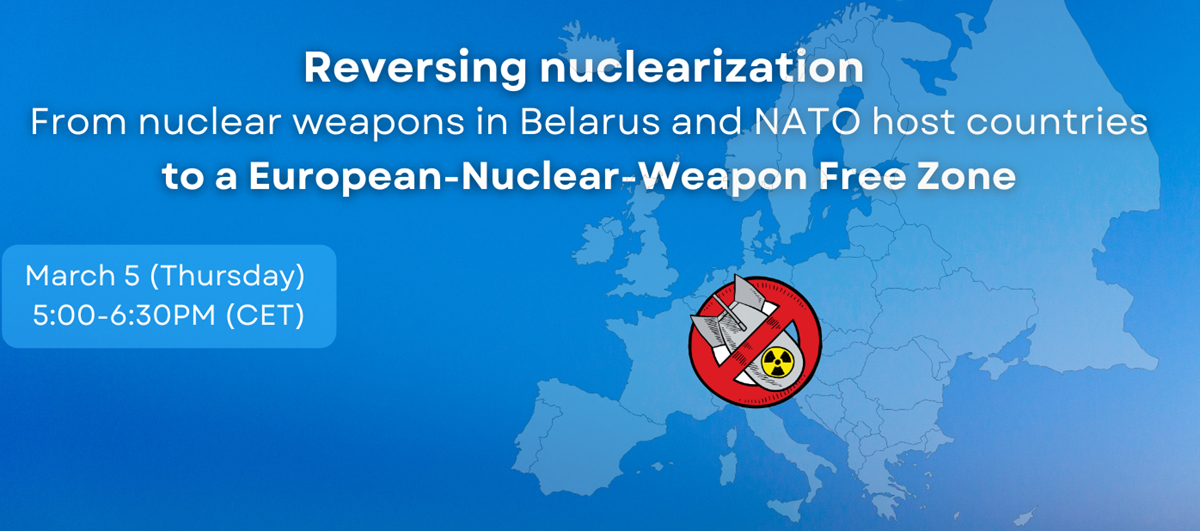
6 March -Online – Reversing nuclearization:
From nuclear weapons in Belarus and NATO host countries to a European-Nuclear-Weapon Free Zone
Mar 6, 2026 03:00 AM in Canberra, Melbourne, Sydney

of the week – Australians for War Powers Reform (AWPR)
To see nuclear-related stories in greater depth and intensity
 Antinuclear
Leave a comment