Turnbull’s biggest economic challenge is Climate Change
 Climate policy looms as Turnbull’s greatest economic challenge, ABC News 26 Oct 15 By Ian Verrender The climate of fear may slowly be lifting after Tony Abbott’s relegation to the political bleachers but the fear of climate persists within the Government.
With little more than a month to go before the 2015 United Nations Climate Change Conference in Paris, we find ourselves in the awkward position of being one of the few developed nations swimming against the tide.
Earlier this month, International Monetary Fund chief Christine Lagarde suggested nations give serious consideration to implementing a carbon tax, rather than cap and trade market-based emission programs.
“It is just the right moment to introduce carbon taxes,” she told delegates at the annual meetings of the IMF and World Bank in Lima, Peru…….
Faced with a structural budget deficit, the Abbott government, in its infinite wisdom, decided to rid itself of a roughly $6 billion a year source of income from the carbon tax and replace with a $2.88 billion spending program over four years.
It was a decision that recoils from everything for which a Coalition government purports to stand.
Apart from the fiscal recklessness, which blows out the deficit and adds to national debt, it has shifted away from a pricing policy to one of heavy handed government intervention.
The Direct Action policy is nothing more than a subsidy for polluters with the tab being picked up by taxpayers.
Abbott politicised climate change, instilling fear into the electorate about the cost of a carbon price to business and consumers without ever being brought to task over the cost to taxpayers of his subsidy program.
His former comrades in arms are still at it. Last month Barnaby Joyce launched into a familiar rant on the ABC’s Q&A, claiming Direct Action was “vastly cheaper and vastly more effective”…..But where is the evidence that it is cheaper? Or more effective? In fact, the studies say the opposite. More on that later…….
Academic studies overwhelmingly reject Direct Action as an efficient or effective way to reduce carbon emissions in the long term.
A study by the Australian National University’s Crawford School found that the Gillard government’s carbon tax cut emissions from the electricity sector alone by between five and nine million tonnes a year while it was in operation. Once it was lifted, emissions began rising again.
And that’s the point. A pricing mechanism works permanently across the economy. A subsidy, on the other hand, may simply produce a one-off effect in one industry while other industries lift emissions….
Then there’s the Government’s very own Productivity Commission study back in 2011, which examined a range of emissions reduction programs around the world.
In its study of eight other countries’ carbon reduction policies, it concluded that a price on carbon was the cheapest way to go……Will Turnbull be able to bring a rational economic approach to climate policy? It is likely to be his greatest challenge as Prime Minister.http://www.abc.net.au/news/2015-10-26/verrender-the-economics-of-climate-change/6883938
No comments yet.
1 This month
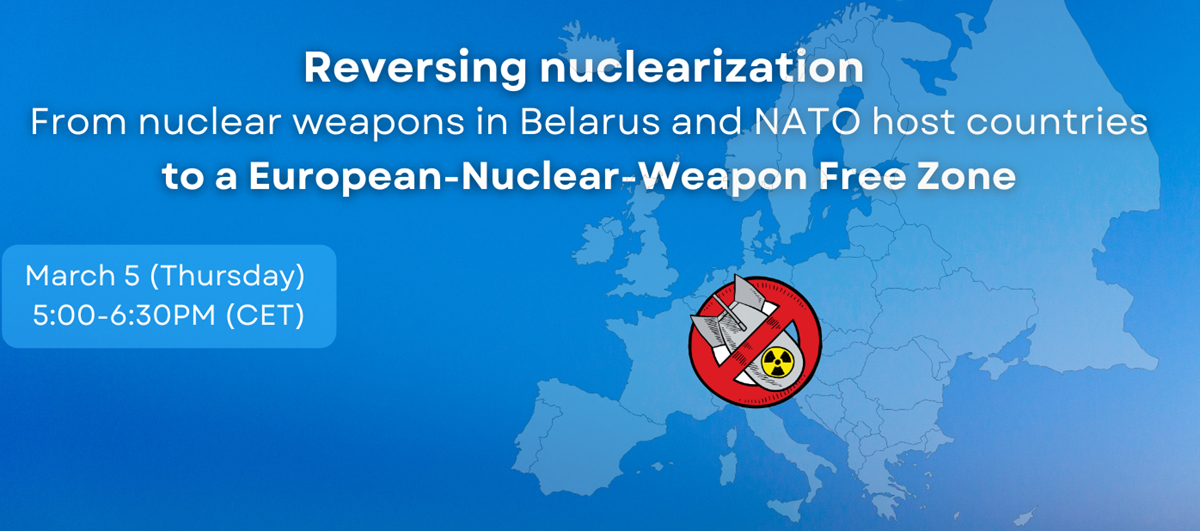
6 March -Online – Reversing nuclearization:
From nuclear weapons in Belarus and NATO host countries to a European-Nuclear-Weapon Free Zone
Mar 6, 2026 03:00 AM in Canberra, Melbourne, Sydney

of the week – Australians for War Powers Reform (AWPR)
To see nuclear-related stories in greater depth and intensity
 Antinuclear
Leave a comment