Australia’s Environment Minister Greg Hunt joining the pro #nuclear dance troupe?
Greg Hunt open to nuclear industry for SA http://www.afr.com/news/policy/climate/greg-hunt-open-to-nuclear-industry-for-sa-20151031-gknvu6 1 Nov 15 Environment Minister Greg Hunt has an “open mind” on nuclear power generation and the creation of a nuclear waste industry in South Australia.
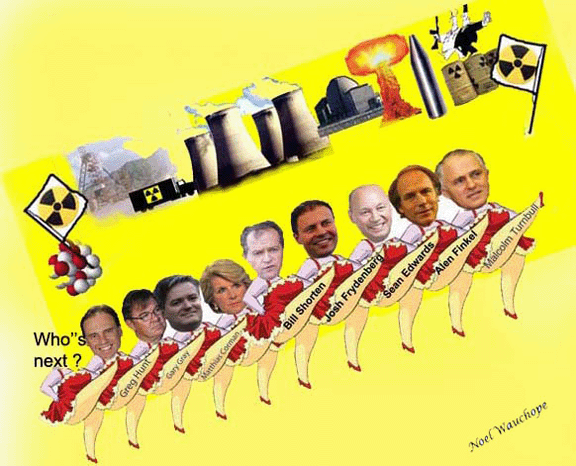
Mr Hunt said is waiting for the findings of the South Australian royal commission into nuclear, which is considering whether Australia should become more involved in the nuclear fuel cycle.
“We approach this with an open mind. We will look at the results of the royal commission,” Mr Hunt told ABC on Sunday.
“Nuclear energy is one of the many forms of zero emissions energy which will be available and what’s my broad vision, and our broad vision, we progressively move towards low and zero emissions energy over the coming decades.” The royal commission will be hosting a series of public sessions until December.
The Australian Financial Review reported on Wednesday that Prime Minister Malcolm Turnbull was backing the creation of a nuclear fuel industry.Mr Turnbull said Australia should become involved in the nuclear fuel cycle to produce fuel rods, export them and then transport them back home once used, and store them in outback nuclear waste dumps.
Assistant Science Minister Karen Andrews told the Financial Review on Wednesday that developing a nuclear waste disposal industry was an option, and pointed out that there is Australian nuclear waste in transit from treatment in France which is expected to be stored by the Australian Nuclear Science and Technology Organisation. Mr Turnbull is yet to confirm the federal government’s short list of potential sites for a nuclear waste dump.
Don’t let strident pro nuclear voices drown out alternative voices
 Gone Nuclear Fishing, The Adelaide Review, 2 Nov 15 John Spoehr With the nuclear Royal Commission, the South Australian Government has unexpectedly opened up a debate about our role in the nuclear fuel cycle. ……My own position at the outset is that it is not possible to examine the nuclear fuel cycle, and all that the nuclear industry entails, without detailed comparisons with the range of alternatives that are available to us in tackling climate change and building an energy industry for the future. Fair comparisons need to be commissioned and sought from a wide range of experts and subject to peer assessment. A citizens’ jury could be presented with the evidence to form another step in the advisory chain.
I am willing to listen to all sides of the debate while maintaining the highest levels of scepticism along the way. I need to be convinced, however, that Australia’s deeper participation in the nuclear fuel cycle is a superior journey to the alternatives available to us – particularly advanced solar thermal and energy storage technologies. Safety concerns and proliferation risks need to be honestly addressed. Other parts of the world might require other energy mixes, dictated by local realities and natural advantages but our position need not be dictated by what might be best applied in other nations to bring about sustainable reductions in greenhouse gases……
we need to ensure that the loudest and most well-resourced voices don’t drown out a robust debate about the alternatives available to us. http://adelaidereview.com.au/opinion/gone-nuclear-fishing/
Germany has made the move to renewables easier for the rest of us
But here’s the thing about the Germans: They knew the energiewende was never going to be a walk in the forest, and yet they set out on it. What can we learn from them? We can’t transplant their desire to reject nuclear power. We can’t appropriate their experience of two great nation-changing projects—rebuilding their country when it seemed impossible, 70 years ago, and reunifying their country when it seemed forever divided, 25 years ago. But we can be inspired to think that the energiewende might be possible for other countries too.
In a recent essay William Nordhaus, a Yale economist who has spent decades studying the problem of addressing climate change, identified what he considers its essence: free riders. Because it’s a global problem, and doing something is costly, every country has an incentive to do nothing and hope that others will act. While most countries have been free riders, Germany has behaved differently: It has ridden out ahead. And in so doing, it has made the journey easier for the rest of us.
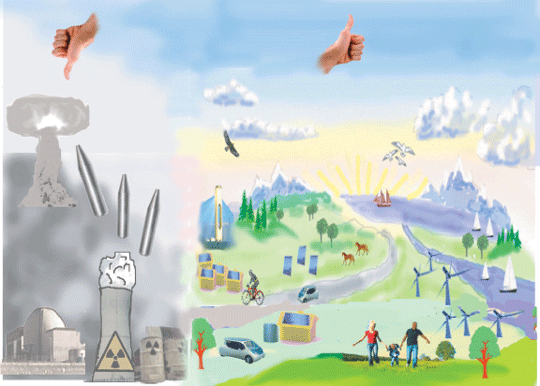
Germany Could Be a Model for How We’ll Get Power in the Future
The European nation’s energy revolution has made it a leader in replacing nukes and fossil fuels with wind and solar technology.National Geographic, By Robert Kunzig Photographs by Luca Locatelli
OCTOBER 15, 2015 “….. Germany is pioneering an epochal transformation it calls the energiewende—an energy revolution that scientists say all nations must one day complete if a climate disaster is to be averted. Among large industrial nations, Germany is a leader. Last year about 27 percent of its electricity came from renewable sources such as wind and solar power, three times what it got a decade ago and more than twice what the United States gets today. The change accelerated after the 2011 meltdown at Japan’s Fukushima nuclear power plant, which led Chancellor Angela Merkel to declare that Germany would shut all 17 of its own reactors by 2022. Nine have been switched off so far, and renewables have more than picked up the slack.
What makes Germany so important to the world, however, is the question of whether it can lead the retreat from fossil fuels. By later this century, scientists say, planet-warming carbon emissions must fall to virtually zero. Germany, the world’s fourth largest economy, has promised some of the most aggressive emission cuts—by 2020, a 40 percent cut from 1990 levels, and by 2050, at least 80 percent…….. Continue reading
Politicians’ ‘blinkered thinking’ in favouring nuclear industry – Bob Brown
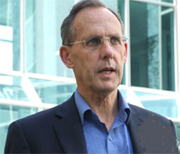 Keep nuclear out of our backyard by Bob Brown, 1 Nov 15 http://www.afr.com/opinion/letters-to-the-editor/keep-nuclear-out-of-our-backyard-20151031-gknvq7 Proposals for a nuclear reprocessing hub in South Australia, apparently gaining in both Coalition and Labor support, will be sorely tested in the coming and inevitable public debate.
This is a thinly disguised plan for the first nuclear power stations and a reprocessing plant on Australian soil. Such reactors and plant will require public subsidies unless, as in the latest British project, a foreign entity like China helps foot the bill. China and Japan are at the heart of the South Australian proposals. When Prime Minister John Howard tested the waters of public opinion on nuclear power stations – without the China or Japan factor – his retreat was swift and total.
The idea is to store nuclear waste above and below ground somewhere in the Outback – that is, on Aboriginal land. Besides raising questions of transporting the waste, what of the morality of dumping such toxic material in someone else’s yard? If so safe, why not put the nuclear hub in Adelaide or Canberra, let alone the Chinese, Japanese, Taiwanese, Indian, British or French countrysides?
We are in an age of handbag-sized nuclear weapons. International terror organisations see these as the Holy Grail. In the coming century of unprecedented human dilemmas, a nuclear Australia will inevitably become a more attractive focus and target for such organisations, as well as for hostile foreign governments.
With rapid innovation and cost reduction for both energy efficiency and renewable energy, the South Australian proposal is not just unnecessary, it is a case of blinkered thinking, foreign pressure and big dollars getting in the way of a clear-eyed national strategy for Australia’s future independence, security and lifestyle.
Doctors warn on health effects of climate change on children
 Australian doctors call for Health Minister to attend Paris climate talks, SMH November 2, Lucy Cormack The “increasingly unmanageable” threat of climate change on children’s health has prompted an open letter from doctors around Australia to the government, calling for Federal Health Minister Sussan Ley to attend the United Nations Paris climate summit this December.
In the letter, from independent organisation Doctors for the Environment Australia, leading doctors warn of the “health emergency” climate change presents for children, who have the least capacity to act. “More bushfires, floods and storms have already had severe and ongoing psychological effects on Australian children,” said the letter, which was released on Monday.
“Higher temperatures, which we are now seeing, have been linked to increases in premature births and hospital attendances for infectious diarrhoea, fever, asthma, dehydration and heat exhaustion.”…….Beyond two degrees of warming, health impacts threaten to become increasingly unmanageable.”
Professor Fiona Stanley, a former Australian of the year and a signatory to the letter, said she strongly supported the call for Ms Ley to go to Paris, because Australia desperately needed a national strategic plan for handling the health impacts of climate change…….Professor Kingsley Faulkner, AM, chair of DEA and former president of the Royal Australasian College of Surgeons, said Australia risked remaining “a laggard, rather than a leader on climate change”.
“Australia must prove to the world that it can protect the health of its own citizens in Paris, especially its children,” he said.
The 2015 Paris COP21 climate summit will host leaders from more than 190 countries and runs from November 30 to December 11. http://www.smh.com.au/environment/australian-doctors-call-for-health-minister-to-attend-paris-climate-talks-20151101-gknvym.html#ixzz3qIcipVs1
Sunshine in your beer in Sydney
 Pingala community-owned solar project to hit the roof of Young Henrys brewery, SMH, 2 November Lucy Cormack Environment Reporter
Imagine if there was sunshine in your beer. With a plan to build a solar farm atop the Young Henrys brewery in the heart of Sydney’s inner west, there soon could be.
Community members can become shareholders in the project – a collaboration with community energy organisation Pingala – and therefore, part owners of a future local solar farm. “When the Pingala guys came and spoke to us about it, we hadn’t had an interest in solar. Being able to put enough aside for large-scale solar wasn’t something we could afford,” said brewery part-owner Oscar McMahon.
“This was the perfect thing for us. We will start buying the power from the Pingala solar system on our roof, repaying people’s local investment into that system … we start buying renewable energy from our community.”
Electricity from the system will be used to power brewing processes, avoiding around 127 tonnes greenhouse gas emissions a year…….
The project will be the first for Pingala, part of a plan to start building community-owned solar farms on businesses and organisations across Sydney. The first stages have been realised with approval for a $40,000 innovation grant from the City of Sydney. Pingala volunteer Tom Nockolds said the renewable energy movement can no longer be ignored. “This idea, [it’s] time has really come. We’re opening up a new way for people to invest in renewable energy.” He said the project is directed at everyday “mums and dads who are struggling to find an opportunity to invest in renewables”. “Particularly in Sydney, where a high proportion of people live in apartments, are renters, or don’t have roof [space],” he said.
The Pingala initiative will aim for a 6 per cent to 8 per cent return for investors. After they have been paid back, the panels are gifted to the business to continue using. The first stages have been realised with approval for a $40,000 innovation grant from the City of Sydney.
Pingala volunteer Tom Nockolds said the renewable energy movement can no longer be ignored. “This idea, [it’s] time has really come. We’re opening up a new way for people to invest in renewable energy.”He said the project is directed at everyday “mums and dads who are struggling to find an opportunity to invest in renewables”. “Particularly in Sydney, where a high proportion of people live in apartments, are renters, or don’t have roof [space],” he said.
The Pingala initiative will aim for a 6 per cent to 8 per cent return for investors. After they have been paid back, the panels are gifted to the business to continue using
The Young Henrys project has the nod from Lord Mayor Clover Moore, who said it shows how Sydney “can make the shift to renewable energy even faster”. While Pingala is still obtaining financial and legal advice for the project, Mr Nockolds said in the early new year solar panels will be appearing on the Young Henrys roof…..http://www.smh.com.au/environment/pingala-communityowned-solar-project-to-hit-the-roof-of-young-henrys-brewery-20151029-gkltqu.html#ixzz3qIlYu8Jj
How Germany developed its transition from nuclear energy to renewables
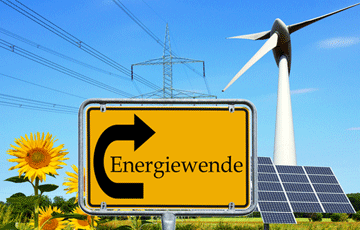 Germany Could Be a Model for How We’ll Get Power in the Future
The European nation’s energy revolution has made it a leader in replacing nukes and fossil fuels with wind and solar technology. National Geographic, By Robert Kunzig Photographs by Luca Locatelli OCTOBER 15, 2015 “…..Germany’s Audacious Goal
Scottish Labour votes to scrap Trident nuclear missile system
Mure Dickie in Perth, 1 Nov 15 Scottish Labour has voted emphatically against renewing the Trident nuclear weapon system, offering a major boost to supporters of unilateral disarmament in the UK party, including its leader, Jeremy Corbyn. Party members and union delegates to a conference in Perth both voted by 70 per cent to 30 to abandon plans to maintain a “massively expensive” and “militarily useless” submarine-launched ballistic nuclear missile system.
Ian Murray, Labour’s only MP in Scotland and a member of the UK shadow cabinet, said the more than two-thirds majority meant disarmament was now formal policy for the Scottish party. That would mean it must be considered by UK Labour policy planners and could be included as part of Labour’s platform for the Scottish parliamentary elections next May. “It should be in the manifesto,” Mr Murray said.
The vote highlights uncertainty about Labour’s policy on Trident since Mr Corbyn’s election and will be portrayed by the Scottish National party as evidence of deep divisions between him and the UK party’s mainstream.
But many Scottish Labour members praised the decision of Kezia Dugdale, the Scottish party’s new leader and an opponent of unilateral disarmament, to allow delegates to choose to debate and vote on Trident and other issues.
The vote came after a vigorous and often passionate debate in which opponents of Trident renewal stressed what many called the fundamental immorality of nuclear weapons while supporters focused on the threat that scrapping them would pose to thousands of well-paid jobs.
Union representatives were divided on whether to back Trident renewal, with many fearing that promised defence industry diversification would not deliver equivalent employment for highly skilled workers…….. delegate Stephen Low said scrapping nuclear weapons would free money to be spent in more economically productive ways.
“I’d rather have pie in the sky on my horizon than a mushroom cloud,” Mr Low said. “You get a lot of bang for your buck with Trident . . . but you don’t get that many jobs.”
Defence policy is decided by the UK party, but Bill Butler, a candidate for the party in next May’s Scottish parliamentary election, said it could help build momentum for nuclear disarmament……..http://www.ft.com/intl/cms/s/0/fb106dec-809b-11e5-84dc-31c8b3b18e5f.html#axzz3qGtjP1GJ
1 This month
7 April – WEBINAR – Australia and the Doomsday Clock – Preventing nuclear war through NoFirstUse and other policies
Online | Tuesday April 7, 4:00-5:30pm, Australian Eastern Time / 8:00-9:30am Central Europe Time
– Access the registration link
15 April – Zoom –Nuclear Power is Not the Solution
Apr 15, 2026 01:00 AM in Canberra, Melbourne, Sydney

Join the International Physicians for the Prevention of Nuclear War (IPPNW) on Tuesday, April 14th for a timely webinar exploring the risks associated with nuclear power and challenging the myth that it offers a simple, safe, carbon-free solution to the climate crisis

21 April Webinar: No Nuclear Weapons in Australia
Start: 2026-04-21 18:00:00 UTC Canberra, Melbourne, Sydney (GMT+10:00)
End: 2026-04-21 19:30:00 UTC Canberra, Melbourne, Sydney (GMT+10:00)
Event Type: Virtual
A virtual link will be communicated before the event.
Host Contact Info: australia@icanw.org

of the week – Australians for War Powers Reform (AWPR)
To see nuclear-related stories in greater depth and intensity
 Antinuclear