South Australian towns could become nuclear terrorism targets
 Nuclear a terrorist risk, Whyalla News Dec. 28, 2015, Local towns such as Whyalla could be made terror targets if South Australia does become part of the nuclear fuel cycle.
This risk was outlined as part of a Nuclear Royal Commission public session held at the Whyalla public library in front of a small group of locals earlier this month.
Regional engagement officer Jon Bok said that an increased threat of terrorism was one of the several risks the commission were taking into account.
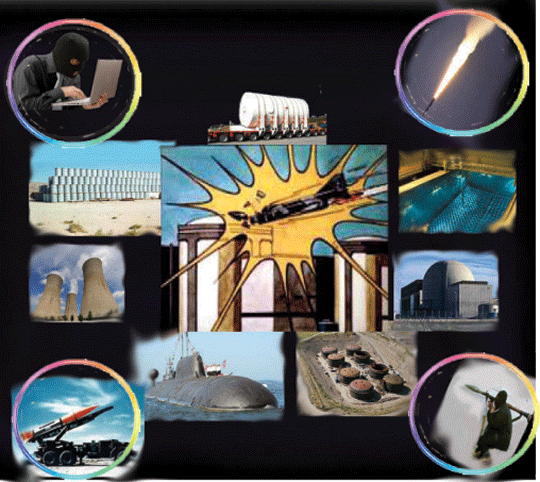
“At the moment we are looking into several issues, with terrorism being one of them,” Mr Bok said.
Mr Bok declined to comment on what counter-measures could be taken to prevent a terrorist attack…… http://www.whyallanewsonline.com.au/story/3617682/nuclear-a-terrorist-risk/
Australian government in deal with Ukraine’s troubled nuclear industry

 Ukraine to sign agreement on nuclear energy with Australia in 2016 http://en.interfax.com.ua/news/general/314722.html 29 Dec 15 Ukraine plans in 2016 to sign an agreement with Australia on cooperation in the field of using nuclear energy for peaceful purposes, Director of the Department of Strategic Planning and European Integration at the Energy and Coal Industry Ministry of Ukraine Mykhailo Bno-Airiian has said.
“One of the main tasks for 2016 is the signing of an agreement between the government of Ukraine and Australia on cooperation in the field of using nuclear energy for peaceful purposes,” he said at a briefing in Kyiv.
According to the department, the agreement has been agreed with the Australian government and is currently undergoing national procedures for its signature and ratification.
The illness and death fate of so many who worked in USA’s secret nuclear sites
 Of the 33,480, the government has specifically acknowledged that exposure to radiation or other toxins on the job likely caused or contributed to the deaths of 15,809 workers. And this tally almost certainly underestimates the total dead among the 600,000 who worked in the weapons program at its peak.
The women who worked at the plant were told to keep their mouths shut, and those  who talked about their jobs were quickly let go.
 Nuclear workers: Projects’ results were worth illnesses, deaths Amarillo.com December 28, 2015 Tribune News Service Editor’s note: This is the third story in a series examining the health problems that afflict the U.S. nuclear workforce as the government launches a $1 trillion plan to modernize the arsenal.
In 1944, when the feds wanted young women to help out with a top-secret project in the hills of Tennessee, they found 19-year-old Evelyn Babb.
She grew up on four acres in Appalachia, where her family had one milk cow and a couple dozen chickens. She jumped at the chance to make 70 cents an hour at the new Y-12 plant in Oak Ridge, Tenn., twisting knobs on dials, with no clue what she was doing. Bosses advised her to tell friends she was making highchairs for infants.
When President Harry Truman dropped an atomic bomb on Hiroshima on Aug. 6, 1945, Babb learned the truth: She had helped produce the atomic hell that killed thousands of Japanese as one of the climactic acts of World War II.
Broken Hill has Southern hemisphere’s largest solar energy project
 The industry is looking for assurance that Prime Minister Malcolm Turnbull is more climate-friendly than his predecessor, Tony Abbott, who said coal was “good for humanity.”
How Broken Hill became a solar power trailblazer, SMH December 22, 2015 James Paton Broken Hill spawned the world’s largest mining company and generated more than $75 billion in wealth. Now as its minerals ebb, Australia’s longest-lived mining city is looking to tap a more abundant resource.
On the sun-baked edge of the outback city, 700 miles west of Sydney, a solar farm the size of London’s Hyde Park shimmers like an oasis – its panels sending enough electricity to the national grid to power 17,000 homes a year.
Combined with a sister plant, the AGL Energy and First Solar project is the largest of its type in the southern hemisphere. Clean energy advocates are counting on the 140-hectare development to make Broken Hill, which at one time boasted the world’s most successful silver mine, a trailblazer once again. Continue reading
What is the situation in Fukushima today?
The herculean cleanup of Fukushima Prefecture involves 105 cities, towns, and villages. Unlike Chernobyl where authorities declared a 1,000 square mile no-habitation zone and resettlement of 350,000 people, thus allowing radiation to dissipate over decades-to-centuries, Japan is attempting to remake Fukushima back into its old self. But, radioactive material collected in millions of black bags is a vexing problem for the ages.
Adding to the lingering problem of transporting and storing radioactive waste, over time, the bags will likely deteriorate and need to be replaced with fresh bags. It is an endless cycle.
Handling radioactive waste in Japan may become generational employment, similar to how second and third generation workers eventually completed the grand cathedrals of Europe, like Notre Dame de Paris with a cornerstone laid in 1163 resulting in major construction completed circa 1250.
 Fukushima Today, Dissident Voice by Robert Hunziker / December 29th, 2015 Throughout the world, the name Fukushima has become synonymous with nuclear disaster and running for the hills. Yet, Fukushima may be one of the least understood disasters in modern times, as nobody knows how to fix either the problem nor the true dimension of the damage. Thus, Fukushima is in uncharted territory, a total nuclear meltdown that dances to its own rhythm. Similar to an overly concerned parent, TEPCO merely monitors but makes big mistakes along the way.
Over time, bits and pieces of information about Fukushima Prefecture come to surface. For example, Arkadiusz Podniesinski, the noted documentary photographer of Chernobyl, recently visited Fukushima. His photos and commentary depict a scenario of ruination and anxiety, a sense of hopelessness for the future.
Ominously, the broken down Fukushima Daiichi Nuclear Power Plant looms in the background of everybody’s life, like the seemingly indestructible iconic image of destruction itself, Godzilla with its signature “atomic breath.”
Podniesinski’s commentary clearly identifies the blame for the nuclear accident, namely:……… Continue reading
Australia leads the world in home rooftop solar
 Australia’s Small-Scale Rooftop Solar Installations Hit 4.59 GW In 2015 http://cleantechnica.com/2015/12/29/australias-small-scale-rooftop-solar-installations-hit-4-59-gw-in-2015/ by Glenn Meyers Propelling a global boost in renewable energy, Australia’s Clean Energy Regulator has reported small-scale rooftop solar totaled 4.59 GW in 2015. As reported by pv-magazine, data released by the Clean Energy Regulator shows 119,000 new small-scale PV installations have taken place in 2015. While not as sizable as 2014, this number distinguishes Australia with the highest portion of residential buildings with rooftop PV globally.
The Australia small-scale rooftop solar numbers also show the nation has maintained its world lead the world in deployment of rooftop solar. Counting a December 1 calculation, Australia has reached 1.49 million small-scale PV installations. This total is based on data released by this country’s Clean Energy Regulator.
The Clean Energy Regulator was established on 2 April 2012 as an independent statutory authority by the Clean Energy Regulator Act 2011, and operates as part of the Environment portfolio.
Clean Energy Finance Corporation (CEFC) estimates the nation will have another 300 MW of large-scale PV by the end of 2015. “Renewable energy is essential to Australia’s future economic growth and prosperity in a carbon-constrained world and to helping lower Australia’s carbon emissions. The transformation of Australia’s energy sector will require around $100 billion in investment in the renewables sector over the period to 2050.”
The CEFC Act has provided that a minimum of 50% of the CEFC portfolio be invested in renewable energy technologies, related enabling technologies and hybrid technologies that integrate renewable energy technologies by 1 July 2018.
CEFC reports on Australian solar potential
The CEFC has stated, “With the highest average solar radiation per square metre of any country in the world, and substantial cost reductions in solar technology over recent years, there is significant future opportunity for growth in deployment of solar technologies in Australia.”
CEFC has invested in both large and small-scale solar projects using solar photovoltaics. It reports the demand for solar financing continues to be strong, with solar projects valued over $3 billion.
The clean energy report shows a solid foundation for small-scale solar is in place.
Declassified documents show the horror of USA’s planned nuclear war on populations
 Stranger than Strangelove: how the US planned for nuclear war in the 1950s, The Conversation, Paul Lashmar, Senior Lecturer in Journalism, University of Sussex December 28, 2015 Those who have written about the nuclear Cold War remain grateful to Stanley Kubrick for giving us the satirical 1964 film Dr Strangelove which captures the madness that swept the world for 40 years. The name Strangelove may be overused but the United States has now released a secret file that really does justify the sobriquet: “Stranger than Strangelove”. Almost anodyne in title, Atomic Weapons Requirements Study for 1959 is a truly shocking document, revealing the scale of the holocaust that would have been unleashed in a nuclear war.
Record low price for wind energy achieved in ACT deal with South Australia
 Record price for renewable energy achieved in new wind farm deal, ACT Government says http://www.abc.net.au/news/2015-12-21/record-price-for-renewale-energy-achieved-in-new-wind-farm-deal/7045414
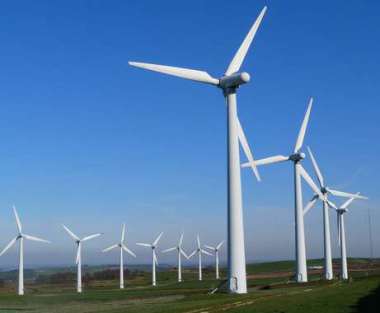
A record low in pricing for renewable energy has been set as part of a deal to buy power from a South Australian wind farm, the ACT Environment Minister says.
The French-developed Hornsdale wind farm has been selected to supply power to the ACT, at a cost of $77 per megawatt hour.
Located just north of Jamestown in South Australia, the wind farm will eventually power 56,000 Canberra houses, providing 13 per cent of the ACT’s projected electricity demand by 2020. Continue reading
Catholic Church in South Africa rejects nuclear power, calls for referendum
 South Africa’s Catholic Church Rejects Nuclear Procurement Plans, Calls For Referendum, IBT BY MORGAN WINSOR @MORGANWINSOR ON 12/29/15 The Catholic Church in South Africa urged the government Tuesday to suspend its nuclear power procurement plans until a referendum on the issue is held. The Justice and Peace Commission for the Southern African Catholic Bishops’ Conference said in a statement the risks of adding nuclear energy to the national grid outweigh any economic benefits, according to South Africa’sFin24.
“Although the probability of a nuclear accident is relatively low, the consequences of such an accident cause health hazards for thousands of people and render hundreds of kilometers of land uninhabitable and unsuitable for any use for decades,” said Bishop Abel Gabuza, chairperson of the commission. “The commission has therefore appealed to the government to urgently call for a nuclear referendum.”
Gabuza said the South African government, which is struggling with power shortages and an economic crisis, has yet to show evidence that nuclear procurement is affordable to the country and consumers. The Christian-majority nation should instead focus its efforts and financial resources on renewable energy, he added.
“Given the enormity of the risks that the South African government is asking its citizens to bear through the nuclear option, including the enormous safety risks and economic risks, it is only fair that the government directly consults its people on the matter,” Gabuza said in the statement Tuesday. “A referendum is the best instrument for realizing the common good on this important matter.”…….
The Justice and Peace Commission for the Southern African Catholic Bishops’ Conference said the government should look to Italy as a leading example. In June 2011, the Italian government held a similar referendum to poll its citizens on its plans to generate 25 percent of the country’s electricity from nuclear power by 2030. Well over 90 percent of voters rejected the plans for a return to nuclear power generation, the Guardian reported at the time.
“If our government truly believes that its nuclear decision is serving the best interests of the majority of South Africans, it should not be afraid to emulate the Italian example and open up the matter to a national referendum before the formal bidding process commences,” Gabuza said in the commission’s statement Tuesday, according to Fin24. http://www.ibtimes.com/south-africas-catholic-church-rejects-nuclear-procurement-plans-calls-referendum-2242619
Queensland’s Fraser Coast Region could bloom with solar farm, says Councillor
 Solar Farm ‘Common Sense’ For Queensland’s Fraser Coast December 30, 2015 Energy Matters “There are many issues on the Fraser Coast Region; none of which are more important than rising energy prices,” says Cr. Loft; who also points to issues with unreliable delivery of electricity.
The councillor states the construction of a solar farm within the region’s boundaries could provide savings for Council of around 15%, freeing up hundreds of thousands of dollars in working capital that could be redirected to other community needs.
In addition to savings, creating jobs and a more robust electricity supply, Cr. Loft says benefits for the region would include “the ability to portray the Fraser Coast Council as an environmentally friendly and green community, compatible with our magnificent natural environment.”
The Fraser Coast sits within the Great Sandy Biosphere, which is part of a world network of Biosphere Reserves.
The proposed feasibility study would include profiling the electricity consumption of Council and major consumers of electricity in the Shire; determining total Shire electricity consumption, potential locations for the facility and the most appropriate technology, e.g. solar panels, CPV or solar thermal + storage.
Cr. Loft believes now is a good time for a major solar power project……..
The Fraser Coast Council incorporates Fraser Island – the world’s largest sand island – and towns including Maryborough, Burrum Heads, Hervey Bay and Brooweena.
Queensland is Australia’s leading state in terms of total solar capacity and it also has the highest number of small scale solar power systems – more than 460,000 installations. http://www.energymatters.com.au/renewable-news/fraser-coast-solar-em5271/
Scotland reached ALP’s proposed 50% renewable energy target in 2014
 Scotland Just Hit Australia’s 2030 Renewable Energy Target In 2014 http://www.gizmodo.com.au/2015/12/scotland-just-hit-australias-2030-renewable-energy-target-in-2014/ MARK SERRELS 29 Dec 15 Earlier this year Bill Shorten unveiled a bold plan to bring 50% of Australia’s electricity generated by renewable sources by 2030. A plan he said would be shot down by scare tactics by the current government.
But the Scottish Government just announced it reached that same target. In 2014.
n 2014 49.7% of gross electrical consumption came from renewable sources, meaning that Scotland hit its 2015 target a year early. That’s an 11.9% increase on the 2013 figure.
“Today’s figures show that Scotland’s renewables sector is stronger than ever and our early adoption of clean, green energy technology and infrastructure was the right thing to do,” said Scotland’ Energy Minister Fergus Ewing. “It is fantastic news that renewables are now Scotland’s biggest electricity generator, and that nearly half of gross electricity consumption comes from renewables.”
Australia’s current official renewable energy target is 22.5% by 2020. Bill Shorten wants to increase that to 50% by 2030, to be in line with more ambitious countries around the world.
Obviously there are differences between the countries — Scotland potential as a natural resource base for renewable energy is high, with wind, wave and tide became the main sources of electricity. And compared the remainder of the United Kingdom, Scotland punches dramatically above its weight. Part of that has to do with the devolved Government’s focus on green issues. The Conservative UK government hasn’t put quite the same amount of faith into renewables as the Scottish Government.
The current Scottish government intends to push forward with its commitment to renewable energy.
“Despite damaging policy changes from the UK Government, we will continue to harness – and bolster – Scotland’s renewables potential, both in generation and infrastructure,” said Fergus Ewing. “At the end of Q3 2015, there was 7,504 MW of installed renewables electricity capacity in Scotland, an increase of 4.6% over the year.”
Australia’s potential for renewables is high. Many peer reviewed studies believe it is feasible (and economically beneficial) for Australia to move towards 100% dependence on renewable energy.
Monitoring USA’s exposure to nuclear radiation
 Fukushima Update: “Your Radiation This Week, BEFORE IT’S NEWS, Dec 19 to Dec 26, 2015″ By Bob Nichols
Normal Radiation is 5 to 20 CPM. 50 CPM is an alert level.
RADIATION CPM* • TIMES NORMAL BACKGROUND LEVEL • CITY, STATE • TYPE (
Baby Pulse Spikes Rad Monitors in US: ..……
1 This month

of the week – Australians for War Powers Reform (AWPR)
To see nuclear-related stories in greater depth and intensity
 Antinuclear