Experts warn on risks in nuclear waste disposal
“These accidents during the first 15 years of operation really illustrate the challenge of predicting the behavior of the repository over 10,000 years,”
The Stanford experts also suggest more attention to how the buried materials may interact with each other, particularly with salty brine, over centuries.

 Buried nuclear waste risky, say Stanford experts http://news.independence-card.com/buried-nuclear-waste-risky-say-stanford-experts/ Stanford Report, January 15, 2016 Radioactive material from the laboratories that design America’s nuclear weapons will have to be buried and kept away from humans for at least 10,000 years. But three Stanford experts say the safety analysis of this project needs to be revised to reflect new strategies that aim to substantially increase the amounts of plutonium to be disposed of. By Dan Stober
The Department of Energy’s long-term plan for dealing with material contaminated with plutonium and heavier elements from the U.S. weapons program is to bury it underground at the Waste Isolation Pilot Plant in southeastern New Mexico.
The Energy Department’s plan aims to safeguard nuclear material for the next 10,000 years. But three Stanford nuclear scientists point out in a new commentary article in the journal Nature that the Waste Isolation Pilot Plant (WIPP) was not designed to hold as much plutonium as is now being considered for disposal there. And, in fact, the site has seen two accidents in recent years. Continue reading
The planned repositary for Lucas Heights returning nuclear waste
 Radioactive waste in Australia, Medical Association
 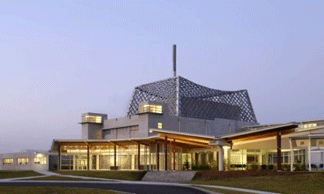 for the Prevention of War (MAPW) 18 Jan 16 What will the repository look like? “……The low level waste will be permanently disposed of in a shallow trench covered by 5 metres of soil with plastic and clay lining to prevent water and other materials entering. The nuclear fuel waste, which is intermediate level waste, is too hazardous to be managed in this manner, so will be placed above ground in a temporary purpose-built store3 . Is the repository a permanent management solution? No. This is merely an interim repository for the intermediate level waste. There is no timeline set for a permanent solution. Permanent disposal of intermediate level waste requires deep geological burial. So the Commonwealth repository follows IAEA recommendations only for the low level waste (see below). It does not meet the permanent disposal needs of the intermediate level waste, and defers accountability indefinitely
1 This month
Chernobyl: The Lost Tapes – A good documentary on Chernobyl on SBS available On Demand for the next 3 weeks– https://www.sbs.com.au/ondemand/tv-program/chernobyl-the-lost-tapes/2352741955560
15 April – Zoom –Nuclear Power is Not the Solution
Apr 15, 2026 01:00 AM in Canberra, Melbourne, Sydney

Join the International Physicians for the Prevention of Nuclear War (IPPNW) on Tuesday, April 14th for a timely webinar exploring the risks associated with nuclear power and challenging the myth that it offers a simple, safe, carbon-free solution to the climate crisis

21 April Webinar: No Nuclear Weapons in Australia
Start: 2026-04-21 18:00:00 UTC Canberra, Melbourne, Sydney (GMT+10:00)
End: 2026-04-21 19:30:00 UTC Canberra, Melbourne, Sydney (GMT+10:00)
Event Type: Virtual
A virtual link will be communicated before the event.
Host Contact Info: australia@icanw.org

of the week – Australians for War Powers Reform (AWPR)
To see nuclear-related stories in greater depth and intensity
 Antinuclear