South Australian nuclear waste import plan simply cannot succeed
Given the wildly optimistic price for waste modelled by the mid-scenario, not to mention the 56,000 tonnes of waste left over with no costed solution, and with all the uncertainties in developing the new technologies required, the simple conclusion is that this plan is simply all risk with no reward.
No-one else will line up to take advantage of this “once in a lifetime opportunity”, because the opportunity does not exist. The plan simply cannot succeed.

The impossible dream Free electricity sounds too good to be true. It is. A plan to produce free electricity for South Australia by embracing nuclear waste sounds like a wonderful idea. But it won’t work. THE AUSTRALIA INSTITUTE Dan Gilchrist February 2016
“……NO GOOD OUTCOME The free energy utopia depends on two new, as yet unproven technologies: PRISM reactors, and cheap borehole disposal. The Edwards plan appears to rely on these technologies not only being successfully developed, but remaining entirely in Australian hands. Competition is certainly not addressed in the plan.
Northern Territory Mine Regulator gives a free pass for uranium mining companies to pollute
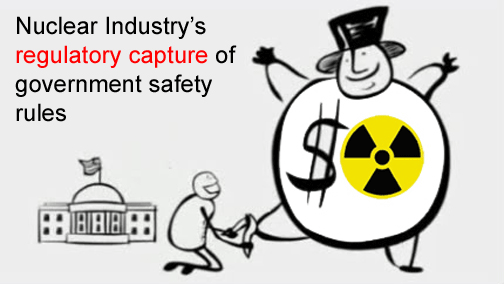 What is a regulator for again? http://linkis.com/greensmps.org.au/1cNkL 12 Feb 2016 The Northern Territory mine regulator is inviting uranium companies to ignore any environmental safeguards with their refusal to prosecute Energy Resources Australia, the Australian Greens said today.
“After more than two years, the NT regulator has given ERA a pass. The Ranger mine leaked nearly 1.5 million litres of radioactive acidic sludge into the plant area, and could have got people killed,” Australian Greens Deputy Leader Senator Scott Ludlam said today.
“Under estimates questioning we were told that the report into the leach tank spill was kept from the public while a decision was made about whether or not to prosecute. It’s hard to envisage a scenario that warranted the application of the full force of the law more than this one.
“The regulator failed to prevent the spill, they took years to deliberate, and came up with nothing. They’ve essentially announced to mining companies in the NT that there are no legal consequences for catastrophic negligence,” Senator Ludlam said.
“We urge the NT government to reverse this decision immediately and force ERA to be accountable.”
No charges over radioactive spill! How nice for ERA!
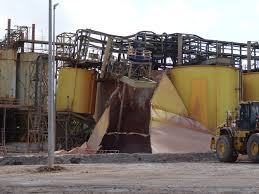 ERA radioactive slurry spill: NT Government won’t lay charges against miner A uranium miner has avoided charges over a 2013 spill of 1,400 cubic metres of radioactive slurry at its Ranger mine in the Northern Territory. ABC News 12 Feb 16
Key Points:
- Report focuses on radioactive spill from 2013 at Ranger Mine near Kakadu NP
- NT Government says not in public interest to lay charges
- Mining company Energy Resources Australia welcomes findings
The spill at the Energy Resources of Australia (ERA) Ranger uranium mine, which is surrounded by Kakadu National Park, saw a holding tank collapse on December 7, 2013. Workers discovered a hole in the side of the tank and were evacuated before the tank burst and the slurry escaped.
ERA said no-one was injured and no uranium leaked off the site into Kakadu.
The NT Government on Friday released the findings of its Completed Investigation Into Failure of Leach Tank 1 Ranger Uranium Mine.
Department of Mines and Energy chief executive, Ron Kelly, explained in the report that he accepted the “admission of fault by ERA to the unauthorised spill as a result of the failure of Leach Tank 1”.
“However I have decided that it is not in the public interest to lay a charge against ERA under Section 33 of the NT Mining Management Act [MMA],” he said……..
EDO blames ‘lack of political will’ for failure to prosecute
Principal lawyer with the non-profit Environmental Defenders Office in the NT, David Morris, said the Government did not need to show that ERA intended for the spill to occur to successfully prosecute the miner.
“The reason they are not bringing this prosecution? I think, lack of political will,” Mr Morris said.
“What this decision does is send a message to the Northern Territory community that we are not going to hold companies to account for a really poor standard of quality control on their mine sites,” Mr Morris said.
He said being forced to shut down the site was not a penalty.
“That is the cost of doing business when you do business poorly.” http://www.abc.net.au/news/2016-02-12/era-avoids-charges-over-radioactive-slurry-spill/7163560
Independent Australia cracks the mystery of “international award” to (Anti) Environment Minister Greg Hunt
 Mystery explained: Hunt’s award handed out by the oil industry, Independent Australia Lachlan Barker 12 February 2016, MANY THIS week, myself definitely included, were gobsmacked by Greg Hunt receiving an award for – get your sick bags ready everyone – “Best Minister in the World“.
When I first saw this, again like so many of you, I thought it was satire, perhaps done by that excellent SBS site The Backburner. I’ve repeatedly been taken in by this site, so plausible are their funny stories and so appalling is our federal government.
But no, when we all got off the floor, the stories were indeed real and Hunt had, indeed, been given this award.
However, I knew there was something rotten here and so I thought I better find out how this bizarre occurrence came about. So I went to the site of the organisation that gave out the award, the World Government Summit. There on the home page is a link to “Partners“, so I clicked on that and discovered that the intriguingly entitled ‘Entrepreneurship Partner’ is the Abraaj Group.
So I clicked on that and we come to the Abraaj page and discover their portfolio. Among them are such heartwarming industries as Chemicals, Metals and Industrials,Pharmaceuticals, Construction and Manufacturing and of course Energy, Mining and Utilities.
[Author lists the companies, with their logos]
One company, Auro Mira Energy is focussed on renewables; they pursue hydro and biomass power generation in India.
However, the rest is largely fossil fuels……..
So there you have it mystery solved, Greg Hunt’s award was sponsored in large part by the energy industry, most prominently oil.
Once I found this out, it kind of made Hunt’s award make sense.
The award was for “Best Minister in the World” and so if you are going to pick a minister who does more than any other to enable the continued and increased use of fossil fuels, then clearly Greg Hunt is your man………
Greg Hunt is the best at enabling ongoing and increasing use of fossil fuels, against all financial and global ecological sense. So they can give him an award, as long as it’s for “Most Destructive Environment Minister the Earth has ever Known”.
Lachlan Barker blogs at cyclonecharlie88.blogspot.com.au. You can follow him on Twitter at@cyclonecharlie8. https://independentaustralia.net/environment/environment-display/mystery-explained-hunts-award-handed-out-by-the-oil-industry,8672
Exploding Senator Edward’s plan for nuclear waste importing
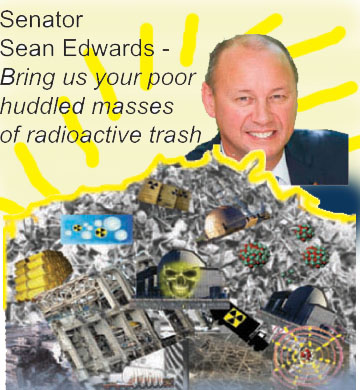 The impossible dream Free electricity sounds too good to be true. It is. A plan to produce free electricity for South Australia by embracing nuclear waste sounds like a wonderful idea. But it won’t work. THE AUSTRALIA INSTITUTE Dan Gilchrist February 2016
2900 scientists urge Malcolm Turnbull to prevent the drastic cuts to CSIRO’s climate researchers
Australia played a vital role in monitoring and modelling, particularly for the southern hemisphere.
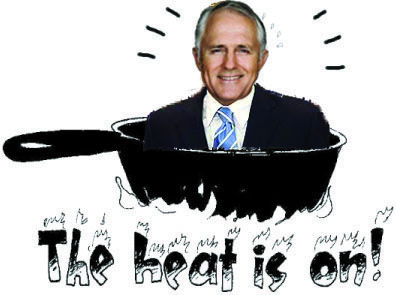 CSIRO climate cuts ‘devastating’, almost 3000 scientists tell Malcolm Turnbull http://www.smh.com.au/environment/climate-change/csiro-climate-cuts-devastating-almost-3000-scientists-tell-malcolm-turnbull-20160211-gms3ea.html Peter Hannam Environment Editor, Almost 3000 scientists from nearly 60 nations have appealed to Prime Minister Malcolm Turnbull and other Australian leaders to halt the CSIRO’s plans to halve the number of researchers working on climate monitoring and modelling.
In a letter that was also sent to the CSIRO’s board and chief executive Larry Marshall, the 2900 researchers said the decision to cut 100 full-time positions out of about 140 staff from two units of the Oceans and Atmospheric division “alarmed the global research community”.
“The decision to decimate a vibrant and world-leading research program shows a lack of insight, and a misunderstanding of the importance of the depth and significance of Australian contributions to global and regional climate research,” the letter said.
“The capacity of Australia to assess future risks and plan for climate change adaptation crucially depends on maintaining and augmenting this research capacity.”
The letter follows a statement earlier this week by the World Climate Research Program that the proposed axing risked severing “vital linkages with Australian colleagues and to essential southern hemisphere data sources, linkages that connect Australia to the UK, the US, New Zealand, Japan, China and beyond”. Continue reading
The massive holes in Senator Edward’s arguments for “new nuclear” technology for South Australia
not a single PRISM [ (Power Reactor Innovative Small Module] has actually been built…. the commercial viability of these technologies is unproven
Crucially, under the plan, Australia would have been taking spent fuel for 4 years before the first PRISM came online, assuming the reactors were built on time.
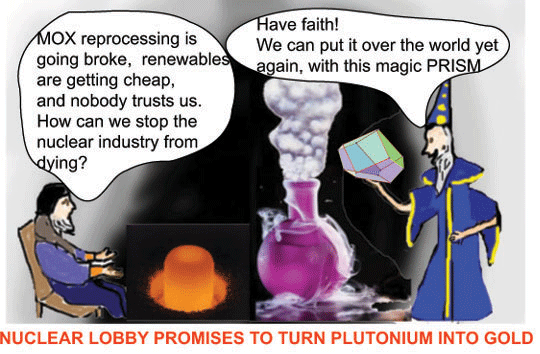
if borehole technology works as intended, and at the prices hoped for, why would any country pay another to take their waste for $1,370,000 a tonne, when a solution exists that only costs $216,000 a tonne, less than one sixth of the price?
 The impossible dream Free electricity sounds too good to be true. It is. A plan to produce free electricity for South Australia by embracing nuclear waste sounds like a wonderful idea. But it won’t work. THE AUSTRALIA INSTITUTE Dan Gilchrist February 2016
“……NEW TECHNOLOGY This comprehensively researched submission asserts that a transformative opportunity is to be found in pairing established, mature practices with cuspof-commercialisation technologies to provide an innovative model of service to the global community. (emphasis added) Edwards’ submission to the Royal Commission
Australia needs a new National Day of Mirth – Greg Hunt Day
WATCH: Scott Ludlam Rips Greg Hunt For Award ‘It Sounds Like His Mum Made Up’ The Greens’ Deputy Leader has a new idea for a day of national mirth and holiday-making. Get ready for Greg Hunt Day.
Not one to let a moment of social media frenzy pass uncommented on, Scott Ludlam has this contribution to make in the wake of Greg Hunt being awarded the ‘World’s Best Minister’ tag at the World Government Summit overnight.
In an address to the nation, Ludlam called for the surprising event to be celebrated by declaring February 10 a national public holiday. “We want to acknowledge the brazen audacity of Minister Hunt accepting an award for his contribution to dismantling Australia’s world leading climate change laws.”
It goes on. … https://newmatilda.com/2016/02/10/watch-scott-ludlam-rips-greg-hunt-for-award-it-sounds-like-his-mum-made-up/ (Video viewing time 2min 5sec)
Need for epidemiological studies in areas near nuclear facilities
Childhood leukemia, low birth weight, compromised neural development are all associated with exposure to radiation during pregnancy and early childhood.
Astonishingly, no official body in the United States is seriously investigating these impacts. In fact, the U. S. federal government appears not to conduct public health impact studies of populations around nuclear power reactor sites.

Who is monitoring the health of populations around nuclear power  plants?, http://enformable.com/2016/02/who-is-monitoring-health-of-populations-around-nuclear-power-plants/ Enformable, Cindy Folkers Author’s note: I wrote this blog post with knowledge of the ongoing tritium leaks plaguing a number of nuclear power reactors in the U.S., but before the latest high levels of tritium released from the Indian Point reactor in New York were reported. These recent unplanned and largely unaccounted for releases bring into stark relief the need to measure in real time the releases we DO initially control; further, it is reasonable to request public access to these data.
This denial of the dangers of radioactivity has carried through to the present day. When the Environmental Protection Agency (EPA) issued its first-ever radiation exposure standards in 1977, the US was only 20 years into the atomic energy age, barely long enough to see many of the health impacts radioactivity may have had. Man-made radioactivity had been around for about 40 years with the building of the bomb, well before EPA was established, but well after some very nasty health effects from larger doses were recognized. Now, in 2015, EPA is considering revising its radiation standards – the first major revision since 1977.
EPA is responsible for regulating radioactive emissions that migrate off of a site that releases such material. These off site releases can expose members of the public and their environment. Revision of these nearly 40-year old standards should be a good thing; adding protection for women who are 50 % more sensitive to radioactivity than men; and providing proper protection for pregnancy and childhood development —life stages that are particularly, in some cases uniquely, sensitive to exposure to radioactivity. But old habits, and nuclear industry interference, die hard. Continue reading
The contribution of LEAD to brain problems and violent crime
an astonishing body of evidence. We now have studies at the international level, the national level, the state level, the city level, and even the individual level. Groups of children have been followed from the womb to adulthood, and higher childhood blood lead levels are consistently associated with higher adult arrest rates for violent crimes. All of these studies tell the same story: Gasoline lead is responsible for a good share of the rise and fall of violent crime over the past half century……
It’s the only hypothesis that persuasively explains both the rise of crime in the ’60s and ’70s and its fall beginning in the ’90s.
A second study found that high exposure to lead during childhood was linked to a permanent loss of gray matter in the prefrontal cortex—a part of the brain associated with aggression control as well as what psychologists call “executive functions”: emotional regulation, impulse control, attention, verbal reasoning, and mental flexibility.
LEAD – America’s real criminal element. Mother Jones, By Kevin Drum, February 16 “…………IN 1994, RICK NEVIN WAS A CONSULTANT working for the US Department of Housing and Urban Development on the costs and benefits of removing lead paint from old houses. This has been a topic of intense study because of the growing body of research linking lead exposure in small children with a whole raft of complications later in life, including lower IQ, hyperactivity, behavioral problems, and learning disabilities.
But as Nevin was working on that assignment, his client suggested they might be missing something. A recent study had suggested a link between childhood lead exposure and juvenile delinquency later on. Maybe reducing lead exposure had an effect on violent crime too?
That tip took Nevin in a different direction. The biggest source of lead in the postwar era, it turns out, wasn’t paint. It was leaded gasoline. And if you chart the rise and fall of atmospheric lead caused by the rise and fall of leaded gasoline consumption, you get a pretty simple upside-down U: Lead emissions from tailpipes rose steadily from the early ’40s through the early ’70s, nearly quadrupling over that period. Then, as unleaded gasoline began to replace leaded gasoline, emissions plummeted.
Criminality in big nuclear corporations
Designers of PRISM, General Electric and Hitachi are frauds whose criminality could have put the public at dire risk. They were hit with a $2.7 million penalty by the US DoJ.
http://www.justice.gov/opa/pr/general-electric-hitachi-nuclear-energy-americas-agrees-pay-27-million-alleged-false-claims
Ecocidal maniac GE has a rap sheet which is despicable yet they don’t lose their licence to meddle with the atom. Bernie Madoff and his Ponzi scheme got him 150 years in prison yet the GE beasts remain free to run amok with impunity.
http://www.multinationalmonitor.org/mm2001/01july-august/julyaug01corp4.html
Utility scale solar projects to benefit from ARENA funding as solar costs have fallen
 Cost cuts set solar on track to capture share of RET http://www.smh.com.au/business/energy/cost-cuts-set-solar-on-track-to-capture-share-of-ret-20160209-gmp73f.html February 11, 2016 Angela Macdonald-Smith Energy Reporter Rapid cost reductions have put solar power on a fast-track to capturing at least some of the 2020 Renewable Energy Target market for large-scale projects and are attracting a new breed of player into the local sector.
Last month’s short-listing by the Australian Renewable Energy Association of 22 projects for funding under its $100 million grant round featured a number of names new to Australia, as well as many taking their first foray into solar. Indian conglomerate Adani, better known for its controversial Galilee coal ambitions, also revealed its local solar ambitions this week.
Australia’s wealth of sunshine sets it up to become a leading player in large-scale solar, according to ARENA chief executive Ivor Frischknecht, in a logical follow-on from our enthusiastic adoption of rooftop solar.
Frischknecht points to startling progress on the cost front over the past few years for utility-scale solar projects. Continue reading
Aboriginal traditional owners recognised in name change for Flinders Ranges
Flinders Ranges renamed in recognition of traditional Aboriginal owners ABC North and West By Michael Dulaney, Tim Bennett and Carmen Brown 12 Feb 16 The Flinders Ranges National Park has been officially renamed to incorporate the traditional Aboriginal word for the area.
Traditional owner Mark McKenzie confirmed the park was officially renamed Ikara-Flinders Ranges National Park in a ceremony on Friday at Wilpena Pound, 430 kilometres north of Adelaide.
The new name incorporates an Adnyamathanha word, Ikara, which means “meeting place” reflecting the traditional name for Wilpena Pound — a natural amphitheatre of mountains forming one of the most prominent features of the Ranges.
I’ll also be thinking of the children in the future, to make sure we remain — as a people — part of the landscape of the Flinders Ranges National Park.
Michael Anderson, traditional owner
Adnyamathanha Traditional Lands Association (ATLA) chairman Michael Anderson said the change recognised the spiritual and cultural significance of the area for traditional owners…….http://www.abc.net.au/news/2016-02-12/flinders-ranges-renamed-in-recognition-of-traditional-owners/7161
Western Australia’s Environmental Defender’s Office slams biodiversity bill
WA enviro defender slams biodiversity bill https://au.news.yahoo.com/thewest/wa/a/30797749/wa-enviro-defender-slams-biodiversity-bill/ AAP February 11, 2016, The Environmental Defender’s Office has advised against passing the West Australian government’s biodiversity conservation bill in its current form, saying the touted benefits are illusory. Environment Minister Albert Jacob introduced the bill in November, describing changes to the Wildlife Conservation Act as “the Holy Grail” of legislation change for every government going back to the 1980s.
The EDO, however, has released a 36-page white paper that strongly disagrees with the touted benefits of the changes.
Principal solicitor Patrick Pearlman conceded the bill had some good features including repealing two obsolete laws and substantially increasing potential fines for violations, but takes “a giant step back in many other ways”.
He said the proposed removal of “even the threat of jail time” for harming highly threatened species was particularly disturbing.
Mr Pearlman said the proposed changes would give virtually unfettered discretion to either the state environment minister or the Department of Parks and Wildlife’s chief executive in decision-making, leaving the scientific community and the public out in the cold when it came to identifying vulnerable species, critical habitat or key threats.
The bill would give offenders defences that would likely undermine enforcement efforts, and broadly exempt government and industry from the new law’s reach, he said.
“Even worse, the bill appears to promote short-term declines to foster development and permits the minister to allow species to be taken to the point of extinction,” he said.
Last year, the state government cut the EDO’s funding completely.
Breakthrough Institute’s disinformation on carbon emissions from nuclear
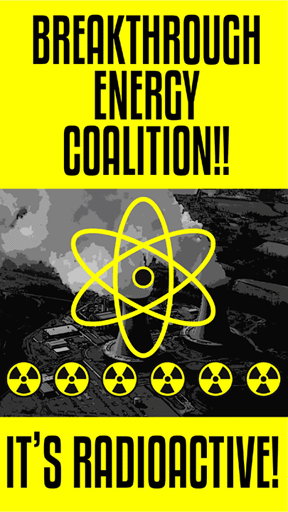 Why the Current Nuclear Showdown in California Should Matter to You, Sunset for Nuclear Power? CounterPunch, by JAMES HEDDLE FEBRUARY 12, 2016
“………….Comparisons are Odious…and Misleading The contention that nuclear energy is ‘carbon free’ is a piece of disinformation. Yes, relative to those of coal, oil, and gas, the total carbon emissions from the nuclear fuel chain is lowER.
But, by no stretch of the data, are they zero.
When you add together all the fossil fuel-dependent earth-moving machines, transportation, milling and processing operations, security and grappling with transporting and storing tons of radioactive waste lethal for thousands of years, it becomes clear how big the actual carbon footprint of the nuclear energy industry really is.
But, not only does the nuclear fuel chain emit carbon at every stage, it also emits DNA and public health destroying radioactive pollution.
Every day, ‘routine emissions’ from every nuclear reactor in the world contaminate the surrounding environment and population with radiological pollution. It’s all about our genetic heritage, you see.
A Pro-Nuclear Henny Penny
Like denialist counterparts in the asbestos, tobacco, oil and GMO industries, Shallenberger and his coalition colleagues poopoo the risks of their product. But they think the sky will fall if Diablo is shutdown….. http://www.counterpunch.org/2016/02/12/why-the-current-nuclear-showdown-in-california-should-matter-to-you/
1 This month

of the week – Australians for War Powers Reform (AWPR)
To see nuclear-related stories in greater depth and intensity
 Antinuclear