Election: Liberal and Labor prefer to ignore Climate Change
 Climate change has dropped off the political radar (and this is a big problem) ABC THE DRUM, 14 APR 16 By Mike Steketee The aversion to talking about climate change during the election campaign reflects a wider problem: our concern for this issue has fallen even while it has become larger and more urgent, writes Mike Steketee.
How much of an issue will climate change be in this year’s election?
Not a major one, if Malcolm Turnbull gets his way. He has saddled himself with Tony Abbott’s policy as one of the costs of appeasing the conservatives in his ranks.
And while Bill Shorten will be arguing he has a superior policy – but also risking a fear campaign over re-introducing a carbon tax – Labor, too, believes it has bigger fish to fry, such as pushing forward its credentials on education and health.
This reflects a sobering reality: in the last eight years, many Australians’ concern over climate change has fallen even while the problem has become larger and more urgent.
The market research company Ipsos has been conducting surveys on the issue since 2007. In that year 54 per cent of people who were presented with a list of issues said climate change was one that needed to be addressed. In the latest report, still to be released, this fell to 38 per cent last year. This is about the same as for the previous two years, although higher than in 2011 and 2012.
Different descriptions on the list for essentially the same issue confirmed the finding, but more strongly. For example, concern about tackling “global warming” fell from 55 per cent to 35 per cent over the eight years. Renewable energy was at the top of the list of issues that needed to be addressed but it also has fallen significantly – from 68 per cent to 51 per cent.
Perhaps people are less concerned because some action has been taken. But if this is true of renewable energy, where the government has set a (reduced) target of 22.5 per cent by 2020 and Labor 50 per cent by 2030, it is hard to argue the same on other issues.
Concern about the need to address rising sea levels has fallen from 29 per cent to 17 per cent over the eight years. Sea levels rose by an estimated global average of 17cm between 1900 and 2005 and according to recent research, nearly 70 per cent of the increase since 1970 was due to human influences – that is, the thermal expansion of the oceans and the melting of glaciers due to burning fossil fuels.
The argument has been that scaring people with stories about bushfires, cyclones and melting glaciers does not work……
There have been major progress in recent years to curbing carbon emissions, particularly in China and notably driven at least in part by public concern over smog produced by industry. Global energy-related carbon dioxide emissions have stayed flat for the last two years, according to the International Energy Agency. It adds that renewables accounted for about 90 per cent of new electricity generation last year.
But in Australia emissions from electricity generation have continued growing – by 3 per cent in 2014-15 –and emissions overall have increased by 1.3 per cent…….http://www.abc.net.au/news/2016-04-15/steketee-climate-change-has-dropped-off-the-political-radar/7328538
No comments yet.
1 This month
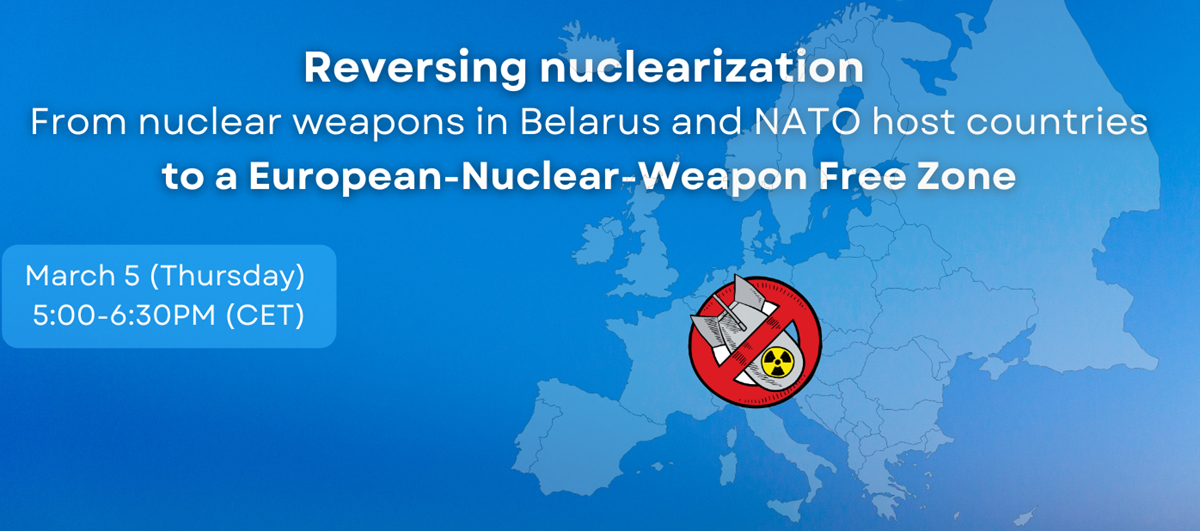
6 March -Online – Reversing nuclearization:
From nuclear weapons in Belarus and NATO host countries to a European-Nuclear-Weapon Free Zone
Mar 6, 2026 03:00 AM in Canberra, Melbourne, Sydney

of the week – Australians for War Powers Reform (AWPR)
To see nuclear-related stories in greater depth and intensity
 Antinuclear
Leave a comment