1 – 3 July – Lizard Bites Back festival at Olympic Damn Uranium Mine
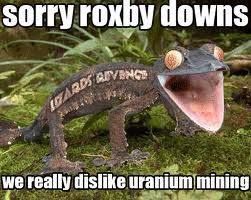 The Lizards Bites Back music and arts festival and protest camp will take place at the gates of the Olympic Dam uranium mine (or close by) from the 1st – 3rd of July this year. The “protestival” will include a variety of musicians and artists from around the country, mobile artworks, workshops on nuclear issues, non-violent direct action, and the message that there is strong community opposition to uranium mining and any expansion of the nuclear fuel chain in South Australia, from BHP Billiton’s planned heap leach demonstration plant to current proposals for South Australia to host a nuclear waste dump. The event will run entirely on solar and wind power.
The entire nuclear fuel chain from mining to nuclear waste dumps poses unique health and environmental risks that span generations. With South Australia currently facing two proposals for nuclear waste dumps The Lizard Bites Back will re-focus on the source of the problem, highlighting an absurd global situation where we continue to mine a mineral that we cannot dispose of safely, whilst proposals are again being made to force nuclear waste dumps on communities that do not want them. The Olympic Dam mine itself will also eventually become a dump – in the sense that once it is closed, it will leave millions of tonnes of radioactive tailings on the surface of the land forever.
Uranium mining is the beginning of the nuclear fuel chain, and the problem of the long term storage of radioactive waste remains unresolved. Until the industry and governments stop creating nuclear waste by mining uranium, operating nuclear reactors and making nuclear weapons, why should any community bear the health and environmental risks associated with a nuclear waste dump? The government’s current approach mops up the bathroom floor whilst the tap is still running.
A responsible approach to managing nuclear waste would begin with stopping its production. An environmentally and socially just approach would stop targeting Aboriginal lands as sacrifice zones.
The Lizard Bites Back follows on from the Lizards Revenge in July 2012, which mobilised 500 people against the proposed expansion of the mine. Since then, that proposal has been shelved and the company has been investigating heap leach mining as part of a cheaper expansion plan. BHP is projected to begin a heap leach trial on the current mining lease by late this year. Even though this technique is not currently used on-site, Federal approval of the trial did not require environmental assessment.
Please see below for a summary of the issues.
The campsite location is soon to be announced on our website at lizardbitesback.net
Summary
The Olympic Dam mine
The Olympic Dam mine produces 4000 tonnes of yellow cake and 10 million tonnes of radioactive tailings per year. Key health and environmental impacts include:
- Over 100 million tonnes of accumulated tailings which will remain a health and environmental hazard for several hundred thousand years.
- The mines 400 hectares of tailings dams are unlined, and designed to leak radioactive waste into the underlying rock and aquifer
- The mine uses approximately 37 million litres of water per day from the Great Artesian Basin.Under the Indenture Act it pays nothing for this water. The water intake is having adverse impacts on the Mound Springs found near Lake Eyre, which are sacred to the Arabunna people.
- The company identify the inhalation of radon daughters and dust containing radionuclides as the primary radiation exposure pathways for the public.They are the only ones monitoring radon levels and dust contamination.
- These radioactive contaminants can also enter the food chain.This is not being monitored by BHP or any regulatory body.
- The mine has a history of leaks and spills – since 2003 the company has reported 33 incidents.[1]
- The mine operates under the Roxby Downs Indenture Act, which allows wide-ranging exemptions from key South Australian laws, such as the Environmental Protection Act, Freedom of Information Act, the Natural Resources Management Act, and the Aboriginal Heritage Act. These legal privileges allow the mine to operate outside the state regulatory framework, setting a dangerous legal precedent for the nuclear industry in South Australia.There is no guarantee that a similar Indenture would not be applied to a nuclear waste dump in the state, exempting it from environmental and other laws.
No comments yet.
1 This month

of the week – Australians for War Powers Reform (AWPR)
To see nuclear-related stories in greater depth and intensity
 Antinuclear
Leave a comment