The Risky Economics of South Australia’s Nuclear Waste Importing Plan
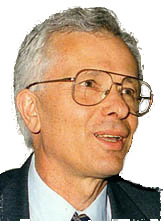 Risks, ethics and consent: Australia shouldn’t become the world’s nuclear wasteland, The Conversation, Mark Diesendorf, Associate Professor, Interdisciplinary Environmental Studies, UNSW Australia, June 28, 2016 Last month the South Australian Nuclear Fuel Cycle Royal Commission recommended that the state government develop a business venture to store a large fraction of the world’s high- and intermediate-level nuclear power station wastes in South Australia. It proposes to do this by first building an interim above-ground store, to be followed by permanent underground repository.
But the commission’s recommendation is based on several debatable assumptions, including:
- an economic analysis that purports to show huge profits with negligible commercial risk
- the notion that social consent could be gained by “careful, considered and detailed technical work”
- the argument that Australia, as a net exporter of energy, has an ethical responsibility to help other countries lower their carbon emissions by means of nuclear power.
I have analysed critically these and other assumptions of the royal commission in a scholarly paper published in the international journal Energy Research and Social Science.
Risky economics
The commission’s economic analysis rests on the heroic assumption that customers would, upon delivery of their nuclear wastes to South Australia, pay up-front for both interim above-ground storage andpermanent underground storage. This would be up to 17 years before the underground repository has actually been built. The estimated total payment would be about A$1.75 million per tonne of heavy metal (tHM) for storing possibly 138,000 tHM in total.
However, this ignores the huge financial risk to the government and taxpayers in the following scenario: the SA government builds the initial facilities – port, underground research and an interim above-ground storage – at a cost of about A$3 billion. Commencing in year 11, customers deliver their nuclear wastes in dry casks, but pay initially only for the costs of interim storage of the casks, declining to pay for geological storage until the underground repository has been built and becomes operational in year 28.
Despite the royal commission’s claim that the government would not develop the project under these conditions, the government could be influenced to accept the wastes by pressure, both positive and negative, from overseas governments, multinational corporations and/or internal politics.
Then, after a large quantity of nuclear waste has been placed into interim storage in SA, the government might not proceed with the geological storage, costing an extra A$38 billion, for technical, political or financial reasons.
A similar situation occurred in the United States with the termination of funding for the Yucca Mountain repository after US$13.5 billion had already been spent.
In this scenario, SA would be locked into managing a large number of dry casks, designed only for interim storage and located above ground, which will gradually erode and leak their dangerous contents over several decades. The physical hazards and the corresponding financial burden on future generations of all Australians would be substantial.
In this scenario, it would also be risky for customers who relied upon it and so failed to provide their own domestic geological repository……… https://theconversation.com/risks-ethics-and-consent-australia-shouldnt-become-the-worlds-nuclear-wasteland-61380
No comments yet.
1 This month

of the week – Australians for War Powers Reform (AWPR)
To see nuclear-related stories in greater depth and intensity
 Antinuclear
Leave a comment