How much is the South Australian government spending on its pro nuclear extravaganza?
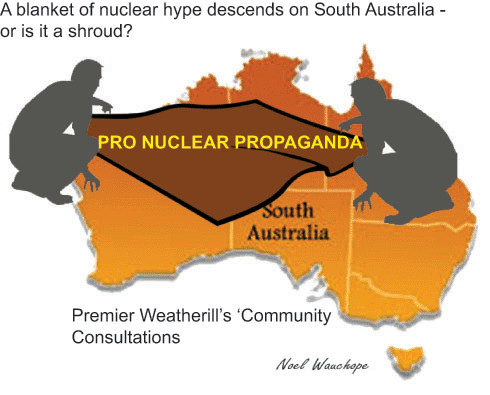
 What I’m worried about is the amount of tax-payers’ money that is going into this State-wide nuclear brainwash. Is Premier Jay Weatherill squandering so much of the State’s coffers on this fool’s enterprise that he and the rest of the politicians will feel that they MUST go on and complete the damn thing – commit to an international nuclear waste dump? Current estimate is $13 million. But will it be more?
From July 29 to October 20 they will be sending teams of nuclear spruikers all over the State of South Australia.
Teams from Nuclear Fuel Cycle Royal Commission Consultation and Response Agency will be there to spread the jolly word of the biased Nuclear Fuel Chain Royal Commission. Who’s on this Agency anyway? Can we expect to hear, yet again, from Greg Ward and Chad Jacobi giving their polished pro nuclear spiel? Will there be deceptive and trivialised presentations on the healthiness of ionising radiation – as there were at the recent Citizens’ Jury hearings?
Adelaide: the next steps in South Australia’s nuclear brainwash
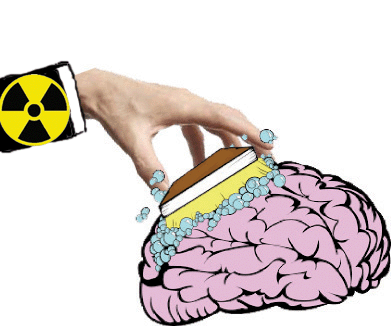
The next step in the international nuclear waste dump campaign from the government is “community consultation” and they are visiting 100 sites around SA. People’s opinions will be used to gauge whether there is community consent or not.
Murdoch and the Liberals on the attack against renewable energy
 Murdoch and the Coalition: This week targetting renewables, Independent Australia Giles Parkinson 18 July 2016, The Murdoch media and the Coalition are ramping up the war on renewables in the wake of soaring gas prices, writes Giles Parkinson.
THE MURDOCH MEDIA and conservative Coalition parties have ramped up their attacks on renewable energy in light of the big spike in electricity prices in  South Australia this week, saying that wind and solar are solely to blame for the state’s electricity problems.
Power prices spiked sharply again this week but energy analysts say that wind and solar are not at fault, pointing out that gas prices have jumped to record highs and the interconnector to Victoria was constrained due to delayed work on network upgrades.
But this has cut no mustard with the Murdoch media and the Coalition, who have used the incidents of the past week to renew their usually skewed attacks against the high levels of wind and solar in the state.
In an editorial entitled ‘SA power prices threaten future of economy‘, The Advertiser, Murdoch’s monopoly daily newspaper in Adelaide, thundered:
‘SA’s reliance on wind and solar power is responsible for these absurd prices.’
And threatened:
‘The state’s electricity supply cannot be left at the mercy of the weather gods and erratic spot prices. Labor’s great green energy experiment will cost it ultimate power in 2018.’
The editorial makes absolutely no mention of the record gas prices, or the energy cartel that it is defending.
Murdoch’s position has been eagerly supported by the local state opposition, which like all Coalition parties across the country – at both the state and federal level – is pushing back against any moves to increase the amount of renewable energy in the electricity system. Continue reading
It’s Over: The Myth of the Nuclear Renaissance
The Myth of the Nuclear Renaissance The game is already over for nuclear energy. U.S. News Linda Pentz Gunter July 18, 2016, Desperate times for the nuclear industry call for desperate rhetoric. Hence the reach, once again, for “renaissance,” even though the facts support no such thing and the industry itself dare not even resurrect the mythological moniker. [“The New Nuclear Renaissance,” 6/11/2016]
With nuclear power priced out of the market – not only by natural gas but, more importantly for climate, by renewables – die-hard nuclear proponents are dressing up old reactors in new propaganda.
Sodium-cooled, fast and even small modular reactors are all designs that have been around – and rejected – for decades.

Sodium-cooled reactors are prone to fires, explosions and super-criticality accidents. A rapid power increase inside the core of such a reactor could vaporize the fuel and blow the core apart. Far from “walk away safe,” these on-paper designs have not been submitted to the kind of rigorous “all scenarios” testing that could definitively designate them as meltdown proof.
Small modular reactors that deliver lower amounts of electricity than large ones present an economy of scale that has proven to be a deterrent to investors. Capitol costs per kilowatt for these reactors are estimated at double those for a traditional light water reactor.
Furthermore, so-called “new” designs that are still on the drawing board will remain there for years to come, too late for climate change that can be answered quickly and far more cheaply by immediate and widespread implementation of wind and solar energy, whose prices are falling precipitously.
The real race the U.S. is letting China win is in the renewable energy field. China’s renewable investments in 2015 totaled $100 billion, according to the just released “2016 World Nuclear Industry Status Report,” more than five times the amount the country invested for new reactors, which was $18 billion.
The game is over for nuclear energy and there is no extra time, even in China. “Construction starts for new nuclear reactors fell to zero globally in the first half of 2016 as the atomic industry struggles against falling costs for renewables and a slowdown in Chinese building” the report found.
The Renaissance was a cultural movement that bridged Medieval times to the so-called Early Modern Age. Like nuclear energy, it is of the past, not the future. http://www.usnews.com/opinion/articles/2016-07-18/stop-perpetuating-the-myth-of-the-nuclear-renaissance

South Australia to get world’s biggest solar + storage project
 World’s biggest solar + storage projects planned for Australia http://reneweconomy.com.au/2016/worlds-biggest-solar-storage-projects-planned-australia-95528 By Giles Parkinson on 19 July 2016 Australian infrastructure investor Lyon Group says it plans to build the world’s biggest solar plus storage project in South Australia in the next two years, and sees a huge future for combined solar and battery storage plants..
Lyon Group’s David Green – which worked on developing a soon-to-be built 30MW solar plant and 1.4MW/5.3MWh lithium battery storage facility near Cooktown, in far north Queensland, before selling it to German-based company Conergy – plans a series of other projects and claims a pipeline of more than 300MW of solar and up to 60MW of battery storage.
The first new project is planned for South Australia, with a 100MW solar PV plant to be combined with a battery storage array of up to 40MW, Green says the plant could be in operation near Roxby Downs by early 2018, and there are plans for other similar projects around the country.

The first stage of what is known as the Kingfisher project – 20MW of solar PV plus a minimum 2MW battery storage – is expected to be running late next year.
The project is one of the finalists in the Australian Renewable Energy Agency funding round for large scale solar, which is expected to allocate monies to 10 or more projects when decisions are announced next month.
Green says the company – which has previously invested in coal, gas and wind projects, but is now specialising in solar and storage – is looking to be a global industry leader in solar plus storage.
“The genie is out of the bottle. There will be a burst of activity now in large scale solar + battery projects. This is the real battery storage story coming out of Australia – batteries used to convert large scale solar to effectively baseload, or peaking plant.”
The combination of solar and storage means the facilities can compete on two levels – providing clean energy and dispatchable power, either to household or large energy users, and also re-enforcing the edge the grid, in some cases avoiding the costs of grid upgrades. Continue reading
Taxpayer to fund Adani coal project – says new ‘Environment” Minister Josh Frydenberg
 Frydenberg signals $5 billion taxpayer frolic with Adani’s unwanted
fossil flop, Independent Australia Sophie Vorrath 24 September 2015 In a shock interview yesterday, the Turnbull Government’s new energy and resources minister, Josh Frydenberg, signalled that taxpayers would be stumping up funds for Adani’s unpopular Carmichael coal mine.Renew Economy’s Sophie Vorrath reports.
IF AUSTRALIA’s new Prime Minister and refreshed front bench are showing signs of being more progressive about renewable energy investment and R&D, it looks like they are also going to be far more candid about coal, and their plans to invest heavily there, too.
In an interview with Fairfax media on Wednesday, the newly sworn in energy and resources minister Josh Frydenberg was crystal clear on the government’s intent to use taxpayer money from its $5 billion Northern Infrastructure Fund to help get the Adani-owned Carmichael coal mining project off the ground.
And he was equally clear that the Turnbull Government’s attitude to developing new coal projects – despite the smart money being on all untapped fossil fuel resources staying in the ground, and despite the fact that most banks and institutional investors won’t touch the Galilee Basin project with a 10 foot barge pole – remains the same as the Abbott Government’s. Frydenberg told the AFR, repeating the mantra of his former boss:
[Carmichael coal mine is] a very important project, which will see significant investment in Australia and provide electricity to millions of people in the developing world,”
Anti-development activism can create major delays in projects and send investment offshore, and you have to be very conscious of that when there are such large time frames involved and we are competing internationally for investment in this country.
The trouble is, the sort of investment Frydenberg sees Australia competing for is looking more like divestment to the rest of the world, with a new report showing that there is now an estimated $2.6 trillion in coal, gas and other fossil fuel assets set to be dumped from the investment portfolios of 430 institutions and 2,040 individuals around the world…….https://independentaustralia.net/environment/environment-display/frydenberg-signals-5-billion-taxpayer-frolic-with-adanis-unwanted-fossil-flop-,8193
Victoria to get record-breaking wind farm
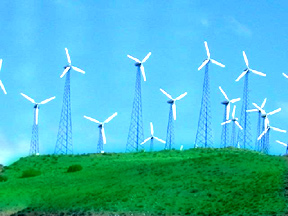 Record-breaking, brolga-friendly, $650m wind farm gets government green light, The Age, July 19 2016 Benjamin Preiss Victoria’s most productive wind farm generating enough power for 140,000 households will be built in the south-west after the state government approved the plans.
The $650 million wind farm, to be built near Dundonnell, will have 96 turbines. Once completed, it will produce enough power to supply the combined populations of Ballarat and Warrnambool.
The project will create an estimated 300 jobs during construction, with 16 positions once it is built…….The wind farm’s layout was designed to accommodate brolga breeding and flocking habits, according to the government………http://www.theage.com.au/victoria/recordbreaking-brolgafriendly-wind-farm-gets-government-green-light-20160719-gq8o3t.html
North America on the brink of A Trillion Dollar Renewable Energy Market
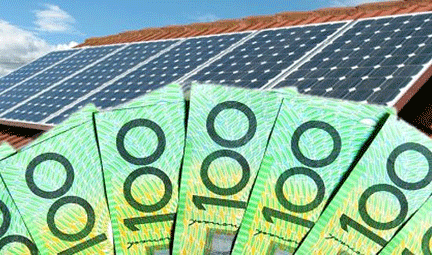
 A Trillion Dollar Renewable Energy Market Might Have Just Opened Up in North America
An agreement between the U.S., Canada, and Mexico could open up new growth for the solar industry. The Motley Fool Travis Hoium (TMFFlushDraw)
Jul 4, 2016 Leaders of the U.S., Canada, and Mexico agreed this week to increase their renewable energy consumption in an effort to get half of North America’s energy from renewable sources by 2025. It’s a lofty goal, despite assertions that 37% of the region’s energy already comes from renewables. But it highlights just how much of a coordinated effort the countries are taking. And it may open a trillion dollar energy market for renewable energy companies. Continue reading
$US2 trillion lost to world economy, as places become ‘too hot to work’
 Many places ‘too hot to work’ by 2030
 http://www.heraldsun.com.au/news/breaking-news/many-places-too-hot-to-work-by-2030/news-story/67761e405a9405d45d94279104016f7c Beh Lih Yi, AAP
It showed that in Southeast Asia alone, up to 20 per cent of annual work hours may already be lost in jobs with exposure to extreme heat with the figures set to double by 2050 as the effects of climate change deepen.
Across the globe, 43 countries will see a fall in their gross domestic product (GDP) due to reduced productivity, the majority of them in Asia including Indonesia, Malaysia, China, India and Bangladesh, Tord Kjellstrom, a director at the New Zealand-based Health and Environment International Trust, said. Indonesia and Thailand could see their GDP reduced by six per cent in 2030, while in China GDP could be reduced by 0.8 per cent and in India by 3.2 per cent.
Kjellstrom authored one of six papers on the impact of climate change on health that were put together by the United Nations University’s International Institute for Global Health in Kuala Lumpur and published in the Asia Pacific Journal of Public Health.
Kjellstrom warned that the lowest-paid workers – those in heavy labour, agricultural and manufacturing – were most at risk of exposure to extreme heat.
The other papers in the series showed around 2.1 million people worldwide died between 1980 and 2012 due to nearly 21,000 natural catastrophes such as floods, mudslides, extreme heat, drought, high winds or fires.
In Asia Pacific, 1.2 billon people have been affected by 1215 disasters – mostly floods, cyclones and landslides – since 2000.
The first three months of 2016 have broken temperature records and 2015 was the planet’s warmest year since records began in the 19th century.
Hypocrisy of Malcolm Turnbull on Climate Change
 Three minutes to midnight and our politics ignores the climate threat The further burning of vast carbon reserves is an attack on the human species, writes scientist Dr Andrew Glickson. Crikey, 19 July 16
— Malcolm Turnbull, 2010 … (subscribers only) https://www.crikey.com.au/2016/07/19/inaction-on-climate-change-crime/
Nick Xenophon wants inquiry in South Australia’s renewable energy issues
Nick Xenophon blames SA energy woes on ‘bad’ renewables rules, AFR, by Angela Macdonald-Smith, 20 July 16 South Australian Senator Nick Xenophon says the state’s energy problems are due to “bad decisions” in the design of the renewable energy target legislation that failed to take into account the impact of more intermittent generation on wholesale prices……..
Mr Xenophon said he would raise the suggestion of a Senate inquiry into renewable energy to consider issues as to whether some types of energy should attract a higher weighting in renewable energy certificates if they produced more reliable power, and to consider potential incentives for battery storage.
SA Treasurer Tom Koutsantonis says those blaming the state’s energy woes on its push into renewables have “completely misunderstood” the situation and insists the fault lies in the lack of a real national electricity market.
1 This month
7 April – WEBINAR – Australia and the Doomsday Clock – Preventing nuclear war through NoFirstUse and other policies
Online | Tuesday April 7, 4:00-5:30pm, Australian Eastern Time / 8:00-9:30am Central Europe Time
– Access the registration link
15 April – Zoom –Nuclear Power is Not the Solution
Apr 15, 2026 01:00 AM in Canberra, Melbourne, Sydney

Join the International Physicians for the Prevention of Nuclear War (IPPNW) on Tuesday, April 14th for a timely webinar exploring the risks associated with nuclear power and challenging the myth that it offers a simple, safe, carbon-free solution to the climate crisis

21 April Webinar: No Nuclear Weapons in Australia
Start: 2026-04-21 18:00:00 UTC Canberra, Melbourne, Sydney (GMT+10:00)
End: 2026-04-21 19:30:00 UTC Canberra, Melbourne, Sydney (GMT+10:00)
Event Type: Virtual
A virtual link will be communicated before the event.
Host Contact Info: australia@icanw.org

of the week – Australians for War Powers Reform (AWPR)
To see nuclear-related stories in greater depth and intensity
 Antinuclear