South Australian Nuclear Royal Commission Did Not Give The Citizens’ Jury The Full Picture
 Submission to JOINT COMMITTEE ON FINDINGS OF THE NUCLEAR FUEL CYCLE ROYAL COMMISSION Makes the case that Australians are being denied the bigger picture, and the NFCRC was deliberately or negligently selective in their assessment of evidence received. https://www.academia.edu/27087058/Submission_to_Joint_Committee_on_Findings_of_the_Nuclear_Fuel_Cycle_Royal_Commission
“………I believe that the South Australian people have a right to know about the implications of all relevant nuclear materials handling processes and their consequences for human health and the environment in advance of making or influencing any government decision to accept or reject spent nuclear fuel.
I am concerned that the Citizens’ Jury currently tasked with simplifying the Nuclear Fuel Cycle Royal Commission may not comprehend the full extent of the Commission’s recommendations- that is, that they are seeking to enable currently prohibited industrial activities across the whole nuclear fuel cycle.[1] Nuclear Fuel Cycle Royal Commission, Government of South Australia, ‘Nuclear Fuel Cycle Royal Commission Report’, 2016: pg. XV. http://yoursay.sa.gov.au/system/NFCRC_Final_Report_Web.pdf . Accessed 2016-07-01……..
3. the question arises: how selective or otherwise was the process of assembling its Final Report and recommendations? Why was certain information received not included in the Commission’s final report?
4. the first Citizens’ Jury did not hear from a presenter who was appropriately knowledgeable on matters of radio-biology and the pathways and effects of exposure to nuclear materials in environmental or occupational contexts (with respect to uranium and nuclear fuel). The only medical professional to address the jurors for any significant length of time was Associate Professor Michael Penniment.
It is my opinion that by not providing fundamental information about the connection between radiationexposure and the development of cancers and leukaemia, the Department of the Premier andCabinet is preventing the jurors from being able to adequately consider risks, which being bombarded by the opportunity of waste storage, and the numerous mechanical processes which would need to occur to enable it………
CHERNOBYL In his presentation to the jurors, Penniment went on to describe the consequences of Chernobyl incorrectly, stating that only 28 people died as a result of the incident, and that those were the first responder clean-up workers. This misinformation conflicts with all recent accounts of the disaster, including those published in the Nuclear Fuel Cycle Royal Commission’s own Final Report. No-one present in the room was able to correct him……
5 I supplied evidence to the Commission for its consideration demonstrating the different approaches taken to measuring and estimating the human health consequences of Chernobyl in my submission to the Tentative Findings. I had hoped that the Commission would compare these with its own references to UNSCEAR and the WHO. No such comparisons were reflected in the Final Report…….
FUKUSHIMA In the case of the 2011 Fukushima disaster, the Commission’s final report fails to reflect the gravity, extent of harm and technical complexities related to the incident and the response thus far……
6. [On the health effects on nuclear workers]
The Commissioner’s response to my question and correction demonstrate that the Commissioner was at that time unaware of the problematic nature of the elevated risk of cancers and leukemias experiencedby nuclear industry workers, despite my submissions. This also confirmed that the evidence I provided to the Commission was ignored, either wilfully or negligently. I reach this conclusion with confidence, given Chad Jacobi’s recent admission that all submissions were read by the Commission, and by him personally.[11]
I have received further confirmation from the Royal Commission’s Chief of Staff, Greg Ward that Chad Jacobi was the chief author of the final report. If Jacobi read all of my submissions, what cause did he have to ignore the evidence that I provided?
NUCLEAR FACILITY EFFLUENT & EMISSIONS In my submissions to the Commission, I drew attention to several studies which identified or analyses clusters of leukemias in close proximity to nuclear facilities…….. The Commission chose not to include this controversial subject in its final report, despite a preliminary search revealing a substantial number of peer-reviewed medical research papers exploring this topic……..
NUCLEAR FUEL LEASING The Final Report refers to the prospect of establishing a nuclear fuel leasing scheme in South Australia, contingent on the establishment of a permanent storage facility for spent nuclear fuel. The report then goes on to say that such a program could provide a competitive advantage capable of improving prospects for the development of additional uranium processing activities in South Australia……..This process of gradual expansion into enrichment and fuel processing is summarised….
By my assessment, these statements reveal the broader intent of the Commission’s recommendations, yet this information is buried deep inside the body of the Final Report. The Commission suggests that South Australia work with established nuclear industrial players to add value to the currently exported product: uranium oxide concentrate.
RECOMMENDATIONS
Nobody can say how much it will cost to store high-level nuclear waste
 The Soaring Costs Of Germany’s Nuclear Shutdown, Environment
  360, Joel Stonington, 25 July 16 “……….Any future waste repository will have to contain the radiation from spent uranium fuel for up to a million years.
Given the time frames involved, it’s not surprising that no country has built a final repository for high-level waste. In Germany, a government commission on highly radioactive nuclear waste spent the last two years working on a 700-page report, released this month, that was supposed to recommend a location. Instead, the report estimated that Germany’s final storage facility would be ready “in the next century.” Costs are expected to be astronomical.
“Nobody can say how much it will cost to store high-level waste. What we know is that it will be very costly – much higher costs can be expected than [what] the German ministry calculates,” said Claudia Kemfert, head of energy, transportation, and environment at the German Institute for Economic Research. The exact number, she said, “cannot be predicted, since experience shows that costs have always been higher than initially expected. ”
At the Asse II mine, roughly $680 million has been spent in the six years since the cleanup began, and the price tag for operations last year totaled $216 million. A 2015 report by Germany’s Environment Ministry noted, “There are currently no technical plans available for the envisaged waste recovery project which would allow a reliable estimate of the costs.”
No one expects to start moving the barrels at the mine until 2033, and estimates of finishing the process extend to 2065. Total costs for moving the waste to a future storage site will almost certainly be in the billions of dollars, with current estimates of just disposing of the recovered waste at $5.5 billion.
The waste issue is one reason nuclear power has been so controversial in Germany and why there is broad support among the public for phasing it out, with three-quarters of the German population saying they are in favor of Merkel’s decision, according to a survey this year by the Renewable Energy Hamburg Cluster.
“Nuclear in Germany is not popular,” Kemfert said. “Everybody knows it is dangerous and causes a lot of environmental difficulties. Nuclear has been replaced by renewables – we have no need for nuclear power any more.” ………
With both nuclear waste storage and decommissioning, governments and power companies around the world have often opted for halfway solutions, storing waste in temporary depots and partially decommissioning plants. Worldwide, 447 operational nuclear reactors exist and an additional 157 are in various stages of decommissioning. Just 17 have been fully decommissioned.
In Europe, a recent report by the European Union Commission estimated that funds set aside for waste storage and decommissioning of nuclear plants in the EU’s 16 nuclear nations have fallen short by $137 billion. Dealing with nuclear waste in the United Kingdom is also a highly charged issue. At one location — a former weapons-manufacturing, fuel-reprocessing, and decommissioning site called Sellafield — the expected cleanup cost increased from $59 billion in 2005 to $155 billion in 2015. ……
despite recently completing a new plant, the United States is also struggling with decommissioning. The cost estimates of shuttering U.S. nuclear plants increased fourfold between 1988 and 2013, according toBloomberg News. Many governments are slowly starting to realize how much those costs have been underestimated.
As Antony Froggatt, a nuclear expert and researcher at Chatham House — a London-based think tank— put it, “The question is, how do you create a fair cost to cover what will happen far into the future?” http://e360.yale.edu/feature/soaring_cost_german_nuclear_shutdown/3019/
South Australian government’s nuclear roadshow begins Friday 29 July

The Government’s nuclear waste dump “community consultation” roadshow begins this Friday in Adelaide’s Rundle Mall. Over the next three months they plan to visit 100 sites across 60 towns to explain the Royal Commission’s report and gather feedback.
Make your voice heard
This is the opportunity to make sure your views are heard by the State Government before Premier Jay Weatherill makes a decision later this year on whether to go ahead and make South Australia the world’s nuclear waste dumping ground.
If you think South Australia deserves better, then make sure you have your say.
The sessions are informal, so drop in at any time to register your opposition to SA becoming a dumping ground for international high level nuclear waste.
Where and when
Find out when the roadshow will be near you (click here), and mark it in your diary so you don’t miss out.
Tell Jay, a nuclear waste dump is the wrong way for SA.
Indigenous agency wins in Canada- prevents Kiggavik Uranium Mine Project

 Nunavut Impact Review Board, 14 July 16 – correspondence issued on July 14, 2016 by the Honourable Carolyn Bennett, Minister of Indigenous and Northern Affairs and received by the Nunavut Impact Review Board (NIRB or Board) by regular mail on July 25, 2016 regarding the Board’s Final Hearing Report for the Kiggavik Uranium Mine Project Proposal (NIRB File No. 09MN003).
As responsible ministers for the Kiggavik Uranium Mine (the Kiggavik Project) as proposed by AREVA Canada Resources Inc., the Ministers of Fisheries, Oceans and the Canadian Coast Guard, Natural Resources, Transport and Indigenous and Northern Affairs (the Ministers) have jurisdictional responsibility for authorizing whether the Kiggavik Project should or should not proceed. Having reviewed the Board’s Final Hearing Report for the Kiggavik Project, pursuant to Section 12.5.7(a) of the Nunavut Land Claims Agreement, the Ministers have accepted the NIRB’s determination that the Project should not proceed at this time.
Receipt of the Ministers’ decision concludes the Board’s assessment of the Kiggavik Project. All information pertaining to the NIRB’s Review, including the Board’s May 8, 2015 Final Hearing Report, can be accessed online from the Board’s public registry using any of the following search criteria:
Project Name: The Kiggavik Project File Number: 09MN003 Application Number: 123967
Federal Minister for Resources and Northern Australia Matt Canavan will be on Q&A next Monday evening.
 You can submit a question/ upload a video question via: http://www.abc.net.au/tv/qanda/ask-question.htm
Independent inquiry finds that the ABC is not biased
 ABC cleared of ‘anti-business’ bias in independent review http://www.theage.com.au/business/media-and-marketing/abc-cleared-of-antibusiness-bias-in-independent-review-20160722-gqbp68.html Matthew KnottThe ABC has been cleared of systemic “anti-business” bias in a major review of its coverage, with former ANZ boss Mike Smith confessing he has rethought his negative perceptions of the broadcaster.
The independent editorial review, for which Mr Smith was a key adviser, has been one of the broadcaster’s most comprehensive yet. As well as analysing a week’s worth of ABC programming, the review included interviews with ABC business staff and submissions from business groups, think-tanks and unions.
Fairfax Media understands the review, which has not been released publicly, is overwhelmingly positive about the ABC’s coverage overall while making some criticisms.
Sources familiar with the review, led by longtime BBC adviser Kerry Blackburn, said they were relieved and surprised by its positive tone. In his submission, Mr Smith writes that when he began the review, he shared the widespread view in corporate Australia that the ABC was hostile to business and that its coverage of business issues was poor.
But after examining the broadcaster’s output in detail, he came to be impressed by the rigour and balance of most of the ABC’s business reporting.
South Australian govt spruiking nuclear waste dump to TAFE students
SA govt’s Nuclear Consultation and Response Agency (CARA)TAFE SA will host a Video Conference (VC) for students on Thursday 28thJuly between12-1pm. Mr John Phelan, CARA’s Director of Engagement, will provide information during this session.
TAFE SA Video Conference (VC) Campus Locations – Thursday 28th July 12pm – 1pm
South Australian Greens prevented law that would give full rein to taxpayer funded nuclear promotion
Nuclear waste dump ‘spruiking’ with taxpayers’ money stopped by Greens http://www.abc.net.au/news/2016-04-14/nuclear-waste-dump-‘spruiking’-with-taxpayers’-money-stopped/7325076 14 Apr 2016 An attempt to change the law in South Australia to allow public money to be spent on promoting a nuclear waste dump has been stopped with the Greens claiming a victory.
A law passed in 2000 to stop public funds from being used in any activity associated with a nuclear waste facility.
The State Government had tried to amend the law to allow consultation with the community on the results of the Nuclear Fuel Cycle Royal Commission. Greens MLC Mark Parnell said the proposed change was too wide ranging and the Upper House had stepped in to protect taxpayers.
“The Greens do accept that we do need to have a public debate,” he said.”We’re confident we know what the result will be but nevertheless the Government says they only want to consult, they don’t want to spruik and they don’t want to plan for a nuclear waste dump.”
He said the Government had attempted to “overreach”.”The law now says that the Government can use public money to consult the community but they’re not to use public money for promoting or designing or even buying land for a nuclear waste dump.”
Global nuclear industry promoters influencing SA nuclear waste plan
 27 July 2016 The Australian Conservation Foundation will today table to a South Australian Parliamentary committee information showing a key adviser to the state’s recent nuclear Royal Commission is a nuclear ‘true believer’ who was behind a failed attempt to open a global radioactive waste dump in Australia in the 1990s.
Charles McCombie, who was technical manager of Pangea Resources – a consortium that tried to advance a waste dump in Australia during the 1990s – is a foundation partner of MCM, a Swiss based firm contracted by the Royal Commission to model economic and technical information and analyse potential customer demand and economics.
MCM’s report strongly influenced the Commission’s enthusiastic pro-dump recommendations. Mr McCombie is also President of ARIUS, the Association for Regional & International Underground Storage. MCM and ARIUS both aim to advance global radioactive waste disposal, raising questions about the independence and objectivity of the advice provided.
MCM has stated that a positive state government response to the Royal Commission report would ‘change the worldwide paradigm of radioactive waste management’.
“In the late 1990s public outrage forced Pangea to abandon its dumping plan”, said ACF campaigner Dave Sweeney. “Today a pro-nuclear Royal Commission is using public funds so Pangea’s inheritors can re-write the proposal. South Australians deserve better.
“Understandably there is concern about commercial interests pushing a plan to ship, store and bury the largest amount of the world’s worst nuclear waste in South Australia.
“The permanent risk of nuclear waste demands the highest level of scrutiny and transparency, not limited disclosure and insiders promoting a pre-determined agenda.
“Radioactive waste management is complex, contaminating and costly – and it lasts far longer than any politician or headline. It needs real analysis, not industry assumptions.
“ACF urges Premier Jay Weatherill to seek an independent review of the Royal Commission’s research and recommendations and not to further advance this high risk plan based on a report that is compromised, deeply deficient and unfit for purpose.”
Taxpayers left with the bill for cleaning up uranium mines
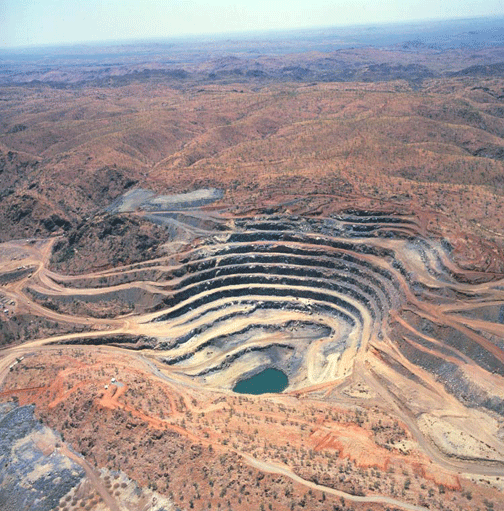 The Humphries Report illuminates the challenge for the mining sector and state governments and it contains just five case studies……
For the environment, the risks are clear, the Mary Kathleen uranium mine, once controlled by Rio, was rehabilitated and relinquished in 1986, winning an award for technical excellence at the time. The waste dump has since failed and the liability and attendant costs now reside with Queensland taxpayers.
Mary Kathleen, whose AFL side once won three regional premierships, is now a ghost town. Radioactive waste has seeped into the water systems.
Taxpayers to foot the bill for mine closures, Independent Australia 26 July 2016 Mine rehabilitation – to avoid toxic seepage – is a costly business which taxpayers look likely to fund, writes Michael West.
MINING COMPANIES and regulators have gravely underestimated the costs of mine rehabilitation, leaving taxpayers in the gun for billions of dollars in clean-up costs, says Rick Humphries.
He should know. Humphries was Rio Tinto’s top adviser on land use before heading up mine rehabilitation for base metals groupMMG.
The environmental scientist has since “switched sides” to consult for conservation groups on mine closure.
Humphries told us in an interview last week:
“The problem is there is a very large and growing environmental liability and if it’s not put in check it will cost taxpayers dearly, and result in large scale degradation of national resources.”
There are some 50,000 abandoned mine sites in Australia. Many are small and old. Others though, such as Century Zinc Mine, Ranger Uranium and the first of the mega coal mines to close – Anglo American’s Drayton and Rio Tinto’s Blair Athol – are large, toxic and present a formidable challenge to close properly.
The humongous Ranger and Century open cut voids alone, will cost around $750 million to $1 billion to rehabilitate and the residual risks and liabilities for their parent companies (Rio Tinto and MMG) are as yet unknown. Continue reading
Green bonds fast gaining popularity
 Green bonds the new black in the market as environmental financing surges, ABC News, 26 July 16 By business reporter Stephen Letts The environmentally sensitive shoots developing in the global bonds market appear to be heading for a serious growth spurt with another record quarter of “green bonds” issuance.
In a research note on the sector, the credit ratings agency Moody’s found environmentally focused green bond issuance in the June quarter hit a record $US20.3 billion ($27 billion), well above the $US16.9 billion ($22.5 billion) recorded in the first quarter of the year.
Added together, the two quarters raised almost 90 per cent more capital than in the first half of 2015.
“The global green bond market is now poised to reach $US75 billion ($100 billion) in total volume for 2016 and so set a new record for the fifth consecutive year, given the strong issuance already observable in the first two weeks of Q3,” Moody’s senior vice president Henry Shilling said.
That fresh flow in the third quarter includes $300 million worth of bonds from Victoria put out to tender earlier this month, the first green issuance from an Australian state or federal government……
Clean energy projects dominate the market
The increasing demand has been supported by many big pension funds now carrying mandates that stipulate portfolios must hold required levels of environmentally friendly investments.
Around two-thirds of green bond proceeds in the quarter were directed to renewable energy and energy efficient projects, with clean transport accounting for a further 17 per cent of the money raised.
The US dominated issuance, with 23 per cent of the market, followed by the big development agencies such as the World Bank, with 17 per cent, although China is expected to bounce back to its dominant position in the market with $US3 billion worth of bonds in the pipeline for sale in coming months……. http://www.abc.net.au/news/2016-07-27/green-is-new-black-in-the-bonds-market-environmental-finance/7664414
Canberra solar project co-located with wind farm
 Gullen Range Wind Farm adds solar project in Australian first, Canberra Times John Thistleton 27 July 16
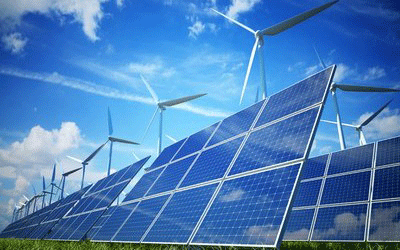
Australia’s first large-scale solar farm to be co-located with wind turbines will be built near Canberra, saving money and creating a more reliable, cheaper renewable energy model.
The 10 MW solar photovoltaic plant near the existing Gullen Range Wind Farm, 28 kilometres north west of Goulburn, will likely be followed by more co-located generators, says the Australian Renewable Energy Agency, which is providing $9.9 million for the $26 million project.
ARENA chief executive Ivor Frischknecht said under the co-location model developers could save money on grid connection, approvals and site development costs including access tracks by co-locating wind and solar plants, while also reducing environmental impacts. Proponents expect savings of about $6 million.
Mr Frischknecht said solar and wind were complementary sources of renewable energy that produced power at different times of the day and year.
“Co-location provides more continuous energy generation, as wind farms tend to generate more energy overnight while solar only generates during the day. Gullen Wind Farm generates more power in winter and the new solar farm will generate more in summer,” Mr Frischknecht said.
“It could also unlock new markets for medium-scale solar PV projects, because scale isn’t as important for competitiveness when plants are co-located.”……http://www.canberratimes.com.au/business/energy/gullen-range-wind-farm-adds-solar-project-in-australian-first-20160726-gqdqqh.html
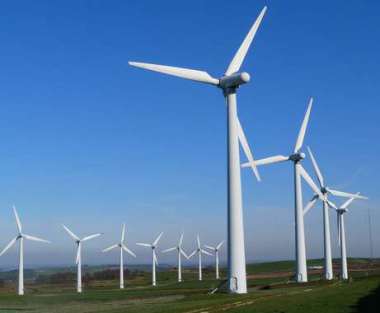
European wind energy is now cheaper than nuclear power
 http://inhabitat.com/european-wind-energy-is-now-cheaper-than-nuclear-power/
Wind energy has officially overtaken nuclear power as the most affordable energy option – at least in countries surrounding the North Sea. In nearby European nations, the cost of wind is now 30 percent lower than nuclear, a promising development in the push for renewable energy around the world. At the rate of present installations, industry group WindEurope predicts these wind farms will generate a full 7 percent of all energy within Europe by 2030.
The reason for the drop in price is largely due to the fact that offshore wind farms are becoming cheaper and easier to build. In the past, constructing these farms has been expensive and impractical – and given the relatively low cost of fossil fuels, it simply hasn’t made sense for many companies to invest in the projects. However, the closure of many drilling projects in the North Sea has left offshore installation vehicles without enough work, causing the cost of transporting turbines out to sea to plummet. Other factors which have helped lower the price include low oil and steel prices, reduced maintenance requirements, and the ability to mass produce turbines.
While these falling wind power costs only represent a small part of the global energy market, there’s no reason other regions can’t build up a similar capacity. China, for instance, has built so many solar and wind facilities that it’s already on track to exceed its own emissions targets by 2020. And while wind power is currently developing at a slower pace in the US, that may not be true for long – new turbine designs could potentially upend the entire industry and fuel exponential growth on the American side of the Atlantic.
Via ENN Photos via Andreas Klinke Johannsen and m.prinke
Dr Helen Caldicott encourages new film “Three Minutes to Midnight”
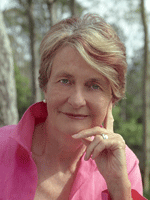 Dr. Helen Caldicott’s Prognosis for Humanity – “Not Good” “We are like lemmings walking toward the cliff of nuclear annihilation, worrying about things that don’t matter.” http://registremblay.com/dr-helen-caldicotts-prognosis-humanity-not-good/ by Regis Tremblay 26 July 16
On Wednesday, July 20, 2016, I had the distinct pleasure of interviewing another person of great importance with an urgent message for humanity. Dr. Helen Caldicott is an internationally acclaimed Australian physician and antinuclear activist. She is a co-founder of Physicians for Social Responsibility, and founder of the Women’s Action for Nuclear Disarmament, and International Physicians to Save the Environment.
As a physician who has studied and researched the biological effects of radiation throughout her entire career, she warns the world that nuclear technology threatens life on our planet with extinction. This is a chilling message at a time when nuclear power, the threat of an imminent nuclear holocaust, and climate change have humanity on the brink of extinction. These three threats are the principle theme of my current film project which had been titled, 11:57 – Three Minutes to Midnight. When I told Helen that I had an alternative title 11:59:30 – Thirty Seconds to Midnight, she told me “that’s it.”
Helen’s message and the message of my new film are disturbing because they present the irrefutable facts screaming out for attention before it is too late. As a species, we are running out of time to save ourselves and all life on the planet. Dr. Caldicott’s prognosis: “not good.”
Pending my October trip to Russia to complete filming, I anticipate that 11:59:30 – Thirty Seconds to Midnight will be ready for release early in 2017.
No chance of Small Nuclear Reactors succeeding unless they are ordered en masse
“Despite the optimism among some in the industry, there remain significant hurdles to widespread use of SMRs. Firstly, even those building them privately admit the first ones will cost roughly the same per unit of electricity produced by a large reactor until costs can be driven down. One executive says: “Over time, we think we can get the costs down — as long as enough of them are commissioned.” – Financial Times 26 July 16
1 This month
7 April – WEBINAR – Australia and the Doomsday Clock – Preventing nuclear war through NoFirstUse and other policies
Online | Tuesday April 7, 4:00-5:30pm, Australian Eastern Time / 8:00-9:30am Central Europe Time
– Access the registration link
15 April – Zoom –Nuclear Power is Not the Solution
Apr 15, 2026 01:00 AM in Canberra, Melbourne, Sydney

Join the International Physicians for the Prevention of Nuclear War (IPPNW) on Tuesday, April 14th for a timely webinar exploring the risks associated with nuclear power and challenging the myth that it offers a simple, safe, carbon-free solution to the climate crisis

21 April Webinar: No Nuclear Weapons in Australia
Start: 2026-04-21 18:00:00 UTC Canberra, Melbourne, Sydney (GMT+10:00)
End: 2026-04-21 19:30:00 UTC Canberra, Melbourne, Sydney (GMT+10:00)
Event Type: Virtual
A virtual link will be communicated before the event.
Host Contact Info: australia@icanw.org

of the week – Australians for War Powers Reform (AWPR)
To see nuclear-related stories in greater depth and intensity
 Antinuclear