Hiroshima museum gets hibakusha’s rare copy of A-bomb tanka book written behind censors’ backs

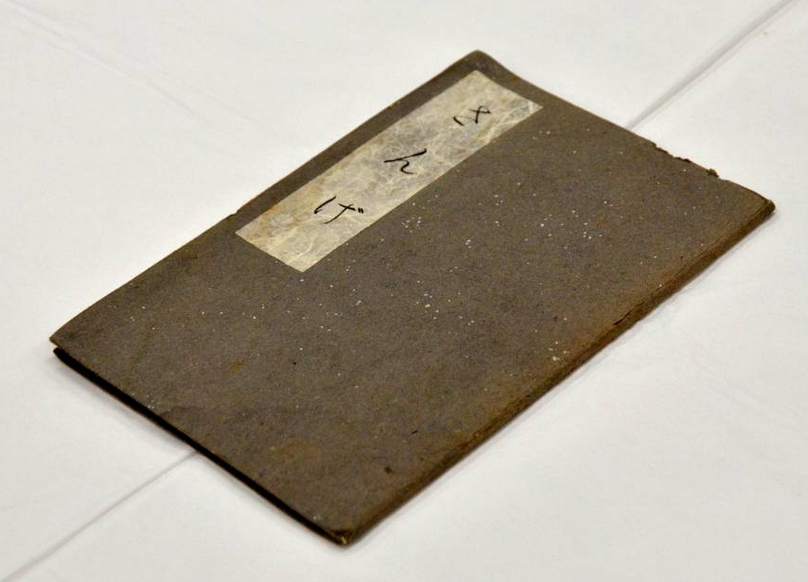
A tanka collection by late hibakusha poet Shinoe Shoda, recently found in a private home, has been donated to the city of Hiroshima.
HIROSHIMA – A copy of an anthology of traditional tanka by Shinoe Shoda written to depict the horrors of the atomic bombing of Hiroshima and secretly published during the Allied Occupation has been discovered at a temple in Hiroshima Prefecture.
The anthology, titled “Sange,” a Buddhist term meaning death, was donated to the Hiroshima Peace Memorial Museum in the city on Tuesday.
The only other copy was thought to be one found earlier at the house of a relative of the late poet.
The donated copy is “a precious and rare material,” said an official at the Hiroshima Municipal Government’s peace promotion division.
Shoda experienced the atomic bombing while at home, only about 1.7 km from ground zero.
The anthology includes about 100 tanka that give graphic…
View original post 192 more words
“A Slow Genocide of the People”: Uranium Mining Leaves Toxic Nuclear Legacy on Indigenous Land

By DemocracyNow.org:
“A Slow Genocide of the People”: Uranium Mining Leaves Toxic Nuclear Legacy on Indigenous Land MARCH 14, 2014
The iconic Grand Canyon is the site of a battle over toxic uranium mining. Last year, a company called Energy Fuels Resources was given federal approval to reopen a mine six miles from the Grand Canyon’s popular South Rim entrance. A coalition of Native and environmental groups have protested the decision, saying uranium mining could strain scarce water sources and pose serious health effects. Diné (Navajo) tribal lands are littered with abandoned uranium mines. From 1944 to 1986, 3.9 million tons of uranium ore were chiseled and blasted from the mountains and plains of the region. More than 1,000 mines have closed, but the mining companies never properly disposed of their radioactive waste piles, leading to a spike in cancer rates and other health ailments. Broadcasting from Flagstaff, Arizona…
View original post 2,961 more words
Festering doubts on impartiality of Nuclear Royal Commissioner Kevin Scarce
Kevin Scarce, head of SA’s Nuclear Fuel Cycle RC, also has a conflict of interest, 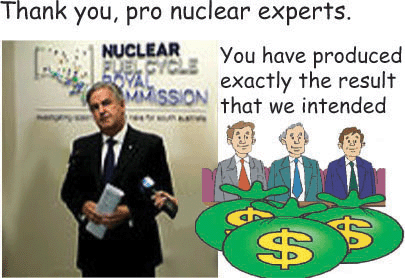 Independent Australia, 4 August 2016, Given the public outcry over Brian Martin’s conflict of interest as head of the Royal Commission into Juvenile Justice in the NT, Noel Wauchope asks why Kevin Scarce’s suitability as head of SA’s Nuclear Fuel Cycle RC wasn’t questioned……..
Brian Martin did not think that he had a conflict of interest in relation to his previous role as a Northern Territory judge. He did not doubt his “capacity to be both independent and competent in the role of the commissioner”. However, he recognised that a community perception of his having a conflict of interest would compromise the Royal Commission and its results.
As Mark Kenny wrote in The Age on 2 August 2016:
‘Indeed, Martin acknowledged this [public confidence] was the crucial factor — irrespective of the facts. He observed if any public doubts about the impartiality or commitment to the unvarnished truth were allowed to “fester” during the commission’s long months, its outcomes would be compromised.’
Why no outcry about the conflict of interest in appointing Kevin Scarce as head of SA’s Nuclear Fuel Cycle RC?
Apparently, while it’s not OK to have a conflict of interest in a National Royal Commissioner, this has not yet been a problem for a State one…….
Unlike the situation with Brian Martin, this is not a case of a perception of conflict of interest by some special sections of the community. It looks more like a choice of a royal commissioner that is unusual and inappropriate and involving a much more obvious conflict of interest.
The general practice in royal commissions is to appoint a serving or retired judge, due to the quasi-legal nature of the process…….Kevin Scarce with no legal background, was a most unusual choice as royal commissioner for South Australia’s Nuclear Fuel Cycle Royal Commission. Furthermore, his military career and close involvement with defence agencies, raises questions about his impartiality…….
There is a strong defence lobby pushing for Australia to acquire nuclear powered submarines. Kevin Scarce was previously the head of Maritime Systems at the Defence Materiel Organisation.
Kevin Scarce is a shareholder in Rio Tinto Group, the owner and operator of Ranger and Rossing uranium mines in Australia and Namibia
Prior to his appointment as Royal Commissioner, Kevin Scarce advocated a nuclear industry for South Australia. Speaking in November 2014 at a Flinders University guest lecture, Scarce acknowledged being “an advocate for a nuclear industry”. ……
2014 Investigator Lecture – Rear Admiral the Honourable Kevin Scarce AC CSC RAN Rtd
Will the outcome of the SA nuclear RC be compromised, given the criticisms so far?…..
The selection of pro nuclear advisers and speakers continued through the Royal Commission’s year-long proceedings and subsequent Citizens’ Jury sessions, as Independent Australia has shown in recent articles. ..
Numerous well researched criticisms sent to this Royal Commission seem to have been ignored. Kevin Scarce has dismissed opposition as based on emotion or opinion, rather than on facts,saying: “The debate has been formed upon fear…”
in South Australia, the outcome of its Nuclear Royal Commission may well be compromised, as public confidence in Kevin Scarce might fester amongst Australians in general, and even amongst South Australians, despite that State’s government now bombarding them with pro nuclear propaganda. https://independentaustralia.net/environment/environment-display/kevin-scarce-head-of-sas-nuclear-fuel-cycle-rc-also-has-a-conflict-of-interest,9310
1 This month
To see nuclear-related stories in greater depth and intensity
– go to https://nuclearinformation.wordpress.com/


 Antinuclear