Robert Alvarez on the unsolved dangers of nuclear wastes
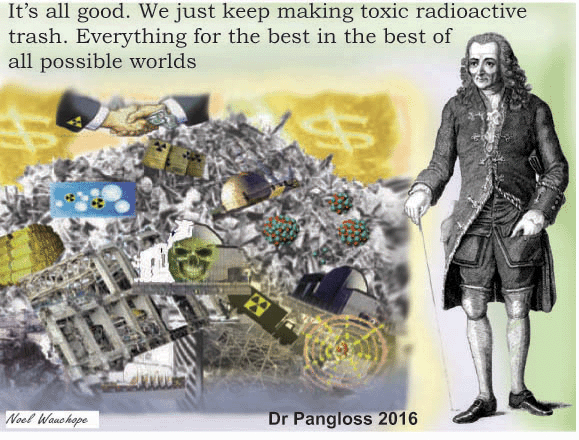

 Scientists Robert Alvarez, 11 AUGUST 2016 In addition to generating electricity, US nuclear power plants are now major radioactive waste management operations, storing concentrations of radioactivity that dwarf those generated by the country’s nuclear weapons program. Because the proposed Yucca Mountain nuclear waste repository remains in limbo, and other permanent storage plans are in their infancy, these wastes are likely to remain in interim storage at commercial reactor sites for the indefinite future. This reality raises one issue of particular concern—how to store the high-burnup nuclear fuel used by most US utilities. An Energy Department expert panel has raised questions that suggest neither government regulators nor the utilities operating commercial nuclear power plants understand the potential impact of used high-burnup fuel on storage and transport of used nuclear fuel, and, ultimately, on the cost of nuclear waste management.
Down the road, it is likely that spent nuclear fuel will have to be repackaged to mitigate decay heat into smaller containers ahead of final disposal. High-burnup fuel will only complicate the process, and increase costs, currently estimated in the tens of billions of dollars. Depending on the geologic medium, a maximum of four assemblies for high burnup, as opposed to the dozens in current storage casks, would be permitted after 100 years of decay; larger packages containing no more than 21 assemblies might have to be disposed if there is forced ventilation for 50 to 250 years—driving up repository costs.
The basic approach undertaken in this country for the storage and disposal of spent nuclear fuel needs to be fundamentally revamped. Instead of waiting for problems to arise, the NRC and the Energy Department need to develop a transparent and comprehensive road map identifying the key elements of—and especially the unknowns associated with—interim storage, transportation, repackaging, and final disposal of all nuclear fuel, including the high-burnup variety. Otherwise, the United States will remain dependent on leaps of faith in regard to nuclear waste storage—leaps that are setting the stage for large, unfunded radioactive waste “balloon mortgage” payments in the future. waste? http://thebulletin.org/nuclear-power-plant-or-storage-dump-hot-radioactive-waste9775
1 Comment »
Leave a comment
1 This month
Chernobyl: The Lost Tapes – A good documentary on Chernobyl on SBS available On Demand for the next 3 weeks– https://www.sbs.com.au/ondemand/tv-program/chernobyl-the-lost-tapes/2352741955560
15 April – Zoom –Nuclear Power is Not the Solution
Apr 15, 2026 01:00 AM in Canberra, Melbourne, Sydney

Join the International Physicians for the Prevention of Nuclear War (IPPNW) on Tuesday, April 14th for a timely webinar exploring the risks associated with nuclear power and challenging the myth that it offers a simple, safe, carbon-free solution to the climate crisis

21 April Webinar: No Nuclear Weapons in Australia
Start: 2026-04-21 18:00:00 UTC Canberra, Melbourne, Sydney (GMT+10:00)
End: 2026-04-21 19:30:00 UTC Canberra, Melbourne, Sydney (GMT+10:00)
Event Type: Virtual
A virtual link will be communicated before the event.
Host Contact Info: australia@icanw.org

of the week – Australians for War Powers Reform (AWPR)
To see nuclear-related stories in greater depth and intensity
 Antinuclear
[…] Source: Robert Alvarez on the unsolved dangers of nuclear wastes « Antinuclear […]
LikeLike
Pingback by Robert Alvarez on the unsolved dangers of nuclear wastes « Antinuclear | AGR Daily News Service | August 13, 2016 |