Safety concerns about Lucas Heights Nuclear Wastes repatriated from France
 Fight To Stop Nuclear Waste In The Flinders Ranges Paul Levai https://www.facebook.com/groups/941313402573199/ 16 Aug
 16
16
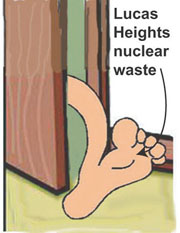
Paul Levai Interesting trip to ANSTO. A few concerns that I will post as some stage soon but the main one is that the intermediate waste that they propose to store here is our spent fuel rod waste from the old Lucas Heights HIFAR reactor that has been sent to France for reprocessing and must be returned to us as intermediate waste.
BUT the scary part is that rather than design and build a new container system for the ILW ( that would be easily identifiable) they decided to use an existing design container for HLW (high level waste) because its cheaper and easier and they think it will alleviate safety concerns (better and stronger).
Australia completes first phase of its waste repatriation project ANSTO :The The shipment of repatriated waste left France on 15 October, arrived in Port Kembla on 5 December, and was safely transported to the interim storage facility at Lucas Heights the following day (6 December, 2015).
Earthquake near Port Pirie
Earthquake Details Issued by © Commonwealth of Australia (Geoscience Australia) 2016
Date and Time UTC: 13 August 2016 @ 19:49:39
Location NE of Port Pirie, SA. Magnitude ML: 2.0
Coordinates: -32.811, 138.228 Depth: 1 km
Potentially Tsunamigenic No http://www.ga.gov.au/earthquakes/getQuakeDetails.do?quakeId=3856247
The nuclear brink

 http://www.abc.net.au/radionational/programs/latenightlive/the-nuclear-brink/7747886 16 August 2016 (view full episode)
In spite of earlier efforts by President Barack Obama to bring the world towards a nuclear free course, we are actually getting further away from reducing the nuclear weapons stockpiles. And a relations between Russia and the USA remain strained, Dr William J. Perry, former US Secretary of Defence warns that we’re on the verge of a new nuclear arms race, and drifting back into Cold War mentality.
Dr Perry has completed his memoirs about his extensive experience in foreign policy and weapons analysis to send a message to the world.
Aboriginal people will fight planned Vimy uranium mine, despite EPA’s approoval of it
Indigenous people living in the area have a bad history with uranium developments. It’s a few hundred kilometres from Cundalee, the mission where Spinifex people from the Great Victoria Desert were placed after being pushed off their traditional lands by the British government’s nuclear testing program in Maralinga, South Australia, in the 1950s and 60s
 Pilanguru people to fight on as uranium mine gets environmental approval
Traditional owners say the Indigenous community has not been adequately consulted about Vimy Resources’ planned Mulga Rock open-pit mine, Guardian, Calla Wahlquist, 15 Aug 16, Traditional owners have vowed to fight a proposed uranium mine at Mulga Rock, about 240km west of Kalgoorlie, Western Australia, which was given conditional environmental approval on Monday.
The Environmental Protection Authority of WA recommended the Barnett government approve construction of the open-pit mine and uranium processing plant, operated by Perth-based Vimy Resources Limited, after a three-month public environmental review. Continue reading
Environmental groups put a winning argument against the Yeelirrie uranium project
The winning argument against the mine A joint submission was provided to the Yeelirrie Public  Environment Review by the Conservation Council of WA, the Australian
  Conservation Foundation, Friends of the Earth Australia, The Wilderness Society, the Anti-Nuclear Alliance of WA, the West Australia Nuclear Free
 Alliance and the Australian Nuclear Free Alliance.
Amongst other points, they called for the project to be rejected “on the grounds that  the Yeelirrie Subterranean Community, a Priority 1 Ecological Community (PEC) comprises a series of highly endemic, diverse stygofauna and troglofauna species within multiple calcrete habitats). The impacts of the proposed Yeelirrie uranium mine, predominantly the associated groundwater drawdown, pose an unacceptable risk that could see a number of subterranean species become extinct (particularly 15 species that are currently only known from the direct impact zone).”
The EPA decision was based on the impacts on subterranean fauna, and disregarded other points made in the submission.
The Wongutha Traditional Owners have been fighting this project for over 40 years.
WA EPA rejects proposed Yeelirrie uranium mine, Online Opinion, By Mara Bonacci – posted Tuesday, 16 August 2016 After nearly 3,000 people lodged submissions with the Western Australian EPA in opposition to the proposed uranium mine at Yeelirrie, on August 3 the EPA recommended that the project be rejected. Traditional Owners and environmentalists welcomed the decision, but remain wary……. Continue reading
Industry Minister Greg Hunt attacks renewable energy, but Energy Minister Frydenbereg supports it
Mr Frydenberg has said Friday’s national energy ministers’ meeting will discuss topics including the transformation of electricity markets to ensure a greater use of renewable energy and new technologies, such as battery storage.
In an interview with The Advertiser, Mr Koutsantonis renewed a push for a high-voltage interconnector cable to New South Wales, at a cost of about $700 million, saying this would result in cheaper prices and improved supply by connecting SA to more sources of electricity.
He said competition in SA was limited by the high-voltage transmission link to only one state, while Victoria’s lower prices were explained by cables connecting to three states — SA, NSW and Tasmania.
Mr Koutsantonis said state and federal taxpayers might be willing to fund up to $300 million of the NSW interconnector project if electricity supplies were improved.
 Jackson Gothe-Snape, Paul Starick, The Advertiser August 17, 2016 FEDERAL Industry Minister Greg Hunt has lit the fuse for a fiery national energy summit on Friday by blaming high electricity prices on the failure of some states to plan for the growing use of renewables.
In a thinly veiled attack on SA’s embrace of solar and wind, Mr Hunt will on Wednesday use a speech in Port Pirie to condemn a pretence that integrating renewable energy into power grids is free of cost and other impacts.
Mr Hunt’s comments contrast sharply with those of Cabinet colleague and Energy Minister Josh Frydenberg, whose stated aims in calling Friday’s ministerial meeting in Canberra were to “strengthen co-operation” between governments to ensure energy markets remained “stable and secure”. Continue reading
Western Australia’s EPA approves Vimy uranium mine, but Conservation Council and Aborigines oppose it
Vimy Resources uranium mine east of Kalgoorlie given environmental approval, ABC News, By Laura Gartry , 16 Aug 16, A new uranium mine in Western Australia’s Goldfields has been recommended for approval by the state’s environmental watchdog, just weeks after a similar proposal in the area was knocked back.
The Environmental Protection Authority [EPA] granted the approval for Vimy Resources’ Mulga Rock uranium project, which is 240 kilometres east-north-east of Kalgoorlie, subject to a range of conditions.
Final approval is still required from both the state and federal environment ministers…….
Earlier this month, the EPA rejected Cameco Australia’s Yeelirrie uranium project after it deemed there was too much risk to the area’s subterranean fauna.
The Canadian company had sought to mine up to 7,500 tonnes of UOC per year from the Yeelirrie deposit, about 420 kilometres north of Kalgoorlie-Boulder and 70 kilometres south-west of Wiluna.
The proposal had attracted protests, including from traditional owner and chair of WA nuclear free alliance Kado Muir, who argued there was no broad community support for uranium mining in WA…….
More than 1,000 submissions were received during the 12-week public review period…….
Two other WA uranium projects have received EPA and ministerial approval in recent years, including the Wiluna uranium mine and the Kintyre uranium project, 270 kilometres north east of Newman.
The Conservation Council of WA said it would appeal the proposed mine because it threatened a pristine environmentally and culturally-significant area.……
Vimy Resources faces many hurdles and road blocks and today’s EPA recommendation is a long way from a green light for mining yellow cake at Mulga Rock,” Council campaigner Mia Pepper said.
Pila Nguru Aboriginal Corporation chair Bruce Hogan said the site was culturally significant. “We don’t want that mine to go ahead. We will fight against that mine at Mulga Rock,” Mr Hogan said.
Spinifex Pilki elder Sandra Evans said traditional owners from the Great Victoria Desert area were not consulted properly. “There are a lot of women’s sites there – they didn’t come to talk to the tribal women from there about clearing the grass trees and other special places,” she said.
“Uranium is different to other minerals – it’s dangerous. If it leaves our country and goes somewhere else – that’s still our responsibility, we worry about that.”
The EPA’s report is open for a two-week public appeal period.” http://www.abc.net.au/news/2016-08-15/epa-approves-uranium-mine-near-kalgoorlie/7734798
USA company seeks govt compensation for “stranded” nuclear waste casks
 Could South Australia end up with stranded nuclear waste casks, and lawsuits against the State govt?
 Rowe seeks money for nuke waste storage By DIANE BRONCACCIO Recorder Staff Tuesday, August 16, 2016 ROWE — The Yankee Atomic Electric Co. nuclear power plant in Rowe shut down its 185-megawatt reactor in 1992, leaving in place 15 dry casks of radioactive spent fuel, along with one cask of higher-level nuclear waste, until the federal government finds a permanent home for waste like this.
Now, Rowe and other U.S. communities with “de facto” interim spent nuclear fuel storage sites are seeking annual compensation for this storage from the federal government. Continue reading
American Greens Sue to Stop Nuclear Waste Transport
Greens Sue to Stop Nuclear Waste Transport http://www.courthousenews.com/2016/08/15/greens-sue-to-stop-nuclear-waste-transport.htm  By BRITAIN EAKIN WASHINGTON (CN) – The U.S. Energy Department’s unprecedented proposed transfer of “a toxic liquid stew” containing nuclear waste between Canada and the U.S violates federal law, seven environmental groups claim in court.
History of Cameco’s Yeelirrie uranium mining plan
 WA EPA rejects proposed Yeelirrie uranium mine, Online Opinion, By Mara Bonacci – posted Tuesday, 16 August 2016 “…….Yeelirrie is located 420 km north of Kalgoorlie in the mid-west region of WA, the land of the Wongutha people. Yeelirrie is the name of a local sheep station and, in the local Aboriginal language, means “place of death”.
In 1973 Western Mining Corporation (WMC) found a uranium deposit there. The Yeelirrie Mine Proposal was submitted to the WA Department of Conservation and Environment in 1979. The proposal was for the development of an open cut mine, ore treatment plant, town and ancillary services and 850 employees. Environmental approval was given by both state and federal governments.
Trial mines were dug in the 1980s, which found the first large scale calcrete orebody in the world. It is estimated that around 195 tonnes of yellowcake were mined in these trials. WMC spent $35 million preparing to develop the mine until the 1983 federal election and subsequent implementation of the ALPs “three mines policy” in 1984, limiting Australia’s number of uranium mines to three.
In 2005, the mine was acquired from WMC by BHP Billiton, who concluded one stage of exploration mining. Then in 2012, Canadian mining company Cameco bought the deposit from BHP for $430 million….
Cameco’s Yeelirrie mine proposal includes:
- A 9 km long, 1.5 km wide and 10 m deep open pit mine
- 14 million tonnes of overburden
- Using 8.7 million litres of water a day
- Producing 7,500 tonnes per year of uranium (10 percent of annual world demand)
- To be transported by four road trains a week
- It would produce 126,000 tonnes per year of CO2 emissions
- 36 million tonnes of tailings stored in the open pit2,421 hectares would be cleared
- 22 years of operation
- Highly variable work force – average of 300………http://onlineopinion.com.au/view.asp?article=18451&page=1
Climate urgency:we’ve locked in more global warming than people realize
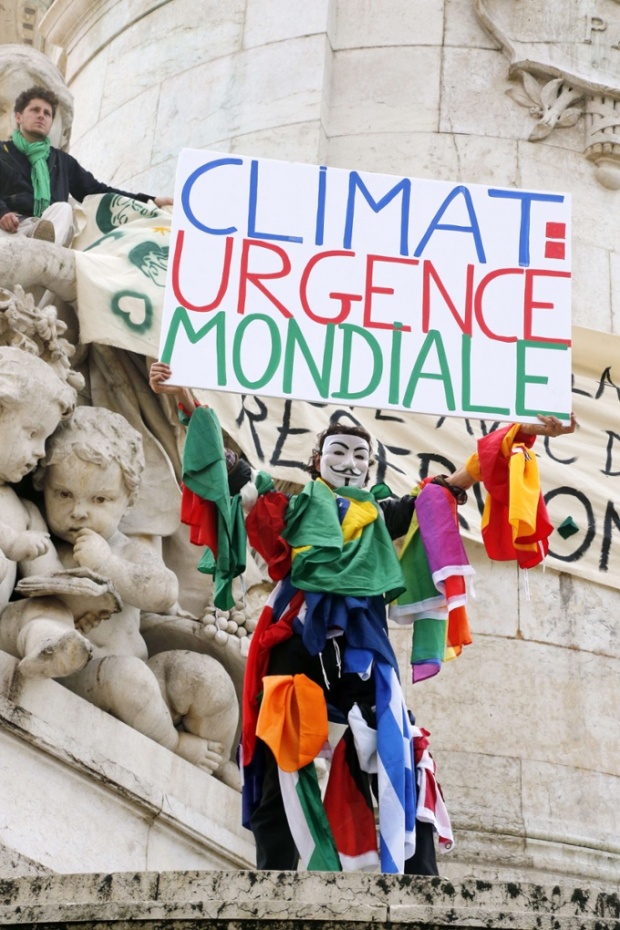 Skeptical Science 15 August 2016While most people accept the reality of human-caused global warming, we tend not to view it as an urgent issue or high priority. That lack of immediate concern may in part stem from a lack of understanding that today’s pollution will heat the planet for centuries to come, as explained in this Denial101x lecture:
So far humans have caused about 1°C warming of global surface temperatures, but if we were to freeze the level of atmospheric carbon dioxide at today’s levels, the planet would continue warming. Over the coming decades, we’d see about another 0.5°C warming, largely due to what’s called the “thermal inertia” of the oceans (think of the long amount of time it takes to boil a kettle of water). The Earth’s surface would keep warming about another 1.5°C over the ensuing centuries as ice continued to melt, decreasing the planet’s reflectivity.
To put this in context, the international community agreed in last year’s Paris climateaccords that we should limit climate change risks by keeping global warming below 2°C, and preferably closer to 1.5°C. Yet from the carbon pollution we’ve already put into theatmosphere, we’re committed to 1.5–3°C warming over the coming decades and centuries, and we continue to pump out over 30 billion tons of carbon dioxide every year.
The importance of reaching zero or negative emissions
We can solve this problem if, rather than holding the amount of atmospheric carbon dioxide steady, it falls over time. As discussed in the above video, Earth naturally absorbs more carbon than it releases, so if we reduce human emissions to zero, the level of atmospheric carbon dioxide will slowly decline. Humans can also help the process by finding ways to pull carbon out of the atmosphere and sequester it.
Scientists are researching various technologies to accomplish this, but we’ve already put over 500 billion tons of carbon dioxide into the atmosphere. Pulling a significant amount of that carbon out of the atmosphere and storing it safely will be a tremendous challenge, and we won’t be able to reduce the amount in the atmosphere until we first get our emissions close to zero.
There are an infinite number of potential carbon emissions pathways, but the 2014 IPCC report considered four possible paths that they called RCPs. In one of these (called RCP 2.6 or RCP3-PD), we take immediate, aggressive, global action to cut carbon pollution, atmospheric carbon dioxide levels peak at 443 ppm in 2050, and by 2100 they’ve fallen back down to today’s level of 400 ppm. In two others (RCPs 4.5 and 6.0) we act more slowly, and atmospheric levels don’t peak until the year 2150, then they remain steady, and in the last (RCP8.5) carbon dioxide levels keep rising until 2250.
This is the critical decade
We don’t know what technologies will be available in the future, but we do know that the more carbon pollution we pump into the atmosphere today, the longer it will take and more difficult it will be to reach zero emissions and stabilize the climate. We’ll also have to pull that much more carbon out of the atmosphere.
It’s possible that as in three of the IPCC scenarios, we’ll never get all the way down to zero or negative carbon emissions, in which case today’s pollution will keep heating the planet for centuries to come. Today’s carbon pollution will leave a legacy of climate change consequences that future generations may struggle with for the next thousand years.
Five years ago, the Australian government established a Climate Commission, which published a report discussing why we’re in the midst of the ‘critical decade’ on climate change…..http://www.skepticalscience.com/climate-urgency-locked-in-more-gw-people-realize.html by dana1981
Striking growth in renewable energy in world’s 20 major economies
 Renewables jump 70% in shift away from fossil fuels, http://www.iran-daily.com/news/166891.html The share of electricity that the world’s 20 major economies are generating from the sun and the wind has jumped by more than 70 percent in the space of five years, new figures show.
In a sign of the shift away from fossil fuels that is starting to take hold in some regions, G20 countries collectively produced eight percent of their electricity from solar farms, wind parks and other green power stations in 2015, up from 4.6 percent in 2010, FT reported.
Seven G20 members now generate more than 10 percent of their electricity from these sources, compared with three in 2010. The seven were led by Germany, home of the Energiewende — a policy shift towards green power. Renewables made up 36 percent of its electricity mix, according to data compiled for the FT by the Bloomberg New Energy Finance research group.
The UK, Italy and France all generated more than 19 percent of their electricity from renewables while Australia and Brazil reached 11 percent and 13 percent respectively. For the 28 members of the EU, the number was 18 percent.
The figures do not include hydropower, one of the oldest sources of renewable electricity.
Instead, the data underline the growth of newer forms of green energy such as solar and wind farms that have been heavily subsidized in many countries as governments try to combat global warming.
This growth has been especially striking in the UK, which generated 24 percent of its electricity from such renewables last year compared with just six percent in 2010.
Still, fossil fuels continue to dominate the electricity supply in many countries, including the US and China, two of the most powerful proponents of the UN climate change accord struck in Paris in December.
China is the world’s largest clean energy market, accounting for nearly a third of the $329 billion invested in clean energy globally last year as the government continued to boost its renewables industry.
India’s nuclear industry inefficient and not commercially viable: solar better
India is better advised to put money instead into its abundant solar energy, which will definitely be less expensive and less risky. “Investing in new solar photovoltaic capacity would be a much lower-cost, significantly less environmentally harmful and far more sustainable alternative to the Mithi Virdi and Kovvada projects,”
Nuclear power costly, inefficient, SANKAR RAY | Fri, 12 Aug 2016, Mumbai , dna Reactors reduced to status of old furniture as no new ones are being made With Prime Minister Narendra Modi and US President Barrack Obama, finalising the import of 12 AP1000 nuclear reactors plants – six from the Westinghouse Electric — for Mithi Virdi, Gujarat, and another six from the GE-Hitachi’s Economic Simplified Boiling Water Reactor for Kovvada, Andhra Pradesh, nuclear hawks
 have become super-active. The US Export-Import Bank is about to complete a financing package for the project. The Nuclear Power Corporation of India and Toshiba Corp’s (6502.T) Westinghouse Electric too confirmed that engineering and site design work would begin shortly. Small wonder, anti–US hawks too have swung into action to nail the very concept of importing nuclear power reactors from the US, arguing that the cost from the US reactors is very high, estimated provisionally at $7.5 million per megawatt in stark contrast to $ 2.9 million of the Russian ones that are installed at Kudankulam.
Prof Sujay Basu, a doyen among energy experts and former — the first too – director, School of Energy Studies, Jadavpur University, expressed his chagrin against import of reactors. “First, the Kudankulam reactors were sold by Russia at distressed price. Second, reactor manufacture, from the very beginning of the new century, ceased to be a profitable business. American nuclear industry is worried for want of buyers and escalation of cost. Continue reading
First Australian uranium shipment to India flagged for next year
August 16, 2016. The first shipment of Australian uranium is reportedly due to arrive in India next year…. (subscribers only)
http://www.theaustralian.com.au/news/world/first-aussie-uranium-shipment-to-india-flagged-for-next-year/news-story/63d71c24223bd3c0890105b897f89c56
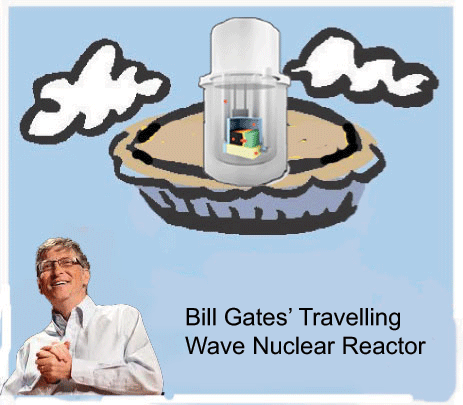
Bill Gates secretive about his nuclear plans, and taxpayer contribution to them
 months have elapsed since the Microsoft Corp. co-founder and 27 other billionaires rolled out their Breakthrough Energy Coalition (BEC) — a promise to invest billions of dollars with a very long payback horizon on groundbreaking new carbon-neutral technologies. And the group has barely been heard from since.
Jonah Goldman, a spokesman for the coalition, said much of the work is happening behind the scenes.
Gates brought his message to Capitol Hill, where he met twice with Sen. Lamar Alexander (R-Tenn.) in the past year to press the Energy and Water Appropriations Subcommittee chairman for federal support for research and development.
The two men discussed small modular nuclear reactors and carbon capture and storage technology at the meetings, an Alexander aide said.
Nineteen countries joined the United States in backing Mission Innovation in Paris, and the European Union signed on in June. Since then, the Obama administration has followed up with a fiscal 2017 funding request of $7.7 billion for clean energy R&D across the federal government, with $5.9 billion of that going to DOE programs
What’s happening with Bill Gates’ multibillion-dollar energy fund? EENews, Jean Chemnick, E&E reporter, ClimateWire: Monday, August 15, 2016 Bill Gates believes the key to addressing climate change is an “energy miracle,” and in November, he set about trying to conjure one. Continue reading
1 This month
Chernobyl: The Lost Tapes – A good documentary on Chernobyl on SBS available On Demand for the next 3 weeks– https://www.sbs.com.au/ondemand/tv-program/chernobyl-the-lost-tapes/2352741955560
15 April – Zoom –Nuclear Power is Not the Solution
Apr 15, 2026 01:00 AM in Canberra, Melbourne, Sydney

Join the International Physicians for the Prevention of Nuclear War (IPPNW) on Tuesday, April 14th for a timely webinar exploring the risks associated with nuclear power and challenging the myth that it offers a simple, safe, carbon-free solution to the climate crisis

21 April Webinar: No Nuclear Weapons in Australia
Start: 2026-04-21 18:00:00 UTC Canberra, Melbourne, Sydney (GMT+10:00)
End: 2026-04-21 19:30:00 UTC Canberra, Melbourne, Sydney (GMT+10:00)
Event Type: Virtual
A virtual link will be communicated before the event.
Host Contact Info: australia@icanw.org

of the week – Australians for War Powers Reform (AWPR)
To see nuclear-related stories in greater depth and intensity
 Antinuclear