Japan considers scrapping fast-breeder reactor as costs mount

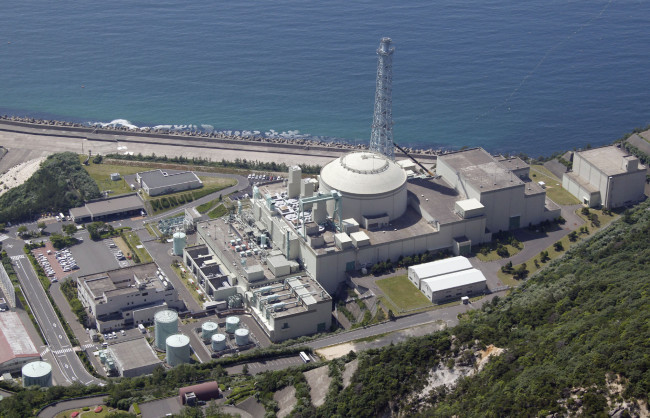
The government is considering scrapping the troubled Monju fast-breeder reactor after calculating that readying it for restart would cost several hundred billion yen, sources said Monday.
A political decision on decommissioning the reactor is now in sight, with Chief Cabinet Secretary Yoshihide Suga joining talks to determine its fate, the sources said.
The facility in Fukui Prefecture has been beset by safety problems and has only been operational for a total of 250 days since it first went critical in 1994.
Decommissioning Monju would deal a serious blow to the nation’s vaunted fuel cycle policy, in which the reactor was designed to play a central role. The plan is to develop a commercial fast-breeder reactor that produces more plutonium than it consumes.
The science ministry has been trying to find a new entity to run the reactor, which is currently operated by the government-backed Japan Atomic Energy Agency.
The ministry…
View original post 215 more words
Public Cost of Fukushima Cleanup Tops $628 Billion and Is Expected to Climb
Meanwhile, problems still persist at the nuclear plant, most notably with the ‘highly contaminated’ water being stored in tanks at the site
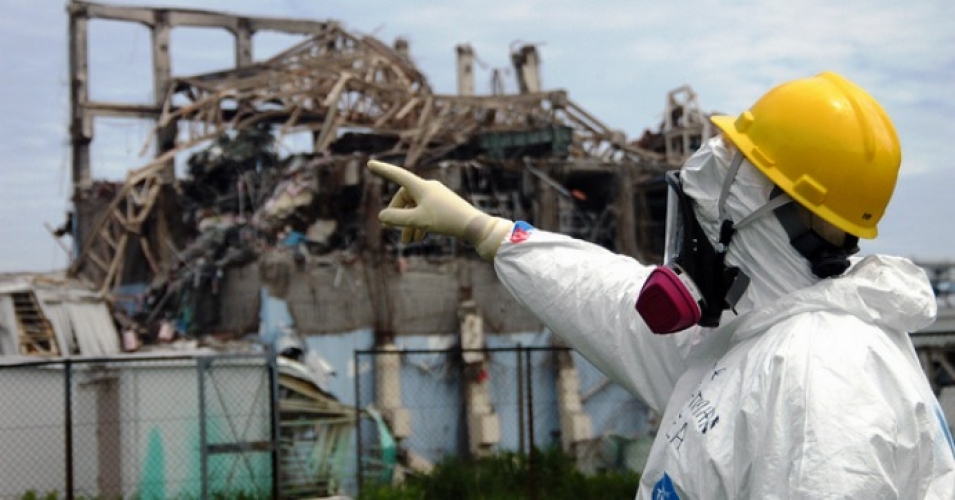
That includes costs for radioactive decontamination and compensation payments, the Japan Times reported.
The public cost of cleaning up the 2011 Fukushima Daiichi nuclear plant disaster topped ¥4.2 trillion (roughly $628 billion) as of March, and is expected to keep climbing, the Japan Timesreported on Sunday.
That includes costs for radioactive decontamination and compensation payments. Tokyo Electric Power Company (TEPCO) will sell off its shares to eventually pay back the cost of decontamination and waste disposal, but the Environment Ministry expects that the overall price of those activities could exceed what TEPCO would get for its shares.
Meanwhile, the taxpayer burden is expected to increase and TEPCO is asking for additional help from the government.
The Times reports:
The government estimates the proceeds from TEPCO share…
View original post 271 more words
Problems persist at Japan’s crippled Fukushima nuclear reactors
Five years after the second-worst nuclear accident in history, contaminated water is still hampering efforts to gain control of the site. Local residents are reluctant to return to their homes. Julian Ryall reports.
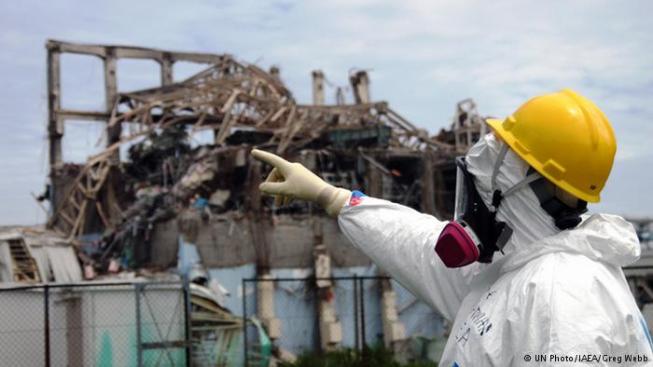
Five years after the second-worst nuclear accident in history, contaminated water is still hampering efforts to gain control of the site. Local residents are reluctant to return to their homes. Julian Ryall reports.
It has been five years and five months since three of the reactors at the Fukushima Dai-ichi nuclear plant were crippled by the biggest earthquake and tsunami to strike Japan in living memory. Work continues at the site to clean up the radioactivity that escaped into the atmosphere and to regain control of the reactors.
In its press releases, the Tokyo Electric Power Co. (TEPCO) insists that steps taken since the accident are slowly but surely having an effect. But not everyone accepts their…
View original post 944 more words
Utilization of 134Cs/137Cs in the environment to identify the reactor units that caused atmospheric releases during the Fukushima Daiichi accident
Published on 22 August 2016
Abstract
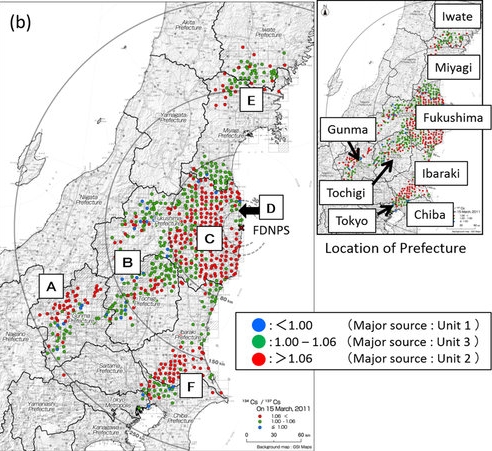
The Fukushima Daiichi nuclear power reactor units that generated large amounts of airborne discharges during the period of March 12–21, 2011 were identified individually by analyzing the combination of measured 134Cs/137Cs depositions on ground surfaces and atmospheric transport and deposition simulations. Because the values of 134Cs/137Cs are different in reactor units owing to fuel burnup differences, the 134Cs/137Cs ratio measured in the environment was used to determine which reactor unit ultimately contaminated a specific area. Atmospheric dispersion model simulations were used for predicting specific areas contaminated by each dominant release. Finally, by comparing the results from both sources, the specific reactor units that yielded the most dominant atmospheric release quantities could be determined. The major source reactor units were Unit 1 in the afternoon of March 12, 2011, Unit 2 during the period from the…
View original post 640 more words
Radioactive Boar Are Thriving And Causing Havoc Near The Fukushima Power Plant
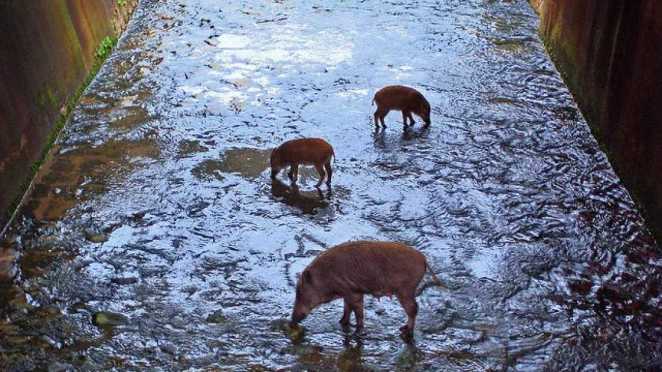
It’s been over five years since tsunami waves crashed into the Fukushima Daiichi power plant and led to its nuclear meltdown. While 20 kilometers (12 miles) of the land around the plant remains a dangerous exclusion zone, the area’s wildlife is taking full advantage of the peace.
Since the nuclear disaster, the population of wild boars has rocketed, much to the dismay of surrounding communities, The Times has reported. In the four years following the disaster, the population of boars is thought to have boomed from 3,000 to 13,000. You might think this ancient Japanese symbol of prosperity and fertility might be welcomed, but it’s estimated they have caused $15 million worth of damage to local agriculture.
Assistant ecology professor Okuda Keitokunin told the Japanese Mainichi newspaper that wild boar, along with racoons, have been using the abandoned houses and emptied buildings in the evacuation zone as a place to breed and shelter.
However, this…
View original post 214 more words
1 This month
7 April – WEBINAR – Australia and the Doomsday Clock – Preventing nuclear war through NoFirstUse and other policies
Online | Tuesday April 7, 4:00-5:30pm, Australian Eastern Time / 8:00-9:30am Central Europe Time
– Access the registration link
15 April – Zoom –Nuclear Power is Not the Solution
Apr 15, 2026 01:00 AM in Canberra, Melbourne, Sydney

Join the International Physicians for the Prevention of Nuclear War (IPPNW) on Tuesday, April 14th for a timely webinar exploring the risks associated with nuclear power and challenging the myth that it offers a simple, safe, carbon-free solution to the climate crisis

21 April Webinar: No Nuclear Weapons in Australia
Start: 2026-04-21 18:00:00 UTC Canberra, Melbourne, Sydney (GMT+10:00)
End: 2026-04-21 19:30:00 UTC Canberra, Melbourne, Sydney (GMT+10:00)
Event Type: Virtual
A virtual link will be communicated before the event.
Host Contact Info: australia@icanw.org

of the week – Australians for War Powers Reform (AWPR)
To see nuclear-related stories in greater depth and intensity
 Antinuclear