New Study: Climate Change Has Doubled the Number of Category 4 and 5 Storms Striking East and Southeast Asia

The atmospheric-ocean heat engine. It’s a pretty simple mechanism for pumping up the power of storms. But as simple as it is, the results can be devastating when this engine gets revved up by human-forced climate change, according to a new study released Monday in Nature Geoscience.
The Heat Engine in Action
As the ocean surface warms, it heats the local atmosphere. This generates an updraft that pushes higher and higher into the air above. Heat also causes water at the ocean surface to evaporate. This evaporated water is borne up on the winds and air currents rising above the heating water. A low-pressure system forms and the water vapor condenses into clouds which ultimately become thunderstorms. The Coriolis effect gives it all a nudge and the storms and clouds start to spin…
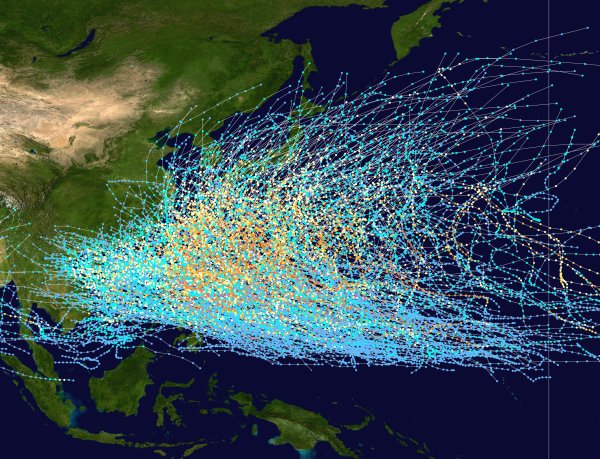
(Pacific Ocean typhoon paths from 1980 through 2005. A new study shows that the destructive…
View original post 676 more words
No comments yet.
1 This month

of the week – Australians for War Powers Reform (AWPR)
To see nuclear-related stories in greater depth and intensity
 Antinuclear
Leave a comment