New research shows Low Dose Rate of ionising radiation induces cancer
Gamma radiation at a human relevant low dose rate is genotoxic in mice, Anne Graupner, Dag M. Eide, Christine Instanes, Jill M. Andersen, Dag A. Brede, Stephen D. Dertinger, Ole C. Lind, Anicke Brandt-Kjelsen, Hans Bjerke, Brit Salbu, Deborah Oughton, Gunnar Brunborg & Ann K. Olsen Scientific Reports 6, Article number: 32977 September 21016
Abstract
Even today, 70 years after Hiroshima and accidents like in Chernobyl and Fukushima, we still have limited knowledge about the health effects of low dose rate (LDR) radiation. Despite their human relevance after occupational and accidental exposure, only few animal studies on the genotoxic effects of chronic LDR radiation have been performed. Selenium (Se) is involved in oxidative stress defence, protecting DNA and other biomolecules from reactive oxygen species (ROS). It is hypothesised that Se deficiency, as it occurs in several parts of the world, may aggravate harmful effects of ROS-inducing stressors such as ionising radiation.
We performed a study in the newly established LDR-facility Figaro on the combined effects of Se deprivation and LDR γ exposure in DNA repair knockout mice (Ogg1−/−) and control animals (Ogg1+/−). Genotoxic effects were seen after continuous radiation (1.4 mGy/h) for 45 days. Chromosomal damage (micronucleus), phenotypic mutations (Pig-a gene mutation of RBCCD24−) and DNA lesions (single strand breaks/alkali labile sites) were significantly increased in blood cells of irradiated animals, covering three types of genotoxic activity.
This study demonstrates that chronic LDR γ radiation is genotoxic in an exposure scenario realistic for humans, supporting the hypothesis that even LDR γ radiation may induce cancer……..
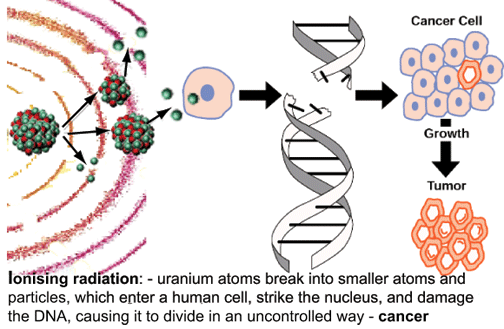
In the present study we demonstrate that exposure to a human relevant LDR γ radiation induces genotoxic effects in mouse blood cells assessed with three separate but complementary assays. These effects were expressed as increased levels of chromosomal damage (micronuclei), phenotypic mutations (RBCCD24−) and DNA lesions (ssb/als). The absolute measured changes were small, but significant. The formation of MN was observed in all irradiated groups independent of genotype or diet, and significant changes were seen in both immature and mature erythrocytes. This is an expected result given the chronic exposure and lack of splenic filtration of circulating MN-containing erythrocytes18……..In summary, exposure to chronic LDR of ionising radiation is indeed genotoxic with potential implications for cancer development, and the response is modified by the availability of Se, an element involved in the antioxidative defence report http://www.nature.com/articles/srep32977
No comments yet.
1 This month
15 April – Zoom –Nuclear Power is Not the Solution
Apr 15, 2026 01:00 AM in Canberra, Melbourne, Sydney

Join the International Physicians for the Prevention of Nuclear War (IPPNW) on Tuesday, April 14th for a timely webinar exploring the risks associated with nuclear power and challenging the myth that it offers a simple, safe, carbon-free solution to the climate crisis

of the week – Australians for War Powers Reform (AWPR)
To see nuclear-related stories in greater depth and intensity
 Antinuclear
Leave a comment