Monju fast-breeder reactor operator insiders say project is a failure: survey

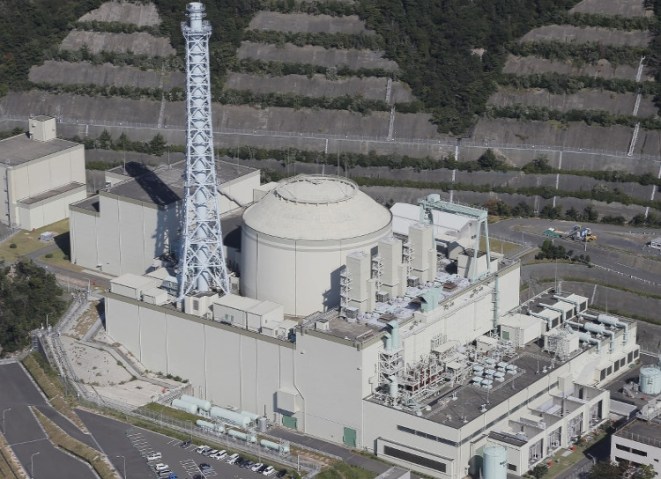
The Monju prototype fast-breeder nuclear reactor in Tsuruga, Fukui Prefecture, is pictured in this file photo taken from a Mainichi helicopter on Oct. 7, 2015
Employees of the operator of the troubled Monju prototype fast-breeder nuclear reactor in Tsuruga, Fukui Prefecture, which the government may decommission, say that the reactor is a failure or criticize the project in other ways, according to a labor union survey.
A survey conducted by one of the labor unions representing workers at the Japan Atomic Energy Agency (JAEA), the results of which the Mainichi Shimbun has obtained, shows that over half of the respondents said the government should consider decommissioning the trouble-plagued reactor.
The JAEA was founded in 2005 through a merger between the Japan Nuclear Cycle Development Institute (JNC) and the Power Reactor and Nuclear Fuel Development Corp. (PNC). There are two labor unions within the JAEA — the Japan Atomic Energy Labor…
View original post 429 more words
Panel to examine options for wrecked Fukushima plant
A panel of experts will discuss reforms at Tokyo Electric Power Company Holdings Inc., including the costly plans to scrap its Fukushima No. 1 nuclear power plant, Industry minister Hiroshige Seko said Tuesday.
The costs of decommissioning the plant, ravaged by the 2011 triple meltdown, is expected to far exceed the initial estimate of ¥2 trillion, prompting the government to review its financial aid to the utility with the help of the private sector.
The government-appointed panel will meet for the first time in early October and draft proposals by year-end, Seko said, as Tepco plans to revise its business plan, compiled in 2014, possibly early next year.
Members of the panel include Akio Mimura, head of the Japan Chamber of Commerce and Industry, and other senior officials of major business groups. Tepco President Naomi Hirose will also join as an observer.
The utility’s business has been pressured by the…
View original post 39 more words
Fukushima unveils grand plan for alternative energy transmission line networks
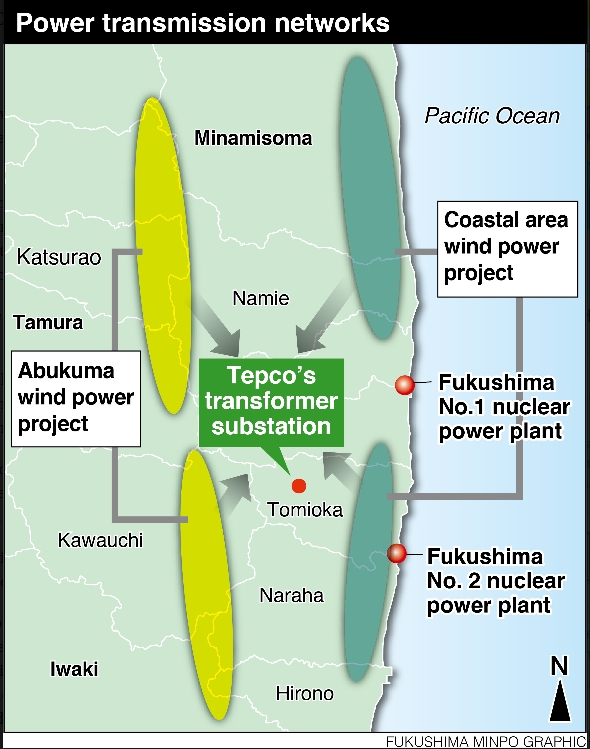
A public-private sector consortium tasked with promoting alternative energy in Fukushima Prefecture will start building new power transmission networks next fiscal year.
The consortium, made up of central government agencies, the Fukushima Prefectural Government and electric power companies, met on Sept. 7. It formulated a plan to make the prefecture staggered by 2011 mega-quake, tsunami and nuclear disaster a pioneer in clean energy.
The prefecture has announced plans to create two new wind power generation zones.
The coastal zone, which is close to Tokyo Electric Power Co. Holdings Inc.’s crippled Fukushima No. 1 nuclear plant, encompasses the cities and towns of Minamisoma, Namie, Futaba, Okuma, Tomioka, Naraha and Hirono.
The other is the inland Fukushima Abukuma zone, covering Tamura and the villages of Kawauchi and Katsurao. Together, the zones are expected to be among the biggest bases for wind power in Japan.
But due to the lack of power transmission…
View original post 313 more words
In Fukushima, A Bitter Legacy Of Radiation, Trauma and Fear
Five years after the nuclear power plant meltdown, a journey through the Fukushima evacuation zone reveals some high levels of radiation and an overriding sense of fear. For many, the psychological damage is far more profound than the health effects.
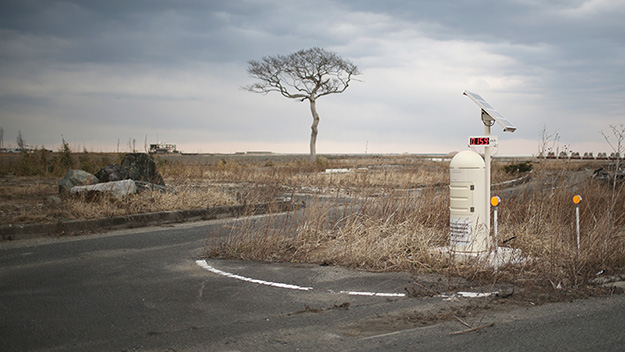
A radiation monitoring station alongside a road in Namie, Japan.
Japan’s Highway 114 may not be the most famous road in the world. It doesn’t have the cachet of Route 66 or the Pan-American Highway. But it does have one claim to fame. It passes through what for the past five years has been one of the most radioactive landscapes on the planet – heading southeast from the Japanese city of Fukushima to the stricken nuclear power plant, Fukushima Daiichi, through the forested mountains where much of the fallout from the meltdown at the plant in March 2011 fell to earth.
It is a largely empty highway now, winding through…
View original post 1,907 more words
6th Citizen-Scientist International Symposium on Radiation Protection Date: Friday, October 7 – Monday, October 10, 2016
From the Reality of Chernobyl and Fukushima
Date: Friday, October 7 – Monday, October 10, 2016
Venue: Main Hall, Fukushima Gender Equality Centre 1-196-1 Kakunai, Nihonmatsu, Fukushima, 964-0904
The Citizen-Scientist International Symposium on Radiation Protection (CSRP), a politically, financially, ideologically and religiously independent non-profit organization, has been committed to keeping to minimum the damages on health and environment caused by the Tokyo Electric Fukushima Daiichi Nuclear Power Plant disaster that followed the Great East Japan Earthquake and Tsunami in March 11, 2011.
CSRP has been inviting administrative officials, researchers, NGOs, member experts of governmental inquiry commissions and international organizations working on radiation protection, etc. Since around the 3rd CSRP, this approach has started to bear fruit, because scientists and other stakeholders with different positions and paradigms began to share the same table of discussion, thus gradually making possible constructive exchange of views.
In the course of this approach…
View original post 287 more words
Photos show nuclear tragedy’s toll on pets
“They never came back because the radiation levels were too high. The animal rescue teams knew the animals were abandoned and left there, so they had three weeks to go in there to find them,” said O’Connor, who added that farm animals usually had to be euthanized.
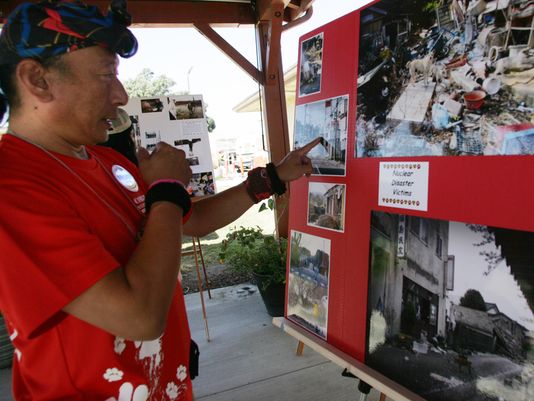
Akira Honda, founder of Nyander Guard Animal Rescue, shows photos of animals left behind in the aftermath of the 2011 earthquake, tsunami and nuclear disaster in Japan. The photos are on display at Ventura County Animal Services’ Camarillo shelter.
Shortly after the Fukushima Daiichi nuclear disaster in 2011 in Japan, nearby residents were immediately evacuated from their homes because of the risk of radiation exposure. They were forced to leave their animals behind.
Akira Honda, nicknamed Taicho, immediately raced to the disaster area from his hometown six hours away to help, and realized the need for an animal shelter near the radiation-contaminated…
View original post 436 more words
1 This month
7 April – WEBINAR – Australia and the Doomsday Clock – Preventing nuclear war through NoFirstUse and other policies
Online | Tuesday April 7, 4:00-5:30pm, Australian Eastern Time / 8:00-9:30am Central Europe Time
– Access the registration link
15 April – Zoom –Nuclear Power is Not the Solution
Apr 15, 2026 01:00 AM in Canberra, Melbourne, Sydney

Join the International Physicians for the Prevention of Nuclear War (IPPNW) on Tuesday, April 14th for a timely webinar exploring the risks associated with nuclear power and challenging the myth that it offers a simple, safe, carbon-free solution to the climate crisis

21 April Webinar: No Nuclear Weapons in Australia
Start: 2026-04-21 18:00:00 UTC Canberra, Melbourne, Sydney (GMT+10:00)
End: 2026-04-21 19:30:00 UTC Canberra, Melbourne, Sydney (GMT+10:00)
Event Type: Virtual
A virtual link will be communicated before the event.
Host Contact Info: australia@icanw.org

of the week – Australians for War Powers Reform (AWPR)
To see nuclear-related stories in greater depth and intensity
 Antinuclear