Fukushima Radioactive Contamination of Tap Water in Eastern Japan


The measures quoted in this article are from the Japan Nuclear Regulatory Agency.
As every measure given by the Japanese government agencies and Tepco during the past 5 and half years, we have the right to question their exactitude and therefore the true numbers could be actually higher than the ones published.
still the fact remains that they do recognize a certain contamination of the tap water in many prefectures of Eastern Japan.
Radioactivity testing of tap water in June 2016
According to the radioactivity test of tap water, the Nuclear Regulatory Agency announced in June 2016 that there is some radioactivity contamination from Fukushima nuclear power plant accident in the tap water of Miyagi Prefecture, Yamagata Prefecture, Fukushima Prefecture, Ibaraki Prefecture, Tochigi Prefecture, Gunma Prefecture, Saitama Prefecture, Chiba Prefecture, Tokyo, Kanagawa Prefecture, Niigata Prefecture, where radioactive cesium has been slightly detected.
(The detection limit value of White Food: 0.5…
View original post 213 more words
High levels of radioactive cesium pooling at dams near Fukushima nuke plant causing anxiety
Once radionuclides enter the eco-system, they move around carried by wind and water. They can’t “go away.” They can’t be “decontaminated.” They can only be moved, the biggest force moving them is nature, not clean up crews.
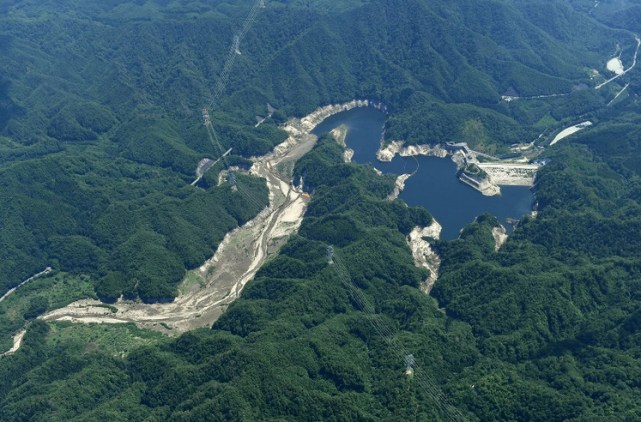
Ogaki Dam in Namie, Fukushima Prefecture, as seen from a Mainichi Shimbun helicopter in July 2016, contains high concentrations of radioactive cesium exceeding the limit set for designated waste.
High levels of radioactive cesium pooling at dams near Fukushima nuke plant
High concentrations of radioactive cesium have been accumulating at the bottom of 10 major dams within a 50-kilometer radius from the disaster-stricken Fukushima No. 1 Nuclear Power Plant, a survey by the Environment Ministry has found.
Radioactive cesium emanating from the 2011 nuclear disaster is pooling at those dams, which are used to hold drinking water and for agricultural use, after the substances flew into there from mountains, forests and rivers. The…
View original post 1,081 more words
Records of Diet’s Fukushima investigation still under wraps

Kiyoshi Kurokawa, chairman of the Fukushima Nuclear Accident Independent Investigation Commission, presents the final report to Lower House Speaker Takahiro Yokomichi, right, in July 2012.
Five years after the accident at the Fukushima No. 1 nuclear power plant, the Diet is still sitting on a trove of raw documents and testimonies of more than 1,100 individuals who were on the front lines during the crisis.
The cache was compiled by the Fukushima Nuclear Accident Independent Investigation Commission, which released a report of its findings that totaled about 600 pages in July 2012.
The documents collected by that commission, including the testimonies of 1,167 individuals, have still not been released to the public more than four years after its disbandment.
Yasunori Sone, a political science professor at Tokyo’s Keio University, said the documents should, in principle, be released to the public because the investigation was conducted by the Diet on behalf…
View original post 633 more words
1 This month

of the week – Australians for War Powers Reform (AWPR)
To see nuclear-related stories in greater depth and intensity
 Antinuclear