Graphite in modern technologies – a pollutant for mining communities in China
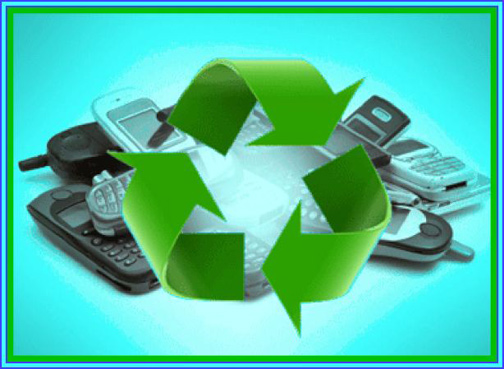 Graphite is a semimetal – as with lithium and other rare metals, it could be recycled, with good design for devices, rather than just dug up and eventually thrown away.
IN YOUR PHONE, IN THEIR AIR A trace of graphite is in consumer tech. In these Chinese villages, it’s everywhere. Washington Post, Story by Peter Whoriskey Photos by Michael Robinson Chavez Videos by Jorge Ribas October 2, 2016 “……….IN THE AIR, IN THE WATER
Despite the name, only a small portion of a lithium-ion battery consists of lithium. Graphite is used to make the negative electrode and represents about 10 to 15 percent of the cost of a typical lithium-ion battery, according to analysts.
The demand for graphite has risen in parallel with the demand for more-powerful laptops, tablets and phones.
Ten years ago, for example, the battery of the best-selling Motorola Razr had a capacity of 680 milliamp-hours. Today, the batteries in the best-selling smartphones have three or four times that.
Lyu Guoliang, senior engineer at the graphite business association in Jixi, said the demand for graphite rose very rapidly in 2010, driven by the demand for lithium-ion batteries.
Graphite for batteries must be refined to high levels of purity, and the flakes must be reformed into tiny spherical or potato-like particles. This extra refining means that the refined graphite is worth 10 times as much as the raw material, said Lyu, and that made the business particularly attractive.
But without proper controls, mining and refining can cause pollution in two ways — by air and by water.
Graphite powder can quickly become airborne dust, drifting for miles. Without systems of tarps and fans to keep it under control, the resulting fine-particle pollution can cause an array of breathing difficulties, such as aggravating lung disease or reducing lung function, and has been linked to heart attacks in people with heart disease, according to the U.S. Environmental Protection Agency.
Graphite operations can also lead to pollution because their chemicals leak into local waters. According to industry sources, the purifying process, especially in China, is commonly done with acids, often hydrofluoric acid, a highly toxic substance.
This method is cheaper than the one used in other countries, where the graphite is purified by “baking,” — that is, heating it up. Riddle, of Asbury Carbons, said refining graphite that way is better for the environment but adds about 15 percent to the price. He said that for the past 20 years his company has insisted on purchasing only graphite refined this way.
“We had hoped more companies and users would follow our lead, but this has not been the case,” Riddle said.
Tracing your battery’s graphite
The lithium-ion battery industry has a massively complicated supply chain. Each consumer company has dealt with multiple suppliers — and their suppliers have dealt with multiple suppliers. This shows some of the connections within the industry. See companies’ responses to Washington Post’s investigation.
WAR AGAINST POLLUTION’
The Chinese government has shown increasing concern about the nation’s environmental woes.
After decades of extraordinary economic growth, the country’s air has become an acute health danger. A million or more Chinese die prematurely every year because of outdoor air pollution, according to multiple estimates, including the report known as the Global Burden of Disease, part of a project run out of the University of Washington. One of the critical groups of pollutants in the Chinese air is “particulate matter” — dust, soot, smoke — a category that includes the air pollutants emitted from graphite plants.
Meanwhile, water quality in China has deteriorated, too. In 2015, the portion of the country’s groundwater supplies classified as “bad” or “very bad” stood at over 60 percent, according to China Water Risk, a nonprofit group that tallies figures from China’s Ministry of Environmental Protection. More than a quarter of China’s key rivers were deemed by the government as “unfit for human contact,” according to the group.
According to a report on graphite mining shown on state-run CCTV, the rivers in Jixi show levels of lead and mercury that are many times the national limit. Given the array of industry in the area, however, it is impossible to say how much of the lead and mercury come from the graphite industry.
“We will resolutely declare war against pollution as we declared war against poverty,” Premier Li Keqiang announced in 2014.
About three years ago, the country’s environmental efforts focused on the graphite industry, and records indicate that more than a dozen companies were issued citations by provincial and city officials, mostly in Heilongjiang and Shandong provinces, where most of China’s graphite business is done.
For example, Aoyu, which operates the plants near Lyu Shengwen and Liu Fulan in Mashan, was cited for not controlling the dust and the water pollution. It was fined roughly $7,500 for those infractions and asked to make improvements, according to a database of government records kept by the Institute of Public and Environmental Affairs (IPE), a Beijing-based nonprofit.
Likewise, BTR faced similar enforcement efforts for air and water pollution.
So, too, has Hensen, a graphite producer in Shandong province that sells to BTR, according to its manager, who did not respond to emailed questions regarding the water pollution.
Guo, the BTR spokeswoman, said that the plant in question has been improved and won the approval of the local government. She attributed the complaints to the fact that BTR is an environmental leader within the industry. As a result, she said, “we think it is normal . . . that someone attacks BTR by improper means. . . . BTR will talk with local people. . . . We would like to prove to them that BTR doesn’t make pollution on the water and crops.”
An Aoyu official hung up on a reporter seeking comment about the pollution.
But not all of the graphite factories appear to have been targeted by the crackdown. For two of the five factories visited by Post journalists, no records of any government citations could be found in the IPE database.
And even at those places where polluters were cited by the government, neighbors said that if any improvements were made, they were short-lived or not substantial enough to clean up the problem. Villagers said some factories employ pollution prevention measures — such as tarps to keep graphite from flying away, or actions to prevent toxic sewage from flowing into local waters — only when the environmental officials are present.
“It was worse last year, but it’s still bad,” Li Jie said in Liumao. “Everything is mai tai.” The trouble, residents and some industry representatives said, is that while the government wants to protect the environment, they also want to protect the jobs at the graphite factories.
Hou Lin, 30, works at the Aoyu plant in Mashan as a safety manager. He walked by as some farmers were complaining to reporters about the pollution.
“The company pollutes a lot,” he agreed. “But people need to have jobs.”Story by Peter Whoriskey. Photos by Michael Robinson Chavez. Videos by Jorge Ribas. Graphics by Lazaro Gamio andTim Meko. Design by Matt Callahan, Emily Chow and Chris Rukan. https://www.washingtonpost.com/graphics/business/batteries/graphite-mining-pollution-in-china/
No comments yet.
1 This month
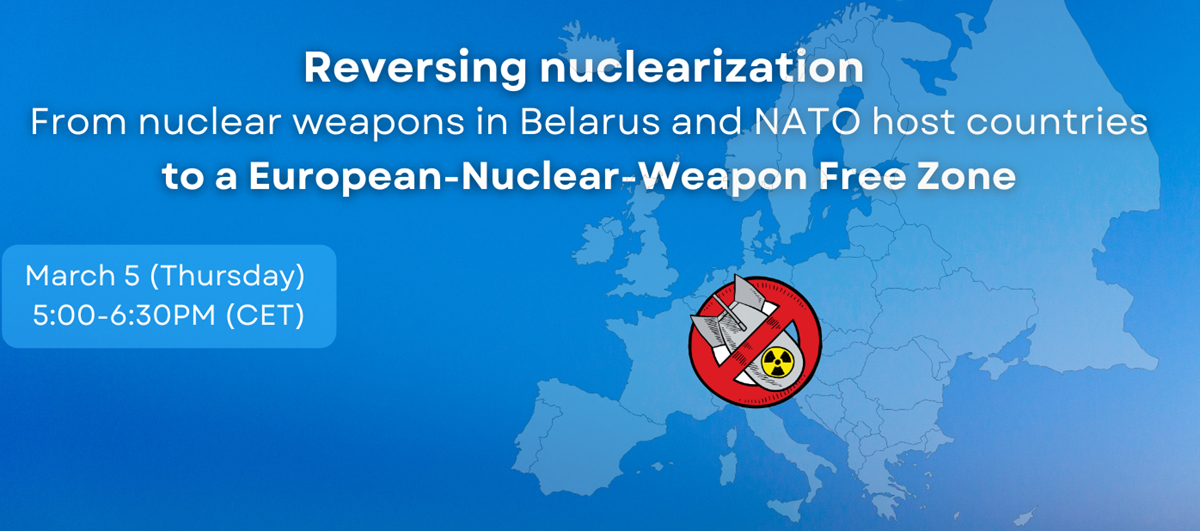
6 March -Online – Reversing nuclearization:
From nuclear weapons in Belarus and NATO host countries to a European-Nuclear-Weapon Free Zone
Mar 6, 2026 03:00 AM in Canberra, Melbourne, Sydney

of the week – Australians for War Powers Reform (AWPR)
To see nuclear-related stories in greater depth and intensity
 Antinuclear
Leave a comment