Radiation Brain Moms and Citizen Scientists: The Gender Politics of Food Contamination after Fukushima

 by Aya Hirata Kimura (Author)
Following the Fukushima Daiichi Nuclear Power Plant disaster in 2011 many concerned citizens—particularly mothers—were unconvinced by the Japanese government’s assurances that the country’s food supply was safe. They took matters into their own hands, collecting their own scientific data that revealed radiation-contaminated food. In Radiation Brain Moms and Citizen Scientists Aya Hirata Kimura shows how, instead of being praised for their concern about their communities’ health and safety, they faced stiff social sanctions, which dismissed their results by attributing them to the work of irrational and rumor-spreading women who lacked scientific knowledge. These citizen scientists were unsuccessful at gaining political traction, as they were constrained by neoliberal and traditional gender ideologies that dictated how private citizens—especially women—should act. By highlighting the challenges these citizen scientists faced, Kimura provides insights into the complicated relationship between science, foodways, gender, and politics in post-Fukushima Japan and beyond.
Editorial…
View original post 229 more words
To 8th October Nuclear and Climate News – Australia
 Investigative journalism this week – yes, it still can happen. This time, it’s the Washington Post, revealing the scandalous origin of the rare earths that we use so prolifically in all our new gizmos – from mobile phones to wind turbines. Cobalt mining in the Congo. Graphite mining in China.
AUSTRALIA
NUCLEAR. While climate news is still the BIG one, for Australia, the pro nuclear machinations going on in South Australia form the URGENT one. On October 9 and 10, the second Nuclear Citizens’ Jury will be held in Adelaide. The last Citizens Jury, while being very well run by DemocracyCo, had a strange brief, and some biased and ignorant witnesses.
While in S Australia, all the very expensive preparations and propaganda for nuclear waste importing go on (all at S Australian taxpayers’ expense) the rest of Australia is oblivious. We must thank the subservient Aussie media for this, especially the Murdochracy.
Another inaccuracy from pro nuclear propagandist Geraldine Thomas. Adi Paterson, Australia’s top nuclear guru, in pro nuclear promotion to Asian schools.
Especially in South Australia, but also in other States, those who care will be protesting against this plan for Australia as the world’s nuclear toilet – on Saturday October 15 –NATIONAL DAY OF ACTION against nuclear waste dumps in SA. Sydney Melbourne.
CLIMATE and RENEWABLE ENERGY.
- Climate forecast: Australia’s weather will get wilder.
- Malcolm Turnbull could, and should, now ratify the Paris climate agreement. Malcolm Turnbull jumps on the anti renewable energy bandwagon. Investors scared, jobs lost, due to unfounded criticism of renewable energy in South Australia.
- Former Liberal leader Dr John Hewson pushes for solar battery storage and solar thermal project near Port Augusta.
- Australia’s first sun-tracking solar farm opens at Majura, Canberra.
- A new wave of wind farm developments is sweeping Victoria.
8 – 9 October – Nuclear Citizens Jury 2, Adelaide: LOOK OUT FOR THE WITNESS LIST
I say “Look out for the witness list, because for citizens’ jury 1, the big weakness was in 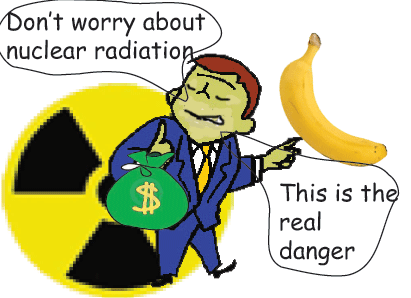 the witnesses – some of whom were clearly ignorant and biaseed. This was particularly apparent in the appalling way they covered (up) the question of ionising radiation and health.
October 8th and 9th Citizens’ Jury Two Livestreaming and Video
See the agenda here. Note these two important sections on Sunday 9th:
3.45pm Working afternoon tea – witness selection
4.15pm Defining the witness list
Citizens’ Jury Two will be held over two weekends in October and one weekend in November. The original 50 members of Citizens’ Jury One will be supplemented by an additional 300 South Australians to answer the question: Under what circumstances, if any, could South Australia pursue the opportunity to store and dispose of nuclear waste from other countries?
The Jury will deliberate on the question using both the Nuclear Fuel Cycle Royal Commission Report and first Citizens’ Jury report, with feedback from the community consultation and expert witnesses also used as important inputs.
The unedited and unchanged jury report will be presented to the Premier and tabled in the South Australian Parliament. The report will play a vital role in informing the State Government’s response to the Royal Commission’s Report later this year.
Dates for Citizens’ Jury Two are 8/9 October, 29/30 October, 5/6 November 2016.
Inconvenient truths the nuclear “citizens’ jury” needs to hear
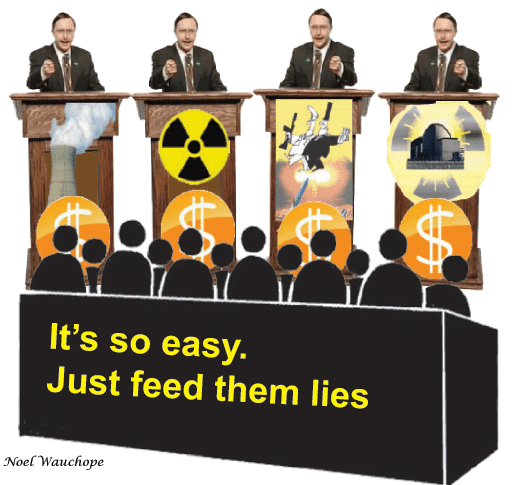
7 Oct 16 As the South Australian Government’s second nuclear “citizens’ jury” gets underway this weekend, it’s essential that participants aren’t denied important facts about global nuclear waste, says Mark Parnell MLC, Parliamentary Leader of the SA Greens.
Here are eight inconvenient truths that the citizens’ jury needs to hear:
1. The much-heralded Finnish underground nuclear waste facility (visited by the Premier recently) does NOT yet have a licence to accept nuclear waste, will not open for at least six years and has been three decades in planning. It is also 20 times SMALLER than the facility proposed for SA by the Royal Commission.
2. The nuclear industry is without peer in terms of cost blow-outs and time over-runs. This is likely to eliminate any anticipated profit for South Australia – which is the sole rationale for the proposed SA dump.
3. According to the Royal Commission’s own consultants, it could cost South Australia more than $600 million before we even know whether the project is viable.
4. The main client countries anticipated to send nuclear waste to South Australia, including South Korea and Japan, are already exploring domestic solutions to their nuclear waste problem and are not considering overseas solutions.
5. The world’s only operating underground nuclear waste facility, in New Mexico, USA, closed in 2015 following a chemical explosion brought about by human error. It is still contaminated and yet to re-open.
6. The most advanced nuclear nation on Earth, the USA, is yet to come up with a permanent solution for waste from its nuclear power plants. The proposed underground nuclear dump in Yucca Mountain, Nevada, has been stalled by community opposition and may never go ahead.
7. Whilst it may be the best idea so far, nobody knows if deep geological disposal of nuclear waste will work in the long term, because it has never been done before.
8. South Australia is not unique in its geology and has regular earthquakes of magnitude 4 and above.
Without all the facts, the citizens’ jury can’t possibly make an informed decision.
NOTE: Mark Parnell MLC is a member of the Parliamentary Joint Select Committee that is investigating the Royal Commission’s findings. Mark and other Committee members recently returned from inspecting nuclear waste facilities under construction in Finland and France, as well as failed facilities in the United States.
Derek Abbott: thought on the connection between nuclear waste dump and nuclear submarines
 Derek Abbott no high level international nuclear waste dump in south australia , 6 Oct 16 Thought for the day: Australia has clear ambitions for nuclear submarines, but doesn’t have the infrastructure or means of waste disposal to support them.
SA’s nuclear dump as a stand-alone commercial venture doesn’t financially add up. Therefore it seems to me the Royal Commission is a poor attempt to hoodwink the public in accepting infrastructure, which will open the door for nuke submarines that will then “justify” the dump’s poor financial position.
Once we are hoodwinked into it making a loss, the justification will be that we need it for national security anyway so the money is “well” invested.
Interesting coincidence that Kevin Scarce was in the Navy. https://www.facebook.com/groups/1314655315214929/
Mainstream media carefully ignored important anti -Pine Gap rally and conference
 Pine Gap: Important talks but who was listening? Alice Springs News, 6 Oct 16 By ERWIN CHLANDA The anti Pine Gap rally, conference and public forum wrapped up yesterday after four days of being noticed but studiously ignored.
This is surprising because two senators of the Australian Parliament were here demanding that the military base be closed, and at least three academics supported that view at a public forum, including Professor Richard Tanter from Melbourne University.
Making an enquiry about Pine Gap is a journalistic investigation quite unlike most: Usually in Australia you can ask questions and get answers and comment, and you can check your facts with the subject of your investigation. But the base is strictly zip-the-lip. One needs to work with secondary sources, such as the US Congressional record, which fortunately is quite revealing – unlike similar Australian sources.
Rather than rubbing up against characteristic Australian scepticism and democratic spirit, that attitude is spreading. A remarkable circumstance locally was that at the forum held at the Chifley on Friday evening, the sunset gathering atop Anzac Hill on Saturday, and a rally outside the gates to the base yesterday morning – all open to the public – there was no sign of currently serving members of the Legislative Assembly, nor the town council, nor any of the main lobbies for commerce and tourism in town. The leaders of Alice Springs have their head firmly stuck in the sand.
This is a worry considering that Pine Gap could be a nuclear target – increasingly plausible given its escalating role in US military action around the world – and if this were to eventuate, this town would be annihilated. It’s been a well documented discussion point since the mid-seventies……….
Senator Lee Rhiannon (at left,outside Pine Gap) told the crowd of about 80: “US people are welcome here. We want to work with people from around the world. But not where there are bases with such destructive agendas.
“The nuclear war agenda was run out of this place. Now that the drones are being directed from here is something we must inform all Australians.”
The organisers focussed on that transformation of the base, along the way prying into the private lives of billions of people under the banner of protection through global surveillance.
Greens Senator Scott Ludlam on Friday gave a brilliant and scathing account of the democracy we live in, where matters of life and death are dealt with not by Federal Parliament, but by the executive and a handful officials.
We pressed him further on these issues outside the Pine Gap gates. He said: “Whether it’s defence, any kind of treaty making agreement, any of these large scale instruments that sign us up to large scale obligations, the Parliament doesn’t get a look-in until after the deal is already done.”……….
The way the cops have been dealing with the events was clearly guided by knowledge that media coverage follows arrests on camera. There were none, and consequently there was scarcely any media coverage………. http://www.alicespringsnews.com.au/2016/10/03/important-talks-but-who-was-listening/
Hurricane Matthew and the threat to Florida’s nuclear reactors
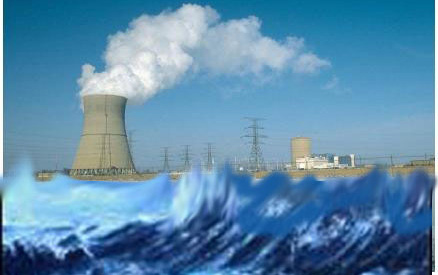 What if Hurricane Matthew Hits Florida’s Nuclear Reactors?, Clean Energy Footprints, October 5th, 2016 Hurricane Matthew has already caused devastation in Haiti and elsewhere in the Caribbean. Tracking this dangerous storm’s path, which Bloomberg reported as a “$15 billion threat,” as it moves towards Florida, Georgia, the Carolinas and potentially up the Eastern seaboard is proving difficult. But despite unclear predictions, communities are wisely mobilizing and calling for evacuations (or are already in the process of doing so) and/or declaring states of emergency.
Extreme weather events have widespread ramifications on our electricity systems. A Department of Energy review of responses to Hurricanes Irene and Sandy from nuclear reactors in the Northeast highlighted a number of strategies to protect the reactors. According to the Department of Energy, “Some reactors were shut as a precaution to protect equipment from the storm; others were forced to shut down or reduce power output due to damage to plant facilities or transmission infrastructure serving the plant; and still others were forced to reduce power output due to reduced power demand caused by widespread utility customer outages.”
Two nuclear power plants exist on Florida’s eastern coast: the St. Lucie and Turkey Point facilities. Based on the current National Hurricane Center projections, it appears that Hurricane Matthew will come closest to the St. Lucie nuclear facility early Friday morning. Storm surge near the St. Lucie nuclear reactors may reach 2-5 feet, and with hurricane force winds of 130 miles per hour. Meanwhile, a significant water quality problem in the Southeast is the ongoing pollution at Florida Power and Light’s (FPL) Turkey Point cooling canal system. It’s unclear what effects high winds and storm surge could have on Turkey Point’s open air industrial sewer.
After flooding caused a nuclear meltdown at the Fukushima Daiichi nuclear reactor in Japan, the Miami News Times published an article, “Five reasons Turkey Point could be the next nuclear disaster.” The article noted: “Just like in Japan, Turkey Point is susceptible to a meltdown caused by a natural disaster. A hurricane-spurred tidal surge from Turkey Point’s neighboring Biscayne Bay could create catastrophic conditions identical to those in Japan. With power down, the plant would be forced to rely on emergency diesel generators to pump water to cool the reactors….those generators would ‘certainly’ become inundated with water from the tidal surge, causing them to drown and fail.” (Southern Alliance for Clean Energy and Tropical Audubon with Friends of the Everglades filed a lawsuit this summer to resolve the pollution problem caused by Turkey Point.)……….http://blog.cleanenergy.org/2016/10/05/nuclearhurricanematthew/
Derek Abbott: a thought on a past electricity blackout in USA and Canada
Derek Abbott, Nuclear Fuel Cycle Watch South Australia, 5 Oct 16, There was a huge grid meltdown and blackout that affected parts of the USA and Canada. Did it have anything to do with renewables? No, because this happened in 2003 when renewables were a very minor player.
However, if you look at the official report on this blackout on p. 111 onwards (see below), you’ll see the grid tripped out around 20 nuclear power stations in total! And it took five days to get all those nuke stations back online. Ouch.
Nuclear proponents in glass houses shouldn’t throw stones at renewables when there is a blackout. http://energy.gov/sites/prod/files/oeprod/DocumentsandMedia/BlackoutFinal-Web.pdf https://www.facebook.com/groups/1021186047913052/
We almost lost Detroit- anti nuclear activists remember Fermi 1 nuclear accident
 Anti-nuclear activists mark Fermi 1 incident It was a half-century ago that plant had a partial meltdown By | BLADE STAFF WRITER Oct. 6, 2016 MONROE — Anti-nuclear activists marked the 50th anniversary of Fermi 1’s partial meltdown Wednesday with a peaceful rally at downtown Monroe’s Loranger Square Pavilion, during which they called for America to embrace more renewable energy and support efforts to safeguard the public from radiation exposure…….
“The striking thing to me is — 50 years later — there are still lessons unlearned,” Terry Lodge, Toledo Coalition for Safe Energy spokesman, said.
Mr. Keegan, Mr. Lochbaum, and Mr. Lodge were among seven speakers who addressed about two dozen people Wednesday at a news conference which began at the exact moment the meltdown was reported to authorities 50 years earlier.
Although eclipsed by Three Mile Island and more significant events in other parts of the world, such as the Fukushima Daiichi meltdown of 2011 in Japan and the Chernobyl disaster of 1986 near Kiev, Russia, the Fermi 1 incident inspired the 1975 John G. Fuller book We Almost Lost Detroit, as well as a protest song by the late singer Gil Scott-Heron……http://www.toledoblade.com/local/2016/10/06/Anti-nuclear-activists-mark-Fermi-1-incident.html
Malcolm Turnbull could, and should, now ratify the Paris climate agreement
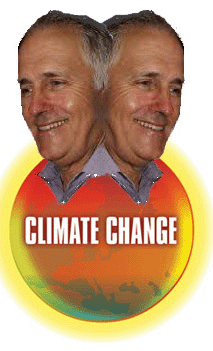 Australian ratification of international treaties is done through the executive, not the parliament. Prime Minister Turnbull makes the final decision as to whether Australia will ratify the Paris Agreement.
Paris climate agreement comes into force: now time for Australia to step up, The Conversation, The Paris climate agreement is set to enter into force next month after the European Union and Canada ratified the agreement overnight. The agreement, reached last December, required ratification by at least 55 countries accounting for 55% of global emissions to become operational.
US President Barack Obama hailed the news as perhaps “a turning point for our planet”, but also noted that it “will not solve the climate crisis” alone.
So far, 73 countries accounting for 56% of emissions have ratified the agreement. This includes the world’s two largest emitters: China and the US. This week the European Parliament approved ratification of the agreement for the EU. The European Council has formally adopted this decision and finalised ratification.
This has put the agreement over the 55% threshold and triggered entry into force. However, by the rules of the agreement, 30 days must now elapse before the agreement becomes operational. The agreement will enter into force on November 4.
This will mean that, from that date, the agreement will be active and legally binding on those who have ratified it……..
Ratifying Paris imposes few additional actions on countries, aside from making a pledge every few years. Not ratifying would make the dissenting country a climate pariah internationally. There is little for parliaments and leaders to debate.
The speed of entry into force may simply betray how little is expected of parties to the pact. It could be a sign of weakness, rather than strength and momentum.
What about Australian ratification? Continue reading
Investors scared, jobs lost, due to unfounded criticism of renewable energy in South Australia
 Allen Hicks, The Advertiser
Indonesia’s peatlands and fires: the risk of a vicious circle of carbon emissions
How the Earth will pay us back for our carbon emissions with … more carbon emissions, WP, The really scary thing about climate change is not that humans will fail to get their emissions under control. The really scary thing is that at some point, the Earth will take over and start adding even more emissions on its own.
A new study underscores this risk by looking closely at Indonesia, which has a unique quality — some 70 billion of tons of carbon that have built up in peatlands over millennia. In this, Indonesia is much like the Arctic, where even larger quantities of ancient carbon are stored in permafrost, and are also vulnerable.
 In each case, if that carbon gets out of the land and into the atmosphere, then global warming will get worse. But global warming could itself up the odds of such massive carbon release. That’s a dangerous position to be in as the world continues to warm.
In the new study in Geophysical Research Letters, a team of researchers led by Yi Yin of the French Laboratoire des Sciences du Climat et de l’Environnement look at the potential of peat bogs in equatorial Asia — a region that includes Malaysia, Papua New Guinea and several other smaller countries but is dominated by Indonesia and its largest islands, Borneo and Sumatra — to worsen our climate problems. It’s timely, considering that last year amid El Niño-induced drought conditions Indonesian blazes emitted over 1.5 billion tons of carbon dioxide equivalents into the atmosphere. That’s more than the annual emissions of Japan (or, needless to say, of Indonesia’s fossil fuel burning).
And the research finds that over the course of this century, that could keep happening. “The strong nonlinear relationship found between fire emissions and cumulative water deficit suggests a high future risk of peat carbon loss due to fire given that future climate projections indicate a twofold increase in the frequency of extreme El Niño,” the researchers write.
The situation arises because of the unique qualities of peat: In peat bogs, wetlands accumulate large amounts of organic matter — dead plant life — over many, many years. If those bogs are then drained, and fires are allowed to burn on them and deep into them, then it is possible to light up huge stores of ancient carbon and to put it back in the atmosphere much more rapidly than the speed at which it accumulated originally……..https://www.washingtonpost.com/news/energy-environment/wp/2016/10/03/there-are-our-carbon-emissions-and-then-there-are-the-ones-the-earth-will-punish-us-with/?utm_term=.b93ac1c3bb66
California may face megadroughts, as climate change advances
Looming megadroughts in western US would make current drought look minor. Warming temperatures and uncertain rainfall mean if more isn’t done to slow climate change, droughts lasting 35 years could blight western states, study says, Guardian, Oliver Milman, 8 Oct 16, The harsh drought currently gripping California may appear trivial in the future as new research shows that the south-west US faces the looming threat of “megadroughts” that last for decades.
California is in its sixth year of drought, which was barely dented by rains brought by the El Niño climate event and sparked a range of water restrictions in the state. But warming temperatures and uncertain rainfall mean that if more isn’t done to slow climate change, droughts lasting 35 years are likely to blight western states by the end of the century, according to the study, published in Science Advances.

Such a megadrought would impose “unprecedented stress on the limited water resources” of the parched US south-west, researchers found, bringing conditions similar to the 1930s dustbowl to California, Nevada, New Mexico, Colorado and Utah – but over a lengthier period.
Using a combination of temperature and precipitation models, the study predicts a 70% chance of a megadrought by the end of the century, should rainfall levels remain the same, with a 90% chance of an elongated drought should rainfall decrease, as most climate models forecast.
“We can’t rule out there could be a 99.9% chance of a megadrought, which makes it virtually certain,” said Toby Ault, a scientist at Cornell University and lead author of the study………
The new report does proffer a crumb of hope – if greenhouse gas emissions are radically cut then the risk of megadrought will reduce by half, giving a roughly 50:50 chance that a multi-decade stretch of below-average rainfall would occur this century.
But the research found that the emissions cuts would have to be far steeper than those agreed to by nations in Paris last year, where a 2C limit on warming was pledged……..https://www.theguardian.com/environment/2016/oct/05/climate-change-megadrought-california-global-warming
Researchers find fossil fuel industry’s methane emissions far higher than thought
 Fossil fuel industry’s methane emissions far higher than thought https://www.theguardian.com/environment/2016/oct/05/fossil-fuel-industrys-methane-emissions-far-higher-than-thought
Emissions of the powerful greenhouse gas from coal, oil and gas are up to 60% greater than previously estimated, meaning current climate prediction models should be revised, research shows, Guardian, Adam Vaughan, 6 Oct 16, The fossil fuel industry’s emissions of a powerful greenhouse gas are dramatically higher than previously thought. Continue reading
New York coalition of community groups aim to scrap nuclear subsidies
 Green groups call on state to scrap upstate nuclear subsidies, Times Union
A coalition of environmental groups including Food & Water Watch and the New York Public Interest Research Group have united to oppose what they estimate as an almost $8 billion effort to subsidize three upstate nuclear power plants: the James A. Fitzpatrick Nuclear Power Plant and Nine Mile Point Nuclear Generating Station outside Oswego and the R.E. Ginna plant east of Rochester.
The state Public Service Commission voted in early August to approve a rate increase for the power generated by the plants to pay for the subsidies. Since then, a group of downstate lawmakers have called for the PSC to reconsider that action and be more transparent in its analysis, noting that the majority of the cost of keeping the plants on line will be borne by downstate rate-payers.
On Wednesday, the environmental coalition made the same economic argument, estimating that residential consumers will be on the hook for an estimated $2.3 billion over the 12-year life of the deal. Con Ed ($705.8 million) and Long Island Power Authority ($501.4 million) would bear the largest proportionate share of the cost based on their number of customers.
Blair Horner of NYPIRG said that keeping the plants in operation was like “subsidizing the horse-and-buggy industry while Henry Ford is rolling cars off the Assembly line.”
The coalition plans to mount a grassroots effort to kill the subsidies in much the same way that the natural gas drilling technique known as hydrofracking was blocked…….http://blog.timesunion.com/capitol/archives/268142/green-groups-call-on-state-to-scrap-upstate-nuclear-subsidies/
1 This month
7 April – WEBINAR – Australia and the Doomsday Clock – Preventing nuclear war through NoFirstUse and other policies
Online | Tuesday April 7, 4:00-5:30pm, Australian Eastern Time / 8:00-9:30am Central Europe Time
– Access the registration link
15 April – Zoom –Nuclear Power is Not the Solution
Apr 15, 2026 01:00 AM in Canberra, Melbourne, Sydney

Join the International Physicians for the Prevention of Nuclear War (IPPNW) on Tuesday, April 14th for a timely webinar exploring the risks associated with nuclear power and challenging the myth that it offers a simple, safe, carbon-free solution to the climate crisis

21 April Webinar: No Nuclear Weapons in Australia
Start: 2026-04-21 18:00:00 UTC Canberra, Melbourne, Sydney (GMT+10:00)
End: 2026-04-21 19:30:00 UTC Canberra, Melbourne, Sydney (GMT+10:00)
Event Type: Virtual
A virtual link will be communicated before the event.
Host Contact Info: australia@icanw.org

of the week – Australians for War Powers Reform (AWPR)
To see nuclear-related stories in greater depth and intensity
 Antinuclear