Australian doctors warn about climate change and health
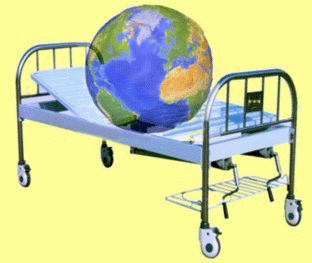 As doctors, we are worried about climate change, The Age, Marianne Cannon and Joseph Ting, 20 Nov 16
We are already treating the symptoms. Doctors, standing alongside nurses and other health professionals, are on the frontline in treating people with injuries and disease from severe weather events – such as droughts, bushfires and heatwaves – plus water borne illness… the list goes on.
Worse is coming and that’s why for the past 20 years, the health and medical community has tried to raise public awareness of this issue. Unfortunately, the clearly documented and growing health effects aren’t often spoken about in Australia. In part, this is due to scarce funding, a hostile political environment and the formidable size and scope of the “modelling exercise” required to begin to describe what will happen if pollution continues at current rates.
However, whilst climate change and health research in Australia is limited we only need to look to our recent history as a portent of things to come.
During the 2009 heatwaves that preceded the Black Saturday bushfires in Victoria there were double the number of deaths from heat related illness as there were from the bushfires. Those most at risk are the very old, very young, people with chronic disease and those on illicit or prescribed medications that mask heat-related stress, as well as those working outdoors or already exposed to high temperatures. It’s been documented that asthma presentations to hospitals also increase on such days as well as in dust storms. This is without taking into account the smoke haze created by prescribed burns which are used to prevent bushfires from raging out of control……..
what must be done? Even the most cynical health professional agrees that prevention is better than cure, and while we still have a chance we must try to avoid disaster.
There is much to learn from other countries. For example, the National Health Service in the UK has a sustainability unit that’s dramatically cut emissions from health care. Some local private hospital networks have already seen fit to take this pathway. A global network with strong connections in Australia, the Global Green and Healthy Hospitals initiative features many examples of healthcare services leading by example by cutting emissions, and improving population health at the same time.
In national climate policy, Australia lag behinds many wealthy and not so wealthy countries. This is an opportunity missed! Just think of the health benefits of leafy, pedestrian- and cycle-friendly towns and cities, where people are more active and breathing cleaner air.
Health care professionals want to see rapid change, and that’s why many of us are advocating for a national strategy on climate change and health in Australia – exemplified by the attendance of many health and medical leaders at a recent roundtable in Parliament House.
This approach offers us the opportunity to co-design policies with government and political parties that ensure health implications are considered when deciding how to tackle climate change – and imbuing such talks with the sense of urgency that the science dictates. We are worried not only for our patients, but also for ourselves and our families.
The cure is known – it’s time to act.
Dr Marianne Cannon and Dr Joseph Ting are emergency physicians based in Brisbane. http://www.theage.com.au/comment/as-doctors-we-are-worried-about-climate-change-20161119-gst9n7.html
No comments yet.
1 This month

of the week – Australians for War Powers Reform (AWPR)
To see nuclear-related stories in greater depth and intensity
 Antinuclear
Leave a comment