What did Jay Weatherill do wrong on the nuclear waste issue?
 Dennis Matthews, 24 Nov 16 Former Cabinet Minister in the Weatherill government, Patrick Conlon, asks what did Jay Weatherill do wrong on the nuclear waste issue (The Advertiser, 17/12/16).
Firstly, Weatherill set up a Royal Commission with a highly biased terms of reference. Secondly, he appointed a Commissioner who was perceived as biased . Thirdly, the Commission was perceived as stacked in favour of getting a go-ahead for expanding the nuclear industry in SA.
The report of the Royal Commission went down like a lead balloon. Claiming that he hadn’t made up his mind on expanding the nuclear industry, Weatherill initiated a “Citizens Jury”. When the citizens failed to give him the answer he wanted he called for a referendum on the issue.
This whole process has been one of outsourcing, a well-known strategy for distancing the government from any flak that may eventuate, at a cost to the tax-payer of the order of $10 million. Conlon calls these actions “courageous”. I suggest that the average voter will see them as cowardly and reckless.
Trump plans to scrap NASA climate research: Australian scientists support NASA
Australian scientists slam Trump’s plans to scrap NASA climate research, REneweconomy, By Sophie Vorrath on 24 November 2016 Australia’s top climate scientists have come out in support of their American counterparts, in response to news that the incoming Trump Administration will scrap climate research at the country’s top research facility, NASA. Trump’s senior advisor on NASA, Bob Walker, announced the plans strip NASA’s Earth science division of funding on Wednesday, in a crackdown on what his team refers to as “politicised science”.
The policy – and the language used to frame it – would be all too familiar to Australian climate scientists, who faced a similar attack on funding and staff of the world-leading CSIRO climate department, and the dismantling of the Climate Commission.
In defense of the CSIRO cuts, the Organisation’s ex-venture capitalist CEO Larry Marshall said the national climate change discussion was “more like religion than science.”
Here’s what Australia’s scientists are saying about Trump and NASA…
“Just as we have seen in Australia the attack on CSIRO climate science under the Coalition government, we now see the incoming Trump administration attacking NASA,” said Professor Ian Lowe, Emeritus Professor of Science, Technology and Society at Griffith University and a former President of the Australian Conservation Foundation.
“They obviously hope that pressure for action will be eased if the science is muffled.
“But with temperatures in the Arctic this week a startling 20 degrees above normal, no amount of waffle can disguise the need for urgent action to decarbonise our energy supply and immediately withdraw support for new coal mines,” Prof Lowe said.
“Why a world leader in Earth observation should do this is beyond rational explanation,” said David Bowman, a “fire scientist” and Professor of Environmental Change Biology at The University of Tasmania.
“Earth observation is a non-negotiable requirement for effective, sustainable fire management and it will be provided by other sources if the US proceeds with this path, such as Europe, Japan and China,” Prof Bowman said.
“So, effectively the US would be ceding intellectual ‘real estate’ to other nations that could quickly become dominant providers of essential information on fire activity.”
Dr Megan Saunders, a Research Fellow in the School of Geography Planning and Environmental Management & Centre for Biodiversity and Conservation Science at The University of Queensland, said scrapping funding to climate research in NASA would be devastating…….http://reneweconomy.com.au/australian-scientists-slam-trumps-plans-to-scrap-nasa-climate-research-78100/
NASA politely debunks Australian climate denying crank Malcolm Roberts
NASA director debunks Malcolm Roberts’ theory on climate data manipulation in polite letter ABC News, 24 Nov 16 In a politely worded letter, the director of NASA’s Goddard Institute for Space Studies (GISS) has addressed One Nation senator Malcolm Roberts’ concerns that the organisation’s data on climate change has been manipulated.
In a rare occurrence, director Gavin Schmidt personally wrote a letter in response to Senator Roberts’ request for information about the NASA GISTEMP analysis of global surface temperature history.
The GISS Surface Temperature Analysis (GISTEMP) is an estimate of global surface temperature change.
In the letter obtained by Fairfax Media and circulated widely on social media, the NASA scientist directed Senator Roberts to a number of links on the NASA website that published the entirety of NASA’s raw data and the code they use to analyse that data…..
“Finally, might I suggest that you avail yourself to the resources provided by the Bureau of Meteorology or CSIRO in Australia for further details on this topic,” the letter concluded.
This out-of-the-ordinary step taken by the NASA director was not the first time Senator Roberts has come up against a scientist over climate change……. http://www.abc.net.au/news/2016-11-24/nasa-director-schools-malcolm-roberts-in-climate-change-letter/8052132
Sea level rise and the threat to coastal real estate
 Perils of Climate Change Could Swamp Coastal Real Estate [compelling photos] Homeowners are slowly growing wary of buying property in the areas most at risk, setting up a potential economic time bomb in an industry that is struggling to adapt.
NYT, By IAN URBINANOV. 24, 2016 MIAMI — Real estate agents looking to sell coastal properties usually focus on one thing: how close the home is to the water’s edge. But buyers are increasingly asking instead how far back it is from the waterline. How many feet above sea level? Is it fortified against storm surges? Does it have emergency power and sump pumps?
Rising sea levels are changing the way people think about waterfront real estate. Though demand remains strong and developers continue to build near the water in many coastal cities, homeowners across the nation are slowly growing wary of buying property in areas most vulnerable to the effects of climate change.
A warming planet has already forced a number of industries — coal, oil, agriculture and utilities among them — to account for potential future costs of a changed climate. The real estate industry, particularly along the vulnerable coastlines, is slowly awakening to the need to factor in the risks of catastrophic damage from climate change, including that wrought by rising seas and storm-driven flooding. Continue reading
China’s solar village plan to lift residents out of poverty
Unlike many other developing countries, around 99% of all Chinese households already have access to the grid.

Solar PV can help China’s poorest, China Dialogue Suzanne Fisher Murray 23.11.2016 中文版本 In Anhui villages are hooking up to the grid to generate income and power, writes Suzanne Fisher-Murray The residents of Yuexi county, a mountainous area in eastern China, must have thought it was their lucky day when they heard they had been selected for China’s new solar poverty alleviation project.
The 382,000 residents are some of the poorest in the country, living below the poverty line of 2,300 yuan (about US$1 per day). This was the key criteria for their selection in the project, which is part of China’s 13th Five-Year-Plan, the roadmap for the nation’s development from 2016 to 2020.
In 2015, President Xi Jinping announced the Chinese government would eradicate poverty in China by 2020, which requires targeting the country’s 70 million people living below the poverty line. In April, 2015, China’s National Energy Administration released a plan to use solar photovoltaics (PV) to increase the income of 200 million Chinese households within 16 provinces and 271 counties.
The project is being piloted in Yuexi county, Anhui province before being rolled out across the country. Villagers identified as living below the poverty line will have rooftop solar panels rated at 3-5 kilowatts installed on their roofs and become shareholders in village solar power stations with a generating capacity of around 60-100 kilowatts. The aim is for the solar panels to earn each family 3,000 yuan (around US$430) in extra income each year. Local farmers could also earn additional income by leasing out non-arable lands or maintaining the solar farms.
So far, 182 villages (with 30,000 residents) in the county have been identified as eligible for the project. Construction has begun at a staggering pace: 57 solar parks were built in 2015, with the remaining 125 expected to be finished this year. Continue reading
Work progressing on solar panels embedded into roads
Solar-Panel Roads to Be Built on Four Continents Next Year, http://www.bloomberg.com/news/articles/2016-11-24/solar-panel-roads-to-be-built-across-four-continents-next-year Bloomberg, Anna Hirtenstein ahirtens
-
Unit of Colas SA designed solar panels that embed into roads
-
Work progressing on larger test site in northern France
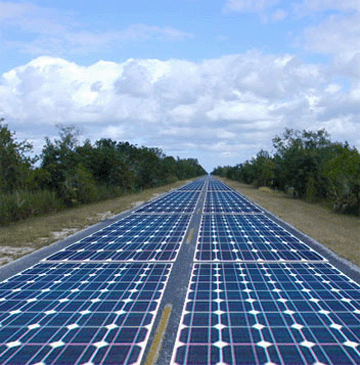
- Electric avenues that can transmit the sun’s energy onto power grids may be coming to a city near you.
A subsidiary of Bouygues SA has designed rugged solar panels, capable of withstand the weight of an 18-wheeler truck, that they’re now building into road surfaces. After nearly five years of research and laboratory tests, they’re constructing 100 outdoor test sites and plan to commercialize the technology in early 2018.“We wanted to find a second life for a road,” said Philippe Harelle, the chief technology officer at Colas SA’s Wattway unit, owned by the French engineering group Bouygues. “Solar farms use land that could otherwise be for agriculture, while the roads are free.”
As solar costs plummet, panels are being increasingly integrated into everyday materials. Continue reading
American cities switched on to climate action, despite the coming Trump presidency
Yet local leaders across the U.S. don’t need to be persuaded of the devastating impacts of climate change—environmentally, socially, and financially speaking—even if Trump and his top advisers do. Global warming’s effects are perhaps easiest to see on the local scale, with rising tides, melting snowcaps, and drier summers. A significant part what’s causing these changes lies in urban centers, which generate an estimated 70 percent of global greenhouse gas emissions, and house more than 50 percent of the population.
And U.S. cities have the power to shrink that footprint and prepare for the worst, even in the absence of financial or regulatory support from the federal government. Congress has long stalled on advancing climate policies, anyways—while cities have taken control of crucial variables that determine emissions and sustainability: renewable-energy programs, bus-rapid transit and rail, shared mobility, protections against flooding and the ever-rising seas.
Many local leaders say that this work has become more important than ever. Here are five American cities that have made real climate progress in ways that they plan to continue in the years of a Trump administration and Republican-controlled Congress.
Miami Beach…..
San Antonio…..
San Diego….
Los Angeles….
Drought brings unprecedented forest fires to Peru – state of emergency
Peru declares state of emergency over deadly forest fires Blazes have burnt 12,000 hectares, including five protected natural areas Endangered species under threat from fires that ‘took us by surprise’, Guardian, Dan Collyns , 24 Nov 16, Peru has declared a state of emergency in seven districts in the north of the country where forest fires have killed two, injured four and burnt nearly 12,000 hectares (30,000 acres) of land, including five protected natural areas.
Wildfires have spread to 11 regions across the country, according to Peru’s civil defence institute, in what scientists say may be the worst drought in more than a decade.
Peru’s environment minister, Elsa Galarza, said a special brigade of firefighters had been deployed to the worst-affected areas in the north. The 31 firefighters are normally stationed in the Inca citadel Machu Picchu, the country’s top tourist attraction.
Endangered animal species such as the spectacled bear – which inspired the Paddington Bear children’s stories – and the white-winged guan are under threat from the blazes. Other rare species such as jaguars, howler monkeys and the collared anteater, are seeing their habitat destroyed inside the protected areas, which include the Amotape mountain range and Cutervo national park.
Peru’s prime minister, Fernando Zavala, travelled to the affected areas and said the state of emergency would allow the government to “continue mobilising people, resources and diverse equipment in order to confront these fires”.
“The ferocity and speed of the fires took us by surprise,” said Joel Córdoba, chief at the Paigabamba protected forest in Cajamarca, one of the worst-affected regions. …… https://www.theguardian.com/environment/2016/nov/24/peru-forest-fires-state-of-emergency-drought
Need to curb greenhouse emissions
Mitigation in Australia, Skeptical Science,22 November 2016 by Riduna Need to Curb Emissions If we continue to increase greenhouse gas emissions at the current rate average global temperature could rise 1.5°C above the pre-industrial within a decade and 2°C by 2040. A rise of 2°C is likely to produce an increasingly dangerous climate which could make some parts of the world uninhabitable, accelerate ice melt and sea level rise and threaten our ability to feed a growing global population. And now, some climate scientists are debating the possibility of a 3°C rise before 2100. That would prove catastrophic.
If we wish to avoid scenarios where populations are driven from their homes by flood or starve because of drought or deluge producing crop failures, it is imperative that we avoid a rise of 2°C this century. The chances of our achieving this by replacing combustion of fossil fuels with clean energy source – and achieving this in a timely manner – are rapidly diminishing, given that average global temperature is already 1.3°C above the pre-industrial.
The current level of anthropogenic greenhouse gas emissions and the rate at which they continue to rise makes it imperative that they be reduced. To this end, technologies have been developed by the more advanced economies which can reduce demand for energy, significantly speeding up the rate at which we can reduce fossil fuel use. These ‘mitigating’ technologies are continually being improved and in the European Union and North America have been deployed to great effect. Yet in Australia, their use is at best disorganized, lacks uniformity at National or State level and at a local level is at best tokenistic or does not occur at all.
Mitigation calls for action which reduces anthropogenic greenhouse gas emissions, particularly Carbon Dioxide (CO2) and Methane (CH4) which, as shown in Fig. 1, are now at their highest levels in over 400,000 years. If these emissions are not curbed and reduced to zero by about 2050, the prospects of keeping average global temperature below 2C above the preindustrial this century become negligible.
Reducing these emissions can be achieved, primarily by reducing demand for fossil fuelled energy generation and by replacing use of fossil fuels with clean renewable energy sources.
If left to the private sector alone, it is unlikely that reduction in demand for energy produced by burning fossil fuels, or its more efficient use, would be achieved with the speed required to effectively slow average global temperature rise. One of the reasons for this is that existing businesses have invested, often heavily, in technology which no longer produces or uses energy efficiently. They are slow to abandon old technology before their outlay in it has been recovered or its continued use is no longer commercially viable.
Mitigation Measures
It therefore falls on the public sector to lead the way through legislation, by setting a good example demonstrating greater profitability to be had from using the latest technology and, in other ways, promoting the transition away from fossil fuels. Twelve basic ways of achieving this are: ……..http://www.skepticalscience.com/Mitigation-in-Australia.html
Measuring global warming in the oceans, with simple, cheap, instruments
 The simple, cheap instruments measuring global warming in the oceans, Skeptical Science 23 November 2016 by John Abraham,
Earth is warming due to the release of heat-trapping greenhouse gases. Scientists are working hard to measure how fast the planet is warming, how much warming has occurred over the past few decades, and how this is affecting coastal areas, ecosystems, and fisheries. By understanding these factors, scientists can better project future climateimpacts.
A large component of Earth’s warming involves the oceans, which absorb excess heat. The difficulty of gathering measurements in the oceans is that they are vast, deep, and often hard to reach. It’s also costly. Think about it: if you wanted to take the ocean’s temperature, how would you do it?
Centuries ago, ocean measurements were made with buckets dropped from the sides of ships. Over time, measurements have become more numerous and more accurate, partly thanks to technology advances. Today, a global array of floats that take continuous profiles of the upper ocean monitors ocean temperatures at more than 3000 locations to depths of 2000 meters.
However, this array was put in place in 2005. Prior to that, the backbone of ocean measurements was a device or probe called the expendable bathythermograph (XBT for short). These small, torpedo-like probes, deployed from ships, gather temperature data to depths of 300 to 2000 meters as they descend through the water.
XBTs were designed as a simple, inexpensive way to obtain temperature measurements from virtually any ship. These XBTs were originally used by navies to determine the depth of the sound channel, where sound waves can travel thousands of miles. They were first introduced in 1967 and immediately adopted by scientists worldwide. Since their debut, several million have been deployed, with some 20,000 launched annually in all ocean basins.
A very important and critical component of their success has been the excellent relationship established by the scientific community with commercial shipping companies. Commercial vessels aid scientists by voluntarily deploying XBTs along routes that are continuously repeated, often in remote regions not sampled by other types of oceanographic equipment.
With XBT use dating back to the 1960s, these measurements offer a unique historical perspective on temperature change in the oceans, which is often associated with global warming or even varying location and the intensity of ocean currents. XBT records, together with those of other observational tools later put in place, are crucial for determining how fast the ocean is warming – an essential factor for quantifying our effect on climate. XBT data are also used to measure how ocean currents change and how heatis transported across ocean basins, both of which are linked to extreme weather events worldwide.
Background information and photos of XBT devices are provided at several sites, such as through the US National Oceanic and Atmospheric Administration (NOAA), Scripps Oceanographic Institution, and Woods Hole Oceanographic Institution. …….http://www.skepticalscience.com/simple-cheap-xbts-measuring-oceans.html
Probe of Fukushima Daini’s N°3 Reactor Cooling System Knocked Offline After Earthquake

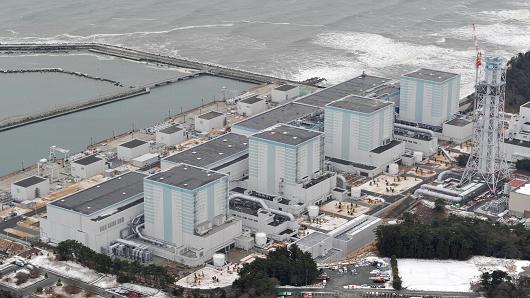
Fukushima Daini
Japan Probes Nuclear Cooling System Shutdown After Earthquake
Japan is investigating why a cooling system used to store nuclear fuel rods was temporarily knocked offline at Tokyo Electric Power Co. Holdings Inc.’s shuttered Fukushima Dai-Ni atomic plant after a 7.4 magnitude earthquake struck the same region devastated by a tsunami in March 2011.
The temblor early Tuesday caused water in the pool at the plant northeast of Tokyo to move, according to the utility known as Tepco. Sensors registered the motion as a decline in water levels, triggering an automatic shutdown, the utility said.
One of at least two cooling pumps supplying water to the spent fuel pool at Dai-Ni’s No. 3 reactor was shut around 6:10 a.m. Tokyo time, according to Tepco. The utility started another pump to resume cooling the fuel rods around 7:47 a.m., it said in an e-mailed statement.
More than five years after the…
View original post 327 more words
Energy Security: The New Black!

As many Australian readers will know, ‘energy security’ has become the latest buzzword in government and industry circles. Much of this new focus has been driven by the political fallout following October’s catastrophic storms in South Australia and a state-wide power blackout. In the political recrimination that followed, the Federal Government and some media outlets argued that state government policies favouring renewable energy were (in part) to blame. Both the Prime Minister and the Federal Energy Minister quickly labelled energy security their ‘number one priority’ and established an energy security review to be chaired by the nations’ Chief Scientist, Alan Finkel. Interestingly however, the meaning of the term ‘energy security’ is itself open to multiple interpretations. To a large extent this ‘framing’ of ‘energy security’ reflects a number of developments that are playing out globally in the areas of energy and environmental policy.
View original post 750 more words
Reactor 3 Spent Fuel Pool Decommissioning unlikely by March 2018
566 fuel assemblies, 514 spent fuel assemblies and 52 unused ones, Tepco has always said so. But since the fuel pool was cleaned up, Tepco only released partial photos of the fuel pool, never any photo of the whole fuel pool. So as of now it is just impossible to verify Tepco’s claim by counting the assemblies. Since the fuel pool also exploded some fuel assemblies must be missing. How many are gone how many remain is still a non answered question, especially as Tepco is not well known for being straightforward.
Will Tepco dare to start decommissioning the reactor 3 fuel pool before the 2020 Tokyo Olympics? I doubt so. In my opinion, Tepco will keep postponing it for after the Olympics, to avoid difficulties and critics.
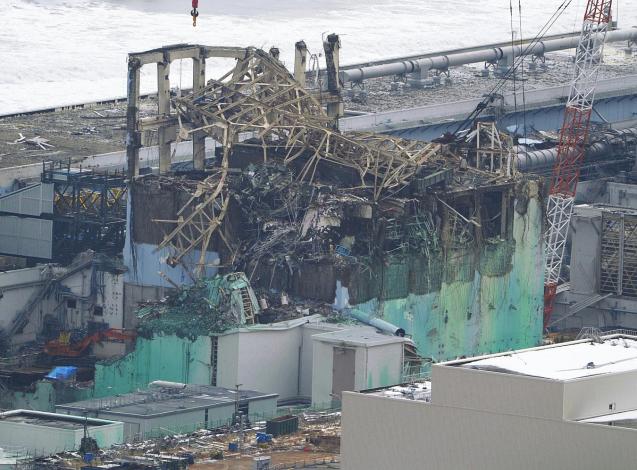
Fuel removal unlikely by March 2018
A government official has suggested that fuel removal from a reactor at the crippled Fukushima Daiichi…
View original post 124 more words
1 This month

of the week – Australians for War Powers Reform (AWPR)
To see nuclear-related stories in greater depth and intensity
 Antinuclear