Beyond the coal rush part 3: The transition begins #auspol

Change in the world’s energy system is happening fast in some countries, not at all in others.
We’ve heard the battles of local people fighting for their homes, their farms and forests against the expansion plans of coal mining companies.
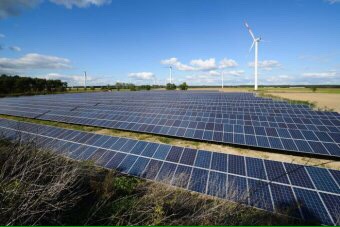
And despite coal’s low market price in 2016, solar PV is on its way to becoming the cheapest source for electricity. Global investment in renewable energy is now higher than in fossil fuels.
Some countries understand the urgency to reduce the amount of coal burnt for electricity. China has a policy to shift away from coal and has begun an energy transition.
The nation has plans to reduce coal in its energy mix to 60% by 2020 and then reduce further.
China’s wind capacity alone is already 100GW. Australia’s total generating capacity is 60GW. Change is under way. Electricity will be cheaper and cleaner. The challenge is for the world…
View original post 21 more words
Beyond the coal rush part 2: The age of coal
Today, Tom Morton continues documenting the struggle against coal on three continents.
In Germany, the proposed expansion of a coal mine would see villages destroyed, along with farmland and forest.
In Australia, a food bowl in northern NSW will be at risk if aquifers are damaged by mining.

Farmers and environmentalists have joined forces in an unlikely alliance. And in India, subsistence farmers would be removed from traditional lands, with animal corridors disrupted if a proposed mine expansion goes ahead.
Press link for more:Radio National Science Show
Beyond the coal rush part 1: The march of coal #auspol
When we burn coal we change the biosphere.
As James Hansen says, ‘if we burned all of the coal in the ground, the planet is cooked.
It would result in temperature rise of several degrees and sea level rise of tens of metres.’
So do we continue down that road, or change?
There are encouraging signs, with the price of renewable energy falling. But there is vast investment in coal.
Mining companies are looking to increase production.
Tom Morton visits Germany, India and northern NSW where plans are underway for new and bigger coal mines. Local people are fighting back, to save their traditional lands, their ancient villages, animal corridors and rich agricultural lands, all of which are threatened by the ongoing march of coal.

Press link for more:Radio National Science Show
1 This month

of the week – Australians for War Powers Reform (AWPR)
To see nuclear-related stories in greater depth and intensity
 Antinuclear