Australia’s responsibility to face up to its radioactive wastes produced at Lucas Heights
 Storing the reprocessed nuclear fuel that is to come back from France at Lucas Heights seems the best of a poor set of alternatives.
We are stuck with highly radioactive material for which we are responsible. Like all countries with nuclear reactors, we should not have produced it in the first place until safe storage technology existed.
 Radioactive game of passing the parcel http://www.brisbanetimes.com.au/opinion/politics/radioactive-game-of-passing-the-parcel-20120523-1z582.html#ixzz1vp20gX9X Richard Broinowski May 24, 2012 Reports indicate France is soon to return reprocessed nuclear waste generated at Lucas Heights to Australia. The federal nuclear agency says the waste is ”intermediate level”, small in volume, and to be stored temporarily at Lucas Heights.
These assurances are misleading in all three respects: the volume of the waste, its toxicity, and its future disposal.
Australia’s first research reactor, the high flux Australian reactor, went critical in January 1958. It was fuelled by highly enriched bomb-grade American uranium. Although small compared with power
reactors, it discharged 37 spent fuel rods a year, each containing the same weapons-grade uranium, plutonium and fission products as its big brothers.
By 2002, it had produced 1665 such rods. Some were sent to Britain and the US for reprocessing. But by 2003, four metric tonnes remained in temporary storage at Lucas Heights
When political pressure forced Britain to cease reprocessing in Scotland, Australia’s nuclear agency arranged with the French company COGEMA to reprocess the rods. Australia is legally bound to take the
lot back – plus, one assumes, the separated plutonium and uranium-235. The problem is there is no agreed permanent place in Australia to put it.
In 2007 the old reactor was decommissioned and replaced by one designed by the Argentine company INVAP. Before construction began, the government stipulated a high-level waste site was to be identified
and a feasibility study completed. No site was found and the stipulation was modified to a strategy for disposal.
The situation becomes more complicated. Argentina initially agreed to take back the spent fuel rods from the reactor for reprocessing, returning the waste to Australia and keeping the weapons-grade uranium-235 and plutonium-239 under full-scope international safeguards. But its officials asserted such reprocessing was in violation of Argentina’s constitution. Australian officials appear not to be worried because they say the reactor has a storage pool with capacity for nine years’ worth of spent fuel rods. A solution, they imply, will turn up.
But like the rapidly filling storage ponds at all civil reactors around the world, this is a short-term solution. The problem of ultimate disposal of irradiated fuel continues unresolved. Australia does not even have a designated repository for low-level nuclear waste such as contaminated clothing and discarded radio pharmaceutical equipment from hospitals.
In 2002, three possible low-level sites were identified in South Australia. But the sites were judged too risky because an errant missile could land on the dump, scattering radioactive debris in all
directions. The state’s then premier, Mike Rann, strenuously opposed it. South Australia, he declared, would not become Australia’s ”nuclear waste state”.
Nor, according to their premiers, would any other Australian state. Australians seem complacent about exporting uranium but become unsettled about storing its end products here, even waste generated by
our reactors.
By February 2010, the only site still under consideration as a nuclear waste dump was Muckaty Station in the Northern Territory, where the federal government can overrule the Legislative Assembly in Darwin.
But deciding on Muckaty was controversial. First, although a small group of traditional owners of the land supported the decision, a greater number opposed it. They launched a case in the Federal Court opposing it.
Second, the site is meant to take low- and intermediate-level waste. But intermediate waste is a narrow definition based on calorific output. If heat is dissipated, runs the argument, high-level waste
becomes intermediate. But whatever its temperature, the waste still contains all the fission byproducts and actinides of high-level waste.
Storing the reprocessed nuclear fuel that is to come back from France at Lucas Heights seems the best of a poor set of alternatives. There are at least suitable storage facilities and chemists and physicists
who know how to handle the material.
But what Australia needs urgently is a solution. We are stuck with highly radioactive material for which we are responsible. Like all countries with nuclear reactors, we should not have produced it in the first place until safe storage technology existed.
Chernobyl danger will last for thousands of years
there is no long-term plan for dealing with a radioactive legacy that will remain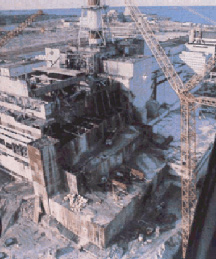 for several millennia……..no one knows where the radioactive wreckage of the ruined reactor and the roughly 30,000 tons of material containing fuel are to be stored……20,000 Radioactive Fuel Rods
Beyond the Sarcophagus, The Overwhelming Challenge of Containing Chernobyl Spiegel Online, By Benjamin Bidder, 1 May 11, Work on the new sarcophagus meant to contain Chernobyl’s reactor 4 is a decade behind schedule. But significant problems will remain even once it is complete. For one, it is only meant to last for 100 years. For another, no one knows what to do with the vast quantities of radioactive waste left behind.
…… the governments of 28 countries have now promised to provide €550 million ($780 million) to build a new containment, although €190 million are still needed for the new shell. It is designed to cover the old sarcophagus the Soviets built in only 200 days in 1986.
So far, engineers have had great difficulty preventing the collapse of the dilapidated ruin. If it did collapse, another cloud of radioactive dust would rise up from the site. But will the money truly help prevent this from happening?
Some €864 million had previously been pledged for the construction of a new containment, and much of that money has already been used up. The German Environment Ministry warns in a report of “substantial project risks” and criticizes the lack of transparency in the use of funds. Most critically, there is no long-term plan for dealing with a radioactive legacy that will remain for several millennia.
Work on the new sarcophagus hasn’t come far. Surveillance cameras and three rows of barbed wire protect the construction site. All photography and filming is forbidden, “out of fear of terrorist attacks,” explains project manager Viktor Salisezki. Some 500 employees of Novarka, an international consortium, are currently preparing the site for the planned construction of the new structure.
Men in white overalls are driving one of the 396 piers that will form the foundation of the massive structure 25 meters (82 feet) into the contaminated ground. The new semi-circular shelter will be 105 meters high, 150 meters long and 257.5 meters wide — a hangar four times as large as Hamburg’s main train station.
Not a Long Time
Salisezki’s men are assembling 18,000 tons of steel, more than was used for the Eiffel Tower in Paris, for the frame alone. To protect the workers from radiation, the construction site is located several hundred meters from the reactor. The project manager hopes that the sarcophagus will be ready by the fall of 2015, which would be 10 years later than originally planned. It will then be pushed over the reactor along special rails. Moving the steel structure alone will take two weeks.
“The new shelter will last 100 years,” says Vladimir Rudko of the National Institute for Nuclear Power Plant Safety. And that, he adds, isn’t a very long time…….
no one knows where the radioactive wreckage of the ruined reactor and the roughly 30,000 tons of material containing fuel are to be stored. In eastern Ukraine, where there are many mines and tunnels, the population is strongly opposed to a permanent repository. As an alternative, Rudko proposes drilling a deep shaft in the restricted zone.
20,000 Radioactive Fuel Rods
“We have to disassemble and dispose of the reactor. We owe that much to our grandchildren,” says Rudko. So far, however, there is neither a plan nor funding for such an undertaking.
Instead, short-term measures to limit the damage will have to suffice for the time being. To prevent the radioactivity from continuing to spread, members of the fire department stand guard on high observation towers in the summer. Forest fires could release radioactive materials that have accumulated in the ground and in plants. In 1992, for example, a large fire blew radioactive particles all the way to the Lithuanian capital Vilnius, about 500 kilometers away. The fine particles are highly carcinogenic if they enter the human body.
The fuel rods from the still-intact Chernobyl reactors 1 to 3 present another problem. About 20,000 radioactive fuel rods have been kept in temporary cooling ponds for years. The nuclear experts with Greenpeace Russia fear that these wet-storage facilities are now more dangerous than the ruined reactor itself.
The French nuclear company Areva was building a new storage complex until 2003. But the concrete began to crumble in the first Ukrainian winter, and cracks had to be filled with plastics. Furthermore, the storage facility had already proven to be too small for the old fuel elements. And the facility has been empty for years, a memorial to the costly planning errors at Chernobyl.
…… the water problem remains unresolved. Each month, 300,000 liters of radioactively contaminated water have to be pumped out of the plant. Some of it is precipitation that enters the sarcophagus through cracks and holes. And some of it is groundwater, which has risen artificially as a result of the 22-square-kilometer cooling water reservoir……http://www.spiegel.de/international/world/0,1518,759014,00.html
A Marine Food Web Bioaccumulation model for Cesium 137 in the Pacific Northwest

From November 2014
Abstract
The Fukushima nuclear accident on 11 March 2011 emerged as a global threat to the conservation of the Pacific Ocean, human health, and marine biodiversity. On April 11 (2011), the Fukushima nuclear plant reached the severity level 7, equivalent to that of the 1986-Chernobyl nuclear disaster. This accident was defined by the International Atomic Energy Agency as “a major release of radioactive material with widespread health and environmental effects requiring implementation of planned and extended countermeasures”.
Despite the looming threat of radiation, there has been scant attention and inadequate radiation monitoring. This is unfortunate, as the potential radioactive contamination of seafoods through bioaccumulation of radioisotopes (i.e. 137Cs) in marine and coastal food webs are issues of major concern for the public health of coastal communities. While releases of 137Cs into the Pacific after the Fukushima nuclear accident are subject to high degree of dilution in the…
View original post 218 more words
NRA: Ice wall effects ‘limited’ at Fukushima nuclear plant
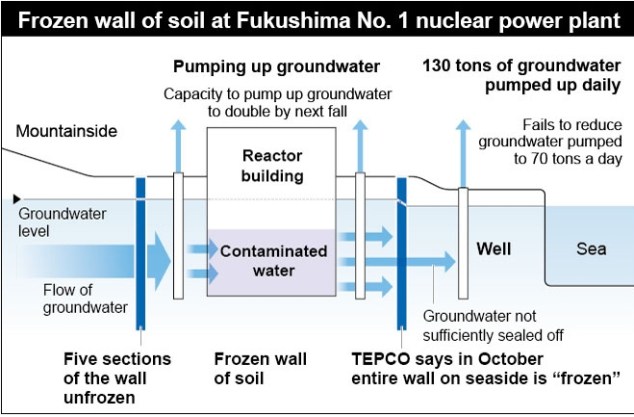
Citing “limited, if any effects,” the Nuclear Regulation Authority said a highly touted “frozen soil wall” should be relegated to a secondary role in reducing contaminated groundwater at the Fukushima No. 1 nuclear plant.
The government spent 34.5 billion yen ($292 million) to build the underground ice wall to prevent groundwater from mixing with radioactive water in four reactor buildings at the crippled plant.
But the NRA, Japan’s nuclear watchdog, concluded on Dec. 26 that the wall has been ineffective in diverting the water away from the buildings. It said that despite the low rainfall over the past several months, the amount of groundwater pumped up through wells outside the frozen wall on the seaside is still well above the reduction target.
It urged the plant operator, Tokyo Electric Power Co., to tackle the groundwater problem primarily with pumps, not the ice wall.
In response, TEPCO at the meeting said…
View original post 545 more words
Why the Extinction Crisis isn’t just about the Environment. #auspol

Why the Extinction Crisis Isn’t Just About the Environment, but Social Justice
The following excerpt is from Ashley Dawson’s new book, Extinction: A Radical History (OR Books, 2016)
The philosophy of ‘in the long run we are all dead’ has guided economic development in the First and Third Worlds, in both socialist and capitalist countries. These processes of development have brought, in some areas and for some people, a genuine and substantial increase in human welfare. But they have also been marked by a profound insensitivity to the environment, a callous disregard for the needs of generations to come… It is what we know as the ‘global green movement’ that has most insistently moved people and governments beyond this crippling shortsightedness, by struggling for a world where the tiger shall still roam the forests of the Sunderbans and the lion stalk majestically across the African plain, where the harvest of…
View original post 1,965 more words
Japan Studying Nuclear Waste Burial 5,000 meters Deep on the Pacific Island of Minamitorishima
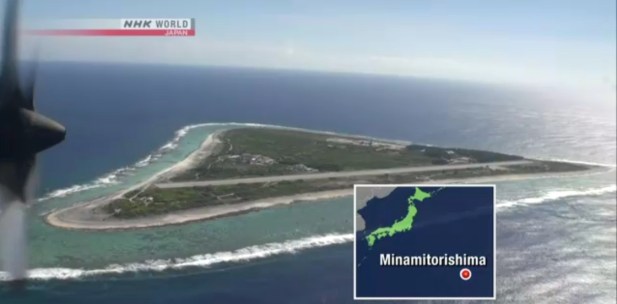
An agency affiliated with the Japanese government is to study the possibility of burying nuclear waste at a depth of about 5,000 meters. That’s much deeper than proposed in the government’s current plan.
Researchers from the Japan Agency for Marine-Earth Science and Technology, or JAMSTEC, will carry out a basic survey for the new disposal option after next April.
The survey will be conducted at Minamitorishima, a remote island above the geologically stable Pacific Plate.
JAMSTEC says it will use a research vessel to collect data on the topography and geology of the area.
No technology exists to bury nuclear waste 5,000 meters below ground as there are many technical challenges.
The Japanese government has been planning to bury high-level radioactive waste from nuclear plants at a depth of more than 300 meters in final disposal facilities. Officials are currently looking for candidate sites.

Nagasaki University Professor Tatsujiro Suzuki is…
View original post 39 more words
America’s youth are suing the government over climate change #auspol
At a time when humanity must reverse course before plunging over a climate cliff, the American public has elected a president who seems to have both feet on the fossil fuel accelerator.
If there is a mechanism to force the Trump administration to put the brakes on dirty energy policy, a lawsuit brought by 21 young people against the Obama administration may hold the key.
Two days after the presidential election, on Nov. 10, a federal district court in Oregon issued a path-breaking decision in Juliana v. U.S. declaring that youth – indeed, all citizens – hold constitutional rights to a stable climate system.
The youth, aged 9 to 20 years old, seek a court-supervised plan to lower carbon dioxide emissions at a rate set by a science-based prescription. The judicial role is analogous to court-supervised remedies protecting equal opportunity for students after Brown v. Board of Education.
The Juliana…
View original post 507 more words
The Cost of Cleaning up Fukushima
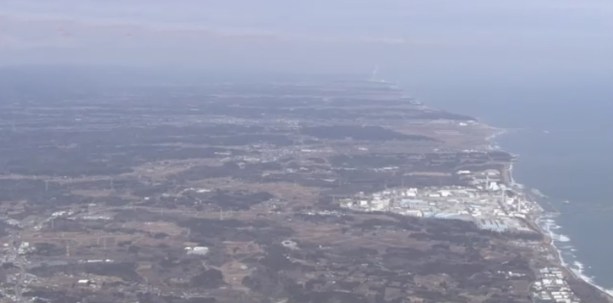
The Abe administration has decided to use taxpayer money for decontaminating areas in Fukushima Prefecture off-limits to people due to fallout of radioactive substances from the March 2011 meltdowns at Tokyo Electric Power’s Fukushima No. 1 power plant. The decision, which deviates from the current policy that Tepco should pay for the decontamination efforts, reflects a proposal put forward in August by the ruling coalition of Prime Minister Shinzo Abe’s Liberal Democratic Party and Komeito but never discussed by the government’s council of experts or in the Diet.
The government may want to justify the move as an effort to help accelerate evacuees’ return to their hometown communities. Still, it will be difficult for the administration to evade criticism that the measure is nothing but a taxpayer-funded bailout for Tepco, which is responsible for the nuclear fallout that affected so many people in Fukushima.
By proceeding with the decontamination work…
View original post 577 more words
Harassment of Evacuees by Prefectural Housing Authorities to evict them for March 2017
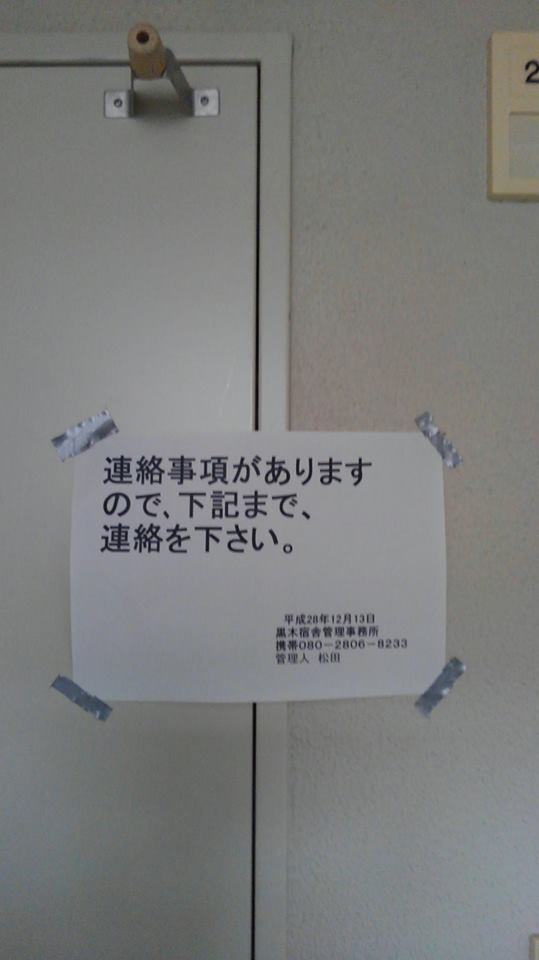
All the people evacuated in 2011 and who benefited of a housing compensation, are now suffering harassment from the various prefectures’ housing authorities, pressuring them to get out of those appartments before coming March 2017
This picture show the notice taped to the entrance door of an evacuee’s appartment, marking and stigmatizing the evacuee’s family to all the neigbors. Those evacuees are victims. Why treat in such manner people who are victims, already suffering plenty enough hardships and losses? What the hell is wrong with you? What are the sins of the victims?
The Japanese government, for the first time, is using state funds for decontamination work in areas affected by the 2011 nuclear accident in Fukushima Prefecture.
The environment ministry earmarked roughly 30 billion yen, or about 250 million dollars, in the fiscal 2017 budget plan, which was approved by the Cabinet on Thursday.
The allocation will be for…
View original post 256 more words
1 This month

of the week – Australians for War Powers Reform (AWPR)
To see nuclear-related stories in greater depth and intensity
 Antinuclear