Australia and USA trail behind in renewable energy, as China and India lead
 Interview: U.S., Australia left behind as China, India leads clean energy advancement http://www.china.org.cn/world/Off_the_Wire/2017-01/06/content_40053872.htm, January 6, 2017 While the U.S.-centric world questions renewable energy, China is leading the world in clean-power investment, driving the fledgling industry further and leverage future growth as the sane world looks to transition away from fossil fuels.
China’s domestic investment in renewable energy lifted to 103 billion U.S. dollars in 2015, outbound investment surged 60 percent year-on-year to 32 billion U.S. dollars in 2016, an Institute for Economics and Financial Analysis report showed Friday.
“This is a massive pivot by the Chinese to capitalise on technology control, industry leadership and to take their position global,” the report’s author, IEEFA’s Australasia director of energy finance studies, Tim Buckley told Xinhua.
China wants to “dominate” these industries in a positive way, Buckley said, deploying technology which is now considered the “best in the world” after years of investment.
“Chinese wind turbines are the best in the world, China produces 50-60 percent of the world’s solar modules, they are producing or installing probably half of the world’s dams as we speak,” Buckley said, adding Chinese hydroelectricity engineers are also world leaders.
China’s neighbor India has also showed ambitions on clear energy development.
Its latest national energy plan shows there will be no new coal fired power plants — other than those already under construction — over the next decade, which puts up red flags for Australia’s coal industry and Adani’s recently approved project in Australia’s Galilee Basin.
“When China is moving very very aggressively as a world leader, India is looking to replicate that and accelerate that trend as well and become the low cost manufacturer of this industry transformation, America and Australia risk getting left behind,” Buckley said.
As agreed at the COP21 Paris climate talks in 2015, the countries involved promised to ensure global warming is limited to a two degree Celsius rise through their respective emissions reductions targets. So, investment in new, clean energy technologies is critical.
Western governments such as Australia and the incoming regime of U.S. President-elect Donald Trump however are still championing fossil fuels.
Trump has named former ExxonMobil Corp. chief Rex Tillerson as his nominee for U.S. Secretary of State, while Australia’s ruling lawmakers have backed a 100 billion Australian dollar investment target to expand the local coal industry.
Buckley issued a wake-up-call to the U.S. (and Australia), stating following a mandate to move back to fossil fuels might have some short term opportunity, but it will come at significant cost to jobs, technology and investment in the future.
Buckley says Asia will pivot to renewable energy within the next decade for economic reasons, taking the lowest cost energy source going forward, which is solar.
“It’s technology driven, its policy driven, it’s unstoppable.”
Australia’s state governments are now filling the void from the lack of guidance from federal authorities to meet their self-imposed targets, the reduction in the cost of renewable energy is also making it commercially viable.
“The cost of renewables are dropping in double digit declines in cost per megawatt every year,” Buckley said.
“The cost of solar is now down to 80 or 90 Australian dollars per megawatt hour, the cost of wind is similar, only a year ago it was 30 percent higher.”
Green energy critics however contend the intermittent nature of renewables heightens energy security concerns. Australia’s government blamed the intermittent nature of renewable energy for the state-wide blackout in South Australia on Sept. 28 2016 following a violent storm.
Buckley — like previous statements by former State Grid Corp. chairman Liu Zhenya — said grid stability is not an issue, there is no technical barrier to the use of renewable energy, it just needs investment to prepare for future energy needs. Endit
A nation to power all its trains with wind energy – why can’t Australia?
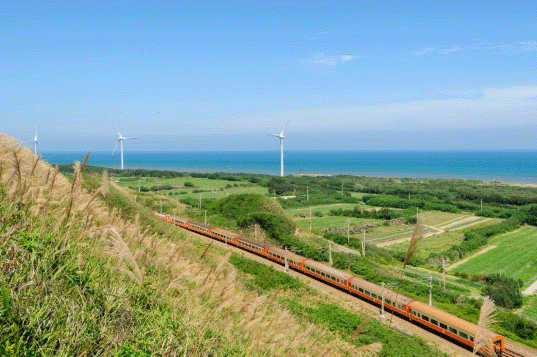
 All Netherlands Railways trains will be 100% wind powered by 2018 http://inhabitat.com/all-netherlands-railways-trains-will-be-100-wind-powered-by-2018/ When its citizens demanded clean energy, The Netherlands responded in the best possible way. Following a ruling earlier this year when 886 citizens sued their government to reduce CO2 emissions, a court at the Hague ordered the Dutch government to adopt a goal of cutting carbon emissions by at least 25 percent over the next five years. In response, the Dutch railways unveiled plans to become 50 percent wind-powered by the end of this year and 100 percent by 2018.
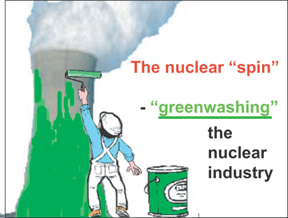
No such thing as ‘green’ nuclear power
don’t for one second think that nuclear power is green or sustainable in any way. You will hear that, because nukes don’t create CO2 when they’re generating power, they’re a solution to climate change.
What you don’t hear from the proponents of nuclear power/weapons is that the mining and refining of nuclear fuel is extremely energy- and carbon-intensive.
What you don’t hear is that the billions of government subsidy dollars that are going to shore up and bail out unprofitable nuclear power companies could be better spent on developing and bringing to scale truly sustainable forms of energy.
What you don’t hear is that there is no way to safely clean up radioactive waste. “Green” and “nuclear” simply cannot be credibly used together.
My Turn/Darling: No such thing as ‘green’ nuclear power http://www.recorder.com/my-turn-nuclear-facilities-7049505 , December 26, 2016 Here in the Pioneer Valley we live within a circle of five operating, decommissioning, or decommissioned nuclear power facilities and a nuclear submarine base. Radioactive materials are extremely dangerous and extremely long lived. For our safety and the safety of future generations, we need to be informed about nuclear power and the waste created from its mining and its use.
Of course, there are nuclear facilities all over the world and nuclear contamination has a way of traveling very long distances in the air, through oceans and rivers, and in our bodies. So it’s not something anyone can totally escape from, no matter where we live. We have fouled our nest with nightmarishly toxic and pernicious stuff and we don’t know what to do with it.
It’s extremely painful, frightening and depressing to face this head on. But we have to. Continue reading
The world is closer to banning nuclear weapons

So where does Australia sit in all this? It would be nice to say we were one of the 127 pledge countries, but instead Australia has been acting as a proxy for the US, actively undermining the process. This is despite a 2014 Nielsen poll, which found 84 per cent of Australians support nuclear disarmament. Both the ALP and the Greens support a ban treaty.
Despite Donald Trump and Vladimir Putin, the world is closer to banning nuclear weapons http://www.smh.com.au/comment/despite-donald-trump-and-vladimir-putin-the-world-is-closer-to-banning-nuclear-weapons-20161227-gtincv.html Margaret Beavis
Despite Vladimir Putin and Donald Trump’s posturing on nuclear weapons, we are suddenly as close as we have ever been to making these weapons of mass destruction illegal.
We have bans for biological and chemical weapons, cluster munitions and land mines. For these, prohibition was the essential first step leading towards their elimination. Many said the relatively recent landmines treaty would make no difference, but it has had a huge impact.
Stigmatising nuclear weapons will result in loss of funding. Many companies (including, shamefully, Australia’s Future Fund, the CBA, Westpac, ANZ and Macquarie Group) will be forced to no longer profit from illegal trade in these the worst weapons of mass destruction. Along with massive divestment there will be identification and verification of stockpiles, and then a decade or more dismantling weapons systems. Continue reading
At both Poles – record losses of sea ice in 2016
New analysis: global sea ice suffered major losses in 2016 http://blogs.discovermagazine.com/imageo/2017/01/07/sea-ice-extent-in-2016-at-both-poles-tracked-well-below-average/#.WHMiWtJ97Gj The extent of sea ice globally took major hits during 2016, according to an analysis released yesterday by the National Snow and Ice Data Center.
At both poles, “a wave of new record lows were set for both daily and monthly extent,” according to the analysis.

In recent years, Arctic sea ice has been hit particularly hard.
“It has been so crazy up there, not just this autumn and winter, but it’s a repeat of last autumn and winter too,” says Mark Serreze, director of the NSIDC.
In years past, abnormal warmth and record low sea ice extent tended to occur most frequently during the warmer months of the year. But for the past two years, things have gotten really weird in the colder months.
In 2015, Serreze says, “you had this amazing heat wave, and you got to the melting point at the North Pole on New Years Eve. And we’ve had a repeat this autumn and winter — an absurd heat wave, and sea ice at record lows.”
Lately, the Southern Hemisphere has been getting into the act. “Now, Antarctic sea ice is very, very low,” Serreze says.
From the NSIDC analysis:
Record low monthly extents were set in the Arctic in January, February, April, May, June, October, and November; and in the Antarctic in November and December.
Put the Arctic and the Antarctic together, and you get his time series of daily global sea ice extent, meaning the Arctic plus Antarctic:
As the graph [on original] shows, the global extent of sea ice tracked well below the long-term average for all of 2016. The greatest deviation from average occurred in mid-November, when sea ice globally was 1.50 million square miles below average.
For comparison, that’s an area about 40 percent as large as the entire United States.
The low extent of sea ice globally “is a result of largely separate processes in the two hemispheres,” according to the NSIDC analysis.
For the Arctic, how much might humankind’s emissions of greenhouse gases be contributing to the long-term decline of sea ice? The graph above [on original] , based on data from a study published in the journal Science, “links Arctic sea ice loss to cumulative CO2emissions in the atmosphere through a simple linear relationship,” according to an analysis released by the NSIDC last December. Based on observations from the satellite and pre-satellite era since 1953, as well as climate models, the study found a linear relationship of 3 square meters of sea ice lost per metric ton of CO2 added to the atmosphere.
That’s over the long run. But over a shorter period of time, what can be said? Specifically, how much of the extreme warmth and retraction of sea ice that has been observed in autumn and winter of both 2015 and 2016 can be attributed to humankind’s emissions of greenhouse gases?
“We’re working on it,” Serreze says. “Maybe these are just extreme random events. But I have been looking at the Arctic since 1982, and I have never seen anything like this.”
Tasmania needs to be better prepared for climate change and weather extremes
 Learn fast or pay the cost
 , EDITORIAL, Mercury January 6, 2017 BEYOND the near-universal consensus that climate change is a reality that humans will increasingly have to adapt to, there is a growing realisation that a warming planet will see an increase in the frequency and intensity of weather-related natural disasters.
This is not a revelation for those who are on the frontline of dealing with disaster. The state’s second Natural Disaster Risk Assessment released in September listed bushfires and flooding as the greatest risks to the state. Not far down the list were heatwave and coastal inundation. The available evidence strongly suggests that the likelihood, frequency and severity of these events will increase as climate change becomes more pronounced.
Tasmania is no stranger to the impact of natural disaster. If the ferocity of the bushfires of 1967 are too distant a memory, we need only to think back to the devastation wrought on the Tasman Peninsula in 2013 or the fires which ravaged the state’s wilderness areas at the beginning of last year. Fresh in our memories too are last year’s floods and the terrible toll they took in terms of human life, property damage and economic disruption……..
Just across the Tasman, New Zealand’s superb civil defence preparedness for earthquakes and tsunamis might provide a useful template to improve our own.
Alongside the need to harden our infrastructure (burying critical power, phone and data wires might help for bushfire-price areas for example) getting better at dealing with disasters should become part of our DNA. We need to better integrate charities into the official response. We need to ensure our agencies are sufficiently equipped and trained and we need to make sure residents have the resources they need to be able to cope with disruption to power, water and road infrastructure. And we need to improve responses disasters over the long term — it is not good enough that the effect of last year’s floods are still being keenly felt by some on the land.
The findings of the current inquiry must be heeded. Tasmania simply cannot afford to continue to learn the same lessons time and time again.http://www.themercury.com.au/news/opinion/editorial-learn-fast-or-pay-the-cost/news-story/c88138b52b0dd6087da5066186d87621
Western Australia leads the world in wave energy #auspol

Wave energy possesses unique characteristics that offer an advantage over other renewables such as wind and solar energy:
Less variable and with the variability being more gradual and with notice; and
More predictable. Australia’s preeminent research organization, the CSIRO, estimates wave energy is at least three times more predictable than wind energy;
The proximity of favourable wave energy sites to ultimate end users, thereby minimising transmission issues. Notably, approximately 60% of the world’s population lives within 60 kilometres of a coast.
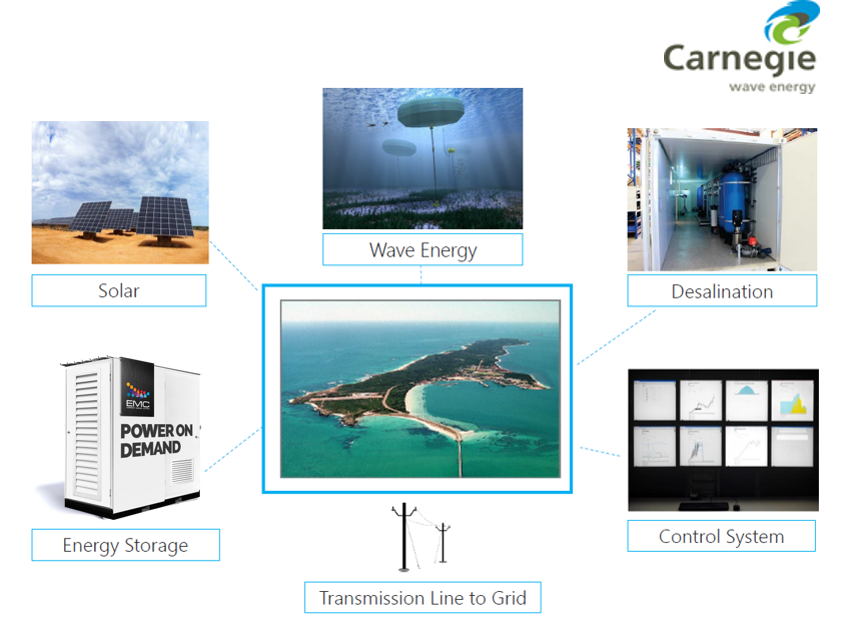
Carnegie’s Mauritian Wave and Microgrid Design Project is focused on the potential for high penetration renewable energy microgrids that incorporate wave energy.
The Project on Mauritius and the neighbouring island of Rodrigues will deliver three outcomes by the end 2016:
1. A renewable energy roadmap for Mauritius, including: technical, commercial and financial feasibility of high penetration renewable energy.
2. An assessment of the Mauritian wave energy resource and the…
View original post 575 more words
Since November 1 Swarms of Quakes Offshore Fukushima prefecture

Since November 1 recent swarms of quakes > M4 offshore Fukushima prefecture in 2D map and 3D representations

Right off Tomioka, location of the Fukushima Dai-ichi Nuclear Power Plant triple meltdown disaster
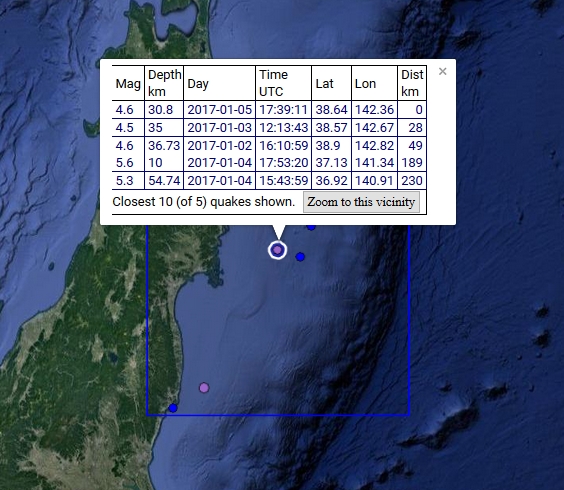
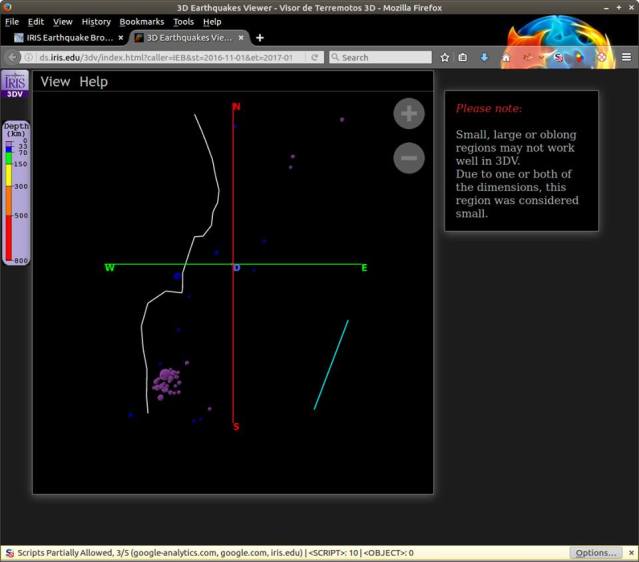
http://ds.iris.edu/ieb/urls/gokey.php?key=faa0-779a-0986… Earthquake Browser – Near East Coast of Honshu
We must not give up the fight on climate change! #auspol
Canada (And Australia) must not give up the fight on climate change
Thomas Homer-Dixon is a professor in the Balsillie School of International Affairs and the faculty of environment at the University of Waterloo.
Those of us concerned about climate change generally inhabit an old-fashioned reality-based world. Scientific research and evidence drive our concern. Although we wish the climate problem would vanish – because, among other things, we want our kids and grandkids to have a safe future – that motivation doesn’t override what science tells us. And science tells us that climate change is a grave threat to humanity.
Now we also have to face the reality that Donald Trump’s election as President of the United States is calamitous for the fight against climate change. Because Mr. Trump and his key cabinet nominees are deeply committed to promoting carbon-based energy industries, they’re not inclined to believe that climate change…
View original post 591 more words
Soil Freezing Around Reactors Not As Effective As expected
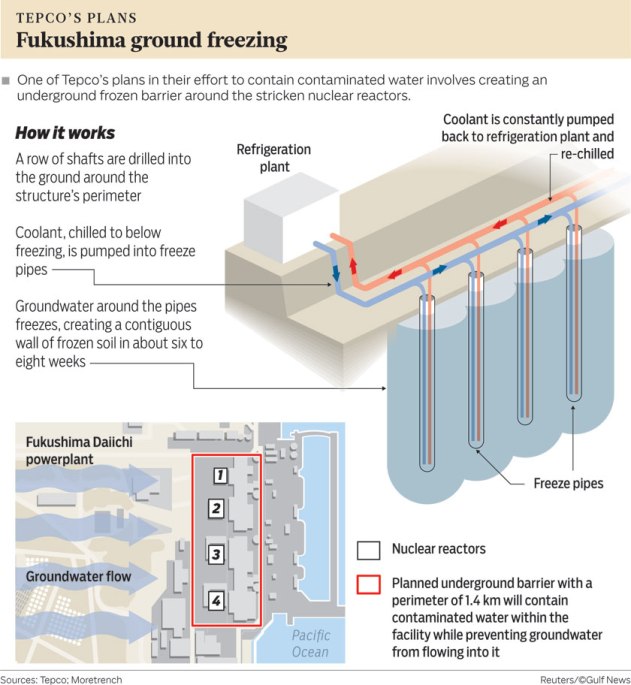
This was to be the ultimate solution for controlling groundwater infiltration in the basement of damaged reactors where it mixes with highly contaminated cooling water. With a total cost of 34.5 billion yen (298 million dollars) paid by Japanese taxpayers, this unprecedented government project was to confirm the Prime Minister’s assertions to the Olympic Committee in 2013 that the situation ” Is under control “.
Begun in June 2016, soil freezing around the four damaged reactors was expected to limit groundwater infiltration and leakage of contaminated water. Since the areas with the strongest phreatic currents did not freeze, TEPCO had to pour concrete in certain areas. But the results have been slow and TEPCO was always demanding more time for the project to prove itself.According to the Asahi, the Nuclear Regulatory Authority, the NRA, seriously doubts the effectiveness of this technique, which it now considers as secondary. Media actions…
View original post 455 more words
Government inquiry into nuclear accident: some testimonies will remain secret

The commission of inquiry set up by the government after the nuclear disaster at the Fukusima dai-ichi plant has recorded some 770 testimonies. 240 have been made public since, with the agreement of the interviewees, including that of the former director of the plant, Masao Yoshida, now deceased.
TEPCO shareholders filed a lawsuit for the publication of the testimonies from 11 executives of TEPCO and 3 executives of NISA, which was the regulator at the time. They have just been dismissed.
Justice considered that if these documents were disclosed, it would be difficult to obtain the cooperation of the concerned persons in the future. The same applies to the secret portions of partially published testimonies.
1 This month

of the week – Australians for War Powers Reform (AWPR)
To see nuclear-related stories in greater depth and intensity
 Antinuclear