Fukushima laden with piles of radioactive soil that can’t be moved into storage

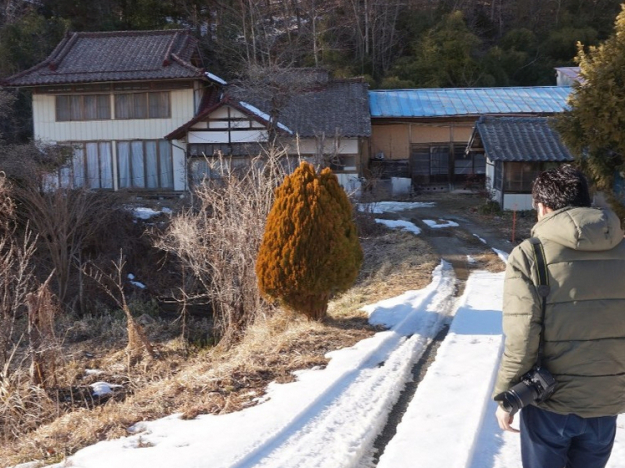
Masaaki Sakai faces his home, which remains standing in the Fukushima Prefecture village of Iitate, on Feb. 15, 2017. In some spots the level of radiation exceeds 1 microsievert per hour, and Sakai has decided to have the structure demolished. (Mainichi)
FUKUSHIMA — As decontamination planned in the wake of the Fukushima nuclear disaster nears an end this fiscal year, focus is shifting to the massive amount of radioactively tainted soil that has piled up during decontamination work. But the construction of interim storage facilities that are supposed to hold this waste within Fukushima Prefecture for up to 30 years before it is finally disposed of has been delayed.
As of the end of February, only about 20 percent of the 16,000 hectares earmarked for interim storage has been acquired through land contracts. It thus appears inevitable that provisional and onsite storage that was only supposed to last for three…
View original post 769 more words
Only 20% of planned waste site secured
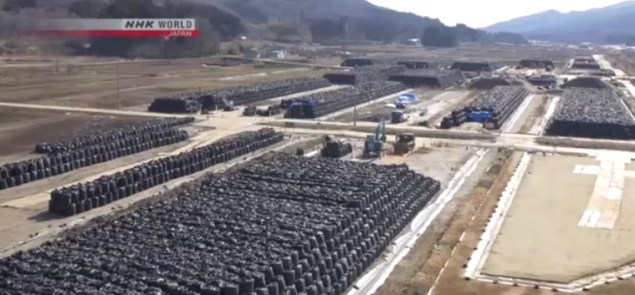
Six years after the Fukushima Daiichi nuclear disaster, the government has secured only 20 percent of the site planned for intermediate facilities to store contaminated waste, such as soil.
The environment ministry plans to build the facilities at a 16-square-kilometer site surrounding the crippled Fukushima Daiichi nuclear plant in Futaba and Okuma towns.
The site will store radioactive waste produced from the cleanup of nuclear contamination in Fukushima for about 30 years.
The facilities started going up in November of last year. The ministry says it plans to start their operation in the autumn of this year.
But as of the end of February, it has secured 3.36 square kilometers, or 21 percent, of the needed land.
Six years on, decontamination-related waste is still kept at about 1,100 temporary storage sites. Also individuals are keeping some waste in about 146,000 gardens and other sites.
Environmental experts urge the ministry to…
View original post 8 more words
Nearly 50% of Fukushima evacuees felt harassed, the children bullied

Nearly 50% of Fukushima evacuees felt harassed
A survey has found that nearly half of the former residents of Fukushima who were forced to evacuate their homes following the 2011 nuclear disaster experienced harassment of some sort.
NHK joined hands with Waseda University and others to survey households from four municipalities in the prefecture near the crippled Fukushima Daiichi nuclear power plant.
Of some 741 people who responded, 334 said that they have felt harassed or suffered emotional distress.
In the multiple-choice survey, 274 cited harassment linked to compensation they were entitled to.
In 197 cases, victims felt stressed by those who noted their evacuee status. Another 127 replies were related to the nuclear fallout.
One family was barred from a community event on the grounds they were evacuees. The car of another family was vandalized. Another victim was told he or she didn’t need a wage hike or…
View original post 395 more words
After Fukushima disaster, Japanese mothers don lab coats to measure radiation
 IWAKI, Japan, March 9 (Thomson Reuters Foundation) – At a laboratory an hour’s drive from Japan’s Fukushima nuclear plant, a woman with a white mask over her mouth presses bright red strawberries into a pot, ready to be measured for radiation contamination.
Six years after a massive earthquake off the coast of Japan triggered meltdowns at three of Fukushima’s reactors, local mothers with no scientific background staff a laboratory that keeps track of radiation levels in food, water and soil.
As some women divide the samples between different bowls and handmade paper containers, others are logging onto computers to keep an eye on data – findings that will be published for the public to access.
The women on duty, wearing pastel-coloured overalls, are paid a small salary to come in for a few hours each day, leaving them free to care for their children after school.
“In universities, data is…
View original post 848 more words
The Fukushima disaster will never go away
Surendra’s chilling update on the continuous radiation poisoning of the entire globe.
In approaching the sixth anniversary of the March 11, 2011 Fukushima catastrophe, February saw a bevy of updates appearing on the internet. As well as including a few general, timeless messages in this article, I have tried to highlight the implications of the latest news.
The flow of false information, from the Tokyo Electric Power Company (TEPCO) and Japanese central and prefectural governments, about the Fukushima Dai-ichi nuclear power complex, continues unabated. It aptly matches the flow of local groundwater as it gathers radioactive contamination on its journey from the mountains, via the Dai-ichi reactors, to the Pacific Ocean. Yes, the Pacific is still being contaminated on a daily basis while the prefectural government has surprisingly managed to kick-start the local fishing industry. Yet we should not fix our gaze on Japan as the only culprit in the…
View original post 1,855 more words
Over 123,000 evacuees 6 years after disaster
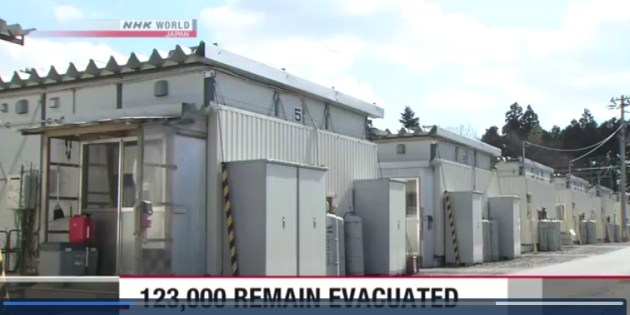 It’s been almost 6 years since the major earthquake and massive tsunami hit northeastern Japan.
The disaster on March 11th, 2011, left more than 18,000 people dead or missing.
According to the Reconstruction Agency, more than 123,000 people are still evacuees, many of them in temporary housing as of mid-February. The number is down about 30 percent from a year ago, but many continue to live with inconvenience and discomfort.
After the 1995 earthquake that killed more than 6,400 people in and around Kobe, western Japan, all evacuees left temporary housing within 5 years.
In the hardest-hit prefectures of Iwate, Miyagi and Fukushima, more than 35,000 people still live in prefabricated temporary houses. A factor behind the situation is a delay in building public housing and work to elevate residential land.
In Fukushima Prefecture, no-entry zones remain around the damaged nuclear plant, with radiation levels higher than the safety standard…
View original post 53 more words
Fukushima resettlement policy violates international human rights commitments & Japanese law
 Tokyo, 7 March 2017 – Japan’s policy to resettle residents to heavily contaminated areas in Fukushima is in contravention of Japanese law and multiple international human rights treaties. Greenpeace Japan and Human Rights Now detailed today numerous human rights violations resulting from the Japanese government’s response over the past six years to the 2011 Fukushima Daiichi nuclear disaster.
“If there is anything the nuclear industry learned from Chernobyl, it’s that a large exclusion zone is bad for business. It’s a constant reminder that a nuclear disaster is irreversible, and it’s women and children who are bearing the brunt,” said Kendra Ulrich, Senior Global Energy Campaigner with Greenpeace Japan.
“Cutting off housing support for self-evacuees threatens more than 10,000 households, potentially forcing many people back to contaminated areas against their will. Compensation payments will end in a year for people from areas where the evacuation order is being lifted, even though radiation levels far exceed…
View original post 438 more words
1 This month

of the week – Australians for War Powers Reform (AWPR)
To see nuclear-related stories in greater depth and intensity
 Antinuclear