The scandalous deficiency of the health scheme in Fukushima

Taro Yamamoto of the Liberal Party, member of the House of Councilors, accused the double standard of the the public radioprotection policy during his questions at the Special Commission of Reconstruction of the House of Deputies on March 21, 2017. He compared the health examination scheme introduced by Ibaraki prefecture to its population after the JCO* criticality accident to that currently available to Fukushima residents. The result shows the utter deficiency of the latter in spite of the fact that the Fukushima accident is classified as level 7, much more severe than the JCO level 4 accident.
We are publishing here the transcription of Taro Yamamoto’s questions** as well as the soil contamination map of Kashima and Haramachi districts of Minamisoma where the evacuation order was lifted in July 2016. The map is provided by the civil measurement group called “Fukuichi*** Area Environmental Radiation Monitoring Project”**** composed mainly…
View original post 2,185 more words
Tests to start on radioactive soil for use in reconstruction

Bags of radioactive soil in a temporary storage site in Iitate, Fukushima Prefecture, will eventually be transported to an interim storage facility.
MINAMI-SOMA, Fukushima Prefecture–The Environment Ministry is exploring the idea of reusing tons of radioactive soil as gravel to rebuild infrastructure in this disaster-stricken prefecture and beyond.
To gauge the feasibility of the project, it will conduct tests on whether contaminated soil can be securely contained without spillage while controlling the level of radioactivity.
The experiment is being conducted in a corner of a temporary storage site in the Odaka district here, just north of the crippled Fukushima No. 1 Nuclear Power plant.
If the tests go off without a hitch, the government is looking at reusing the soil as a construction material in recovery efforts.
Bags of soil gathered through decontamination efforts are kept at temporary storage sites around the Fukushima plant, which went into triple meltdown in…
View original post 229 more words
‘Voluntary’ evacuees torn by decision to flee from Fukushima

Those who fled Fukushima Prefecture and those who stayed after the nuclear disaster get together at a community center in the Sasaya district of the prefectural capital of Fukushima last month.
FUKUSHIMA–Facing diminishing public support and increased scorn from their hometown communities, residents who fled Fukushima Prefecture after the nuclear disaster are now struggling with self-doubts about their decision to leave.
They are called “voluntary” evacuees because they left areas that were not subject to the central government’s evacuations orders after the tsunami slammed into the Fukushima No. 1 nuclear power plant in March 2011.
Since then, they have faced hardships in starting new lives and finding new homes. And persistent fears over radiation continue to prevent many from returning to their hometowns in the prefecture.
When the nuclear crisis was unfolding, Nahoko Hikichi, 44, took her infant and 4-year-old child to Asahikawa, Hokkaido, leaving behind her husband in an…
View original post 758 more words
Mothers who fled Fukushima fallout raise voices against Genkai plant restart in Saga
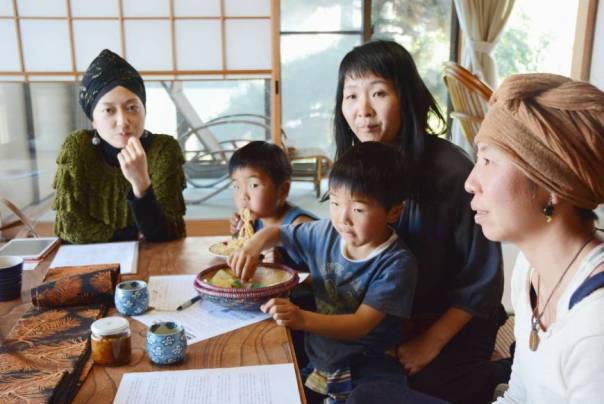
Mothers who fled to the Itoshima, Fukuoka Prefecture, to escape radiation spewed by the March 2011 core meltdowns in Fukushima Prefecture say they are concerned about the safety of the Genkai nuclear plant in neighboring Saga Prefecture.
SAGA – A group of mothers who evacuated from the Kanto region to Fukuoka Prefecture after the 2011 Fukushima nuclear crisis is ramping up protests against efforts to restart the Genkai nuclear plant in neighboring Saga.
After meeting with Minister of Economy, Trade and Industry Hiroshige Seko on Saturday, Saga Gov. Yoshinori Yamaguchi is expected to approve the restart of two reactors in the town of Genkai as early as Monday.
Earlier this month, four of the moms gathered for a meeting in Itoshima in Fukuoka and discussed plans to send the city a document and an inquiry conveying their opposition.
As they racked their brains to deliver effective expressions, the meeting lasted…
View original post 468 more words
1 This month
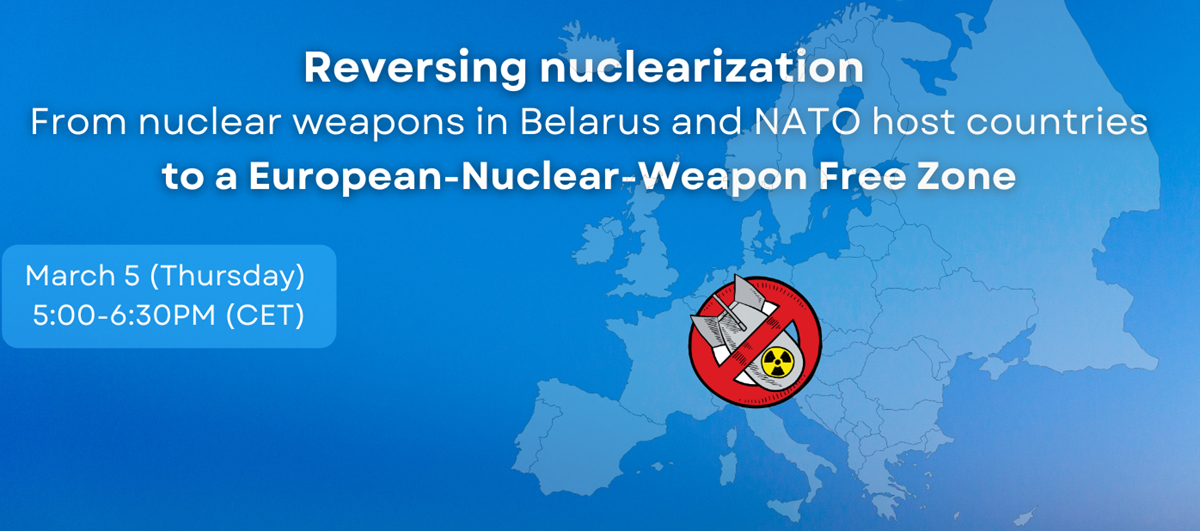
6 March -Online – Reversing nuclearization:
From nuclear weapons in Belarus and NATO host countries to a European-Nuclear-Weapon Free Zone
Mar 6, 2026 03:00 AM in Canberra, Melbourne, Sydney

of the week – Australians for War Powers Reform (AWPR)
To see nuclear-related stories in greater depth and intensity
 Antinuclear