May 10 Energy News

Opinion:
¶ “Buffett Thinks That If You Are Tied to Coal, You Are Screwed” In a nutshell, that’s how the oracle of Omaha perceives the direction that coal is taking. Buffett’s approach is the opposite of that of the Trump administration, which favors reviving US coal industry. He sees a possibility of no coal being burned at all in 20 years. [Wall Street Pit]
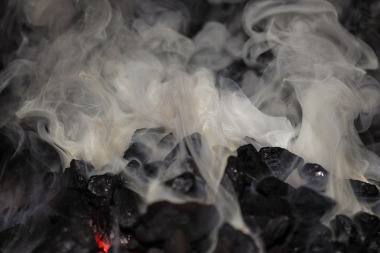 Coal smoke
¶ “Australia’s Renewable Energy Target Is Within Grasping Distance” • According to the Clean Energy Regulator, Australia’s 2020 Renewable Energy Target, sourcing 33,000 GWh of large-scale renewable energy by 2020, is potentially within grasping distance if the current pace of investment continues through the rest of 2017. [CleanTechnica]
Science and Technology:
¶ The pace of global warming is likely to quicken as natural processes in the Pacific switch from serving as a brake to an accelerator, placing the planet on…
View original post 775 more words
On the whole, the Turnbull budget ignores climate change, and fails to plan for long term energy system
Other announcements included the Government reaffirming their $110m loan commitment for the solar thermal project in Port Augusta.
Most of the package will go to measures that will accelerate exploration and assessment of onshore gas and lay the groundwork for new gas pipelines.
It is clear from this budget that the Coalition government is failing to undertake the longer term strategic thinking that is needed to transform Australia’s energy system and wider economy to address Australia’s growing emissions
 Turnbull’s budget ignores energy crisis and dodges climate http://reneweconomy.com.au/turnbulls-budget-ignores-energy-crisis-dodges-climate-24886/ By Matthew Rose on 10 May 2017
Budgets are centrepiece moments for governments. They lay out spending and savings but they also highlight values and choices, along with the agenda the government will pursue in the coming financial year. Decisions often have legislative implications that must be wrangled through the Senate and therefore dominate the political agenda for months if not the following year.
Unfortunately, the second budget of the Turnbull Government continues their dire management of Australia’s energy and climate change policy. By the government’s own admission, they are in the grip of an ‘energy crisis’ largely concerning east coast gas supplies. The energy sector overall has been plagued by policy uncertainty.
Earlier in the week the Energy and Environment Minister admitted Australia wouldn’t meet its Paris Commitment of net zero emissions by 2050 and instead the end of the century was a more realistic ambition.
This ambition ignores the overwhelming scientific evidence that net zero emissions by the end of the century is totally inadequate in avoiding extremely dangerous climate change. It is inconsistent with the Paris Agreement goal of holding global warming well below 2 degrees and to pursue a 1.5-degree limit. In short, it is a grossly negligent position from Australia’s environment minister.
Despite these self-identified challenges the Federal Budget fails to address them. The current centrepiece of the Government’s climate policy the Emission Reduction Fund (ERF) remains under a cloud with no further funding allocated in the Budget. Continue reading
Another radioactive waste accident, this time at Hanford, shows nuclear dump sites are not under control

 Beyond Nuclear, TAKOMA PARK, MD, May 9, 2017 — A tunnel at the Hanford Nuclear Site in Washington State collapsed today on top of railcars stored there that contain “mixed” radioactive waste, an accident that local watchdog group, Hanford Challenge, describes as a “crisis.”
The tunnel is located next to the Plutonium Uranium Extraction Facility, also known as PUREX, and contains substances classified as “dangerous waste.” The collapse prompted an initial evacuation of workers in the area that then spread to a “take cover” order for the entire site.
The already embattled Hanford site was originally part of the Manhattan Project, and a major supplier of military plutonium. It houses 177 storage tanks containing liquid radioactive sludges, some of which have been leaking radioactive effluent that could eventually threaten the Columbia River. Cleanup at the site did not begin until 1989. The Hanford tunnel collapse may have been caused by soil subsidence due to vibrations from nearby road works.
“The current unfolding crisis at Hanford, the bursting barrel at Waste Isolation Pilot Plant (WIPP) in New Mexico in 2014, and the exploding radioactive waste dump in Beatty, Nevada in 2015, show that radioactive waste management is out of control,” said Kevin Kamps, Radioactive Waste Watchdog at Beyond Nuclear
”That’s why the Yucca Mountain dump in Nevada, the Canadian dump targeted at the Great Lakes shore, and the parking lot dumps in Texas and New Mexico must be blocked, to prevent future disasters,” Kamps added.
WIPP, a radioactive waste repository mainly for military waste and situated near Carlsbad, NM, suffered an accident on February 14, 2014. The explosion there released radioactivity that exposed workers who were stationed above ground at the time and forced an almost three-year shutdown of the site. The disaster cost $2 billion and counting. As at Hanford, a relatively minor event — the use of the wrong kitty litter for cleanup — was blamed for the WIPP accident, prompting serious questions about competence and safeguards at such critically dangerous sites.
A leak in a massive nuclear waste storage tank at Hanford in April 2016 was described as “catastrophic” by a former tank farm worker there, even as the U.S. Department of Energy tried to downplay the problem.
Most commercial radioactive waste is currently stored at reactor sites around the country. However, military radioactive waste has continued to pose an on-going storage nightmare. Beyond Nuclear advocates for commercial reactor waste to be stored on-site but in facilities known as Hardened On-Site Storage, or HOSS, and not in the risky pools and inadequate waste casks, as is the current practice. -30- Beyond Nuclear aims to educate and activate the public about the connections between nuclear power and nuclear weapons and the need to abandon both to safeguard our future.
Beyond Nuclear advocates for an energy future that is sustainable, benign and democratic. The Beyond Nuclear team works with diverse partners and allies to provide the public, government officials, and the media with the critical information necessary to move humanity toward a world beyond nuclear. Beyond Nuclear: 6930 Carroll Avenue, Suite 400, Takoma Park, MD 20912. Info@beyondnuclear.org. www.beyondnuclear.org.

Indigenous Australians get a “mixed bag” in the Turnbull budget – with serious omissions
Turnbull Budget has Glaring Omissions for Indigenous Australians, Rachel McFadden | | @ProBonoNews The delivery of the 2017 budget for Indigenous Australians was a “mixed bag” of support and omissions, leaders of key Aboriginal and Torres Strait Islander organisations said., 10th May 2017
More than 30 representatives met in Canberra after the unveiling of the federal government’s 2017 budget, on Tuesday night, to discuss its implications for Australia’s First People.
The National Congress of Australia’s First People said: “The urgent needs of our peoples are almost invisible.”
Most notable were a lack of specific measures to address all but one of the seven Close the Gap targets.
National Congress co-chair and Close the Gap co-chair Jackie Huggins told Pro Bono News that infant mortality, one of the close the gap targets, had increased in the past few years. “We would have liked to see more investment in Close the Gap targets. We still have people dying 10 years younger and infant mortality has also gone up,” Huggins said.
“In the past 10 years, in our country we have seen 88 per cent increase in Aboriginal incarceration rates.
“We know that young Aboriginal males have the highest rate of suicide [than any other demographic]. “
Huggins said she would like to see disability, incarceration and justice measurements added to the Close the Gap targets.
“Another glaring omission was funding around child protection where we see our children in and out of home care quite significantly,” Huggins said.
“And there was no addition funding for National Congress.
“There are some things to be welcomed like the NDIS. We know that more 50 per cent of our people have some kind of disability.” Huggins said the problem was that since Indigenous populations were submerged within larger schemes there was no way of telling whether something like the NDIS was having a direct impact on the target populations.
She said the same went for health funding.
“We welcome funding back to the community legal services. Indigenous businesses have also had a big boost,” she said.
The opposition’s response to the Turnbull budget was more scathing. “The 2017 budget fails to deliver for Aboriginal and Torres Strait Islander Australians,” leader of the opposition Bill Shorten, Senator Patrick Dobson, Warren Snowden, Linda Burney and Senator Malarndirri McCarthy said in a joint statement.
“While the budget includes piecemeal proposals for better employment and health outcomes, there is no comprehensive strategy to make progress on the stalled Closing the Gap targets, or to address other longstanding issues such as the incarceration crisis.
“The budget also fails to secure the future of the National Congress of Australia’s First Peoples with proper funding. Congress is our independent, elected, national Indigenous representative body – it must be respected and resourced.
“The government’s entire approach to Indigenous affairs is defined by savage cuts to services, a loss of local control, a failure to listen to Indigenous voices, and policy-making which is paternalistic and overly bureaucratic.”
Family Matters Campaign co-chair Gerry Moore said he was disappointed that the budget did “nothing” to address the over-representation of Aboriginal and Torres Strait Islander children and families in child protection systems. “If we do the same things we will get the same results,” Moore said.
“We have an escalating crisis in the nation’s child protection systems and we are still on track to triple the number of Aboriginal and Torres Strait Islander children in out of home care by 2035. This Budget does nothing to address this.”
“Unless we see an injection of funding to promote preventative measures and the role of Aboriginal and Torres Strait Islander community controlled services we remain pessimistic about the future of our children” he said.
1 This month
7 April – WEBINAR – Australia and the Doomsday Clock – Preventing nuclear war through NoFirstUse and other policies
Online | Tuesday April 7, 4:00-5:30pm, Australian Eastern Time / 8:00-9:30am Central Europe Time
– Access the registration link
15 April – Zoom –Nuclear Power is Not the Solution
Apr 15, 2026 01:00 AM in Canberra, Melbourne, Sydney

Join the International Physicians for the Prevention of Nuclear War (IPPNW) on Tuesday, April 14th for a timely webinar exploring the risks associated with nuclear power and challenging the myth that it offers a simple, safe, carbon-free solution to the climate crisis

21 April Webinar: No Nuclear Weapons in Australia
Start: 2026-04-21 18:00:00 UTC Canberra, Melbourne, Sydney (GMT+10:00)
End: 2026-04-21 19:30:00 UTC Canberra, Melbourne, Sydney (GMT+10:00)
Event Type: Virtual
A virtual link will be communicated before the event.
Host Contact Info: australia@icanw.org

of the week – Australians for War Powers Reform (AWPR)
To see nuclear-related stories in greater depth and intensity
 Antinuclear