Richard Di Natale – Adani’s Carmichael coalmine won’t go ahead
Adani’s Carmichael coalmine won’t go ahead, Greens leader says
Richard Di Natale ‘confident’ if project can’t be stopped in parliament or for financial reasons, Australians will stand in front of bulldozers, Guardian, Amy Remeikis, 15 Oct 17, Adani’s Carmichael coalmine won’t go ahead, the Greens leader Richard Di Natale said, predicting “many, many thousands” of Australians would come together to protest any moves to stop the project.
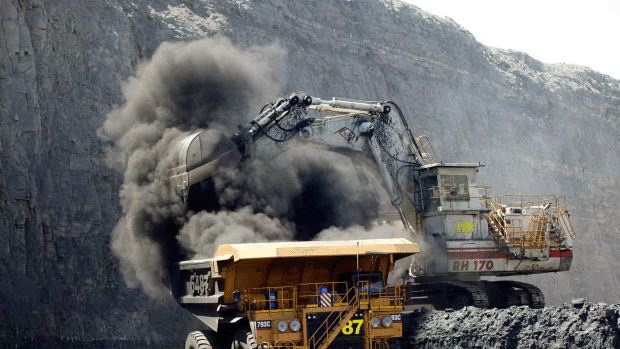
Di Natale said he believed Australians largely stood against the Carmichael coalmine, choosing the Great Barrier Reef and the environment over the construction of what has been billed as the largest coal project in the southern hemisphere…….
Di Natale said he would “absolutely 100%” join in any on-the-ground protest against the mine, if it went ahead, predicting it would be as big as the protest movement which stopped the Franklin Dam from going ahead in Tasmania three decades ago.
“I’ll be more than happy to join those activists right across the country, many of whom I know are preparing, should we fail in the parliament, to ensure that we win it by standing in front of the bulldozers.”
Di Natale said it was about saving both the environment and jobs of the future, instead of a “short-term hit” he said the Carmichael mine would provide……. https://www.theguardian.com/environment/2017/oct/15/adanis-carmichael-coalmine-wont-go-ahead-greens-leader-says
Does a Warming Planet Reallly Need More Coal? #StopAdani

Australia Debates: Does Warming Planet Really Need More Coal?
By JACQUELINE WILLIAMS
October 14, 2017
Australia Debates:
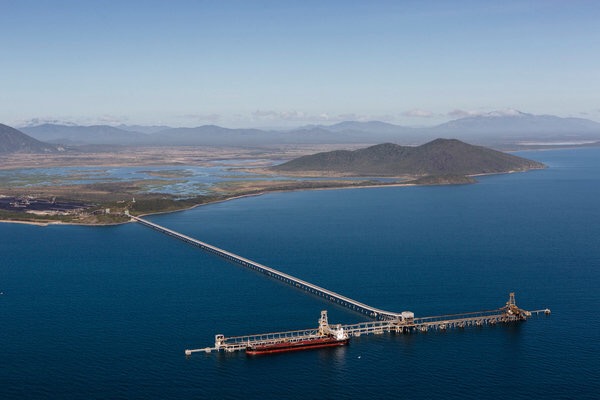
An enormous expansion at Abbot Point, Australia’s most northern deep water coal port, is planned as part of a controversial mining project.
David Maurice Smith for The New York Times
ABBOT POINT, Australia — In a desolate corner of northeastern Australia, about 100 miles from the nearest town, a grassy stretch of prime grazing land sits above a vein of coal so rich and deep that it could be mined for decades.
The Australian government is considering a proposal to build one of the world’s largest coal mines in this remote locale, known as the Galilee Basin, where acacia and eucalyptus trees grow wild between scattered creeks.
An Indian conglomerate, the Adani Group, has asked for a taxpayer-financed loan of as much as $800 million to make the enormous project viable, promising to…
View original post 1,662 more words
Kobe Steel discloses 9 more cases of faked inspection data


View original post 244 more words
Japan’s quiet payouts to cities near nuclear plants fuels speculation of political ploy

View original post 280 more words
Russian Gov’s Rosatom May Buy Up Belarus Nuclear Power Station Contractor Best Known For Dropping the Reactor Pressure Vessel

Comment: If Belarus can’t think of anything better to do with this region than to hand it over to Russia to destroy with routine nuclear discharges and a possible nuclear disaster, then they should give it back to Lithuania. Astraviets, the location of the Belarus nuclear power station, belonged to the Grand Dukes of Lithuania – Kings of Poland. It became part of Belarus after the Soviet Union (Russia) took it as part of the Nazi Soviet pact in 1939. In 2012 65% of Lithuanians voted against a nuclear power station proposal.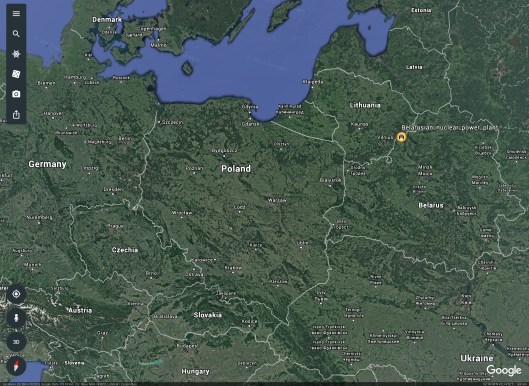
Apparently Russian government owned Rosatom will buy it without competitive bidding too. Vasily Boyko-Veliky is also the owner of the Russian milk holding? Did he get his nuclear expertise by testing milk contaminated from Chernobyl?
From Charter97.org:
“Sesam Company, Which Builds BelNPP, Went Bankrupt
12.10.2017, 11:16 BY VASILY BOYKO-VELIKY
Rosatom will buy from businessman Vasily Boyko-Veliky the…
View original post 571 more words
Astravets-Belarus Nuclear Power Station Is an Economic “Bomb” Says Lithuanian Foreign Minister; Discusses Russian Zapad Military Exercises and More
By Charter97.org:
“Linas Linkevičius: Astravets NPP Is an Economic “Bomb”
9.10.2017, 10:53
LINAS LINKEVIČIUS
The Lithuanian Foreign Minister gave an exclusive interview to Charter97.org.
Lithuania’s Minister of Foreign Affairs Linas Linkevičius answered questions of editor-in-chief of Charter97.org Natallia Radzina.
– Mr. Minister, for the third year Lithuania lives with euro. At the same time, a part of post-socialist countries has not taken a common European currency. Poland categorically does not want to do this. The transition to euro was a political decision and touched upon every Lithuanian citizen. How do you assess the introduction of euro in Lithuania and how did this affect the country’s economic development?
– In short, each country has its own situation. First, almost all Lithuanian parties agreed that joining the euro zone was also our political choice, and we perceive this as a part of European integration.
Second, this is not only a political…
View original post 1,581 more words
1 This month

of the week – Australians for War Powers Reform (AWPR)
To see nuclear-related stories in greater depth and intensity
 Antinuclear