Proposed Federal nuclear waste dump threatens South Australia’s environment and economy

Susan Craig Fight To Stop Nuclear Waste Dump In Flinders Ranges SA November 22
• The current uranium waste storage facility is at Lucas Heights, NSW which has the capacity to continue storage for another 30 years. We are asking that this facility continue to be used until we have established a sound and safe resolution for the disposal of this waste and in collaboration with community and all interested parties.
• The waste dump proposed is not for underground storage, but rather a precarious and interim above ground storage site.
• Should the waste dump for Flinders Ranges be achieved, it will open the flood gates for the world to use South Australia as a dumping ground for many years to come, knowing they can dispose of their radioactive waste away from their own countries.
• South Australia has WORLD CLASS agriculture, food, wine, fibre and forestry industries.
• These industries are S.A’s LARGEST EXPORT INDUSTRIES and our products are transported directly to more than 100 countries.
• Our production systems are sustainable and makes use of CLEAN and SAFE environments.
• These industries are well supported and well positioned to meet the GROWING GLOBAL demand for CLEAN and SAFE food and wine.
• The total value of Australia’s farm exports is expected to hit a NEW RECORD OF $48.7 BILLION in 2016-17, $1 billion higher than the previous year.
• The value of Australia’s agricultural sector is tipped to BREAK ANOTHER RECORD this financial year, peaking at $63.8 BILLION
• Gross wine revenue increased by $329 million to $2.11 BILLION
• The value of wine exports increased by $119 million to $1.34 BILLION
• The value of the tourism market in the FLINDERS RANGES is worth $421 MILLION
• FLINDERS RANGES is the SECOND MOST VISITED regional site in South Australia.
• The value of S.A’s tourism market is worth $6.3 BILLION
• These industries show significant growth on previous years and forecast to CONTINUE GROWING, but a radioactive waste facility in our state will threaten all of this.
• Say NO to nuclear waste in South Australia and keep our farming, our tourism, our people and our future safe. https://www.facebook.com/groups/344452605899556/
www.dontdumponsa.net #dontdumponsa #sa2good2waste
‘Forever project’ Debate over nuclear waste site not ‘simply about money ‘ says indigenous community
 ‘This is a forever project’: Indigenous community mulls nuclear waste
  bunker http://www.cbc.ca/news/canada/london/nuclear-waste-kincardine-indigenous-1.4420280
Debate over nuclear waste site not ‘simply about money or beads and trinkets,’ community says
The Canadian Press : Nov 26, 2017 Indigenous people in the shadow of one of the world’s largest nuclear reactors are adamant their values will underpin their decision on whether to approve a proposed multibillion-dollar storage bunker for radioactive waste — a process that could take at least another year to play out.
Armed with commitments from both the Canadian government and proponents of the Deep Geologic Repository to await their buy-in, the Saugeen Ojibway Nation say they will take their time to reach an informed opinion on a project already more than a decade in the planning.
“Our values and who we are as a people and our connection to the lands and the waters are in many ways more important than the technical aspects of this,” Randall Kahgee, a former chief and now lead adviser to the First Nations on nuclear issues, said in an interview.
“This is not just a simple project. This is a forever project. It requires our people to think beyond seven generations, which is typically how we plan and think about these things.” Continue reading
Russia’s new dangerous nuclear secret, on anniversary of its deadly nuclear disaster

 Counterpunch 24th Nov 2017, Linda Pentz Gunter: September 29 marked the 60th anniversary of the world’s third most deadly— and least known — nuclear accident. It
took place at the Mayak plutonium production facility, in a closed Soviet
city in the Urals.
The huge explosion was kept secret for decades. It
spread hot particles over an area of more than 20,000 square miles,
exposing a population of at least 270,000 and indefinitely contaminating
land and rivers. Entire villages had to be bulldozed. Residents there have
lived for decades with high rates of radiologically induced illnesses and
birth defects.
Now, evidence is emerging of a potentially new nuclear
accident and indications point once again to Mayak as one of the likely
culprits. Ironically, if there was indeed an accident there, it happened on
or around the precise anniversary of the 1957 disaster. The Research
Institute of Atomic Reactors in Dimitrovgrad in the region is another
possible suspect. https://www.counterpunch.org/2017/11/24/a-radioactive-plume-thats-clouded-in-secrecy/
Support for Adani coal mine damaged Liberal-Nationals in Queensland election
 Queensland election: how Adani helped undo the LNP’s push to
  regain power
Exit polls in the state’s south-east found up to 70% of respondents were against the billion-dollar rail line loan for Adani, Guardian, Amy Remeikis, 27 Nov 17, It was the sleeper issue that ended up dominating the Queensland election campaign – and, in the end, activists believed, may have saved government for Labor.
Labor sits the closest to the majority needed to take government in Queensland, 47 seats, after receiving gains in the south-east, largely helped by a drop in support for the Liberal National party.
Among those were Maiwar, the electorate held by the shadow treasurer, Scott Emerson, who looks to have lost largely due to Greens preferences, along with other LNP-held inner-city seats such as Mount Ommaney and Mansfield, which both look to have fallen to Labor.
Exit polls commissioned by GetUp in those electorates found up to 70% of respondents were against the billion-dollar rail line loan for Adani, while another 30% said Labor’s decision to veto the loan helped decide how they would vote.
“We already know the majority of voters from every single party at play opposed the Naif loan, including LNP and One Nation voters,” the GetUp environmental justice director, Sam Regester, told Guardian Australia. “Taking a stronger position against Adani clearly contributed to the swing in south-east Queensland. Just as tellingly, Labor held on to the regional seats that folks like conservative analysts predicted would fall because of the veto.”…….
Regester said that..voters in the south-east, particularly, saw a point of difference.
“The strong showing of the Greens, particularly in south Brisbane and Maiwar, showed more than anything the value of having the clearest, strongest policy on Adani,” he said. “ For most of the last term of government, the two major parties were equally bad on this key issue, so it’s no wonder they picked up a swag of votes.
“Labor was able to offset this somewhat with the Naif veto but this election made it clear that the Greens can be a threat to both major parties when they’re not up to scratch, particularly on Adani.”……..
Under the Naif rules, the states need to give approval for the loan. On Sunday, Palaszczuk confirmed she would stand by the veto decision. She also committed Labor to not allowing any taxpayer funds to flow to the mine, or its associated infrastructure, although has refused to give details of the royalty holiday granted to Adani, worth about $350m, which she said would be paid back with interest.
“We will veto the loan, they said on the 6th of June that they had the green light that they would build the mine and the rail line and we expect them to get on with it,” a Palaszczuk spokesman said.
The future of Adani now rests on whether it can receive financing to begin construction in the Galilee Basin, with some reports it may be close to securing Chinese money to open the mine. That has the potential to create another issue for the Queensland government, be it the LNP or Labor, as both have said they remain in support of the mine for the jobs it will create, with the Chinese funds potentially coming with Chinese labourer and steel strings attached.
GetUp have not finished fighting the project and Regester said Labor’s position was “still nowhere good enough” and a potential issue for the next federal election.
“After watching Adani dominate the state election, there will be folks in federal Labor keen to not see the next federal election nearly de-railed in the same way,” Regester said. “It’s in their interest to get on the right side of this extraordinary movement and oppose the entire Adani [mine] outright. https://www.theguardian.com/australia-news/2017/nov/27/queensland-election-how-adani-helped-undo-the-lnps-push-to-regain-power
Climate change could make some Australian cities virtually ‘uninhabitable’
 Deadly mix of heatwaves and humidity could make some Australian cities virtually ‘uninhabitable’http://www.news.com.au/technology/environment/climate-change/deadly-mix-of-heatwaves-and-humidity-could-make-some-australia-cites-virtually-uninhabitable/news-story/f90ff75e2f982e741efc714a1b7cf0a6, 26 Nov 17,
WITH temperatures nudging 70, this CBD has already been dubbed a “river of fire”. Deadly heatwaves could make it no-go zone. Benedict Brook@BenedictBrook CENTURIES-old heatwave records have been shattered all over Australia in the past week as cities from Hobart to Sydney have been hit by prolonged stretches of temperature far above normal.
Hobart’s recent run of six consecutive November days above 26C hasn’t been equalled for 130 years.
While it may have been warm, though, it was manageable.
However, climate scientists are warning the conditions in another of Australia’s capitals could get so bad it may become “not viable” to live there in decades to come.
A combination of debilitating humidity and what’s known as the “urban heat island effect” mixed in with a good dose of climate change could leave Darwin off-limits to all but the hardiest.
Already, surface temperatures in parts of Darwin’s CBD have been recorded nudging 70C.
And regional cities in Queensland might not be far behind.
Towards the end of November, Darwin locals look forward to the end of the “build-up”, the hot and sticky weather that precedes the wet season.
It’s been a tough few months. Earlier this year, the Bureau of Meteorology warned 2017’s build-up would be “brutal”.
“Everything is hotter than normal,” said the Bureau’s Greg Browning.
Australian National University’s Dr Elizabeth Hanna, an expert on the effects of climate change on health, told news.com.au it was the Top End’s tropical humidity that was the big problem. Continue reading
Heating oceans make South East Australian hot spots
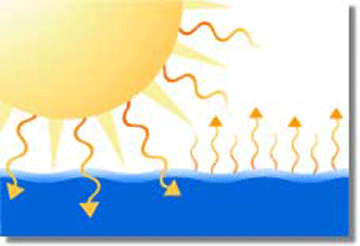 Global hot spot: Exceptional heat pushes up ocean temperatures off Australia http://www.theage.com.au/environment/weather/global-hot-spot-exceptional-heat-pushes-up-ocean-temperatures-off-australia-20171125-gzsrey.html, Peter Hannam
Australia is home to a global hot spot for sea-surface temperatures, with a record burst of prolonged heat in the country’s south-east helping to make conditions several degrees warmer than average.
Daily weather charts generated by the US National Oceanic and Atmospheric Administration show the unusual warmth is almost unmatched around the world, compared with normal temperatures.
Only patches off Greenland and New York in the US are as abnormally warm compared with long-run averages. (See chart below.)
“It’s clear sea-surface temperatures around south-eastern Australia, and Tasmania in particular, are well above average,” Blair Trewin, senior climatologist for the Bureau of Meteorology, told Fairfax Media.
Record warmth
Treatment of climate refugees
 Naomi Klein: US treatment of Haitian refugees is a sign of climate refugees’ future, https://www.greenleft.org.au/content/naomi-klein-us-treatment-haitian-refugees-sign-climate-refugees-future JESSICA CORBETT, November 25, 2017
After an announcement from the Donald Trump administration that it is terminating temporary protections for about 59,000 Haitians who fled to the United States after a devastating 2010 earthquake, journalist Naomi Klein warns decisions by the United States and Canadian governments indicate how wealthy nations may handle climate refugees in the years to come. Continue reading
Australia can meet its 2030 greenhouse emissions target at zero net cost
 What’s the net cost of using renewables to hit Australia’s climate target? Nothing https://theconversation.com/whats-the-net-cost-of-using-renewables-to-hit-australias-climate-target-nothing-88021, Andrew Blakers, Professor of Engineering, Australian National UniversityPhD Candidate, Australian National University, Research Fellow, ANU College of Engineering and Computer Science, Australian National University, November 27, 2017 Australia can meet its 2030 greenhouse emissions target at zero net cost, according to our analysis of a range of options for the National Electricity Market.
Our modelling shows that renewable energy can help hit Australia’s emissions reduction target of 26-28% below 2005 levels by 2030 effectively for free. This is because the cost of electricity from new-build wind and solar will be cheaper than replacing old fossil fuel generators with new ones.
Currently, Australia is installing about 3 gigawatts (GW) per year of wind and solar photovoltaics (PV). This is fast enough to exceed 50% renewables in the electricity grid by 2030. It’s also fast enough to meet Australia’s entire carbon reduction target, as agreed at the 2015 Paris climate summit.
Encouragingly, the rapidly declining cost of wind and solar PV electricity means that the net cost of meeting the Paris target is roughly zero. This is because electricity from new-build wind and PV will be cheaper than from new-build coal generators; cheaper than existing gas generators; and indeed cheaper than the average wholesale price in the entire National Electricity Market, which is currently A$70-100 per megawatt-hour.
Cheapest option
Electricity from new-build wind in Australia currently costs around A$60 per MWh, while PV power costs about A$70 per MWh.
During the 2020s these prices are likely to fall still further – to below A$50 per MWh, judging by the lower-priced contracts being signed around the world, such as in Abu Dhabi, Mexico, India and Chile.
In our research, published today, we modelled the all-in cost of electricity under three different scenarios:
- Renewables: replacement of enough old coal generators by renewables to meet Australia’s Paris climate target
- Gas: premature retirement of most existing coal plant and replacement by new gas generators to meet the Paris target. Note that gas is uncompetitive at current prices, and this scenario would require a large increase in gas use, pushing up prices still further.
- Status quo: replacement of retiring coal generators with supercritical coal. Note that this scenario fails to meet the Paris target by a wide margin, despite having a similar cost to the renewables scenario described above, even though our modelling uses a low coal power station price.
The chart below [on original] shows the all-in cost of electricity in the 2020s under each of the three scenarios, and for three different gas prices: lower, higher, or the same as the current A$8 per gigajoule. As you can see, electricity would cost roughly the same under the renewables scenario as it would under the status quo, regardless of what happens to gas prices.
Balancing a renewable energy grid
The cost of renewables includes both the cost of energy and the cost of balancing the grid to maintain reliability. This balancing act involves using energy storage, stronger interstate high-voltage power lines, and the cost of renewable energy “spillage” on windy, sunny days when the energy stores are full.
The current cost of hourly balancing of the National Electricity Market (NEM) is low because the renewable energy fraction is small. It remains low (less than A$7 per MWh) until the renewable energy fraction rises above three-quarters.
The renewable energy fraction in 2020 will be about one-quarter, which leaves plenty of room for growth before balancing costs become significant.
The proposed Snowy 2.0 pumped hydro project would have a power generation capacity of 2GW and energy storage of 350GWh. This could provide half of the new storage capacity required to balance the NEM up to a renewable energy fraction of two-thirds.
The new storage needed over and above Snowy 2.0 is 2GW of power with 12GWh of storage (enough to provide six hours of demand). This could come from a mix of pumped hydro, batteries and demand management.
Stability and reliability
Most of Australia’s fossil fuel generators will reach the end of their technical lifetimes within 20 years. In our “renewables” scenario detailed above, five coal-fired power stations would be retired early, by an average of five years. In contrast, meeting the Paris targets by substituting gas for coal requires 10 coal stations to close early, by an average of 11 years.
Under the renewables scenario, the grid will still be highly reliable. That’s because it will have a diverse mix of generators: PV (26GW), wind (24GW), coal (9GW), gas (5GW), pumped hydro storage (5GW) and existing hydro and bioenergy (8GW). Many of these assets can be used in ways that help to deliver other services that are vital for grid stability, such as spinning reserve and voltage management.
Because a renewable electricity system comprises thousands of small generators spread over a million square kilometres, sudden shocks to the electricity system from generator failure, such as occur regularly with ageing large coal generators, are unlikely.
Neither does cloudy or calm weather cause shocks, because weather is predictable and a given weather system can take several days to move over the Australian continent. Strengthened interstate interconnections (part of the cost of balancing) reduce the impact of transmission failure, which was the prime cause of the 2016 South Australian blackout.
Since 2015, Australia has tripled the annual deployment rate of new wind and PV generation capacity. Continuing at this rate until 2030 will let us meet our entire Paris carbon target in the electricity sector, all while replacing retiring coal generators, maintaining high grid stability, and stabilising electricity prices.
German wind power beats coal and nuclear power
Bloomberg 24th Nov 2017, Power generated this year by onshore and offshore wind in Germany exceeded the amount of electricity coming from hard coal and nuclear plants for the
first time, the Fraunhofer ISE institute said on its website. German coal
plant operators choked generation from hard coal plants in favor of
cheaper-to-run lignite units this year and nuclear power operators kept
plants like Grundremmingen B, which were offline for extended periods,
Bruno Burger, a professor at Freiburg-based Fraunhofer ISE, said by phone
on Friday.
https://www.bloomberg.com/news/articles/2017-11-24/german-wind-power-beats-hard-coal-nuclear-power-for-first-time
In Peru’s Deserts, Melting Glaciers Are a Godsend (Until They’re Gone)
Accelerating glacial melt in the Andes caused by climate change has set off a gold rush downstream, letting the desert bloom. But as the ice vanishes, the vast farms below may do the same. [great photography]
 NYT, NICHOLAS CASEY 27 Nov 17 Photographs by TOMAS MUNITA VIRU, Peru — The desert blooms now. Blueberries grow to the size of Ping-Pong balls in nothing but sand. Asparagus fields cross dunes, disappearing over the horizon.
The desert produce is packed and shipped to places like Denmark and Delaware. Electricity and water have come to villages that long had neither. Farmers have moved here from the mountains, seeking new futures on all the irrigated land.
It might sound like a perfect development plan, except for one catch: The reason so much water flows through this desert is that an icecap high up in the mountains is melting away.
And the bonanza may not last much longer.
“If the water disappears, we’d have to go back to how it was before,” said Miguel Beltrán, a 62-year-old farmer who worries what will happen when water levels fall. “The land was empty and people went hungry.”
In this part of Peru, climate change has been a blessing — but it may become a curse. In recent decades, accelerating glacial melt in the Andes has enabled a gold rush downstream, contributing to the irrigation and cultivation of more than 100,000 acres of land since the 1980s.
Yet the boon is temporary. The flow of water is already declining as the glacier vanishes, and scientists estimate that by 2050 much of the icecap will be gone.
Throughout the 20th century, enormous government development projects, from Australia to Africa, have diverted water to arid land. Much of Southern California was dry scrubland until canals brought water, inciting a storm of land speculation and growth — a time known as the “Water Wars” depicted in the 1974 film “Chinatown.”
Yet climate change now threatens some of these ambitious undertakings, reducing lakes, diminishing aquifers and shrinking glaciers that feed crops. Here in Peru, the government irrigated the desert and turned it into farmland through an $825 million project that, in a few decades, could be under serious threat.
“We’re talking about the disappearance of frozen water towers that have supported vast populations,” said Jeffrey Bury, a professor at the University of California at Santa Cruz who has spent years studying the effects of glacier melt on Peruvian agriculture. “That is the big picture question related to climate change right now.”…….https://www.nytimes.com/2017/11/26/world/americas/peru-climate-change.html?hp&action=click&pgtype=Homepage&clickSource=story-heading&module=photo-spot-region®ion=top-news&WT.nav=top-news
CWP plans second major solar and battery storage project in NSW — RenewEconomy

CWP proposes a second major solar and storage project for New England region of NSW, this time based around 600MW of solar.
via CWP plans second major solar and battery storage project in NSW — RenewEconomy
Queensland chooses sunshine over coal, to relief of solar industry — RenewEconomy

Large scale solar industry breathes sigh of relief after Queensland poll shows likely return of Palaszczuk government, and the retention of 50 per cent renewables target.
via Queensland chooses sunshine over coal, to relief of solar industry — RenewEconomy
Divest from Coal (?) Letter to the Guardian – Unpublished

Originally posted on Keep Cumbrian Coal in the Hole: Another unpublished letter to the national press on the first deep coal mine in the UK in 30 years. There is something fishy going on with this coal mine plan. There has been nowt in the national media (and virtually nowt in the local media) on…
via Divest from Coal (?) Letter to the Guardian – Unpublished — Mining Awareness +
Activists call on artists to join protests against 2020 Olympics in Tokyo


View original post 866 more words
Fukushima Darkness, Part Two
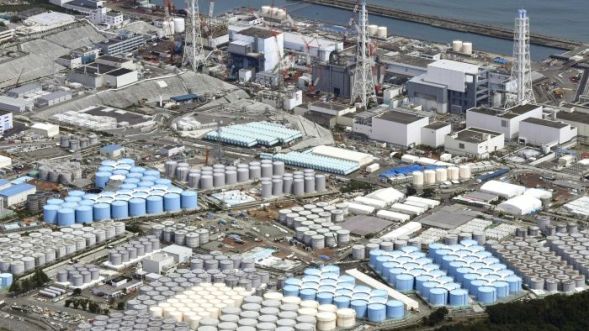
View original post 1,998 more words
1 This month

of the week – Australians for War Powers Reform (AWPR)
To see nuclear-related stories in greater depth and intensity
 Antinuclear