Dishonest scare-mongering linking nuclear medicine and radioactive waste dumps
NUCLEAR MEDICINE AND THE PROPOSED NATIONAL RADIOACTIVE WASTE REPOSITORY , Jim Green 27 January 18, “As health organisations, we are appalled that access to nuclear medical procedures is being used to justify the proposed nuclear waste dump. Most waste from these procedures break down quickly and can be safely disposed of either on site or locally.” − Dr Bill Williams, Medical Association for the Prevention of War
“Linking the need for a centralized radioactive waste storage facility with the production of isotopes for nuclear medicine is misleading. The production of radioactive isotopes for nuclear medicine comprises a small percentage of the output of research reactors. The majority of the waste that is produced in these facilities occurs regardless of the nuclear medicine isotope production.”
− Nuclear Radiologist Dr Peter Karamoskos.
Proponents of a national radioactive waste facility (a repository for lower-level wastes and a co-located store for higher-level wastes) claim or imply that nuclear medicine would be jeopardised if the facility does not proceed. There is no basis to such claims – they amount to dishonest scare-mongering.
Proponents claim that most or all of the waste that the federal government wants to dispose of or store at a national repository/store arises from medicine, specifically the production and use of medical radioisotopes. However, measured by radioactivity, the true figure is just 10-20%. Measured by volume, the figure may be within that range or it may be higher than 20% − but it takes some creative accounting to justify the claim that most or even all of the waste is medical in origin.
In any case, the fact that some waste is of medical origin doesn’t mean that a national repository/store is the best way to manage the waste.
If the plan for a national repository/store does not proceed, medical waste will continue to be stored at the Lucas Heights reactor site operated by the Australian Nuclear Science and Technology Organisation (ANSTO) and, in much smaller volumes, at hospitals. Some waste is used in hospitals and then sent back to ANSTO (e.g. molybdenum ‘cows’ that have been ‘milked’ of the daughter radionuclide, technetium-99m − by far the most commonly used medical radioisotope). That is no problem since ANSTO and hospitals continue to produce radioactive waste and thus they have an ongoing need for on-site waste stores and waste management expertise regardless of the options for periodic off-site disposal.
Nuclear medicine is not being adversely affected by the absence of a national radioactive waste repository/store. Nuclear medicine will not benefit from the creation of a national radioactive waste repository/store.
The incessant references to nuclear medicine to ‘sell’ the proposed radioactive waste repository/store amount to emotive propaganda and scare-mongering. Ironically, that is what critics of the proposed national radioactive waste repository/store are routinely accused of!
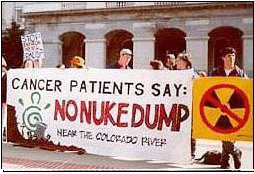 Dishonest scare-mongering linking nuclear medicine and radioactive waste dumps is also evident in other countries. Protests by cancer patients helped end plans to build a radioactive waste dump in Ward Valley, California. http://ens-newswire.com/ens/jun2002/2002-06-04-06.html
What should be done?
Two parallel processes should be initiated regarding radioactive waste management in Australia: a radioactive waste audit, and a National Commission or comparable public inquiry mechanism.
The federal government should immediately initiate an audit of existing waste stockpiles and storage. This could be led by the federal nuclear regulator ARPANSA in consultation with relevant state agencies with responsibility for radioactive waste. This audit would include developing a prioritised program to improve continuing waste storage and handling facilities, and identifying non-recurrent or legacy waste sites and exploring options to retire and de-commission these.
A National Commission would restore procedural and scientific rigour, and stakeholder and community confidence in radioactive waste management. It would identify and evaluate the full suite of radioactive waste management options. That would include the option of maintaining existing arrangements, keeping in mind that 95% of the waste is securely stored at two Commonwealth facilities: ANSTO’s Lucas Heights facility, and a large volume of very low level waste stored on Defence Department land at Woomera, SA.
The above issues are addressed in detail in a 2014 paper posted at: www.nuclear.foe.org.au/waste
Not Even the Briefest of Pauses for Human-Forced Global Warming — Oceans During 2017 Were the Hottest on Record — robertscribbler

Where does most of the heat trapped by human fossil fuel and other greenhouse gas emissions ultimately end up? Given our fixation on global surface temperatures, many people would say ‘the atmosphere.’ But this answer is incorrect. The vast majority ends up in the world ocean. (Global change in ocean heat content through 2015. Image source: […]
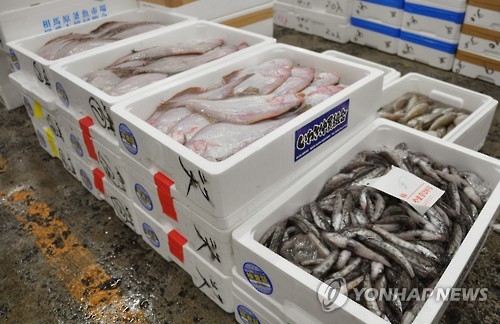
South Koreans still distrustful of Japanese fish products after nuclear meltdown

View original post 211 more words
January 26 Energy News — geoharvey

Opinion: ¶ “Renewable Energy Doesn’t Get More In Subsidies Than Fossil & Nuclear Energy Have Gotten, & Continue To Get” • Fossil fuels have received government subsidies for 100 or so years. They reportedly get about $5 trillion each year, globally. Renewable energy also receives subsidies, but nothing compared to what fossil fuels get. [CleanTechnica] […]
Can A US President Be Charged With A Crime? Is The President Above The Law? — Mining Awareness +

“The President of the United States would be liable to be impeached, tried, and, upon conviction of treason, bribery, or other high crimes or misdemeanors, removed from office; and would afterwards be liable to prosecution and punishment in the ordinary course of law…. He is to have power to grant reprieves and pardons for offenses […]
via Can A US President Be Charged With A Crime? Is The President Above The Law? — Mining Awareness +
1 This month
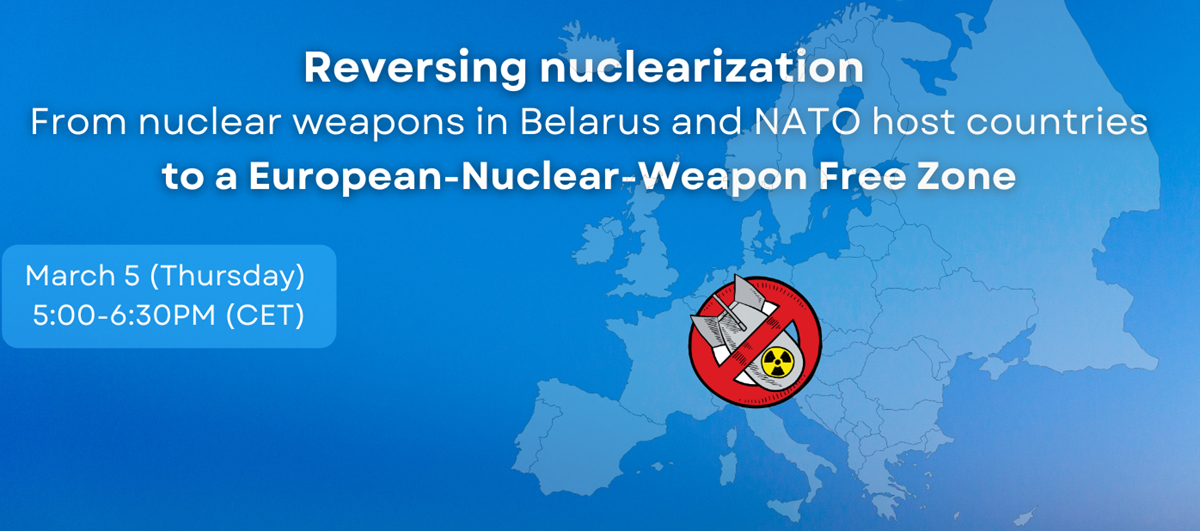
6 March -Online – Reversing nuclearization:
From nuclear weapons in Belarus and NATO host countries to a European-Nuclear-Weapon Free Zone
Mar 6, 2026 03:00 AM in Canberra, Melbourne, Sydney

of the week – Australians for War Powers Reform (AWPR)
To see nuclear-related stories in greater depth and intensity
 Antinuclear