Submissions to Senate: more people oppose a nuclear waste dump in Kimba or Hawker.

The 58 submissions to the Senate, opposing the plan for the process for selecting a nuclear waste dump site come from a variety of organisations and individuals, and include residents of Eyre Peninsula.
These are some points that came up as they answered the Term of Reference, especially (f) – Any related matters. (These submissions also generally gave full answers to the other 5 more narrow Terms of Reference)
Comprehensive criticism of the entire process. (ENUFF Submission no. 109) No justification for dump (Wakelin B No. 23) Why the assumption it has to be South Australia.? (Wauchope N. No. 21) Flawed process (Hughes No. 57) (Mitchell No. 25) Opposed to process, not necessarily to dump (Lienert L No. 50) End the process (Noonan, D No 31) Longterm negative effects (Sisters of St Joseph No. 68 )
Nuclear wastes. Wants re-examination of waste plans (CCSA 55 ) Intermediate wastes (Mitchell 25, Scott C 14 ) Prelude to commercial waste import? (Name Withheld 90 ) Dangers Waste types ( Noonan, D31 Wauchope N 21 ) Lucas Heights best site (Taylor A 82 ) stranded wastes (Tulloch S 32)
Issues of dishonesty – lack of trust (Ashton 73) Hypocrisy of DIIS (Bannon 85 Fergusson 106) Biased committees (Scott T 44) Biased and misleading information given (Thomas 36 Tiller J 9 Tulloch B 87) Dishonest process (Tulloch R 62 ) Conflicts of interest (Cushway 6 Fels P 84 Fergusson 106 )
Illegality of setting up nuclear dump – (Gaweda 54 Madigan 26 Scott T 44 Stokes B Tulloch S 32 Walker 20 )
Aboriginal issues well beyond the Term of Reference about this. Strongly Aboriginal In depth on Aboriginal interaction (ATLA No 42 MKenzie K 78 McKenzie R 107) History of Aboriginal interaction (Bangarla 56 )History. (Madigan 26 MKenzie K 78)
Floods groundwater (Fels K 63 Fels P 84 Thomas 36 )
New research backs the Linear No Threshold theory of ionising radiation
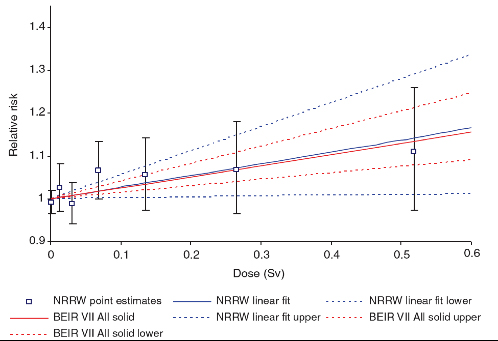
Implications of recent epidemiologic studies for the linear nonthreshold model and radiation protection https://www.researchgate.net/publication/326387649_Implications_of_recent_epidemiologic_studies_for_the_linear_nonthreshold_model_and_radiation_protection
Sweden worst affected as wildfires rage in Arctic Circle
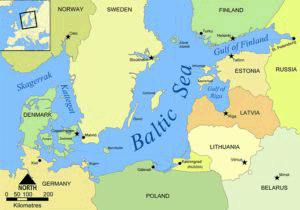 Wildfires rage in Arctic Circle as Sweden calls for help http://www.inkl.com/news/sweden-calls-for-help-as-arctic-circle-hit-by-wildfires?sharer=20552, By Jonathan Watts, July 18, 2018
At least 11 wildfires are raging inside the Arctic Circle as the hot, dry summer turns an abnormally wide area of Europe into a tinderbox.
The worst affected country, Sweden, has called for emergency assistance from its partners in the European Union to help fight the blazes, which have broken out across a wide range of its territory and prompted the evacuations of four communities.
Tens of thousands of people have been warned to remain inside and close windows and vents to avoid smoke inhalation. Rail services have been disrupted.
The Copernicus Earth observation programme, which gives daily updates of fires in Europe, shows more than 60 fires burning across Sweden, with sites also ablaze in Norway, Finland and Russia, including in the Arctic Circle.
Norway has sent six fire-fighting helicopters in response to its neighbour’s request for assistance. Italy is sending two Canadair CL-415s – which can dump 6,000 litres of water on each run – to Örebro in central southern Sweden.
In western Sweden, fire-fighting operations were temporarily halted near an artillery training range near Älvdalen forest due to concernsthat unexploded ordnance might be detonated by the extreme heat.
Residents in Uppsala said they could see the plumes of smoke and have been banned from barbecuing in national parks, after 18 consecutive days without rain.
“This is definitely the worst year in recent times for forest fires. Whilst we get them every year, 2018 is shaping up to be excessive,” said Mike Peacock, a university researcher and local resident.
There have been huge fires in the past in Sweden, but not over such a wide area. This appears to be a trend as more and bigger blazes are reported in other far northern regions like Greenland, Alaska, Siberia and Canada.
The sparks come from a variety of sources: BBQs, cigarettes and increasingly lightning, which is becoming more frequent as the planet warms.
Swedish authorities say the risk of more fires in the days ahead is “extremely high” due to temperatures forecast in excess of 30C. Much of the northern hemisphere has sweltered in unusually hot weather in recent weeks, breaking records from Algeria to California and causing fires from Siberia to Yorkshire. Ukraine has been hit especially hard by wildfires.
The European Forest Fire Information System warned fire danger conditions were likely to be extreme across much of central and northern Europe in the coming weeks.
EU officials said many of this year’s fires are outside the traditional European fire zone of the Mediterranean, and are increasingly taking place at unexpected times of year. 2017 was the worst fire year in Europe’s history, causing destruction to thousands of hectares of forest and cropland in Portugal, Spain and Italy, as late as November. “There are clear trends of longer fire seasons and frequent critical periods in Europe that are leading to dangerous fire situations,” said a European commission official.
Climate scientists said the Arctic and other areas that were once relatively fire-free are likely to become more vulnerable.
“What we’re seeing with this global heatwave is that these areas of fire susceptibility are now broadening, with the moors in north-west England and now these Swedish fires a consequence of that,” said Vincent Gauci, professor of global change ecology at the Open University.
“Both these areas are typically mild and wet which allows forests and peatlands to develop quite large carbon stores,” he added. “When such carbon-dense ecosystems experience aridity and heat and there is a source of ignition – lightning or people – fires will happen.”
India’s summer heat becoming physically unbearable
 In India, summer heat could soon be unbearable — literally
An analysis of South Asia’s biggest cities found that if current warming trends continued, wet bulb temperatures — a measure of heat and humidity indicating when the body can no longer cool itself — will become so high people directly exposed for six hours or more would die.
Somini Sengupta-Seattle Times, July 18, 2018
The New York Times
NEW DELHI — On a sweltering Wednesday in June, a rail-thin woman named Rehmati gripped the doctor’s table with both hands. She could hardly hold herself upright, the pain in her stomach was so intense.
She had traveled for 26 hours in a hot oven of a bus to visit her husband, a migrant worker here in the Indian capital. By the time she got here, the city was an oven, too: 111 degrees by lunchtime, and Rehmati was in an emergency room.
The doctor, Reena Yadav, did not know exactly what had made Rehmati sick, but it was clearly linked to the heat. Yadav suspected dehydration, possibly aggravated by fasting during Ramadan. Or it could have been food poisoning, common in summer because food spoils quickly.
Yadav put Rehmati, who is 31 and goes by one name, on a drip. She held her hand and told her she would be fine. Rehmati leaned over and retched.
Extreme heat can kill, as it did by the dozens in Pakistan in May. But as many of South Asia’s already-scorching cities get even hotter, scientists and economists are warning of a quieter, more far-reaching danger: Extreme heat is devastating the health and livelihoods of tens of millions more.
If global greenhouse-gas emissions continue at their current pace, they say, heat and humidity levels could become unbearable, especially for the poor.
It is already making them poorer and sicker.
…….Indeed, a recent analysis of climate trends in several of South Asia’s biggest cities found that if current warming trends continue, by the end of the century, wet bulb temperatures — a measure of heat and humidity that can indicate the point when the body can no longer cool itself — would be so high that people directly exposed for six hours or more would not survive.
In many places, heat only magnifies the more thorny urban problems, including a shortage of basic services, like electricity and water.
…The science is unequivocally worrying. Across the region, a recent World Bank report concluded, rising temperatures could diminish the living standards of 800 million people.
Worldwide, among the 100 most populous cities where summer highs are expected to reach at least 95 degrees Fahrenheit by 2050, according to estimates by the Urban Climate Change Research Network, 24 are in India.
………Delhi’s heat index, a metric that takes average temperatures and relative humidity into account, has risen sharply — by 0.6 degrees Celsius in summer and 0.55 degrees during monsoons per decade between 1951 and 2010, according to one analysis based on data from 283 weather stations across the country.
Some cities are getting hotter at different times of year. The average March-to-May summertime heat index for Hyderabad had risen by 0.69 degrees per decade between 1951 and 2010. In Kolkata, a delta city in the east, where summers are sticky and hot anyway, the monsoon is becoming particularly harsh: The city’s June-September heat index climbed by 0.26 degrees Celsius per decade.
Joyashree Roy, an economist at Jadavpur University in Kolkata, found that already, most days in the summer are too hot and humid to be doing heavy physical labor without protection, with wet-bulb temperatures far exceeding the thresholds of most international occupational health standards. of most international occupational health standards……… https://www.seattletimes.com/nation-world/in-india-summer-heat-could-soon-be-unbearable-literally/
Night-time temperatures are going up
Research published in the International Journal of Climatology last year found night-time temperatures were increasing more rapidly than daytime temperatures.
Australia is not immune from warmer nights — our night-time temperatures have been increasing over the past 50 years and they are expected to continue to rise.
Why temperatures at night are going up around the world and what we can do about it http://www.abc.net.au/news/2018-07-19/nights-getting-hotter-climate-change-has-deadly-consequences/9985340, ABC Weather By Kate Doyle
1 This month

of the week – Australians for War Powers Reform (AWPR)
To see nuclear-related stories in greater depth and intensity
 Antinuclear