New technologies for flexibility enhancing the worldwide growth of renewable energy
 Chatham House 22nd Aug 2018 Electricity Markets** As renewables become a large share of the global energy mix, greater electricity system flexibility will be critical and will originate from the Chatham House 22nd Aug 2018 Electricity Markets** As renewables become a large share of the global energy mix, greater electricity system flexibility will be critical and will originate from thesmall scale, write Daniel Quiggin and Antony Froggatt. The International
Energy Agency forecasts that ‘solar PV and onshore wind together
represent 75 per cent of global renewable electricity capacity growth over the medium-term’. Bloomberg New Energy Finance also estimates that by 2040, nearly three-quarters of the $10.2 trillion invested in new power-generating capacity will be in renewables. While this renewables rollout is a key part of global climate policy, the challenge is that the
costs associated with managing the system start to escalate once renewables exceed a 30 per cent share of generated electricity. Unless properly planned for, the growth in electric vehicle use and electric heating could further amplify these ‘system integration costs’. They include the cost of holding fossil fuel power plants in reserve for periods of low renewable supply, grid upgrades and the dumping of power from renewables when system constraints are reached. So, as renewable energy pushes beyond 30 per cent,
and as a growing number of cars and domestic-heating systems begin to add to power usage, how can governments ensure electricity is affordable? The answer is ‘flexibility’. A raft of technologies already entering the market, promise to radically enhance the flexibility of electricity systems, helping contain system integration costs while accelerating the low-carbon transition. https://hoffmanncentre.chathamhouse.org/article/decentralised-flexibility/ |
No comments yet.
1 This month
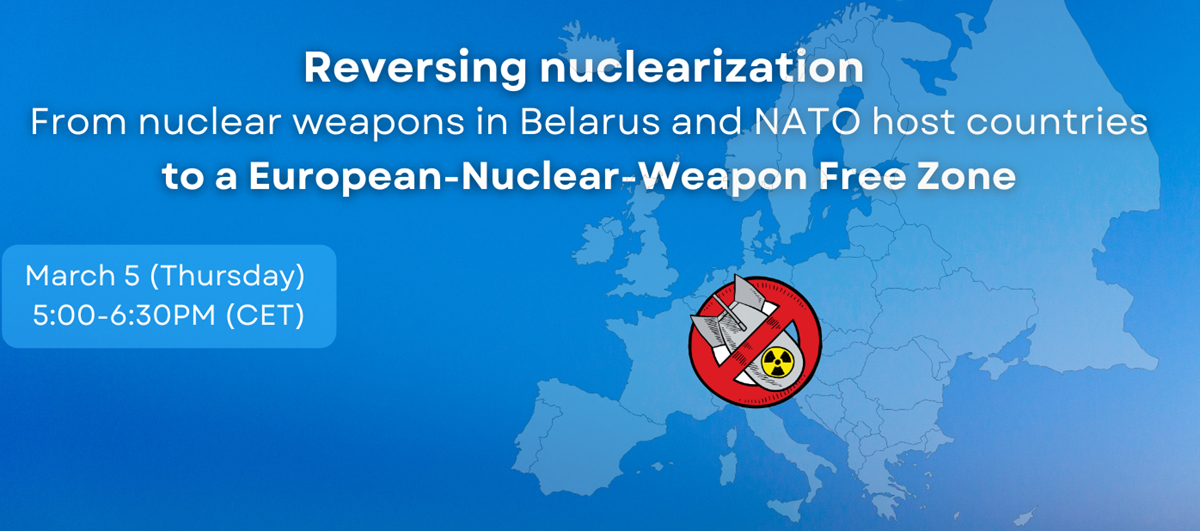
6 March -Online – Reversing nuclearization:
From nuclear weapons in Belarus and NATO host countries to a European-Nuclear-Weapon Free Zone
Mar 6, 2026 03:00 AM in Canberra, Melbourne, Sydney

of the week – Australians for War Powers Reform (AWPR)
To see nuclear-related stories in greater depth and intensity
 Antinuclear
Leave a comment