To October 31 – nuclear and climate news Australia
 Climate change –Big Trouble on a Small Planet-https://www.youtube.com/watch?v=GMra7pPFqmE&t=188sn – https://www.youtube.com/watch?v=YyZs6LdQ1cQ&t=9s The world is pumping out more oil and other petroleum liquids than ever before. Carbon dioxide in the atmosphere broke another record in 2018.
Climate change is already affecting human society in some terrible ways. Persistent drought is one main cause of the migration of Central Americans towards the USA – where they will be confronted by 5,000 soldiers!
In matters nuclear, the murder of journalist Jamal Khashoggi in the Saudi Arabia embassy in Turkey has brought world attention to Saudi Arabia’s Crown Prince Mohammad bin Salman, who almost certainly ordered this killing. Saudi Arabia’s poor human rights record, abuses in Yemen, and international condemnation of the murder make its bid to become a nuclear nation a big worry to the rest of the world. But Trump is still keen to sell weapons and nuclear technology to Saudi Arabia.
World peace teetering again, as President Trump, egged on by his belligerent National Security Advisor John Bolton, prepares to abandon the Intermediate-Range Nuclear Forces Treaty with Russia.
 Investigative journalism –HALF-LIFE Chad Walde believed in his work at Los Alamos National Laboratory. Then he got a rare brain cancer linked to radiation, and the government denied it had any responsibility.
AUSTRALIA
CLIMATE. Only a few years left, for action on climate change – but do we care? Australia losing all credibility with Pacific neighbours, as Morrison pulls out of global climate fund. Coalition digs deeper into coal and climate denial. Climate change policy – the wrecking ball that destroys Australia’s prime ministers. Coalition votes down COAG push to keep climate on energy policy agenda. Liberal MP Dean Smith warns – “Young will abandon us” New member of Parliament, Kerryn Phelps, will push for strong role for Climate Change Authority. About drought – Scott Morrison, Josh Frydenberg, Angus Taylor, Melissa Price are a disgrace!!
As Antarctica thaws, China, Russia and others move in.
NUCLEAR. Australia’s latest 60 Minutes – on Fukushima – a nuclear infomercial.
Lucas Heights nuclear reactor in disarray – costs and safety problems.
Saturday 3 November: Adelaide. Rally – Don’t Dump on South Australia.
Australian govt documents name Whyalla, Port Pirie, Port Lincoln as possible ports for nuclear waste transport.
Legal action in Western Australia means delay, uncertainty, for Cameco’s Yeelirrie uranium mine.
Is it time for BHP to sell unreliable and expensive Olympic Dam uranium mine?
Nuclear weapons for Australia? – at what cost?
Radioactive pollution problems: Australia’s rare earths mine in Malaysia.
Nuclear lobby revs up its frenzied campaign in Australia. Ben Heard is their front man. Ben Heard and pro nuclear company Frazer-Nash pushing for nuclear Australia.
ENERGY Scott Morrison’s desperate electricity measures have no real policy future. Greens leader Adam Bandt says that Labor backing of Liberal coal plan is outrageous. Things are crook for the Liberals, when the right wing IPA blasts them on energy policies!
RENEWA BLE ENERGY Australian business urged to join global embrace of 100% renewables. ZEN Energy and the stunning solar future for South Australia. South Australia opens biggest house. energy costs. Perth’s Scotch College installs 512kW solar, cuts grid power usage by 25% . WA off-grid school runs 100% on solar and battery. Coca-Cola to add 3.5MW solar across Australian operations. CSIRO expands rooftop solar rollout to slash energy costs.
Radioactive pollution problems: Australia’s rare earths mine in Malaysia
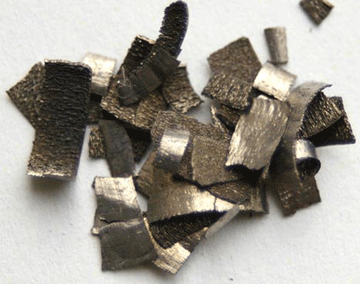 Australian mining plant in Malaysia faces radioactive waste inquiry, As China, the world’s largest producer of rare earth metals, scales back its export operations, the future of Australia’s industry is under a cloud. https://www.sbs.com.au/news/australian-mining-plant-in-malaysia-faces-radioactive-waste-inquiry By Jarni Blakkarly 30 Oct 18, The Chinese government has announced a slashing in the production of rare earth metals, a type of metal used in a range of high-tech products from mobile phones to wind turbines and electric cars.
The country, which is the largest producer and consumer of rare earth metals, has cut its quota for the separation and smelting of rare earths by 36 percent, Reuters reported last week.
China produces roughly 80 per cent of the world’s rare earth metals and the move will likely send global prices skyrocketing. Meanwhile, the joint Australian-Malaysian rare earths operation run by Perth company Lynas, the only major production plant outside of China, is having its own problems.
Earlier this month, the Malaysian government launched a broad parliamentary inquiry into the mine and the management of its radioactive waste.
The Australian company mines rare earth metals in Western Australia before shipping them to Malaysia for processing.
Resources analyst Dylan Kelly from finance group CLSA told SBS News: “It is really critical in a strategic sense as the only real rare earth producer outside of mainland China and one that is high in quality and it is highly sought after in terms of strategic interest, not just for the Japanese, but also the US.”
But questions remain over the management of radioactive waste from the plant and what long-term solutions are in place for its management.
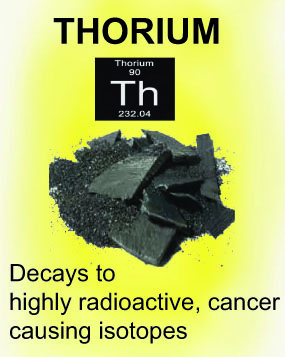 RMIT Professor of environmental engineering Gavin Mudd told SBS News all rare earths processing involves the generation of radioactive thorium and sometimes uranium waste.
The company’s current long-term waste management plans involve repurposing that waste into a soil fertilizer product, but Professor Mudd says not enough has been done yet to guarantee the by-product would be safe.
“Historically the rare earths industry hasn’t got a good track record in being able to demonstrate that safety case,” he said.
While the current government inquiry appears unlikely to shut the processing plant down in its entirety, Professor Mudd says more can be done in terms of increasing environmental reporting and public disclosure around the plant.
Lynas declined to comment to SBS News ahead of the inquiry, but in the past has defended its waste management practices as safe and transparent.
When the plant was approved in 2012 it set a wave of protests by thousands of concerned locals, which was largely ignored by the government.
But with the Opposition coming to power in a surprise election victory in May, the new government is taking a closer look at the plant.
Local Kuantan MP Faziah Salleh says the company needs to develop a new long-term storage plan for the radioactive waste.
“The company has to think about how they dispose of their radioactive waste, because Malaysians, especially people of [the city of] Kuantan, will not except the waste being left … dumped in our backyard, as it is right now,” she said.
The inquiry is due to report back to the government before the end of the year.
WA off-grid school runs 100% on solar and battery — RenewEconomy

New-build, off-grid school north of Perth becomes first in Australia to be powered completely by rooftop solar and battery storage. The post WA off-grid school runs 100% on solar and battery appeared first on RenewEconomy.
via WA off-grid school runs 100% on solar and battery — RenewEconomy
October 29 Energy News — geoharvey

Opinion: ¶ “Energy Transitions are Nothing New but the One Underway is Unprecedented and Urgent” • As a historian who has studied the oil industry’s earliest years and petroleum’s role in world history, I believe that keeping the world habitable for future generations will depend on a swift transition to more sustainable energy sources. [Cosmos] […]
Climate migration in Central America

The Climate Implications of the Migrant Caravan, EcoWatch, Olivia Rosane, Oct. 29, 2018 The U.S. military will send as many as 5,000 troops to the country’s Southern border to meet thousands of refugees and migrants who are traveling north through Mexico from Central America, The Independent reported Monday.
South Australia opens biggest household battery storage support scheme — RenewEconomy

South Australia opens country’s biggest support scheme for household battery storage – with $200 million in the form of grants and loans. The post South Australia opens biggest household battery storage support scheme appeared first on RenewEconomy.
via South Australia opens biggest household battery storage support scheme — RenewEconomy
Energy Insiders Podcast: Which Australian companies will go 100 per cent renewable? — RenewEconomy

Which Australian companies will go 100 per cent renewable? We talk to the head of RE100, who has been to Australia, while David Leitch let’s fly against the “fair dinkum bullshit” of the latest government energy intervention. The post Energy Insiders Podcast: Which Australian companies will go 100 per cent renewable? appeared first on RenewEconomy.
via Energy Insiders Podcast: Which Australian companies will go 100 per cent renewable? — RenewEconomy
October 28 Energy News — geoharvey

Opinion: ¶ “Where To for Australia’s Renewable Energy Sector?” • The Australian Government has no plans to revise the country’s renewable energy target “with anything” after 2020. It will reach its watered-down goal for 2026 anyway, so why bother? Some analysts expect this to cause a slowdown of renewable growth. Others see things differently. [CleanTechnica] […]
Egypt goes for renewable energy in a big way

Image processed by CodeCarvings Piczard ### FREE Community Edition ### on 2017-10-20 17:00:50Z | http://piczard.com | http://codecarvings.com
largest solar power plant in the world early this year, RT reported on Friday. Reporting the remarks of Egyptian official Hassan Abaza, RT said that the superpower plant was built in the city of Aswan, southern Egypt.
economy” is a mechanism to achieve sustainable development. https://www.middleeastmonitor.com/20181027-egypt-builds-largest-solar-power-plant-in-the-world/
Lucas Heights nuclear reactor in disarray – costs and safety problems
Delays hold back nuclear medicine – SEAN PARNELL, OCTOBER 26, 2018 https://www.theaustralian.com.au/national-affairs/health/delays-hold-back-nuclear-medicine/news-story/16d8606ac2f0e5c1d8e9010ea316aa74
Australia’s production of nuclear medicine is in disarray, with a promised world-class manufacturing plant running two years behind schedule, unresolved questions over waste management, and broader concerns over ageing facilities and safety issues at Lucas Heights.
A conveyor breakdown in June at building 23 — where a series of safety incidents prompted a damning independent review — has caused ongoing supply issues throughout Australia and overseas.
The Weekend Australian has learned the existing plant will not be able to resume full domestic production of generators until next year. Amid the disruptions, the Australian Nuclear Science and Technology Organisation has been forced to import generators and trade local ingredients with an American producer. It is refusing to detail how much the inefficient workaround is costing.
One of the safety incidents that prompted a rare intervention by the regulator was caused by a wheel falling off a trolley. It has now emerged the conveyor breakdown was caused by damage to the guide rails that other trolleys use and the conveyor chain guides themselves.
With nuclear medicine stakeholders expressing frustration at the ongoing delays, and a perceived lack of transparency by ANSTO, Industry, Science and Technology Minister Karen Andrews has asked the agency to respond to the internal review as a priority.
“I’ve also sought assurance from ANSTO that they are supplying the market at normal levels,” Ms Andrews said.
Stakeholders had raised concerns with the minister’s predecessor without response and point to continuing practice restrictions.
A new $168.8 million plant, to be known as ANSTO Nuclear Medicine, was meant to be operational in 2016 and as much as triple the production of generators, making Australia a major global player. However, it will not be operational before early next year — ANSTO will not say if the budget has blown out — and license conditions set by the Australian Radiation Protection and Nuclear Safety Agency add to the challenges.
ARPANSA will not allow any overall increase in production until the existing plant is decommissioned, adding to delays, and is demanding more information on plans for a new waste-management facility — including contingency plans should it, too, be delayed.
The ANM would also rely on building 23 which, like the existing plant, was built in the 1950s and is past its use-by date. The independent review revealed ANSTO wanted to replace the building “but federal government budget restrictions have meant that this has not been progressed”.
“A number of additions and modifications have been made to the facility, but these cannot possibly resolve all of the issues associated with a facility not designed for its current use,” the review concluded.
Ms Andrews would not be drawn on the issue, saying it was a matter for ANSTO to respond to the independent review, which also raised concerns over culture.
ARPANSA is overseeing the independent review and has given ANSTO more time to respond to the recommendations.
Legal action in Western Australia means delay, uncertainty, for Cameco’s Yeelirrie uranium mine
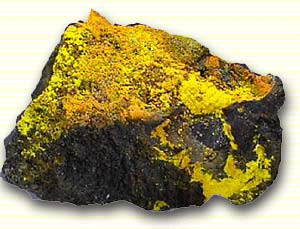  Federal nod for Cameco’s Yeelirrie uranium mine hinges on WA court challenge https://www.kalminer.com.au/?business/mining/federal-nod-for-camecos-yeelirrie-uranium-mine-hinges-on-wa-court-challenge-ng-b881003720z Federal nod for Cameco’s Yeelirrie uranium mine hinges on WA court challenge https://www.kalminer.com.au/?business/mining/federal-nod-for-camecos-yeelirrie-uranium-mine-hinges-on-wa-court-challenge-ng-b881003720z
It means the environmental status of Australia’s largest undeveloped uranium deposit, Canadian major Cameco’s Yeelirrie project near Wiluna, will likely remain uncertain until at least the second half of 2019, almost three years after its approval by former WA environment minister Albert Jacob. Yeelirrie is particularly sensitive because WA’s Environmental Protection Authority initially recommended it be refused on the basis it would make 11 species of rare subterranean invertebrates, known as stygofauna, extinct. WA-based Federal Environment Minister Melissa Price, whose sprawling Durack electorate includes Yeelirrie, told the Kalgoorlie Miner a legal challenge led by anti-nuclear campaigners and a handful of traditional owners was one reason for the delay, with Cameco previously stating it believed the process would be complete early this year. “My department advised that it was prudent to wait for the result of the WA Supreme Court proceedings before finalising the Federal assessment,” she said. “This ensures that we know the State decision is valid and we can avoid overlapping with any State approval conditions.” A Cameco spokesman said the company was working with Ms Price to achieve an outcome as soon as possible. The Conservation Council of WA is hopeful of winning a second appeal against Mr Jacob’s decision in WA’s Supreme Court, after an initial challenge was thrown out in February. Even if the action is unsuccessful the delay could buy opponents of the mine time to see out the conservative Morrison Government and leave the final decision in the hands of a Labor minister, with a hearing not expected to take place until next year. The group’s director Piers Verstegen said it would be “irresponsible” for Ms Price to make a decision on the project while the legal action was afoot. Yeelirrie was discovered by Western Mining Corporation in 1972 and prepared for development in the early 1980s before Labor leader Bob Hawke’s defeat of Malcolm Fraser in 1983 brought in the “three mine policy”, halting new uranium developments. It was sold for $430 million to Cameco by BHP in 2012, but the 128 million-pound yellowcake deposit has remained on ice since then in the face of a subdued uranium market and tricky approvals process. Federal Labor does not currently oppose the development of uranium mines, unlike their WA counterparts who agreed to let Yeelirrie and three other mines in WA, approved under the watch of the Barnett government, be mined in the future on ‘sovereign risk’ grounds. Mr Verstegen claimed Mr Jacob’s Yeelirrie decision set a bad precedent for future decisions on developments that posed a threat to wildlife. “The legal precedent is the same, it could be applied to any species that could be signed off for extinction by the minister,” he argued. “We’re taking that very seriously and that’s why we’re taking these steps to challenge it in the courts.” |
Nuclear lobby revs up its frenzied campaign in Australia. Ben Heard is their front man.
 Frazer-Nash Consultant, Ben Heard, will be speaking at The International Mining and Resources
 Conference (IMARC) in Melbourne on Wednesday 31 October. Nuclear Fuel Cycle Watch South Australia.
Steve Dale “Ben will be giving the keynote address, “Nuclear power in Australia: an ongoing debate”, which discusses the changing nature of the Australian power industry.”
 It is only an ongoing debate because lobbyists and unknown sourced lobbying money have such a corrupting influence on our politics. The nuclear push is reaching fever pitch because a lot pro-nuclear pollies will probably be gone after the next election – and the cross bench may get their wish of a Federal ICAC – which could shine a spotlight on the corrupting influence of Nuclear cack lobbying. https://www.facebook.com/groups/1021186047913052/permalink/2171512056213773/?comment_id=2173512052680440¬if_id=1540684271625148¬if_t=group_comment
New member of Parliament, Kerryn Phelps, will push for strong role for Climate Change Authority
 First thing’: Phelps set sights on reviving fortunes of climate body, Brisbane
  Times, By Peter Hannam, 27 October 2018 Kerryn Phelps, the likely new member for Wentworth, will push for the revival of the near-defunct Climate Change Authority as part of her efforts to advance action on global warming at a federal level.
Dr Phelps, who appears to hold an unassailable lead of 1783 votes for the seat vacated by former prime minister Malcolm Turnbull, said her determination to emphasise cutting carbon emissions and advancing renewable energy was reinforced by a meeting in Sydney on Saturday with ex-Kiribati president Anote Tong.
Dr Phelps said that while Mr Tong’s island nation faced immediate threats from rising sea-levels, the former leader stressed that “sooner or later everyone will be on the frontline” from threats wrought by a warming world.
The independent candidate said it was clear from this month’s byelection that climate change – and the lack of federal policies – was among the highest concerns for Wentworth voters.
If she takes her seat in Parliament as expected next month, Dr Phelps said an early target will be to restore the Climate Change Authority.
It’s the first thing that we could actually do – to reinstate the funding and the scientific credibility of the Climate Change Authority,” Dr Phelps told Fairfax Media. “It’s very important that we do have an independent authority looking at the evidence and providing advice to governments.”……
Many Pacific islands are low-lying or have populations clustered to coasts that facing inundation from rising sea levels. Salt water intrusion into groundwater and exposure to more powerful cyclones are other risks.
Earlier this month, environment minister Melissa Price was accused of disrespecting the Pacific leader by telling him during a chance meeting in a Canberra restaurant that the region was “always” seeking cash and she had her chequebook ready. Ms Price denied she made such comments but she did ring later to say she wished no offence……. https://www.brisbanetimes.com.au/environment/climate-change/first-thing-phelps-set-sights-on-reviving-fortunes-of-climate-body-20181027-p50cd3.html
About drought – Scott Morrison, Josh Frydenberg, Angus Taylor, Melissa Price are a disgrace!!
 How long can Australians put up with these climate criminals ? Scott Morrison, Josh Frydenberg, Angus Taylor, Melissa Price , and dont let us forget that complete ignoramus Barnaby Joyce- happily leading Australia further into climate disaster, with their pretense that the current drought has nothing to do with climate change – that it’s only temporary – the good times will come back. We can prop up unsustainable farmers, using the money intended for disability support.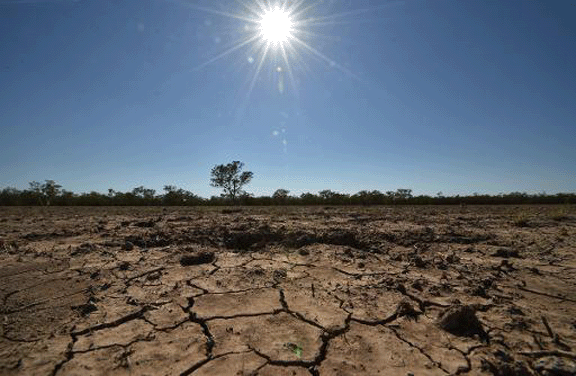
- Summary: Meteorologists expect severe drought and long-lasting rainfall events to worsen in the future. Researchers have determined how frequent, intense and long lasting these types of events will be in the future.
- A University of Oklahoma meteorologist, Elinor R. Martin, expects severe drought and long-lasting rainfall events to worsen in the future. In Martin’s new study just published, she determines how frequent, intense and long lasting these types of events will be in the future. Martin looks at both severe drought and rain events, but it is the first time extended heavy rain events have been studied.
-
“In some places, there will be more frequent droughts, and other places can expect more frequent rainfall,” said Martin, professor in the School of Meteorology, OU College of Atmospheric and Geographic Sciences. “The Caribbean and Central America will have more extreme droughts and the north and northeast of North America can expect more extreme heavy rain events. Around the world, some places will see droughts and heavy rain events become more intense, longer lasting and more frequent. For the agriculture and related industries, this is particularly important.”
Globally, there are areas that will overall become wetter and areas that will become drier. When it gets warmer, the water builds up and it rains for long periods, but there will be longer periods between rain events and in places, it will become drier. Even regions that are projected to become drier overall, like the Southwest and South Central United States, are expected to see more severe, longer and frequent periods of heavy rain. Martin refers to the May 2015 rain event in Oklahoma and Texas as one example of what could be expected in the future.
-
“When it gets warmer, water vapor can build up in the atmosphere, so when it does rain it rains a lot and for long periods, but there will be longer periods between rain events so droughts will become worse.” said Martin. She points to a changing climate as the reason these events will worsen, and defines droughts and rain events by using a standardized rainfall index to compare events between regions and seasons. For this study, Martin used the same climate models as the Intergovernmental Panel on Climate Change.
Story Source:
Materials provided by University of Oklahoma. Original written by Jana Smith
Ben Heard and pro nuclear company Frazer Nash pushing for nuclear Australia
New industry white paper for Australia from published for the coming mining conference: ‘Identifying the role for nuclear power in Australia’s energy transition’. “Free download” from International Mining and Resources Conference – but ya gotta fill in dirty great forms to read it. The nuke lobby doesn’t want outsiders in on this
1 This month
7 April – WEBINAR – Australia and the Doomsday Clock – Preventing nuclear war through NoFirstUse and other policies
Online | Tuesday April 7, 4:00-5:30pm, Australian Eastern Time / 8:00-9:30am Central Europe Time
– Access the registration link
15 April – Zoom –Nuclear Power is Not the Solution
Apr 15, 2026 01:00 AM in Canberra, Melbourne, Sydney

Join the International Physicians for the Prevention of Nuclear War (IPPNW) on Tuesday, April 14th for a timely webinar exploring the risks associated with nuclear power and challenging the myth that it offers a simple, safe, carbon-free solution to the climate crisis

21 April Webinar: No Nuclear Weapons in Australia
Start: 2026-04-21 18:00:00 UTC Canberra, Melbourne, Sydney (GMT+10:00)
End: 2026-04-21 19:30:00 UTC Canberra, Melbourne, Sydney (GMT+10:00)
Event Type: Virtual
A virtual link will be communicated before the event.
Host Contact Info: australia@icanw.org

of the week – Australians for War Powers Reform (AWPR)
To see nuclear-related stories in greater depth and intensity
 Antinuclear